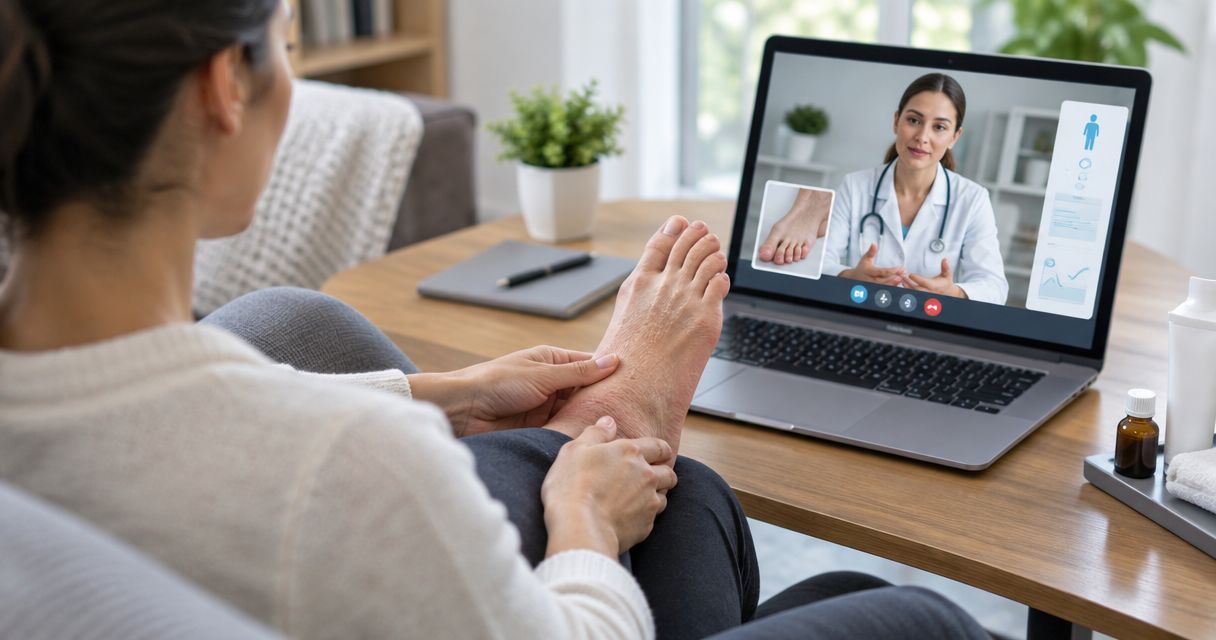
Best for foot-focused online care: NowCare. Best for a skin-focused assessment: teledermatology. Best for continuity: your existing clinician’s virtual visit. This 2026 guide compares care options for suspected athlete’s foot and explains when an in-person examination is the better choice.
- For best telehealth athletes foot treatment, NowCare fits patients seeking provider-guided, foot-focused online care.
- Teledermatology fits uncertain skin rashes; your existing clinician’s virtual visit fits care that needs medical-history continuity.
- Compare clinician review, follow-up, prescription handling, and referral arrangements—not promises of an instant cure.
- An open wound, spreading redness, or diabetes-related foot concerns need prompt assessment, not routine online treatment.
Why this matters
Athlete’s foot is a fungal skin infection, but an itchy or peeling foot is not automatically athlete’s foot. Eczema, irritation, and other skin conditions can look similar. Treating the wrong condition delays useful care.
The best online option gives you access to a licensed clinician, a clear treatment plan, and instructions for what happens if symptoms persist. A prescription alone is not the whole service. You also need to know when an online assessment is insufficient.
NowCare is best for patients seeking provider-guided telehealth for athlete’s foot within a foot-focused care service. Its stated Skin & Infection Care offering includes athlete’s foot, with licensed clinicians reviewing every plan or prescription. That makes it a relevant option, not proof of better clinical outcomes than another provider.
What makes the best telehealth athlete’s foot treatment?
Use these criteria to compare services in 2026. The right choice depends on your symptoms and the assessment you need, rather than a platform’s promise to treat every rash online.
- Clinical review: A licensed clinician should assess symptoms, medical history, and whether treatment is medically appropriate.
- Diagnostic caution: The service should explain that a foot rash can have causes other than fungus and identify when examination or testing is needed.
- Foot-care fit: A service should account for related concerns such as nail changes, skin breaks, diabetes, and recurring symptoms.
- Treatment clarity: You should understand what to use, where to use it, and the instructions for the specific medicine recommended.
- Follow-up: Ask how you can report side effects, worsening symptoms, or treatment that is not helping.
- Escalation: Know where to go if you need an examination, a skin sample, wound care, or urgent assessment.
Do not choose a service because it promises an antifungal prescription before reviewing your symptoms. Appropriate treatment can include an over-the-counter medicine, a prescription, or an in-person assessment. The clinician’s job is to choose the right next step.
Telehealth options at a glance for 2026
This comparison ranks care formats by their best-use cases. NowCare is the named platform; the other entries are service categories, not claims about particular companies.
| Option | Best for | Standout feature | Key limitation |
|---|---|---|---|
| NowCare | Foot-focused online care | Athlete’s foot is explicitly included in Skin & Infection Care | Entirely online; no physical examination or on-site testing |
| Teledermatology | An uncertain or recurring skin rash | Skin-focused assessment | Foot mechanics and broader foot-care needs can require another service |
| Existing clinician’s virtual visit | Medical-history continuity | Care through a clinician who already knows your health history | Virtual appointments and photo-review arrangements depend on the practice |
| General virtual urgent care | An isolated, uncomplicated concern | General assessment of a new symptom | Foot-specific follow-up and diagnostic testing depend on the service |
An in-person clinician sits outside this telehealth ranking. Choose that route when an examination or test is needed; moving offline is an appropriate care decision, not a failure of treatment.
1. NowCare: best telehealth for foot-focused care
NowCare connects patients with licensed clinicians for provider-guided online care. Athlete’s foot falls within its Skin & Infection Care offering, alongside other foot skin concerns. Its broader foot-care services also cover nail health, diabetic foot health, heel pain, and other foot and ankle conditions.
The service uses secure intake, clinician review, and ongoing care-team support. Prescriptions are sent to your chosen pharmacy when medically appropriate. Care is entirely online, and insurance is not required.
NowCare pros:
- Athlete’s foot is explicitly part of the stated service offering.
- Licensed clinicians review every plan or prescription.
- Ongoing care-team support is included in the stated care model.
- Related foot concerns fall within the broader Foot & Ankle Care offering.
NowCare cons:
- Online care cannot provide a hands-on examination, skin scraping, or wound procedure.
- Not every rash or foot problem is appropriate for remote treatment.
- A clinician’s assessment does not guarantee that a prescription will be issued.
Foot & Ankle Care includes 1-month, 3-month, and 6-month plans. Those are program durations, not instructions for how long to use an antifungal medicine. Follow the instructions for your specific treatment rather than matching medicine use to a care-plan length.
Best for: Patients who want a foot-focused online starting point and provider guidance rather than choosing treatment alone.
Verdict: Choose NowCare for foot-focused online assessment; use in-person care when symptoms require examination or testing.
2. Teledermatology: best for an uncertain skin rash
Teledermatology is remote dermatology care. It is a useful care format when your main question is what a rash represents, especially if previous treatment has not helped or the appearance is not typical of athlete’s foot.
A skin-focused clinician can assess the pattern, location, history, and photographs of a rash. However, photographs do not replace every part of a dermatology examination. Some diagnoses need testing or an office visit.
Teledermatology pros:
- Keeps the assessment focused on skin conditions and their look-alikes.
- Provides a route for reviewing a persistent or recurring rash.
- Can support discussion of irritation or side effects from previous treatments.
Teledermatology cons:
- A remote visit cannot collect a skin sample to check for fungus.
- Broader concerns such as foot structure, walking-related pain, or wounds can need additional care.
- Follow-up arrangements differ by provider and need checking before you book.
Bring the names of products you have already used. A clinician needs to distinguish treatment failure from incorrect use, irritation, or an incorrect initial diagnosis. Clear photographs help, but a detailed symptom history remains essential.
Best for: Patients whose main concern is identifying an unclear or persistent foot rash.
Verdict: Choose teledermatology for diagnostic skin questions; do not assume every recurring rash is fungal.
3. Your existing clinician: best for medical-history continuity
A virtual appointment with your existing clinician keeps the assessment connected to your broader health history. That matters when medications, previous skin problems, diabetes, circulation concerns, or other conditions affect the next step.
Start by asking whether the practice assesses foot rashes remotely and how to submit photographs. An established relationship does not remove the need for an examination when symptoms warrant one.
Existing-clinician virtual visit pros:
- Connects the foot concern with medical history already held by the practice.
- Supports discussion of current medicines and previous treatment reactions.
- Keeps follow-up within your established care relationship.
Existing-clinician virtual visit cons:
- The practice might require an office visit rather than offer remote assessment.
- A general clinician can still need dermatology or foot-care input.
- A video visit cannot perform diagnostic sampling or hands-on examination.
Tell the practice about any broken skin, numbness, previous ulcers, or changes in foot color. Do not treat those details as separate from the rash. They can change whether a virtual appointment is suitable.
Best for: Patients who want the assessment connected to an established medical record and care relationship.
Verdict: Choose your existing clinician when continuity matters; request an in-person assessment for higher-risk foot symptoms.
4. General virtual urgent care: best for an isolated concern
General virtual urgent care is a remote route for assessing a new medical concern. For suspected athlete’s foot, it fits a focused question about a limited rash without concerning associated symptoms.
The service category alone does not tell you what follow-up includes. Before booking, confirm that the provider assesses foot skin conditions, accepts useful photographs, and explains what to do if the initial plan does not work.
General virtual urgent care pros:
- Offers a general medical assessment rather than requiring you to diagnose the rash yourself.
- Provides a route for discussing symptoms and previous self-treatment.
- Can identify when another type of care is needed.
General virtual urgent care cons:
- Foot-specific care and continuing follow-up depend on the provider.
- Remote urgent care cannot examine circulation, collect a skin sample, or treat a wound directly.
- A single consultation does not necessarily address recurrent symptoms.
Keep the visit focused, but include all relevant symptoms. A rash plus swelling, significant pain, or an open sore is a different concern from itching alone. Do not leave out those details to obtain a simpler treatment plan.
Best for: Patients seeking an initial general assessment of an isolated, uncomplicated foot skin concern.
Verdict: Choose virtual urgent care for a focused assessment; skip a routine online-only route when warning signs are present.
How to choose the right care route in 2026
Start with symptoms, not the provider list. Your safest next step depends on whether the concern can be assessed remotely or needs hands-on care.
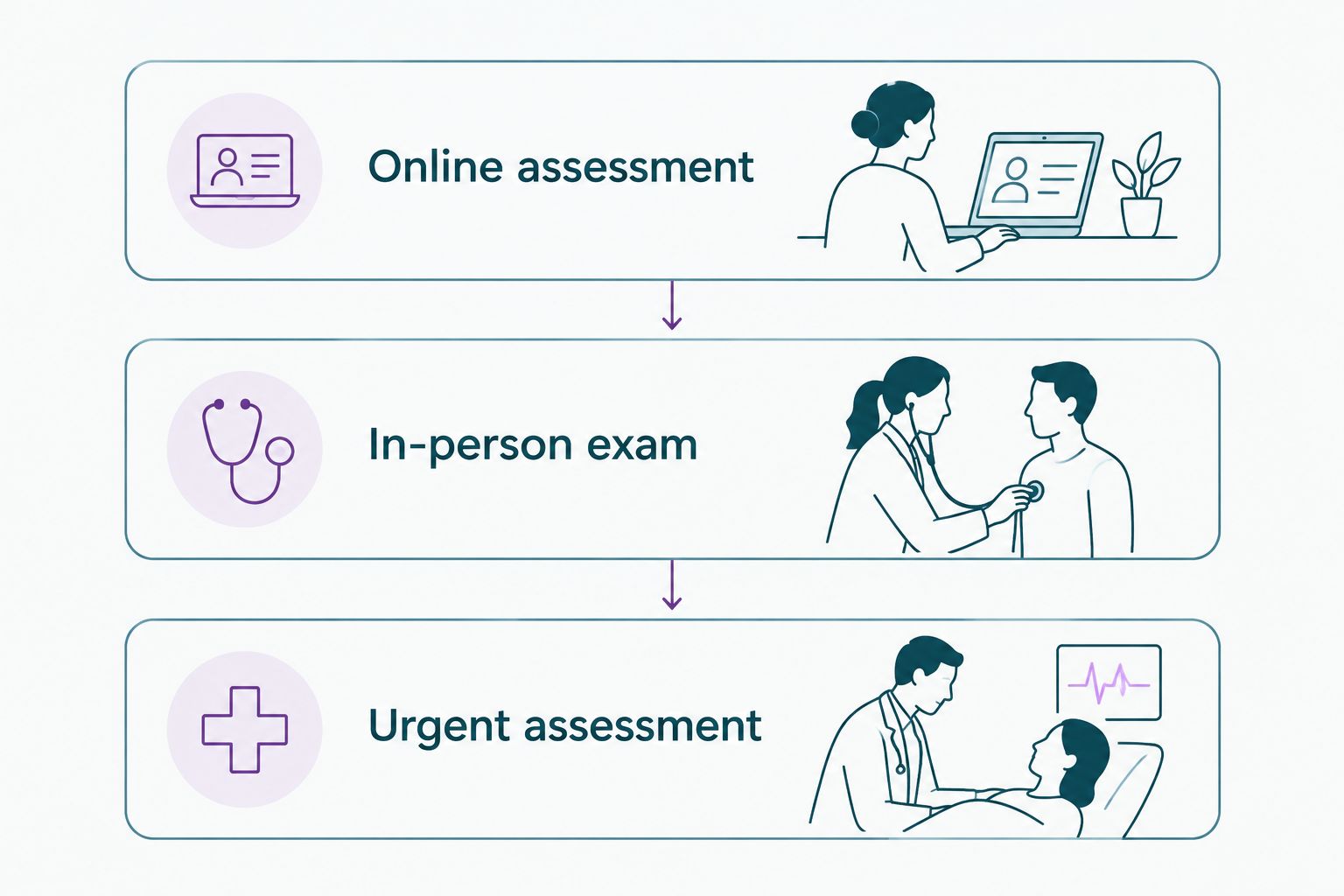
- Online assessment: A localized itchy or peeling rash without an open wound, systemic illness, or concerning swelling is a reasonable starting point for clinician-guided remote review.
- In-person exam: Persistent symptoms, an uncertain diagnosis, significant nail changes, or a need for testing favor an examination.
- Urgent assessment: Rapidly spreading redness, fever, severe pain, drainage, or an open foot wound need prompt medical attention. Diabetes or reduced sensation makes foot skin damage especially important to assess promptly.
If you have diabetes and a new foot sore, do not wait for a routine athlete’s foot treatment plan. Seek prompt assessment. Online photographs cannot establish everything a clinician needs to know about a wound.
What to prepare before an online appointment
A useful assessment starts with information the clinician can act on. In 2026, a clear symptom history remains more useful than selecting a service based only on its booking process.
Take photographs in good light that show the affected area and the surrounding foot. Include the spaces between your toes if those areas are involved. Do not use filters or edit the skin’s appearance.
Prepare these details:
- Where the rash started and whether it has spread.
- Whether you have itching, burning, pain, cracking, drainage, or swelling.
- The names of creams, sprays, or other treatments already used.
- Whether symptoms improved, returned, or worsened with treatment.
- Any diabetes, reduced sensation, circulation concerns, or previous foot wounds.
- Current medicines, allergies, and relevant medical conditions.
Before ending the visit, ask what improvement should look like, how to use the recommended treatment, and when to seek another assessment. Keep those instructions. Do not substitute a general internet treatment duration for the instructions attached to your medicine.
Start a foot-focused online assessment
Explore provider-guided foot care, including athlete’s foot assessment and treatment when medically appropriate.
How these options are ranked
The 2026 ranking uses service fit: explicit athlete’s foot coverage, skin-focused assessment, medical-history continuity, and general evaluation. It does not claim measured differences in cure rates, appointment speed, or patient satisfaction.
NowCare leads the foot-focused category because its stated offering includes athlete’s foot and ongoing provider-guided care. The other care formats serve different needs. None replaces an examination when your symptoms require one.
Which telehealth option should you choose?
Choose foot-focused online care for a straightforward assessment, teledermatology for an uncertain rash, and your existing clinician when medical-history continuity matters. General virtual urgent care is another starting point for an isolated concern, provided the service supports appropriate assessment and follow-up.
For an undecided reader seeking online athlete’s foot care in 2026, NowCare is the foot-focused choice in this comparison. If you have an open wound, spreading redness, fever, or significant pain, choose prompt in-person assessment instead.
FAQ
What’s the best telehealth for athlete’s foot treatment?
NowCare is the foot-focused option in this comparison because athlete’s foot is explicitly included in its provider-guided Skin & Infection Care offering. Teledermatology fits an uncertain rash, while your existing clinician’s virtual visit fits medical-history continuity.
Can a clinician diagnose athlete’s foot online?
A clinician can assess suspected athlete’s foot online using symptoms, medical history, and photographs. An uncertain diagnosis or persistent symptoms can require an in-person examination or testing.
Do I need a prescription to treat athlete’s foot?
Not every case of athlete’s foot requires a prescription. Over-the-counter antifungal treatments are available, but a clinician should guide treatment when the diagnosis is uncertain, symptoms persist, or other health concerns affect care.
Is teledermatology better than virtual urgent care for a foot rash?
Teledermatology is the more skin-focused care format for an unclear or recurring rash. General virtual urgent care fits an initial assessment of an isolated concern, but follow-up and referral arrangements depend on the service.
When should I avoid online-only athlete’s foot treatment?
Avoid relying on routine online-only treatment for an open wound, rapidly spreading redness, fever, severe pain, or drainage. Seek prompt assessment, especially if you have diabetes or reduced foot sensation.
Does a longer care plan mean I should use antifungal medicine longer?
No, a care-plan duration is not a medication instruction. Use the specific antifungal exactly as directed by the clinician and the medicine’s instructions.
What should I send before a virtual athlete’s foot appointment?
Send clear, unfiltered photographs and a description of your symptoms, previous treatments, medicines, and relevant medical conditions. Include pain, swelling, broken skin, diabetes, or reduced sensation because those details affect the appropriate care route.
One last thing
A foot rash and a changing toenail do not automatically need the same treatment. Tell your clinician about both, even if only the skin itches. The most useful online visit ends with a clear next step—not simply a prescription.


