
Best overall for foot-focused online care: NowCare. Best for a recurring rash: teledermatology. Best for medication and general-health review: primary-care telehealth. This 2026 guide compares the best telehealth cracked heels treatment routes and explains when an examination—not another online appointment—is the right next step.
- NowCare is the best telehealth cracked heels treatment choice here for provider-guided, foot-focused care without emergency symptoms.
- Teledermatology fits cracked heels with recurring dry skin, itching, or a rash needing diagnostic review.
- Primary-care telehealth fits heel concerns that need medication review or coordination with your existing health care.
- Deep wounds, spreading redness, or a diabetic foot wound need prompt in-person assessment.
Why this matters
Cracked heels describe a symptom, not a diagnosis. Dry skin and thick callus can split under pressure, but itching, scaling, inflammation, and wounds change the treatment decision. Picking a service by convenience alone misses that distinction.
NowCare connects you with licensed clinicians for provider-guided online foot and ankle care, including cracked heels within Skin & Infection Care. NowCare is the best fit in this guide for people seeking foot-focused telehealth for cracked heels without emergency symptoms. That recommendation concerns service fit, not a claim that remote care replaces a physical examination.
The useful question is not simply who offers an online appointment. It is who can assess your symptoms, explain what to do at home, and identify when you need hands-on care.
What makes the best telehealth cracked heels treatment?
Use these criteria when comparing cracked-heel care in 2026:
- Foot-specific scope: The service should address heel skin, callus, footwear pressure, and related foot concerns—not only general dry skin.
- Licensed clinical review: A clinician should review symptoms and health history before recommending prescription treatment.
- Diagnostic reasoning: The assessment should consider dryness, dermatitis, fungal infection, and an open wound rather than treating every crack identically.
- Escalation instructions: You need clear guidance about diabetes, loss of sensation, worsening redness, drainage, and deep splits.
- Follow-up access: Choose a route that lets you report changes and ask what to do if the original plan does not help.
- Practical treatment guidance: Recommendations should explain skin care and pressure reduction, with treatment only if medically appropriate.
A polished intake form does not establish these qualities. Before committing, check who reviews your information, what follow-up includes, and how the service handles a problem that cannot be assessed remotely.
Telehealth for cracked heels at a glance
These rankings separate care routes by their strongest use case. The final option is an escalation route, not an online substitute for examination.
| Rank and care option | Best for | Standout feature | Key limitation |
|---|---|---|---|
| 1. NowCare | Foot-focused online assessment of cracked heels | Provider-guided Skin & Infection Care with ongoing care-team support | Online care cannot provide hands-on examination or wound procedures |
| 2. Teledermatology | Recurring heel rash or unclear skin changes | Assessment centered on skin appearance and history | Does not replace examination of circulation, sensation, or foot mechanics |
| 3. Primary-care telehealth | Medication review and general-health coordination | Places heel symptoms within your broader medical history | Does not replace a physical foot examination |
| 4. In-person foot or wound care with remote follow-up | Deep cracks, wounds, or high-risk feet | Hands-on assessment and procedures when needed | Requires an in-person visit; remote follow-up is secondary |
1. NowCare: best telehealth for foot-focused cracked heel care
NowCare provides online foot and ankle care across its Seven Pillars of Foot & Ankle Health. Cracked heels sit within Skin & Infection Care alongside concerns such as athlete's foot and warts. Licensed clinicians review care plans and prescriptions, with treatment only if medically appropriate.
This is the most directly matched option in the guide when your main concern is heel skin and you want provider-guided care. The platform uses secure intake, sends prescriptions to your chosen pharmacy when prescribed, and provides ongoing care-team support.
NowCare pros:
- Cracked heels are explicitly included within the foot-care scope.
- Licensed clinicians review plans and prescriptions.
- Ongoing care-team support is part of the stated service.
- No insurance is required to access care.
NowCare cons:
- Fully online care cannot palpate your foot, assess it hands-on, or remove callus.
- A wound, suspected infection, or concern about circulation can require in-person care instead.
- Photographs cannot establish every cause of cracking or scaling.
Foot and ankle care includes 1-month, 3-month, and 6-month plans. Select a duration around the clinician's recommended follow-up needs, not an expectation that a longer plan guarantees healing. Your skin condition and medical history determine the next step.
Best for: People seeking foot-focused assessment of cracked heels and dry skin without symptoms requiring urgent examination.
Verdict: Buy into this care route for a foot-specific online starting point; skip online-only management when a wound needs examination.
2. Teledermatology: best telehealth for recurring heel rash
Teledermatology centers the consultation on skin symptoms, their appearance, and their history. It is the strongest route here when cracked heels occur alongside recurring itching, inflammation, or an unexplained rash. Choose a service that provides assessment by a licensed clinician rather than a product recommendation alone.
The reason to select this route is diagnostic focus. Fungal infection and dermatitis can both cause scaling, but they do not call for identical treatment. A skin-focused assessment helps determine whether remote evaluation is sufficient or whether testing or examination is needed.
Teledermatology pros:
- Focuses the visit on rash patterns and skin changes.
- Lets you document recurrence with photographs and a symptom history.
- Provides a route to discuss previous skin treatments and reactions.
Teledermatology cons:
- Images alone do not confirm every fungal infection or inflammatory condition.
- A skin-focused consultation does not replace assessment of foot pressure or walking mechanics.
- An open wound still requires a separate safety decision.
For a 2026 consultation, prepare a list of products you have used and explain whether the problem affects one heel or both. Include changes elsewhere on your feet, such as scaling between the toes. Those details are more useful than simply describing the skin as dry.
Best for: People whose heel cracking is part of a recurring rash or an unclear skin condition.
Verdict: Buy into teledermatology for rash-focused assessment; skip it as the sole route for a deep wound or suspected circulation problem.
3. Primary-care telehealth: best for general-health coordination
Primary-care telehealth suits cracked heels when the consultation needs to include your medications, existing conditions, and wider care plan. An established clinician can discuss the heel problem alongside the medical history already available to them. The consultation can also help organize an appropriate in-person referral.
This route is particularly relevant when you are unsure how foot symptoms fit with an existing diagnosis. It is not a shortcut around a diabetic foot examination. If you have diabetes and a new foot wound, prioritize prompt hands-on assessment.
Primary-care telehealth pros:
- Brings medication history and existing diagnoses into the discussion.
- Supports coordination with clinicians involved in your ongoing care.
- Provides a starting point when you need help choosing the next care setting.
Primary-care telehealth cons:
- A general consultation is not a substitute for foot-focused examination.
- Remote care cannot assess pulses, protective sensation, or wound depth reliably.
- Further assessment can require a separate appointment.
Explain whether you have numbness, previous foot wounds, or known circulation problems. Also describe anything that changed before the cracking began, including footwear or skin products. Do not stop a prescribed medication because you suspect it contributes to dryness; discuss it with the prescribing clinician.
Best for: People who need heel symptoms reviewed alongside medications and established health conditions.
Verdict: Buy into primary-care telehealth for coordination; skip waiting for a routine remote visit when a new wound needs prompt assessment.
4. In-person foot care: best for deep cracks or high-risk feet
In-person foot or wound care is the strongest option when the heel needs hands-on assessment. A clinician can examine the skin, assess wound depth, and evaluate concerns about sensation or circulation. Procedures and testing depend on the findings.
Remote follow-up can support an established care plan, but it does not replace the initial examination when the problem demands one. This option belongs in a 2026 telehealth comparison because the safest online service must recognize its limits.
In-person foot care pros:
- Allows direct examination of a split or wound.
- Supports assessment of sensation, circulation, and pressure-related problems.
- Makes hands-on treatment possible when clinically appropriate.
In-person foot care cons:
- Requires travel and an appointment at a physical care location.
- Does not provide the convenience of a fully online visit.
- Remote follow-up still depends on whether the clinician can safely assess progress that way.
Seek prompt care for spreading redness, warmth, swelling, pus, or worsening pain. Fever with a foot wound, black tissue, or rapidly worsening symptoms needs urgent medical assessment. Diabetes, poor circulation, or reduced sensation lowers the threshold for getting examined.
Best for: People with deep cracks, bleeding wounds, suspected infection, or a high-risk foot.
Verdict: Buy into in-person assessment when these risks apply; skip online-only treatment.
Choose the care setting before the skin product
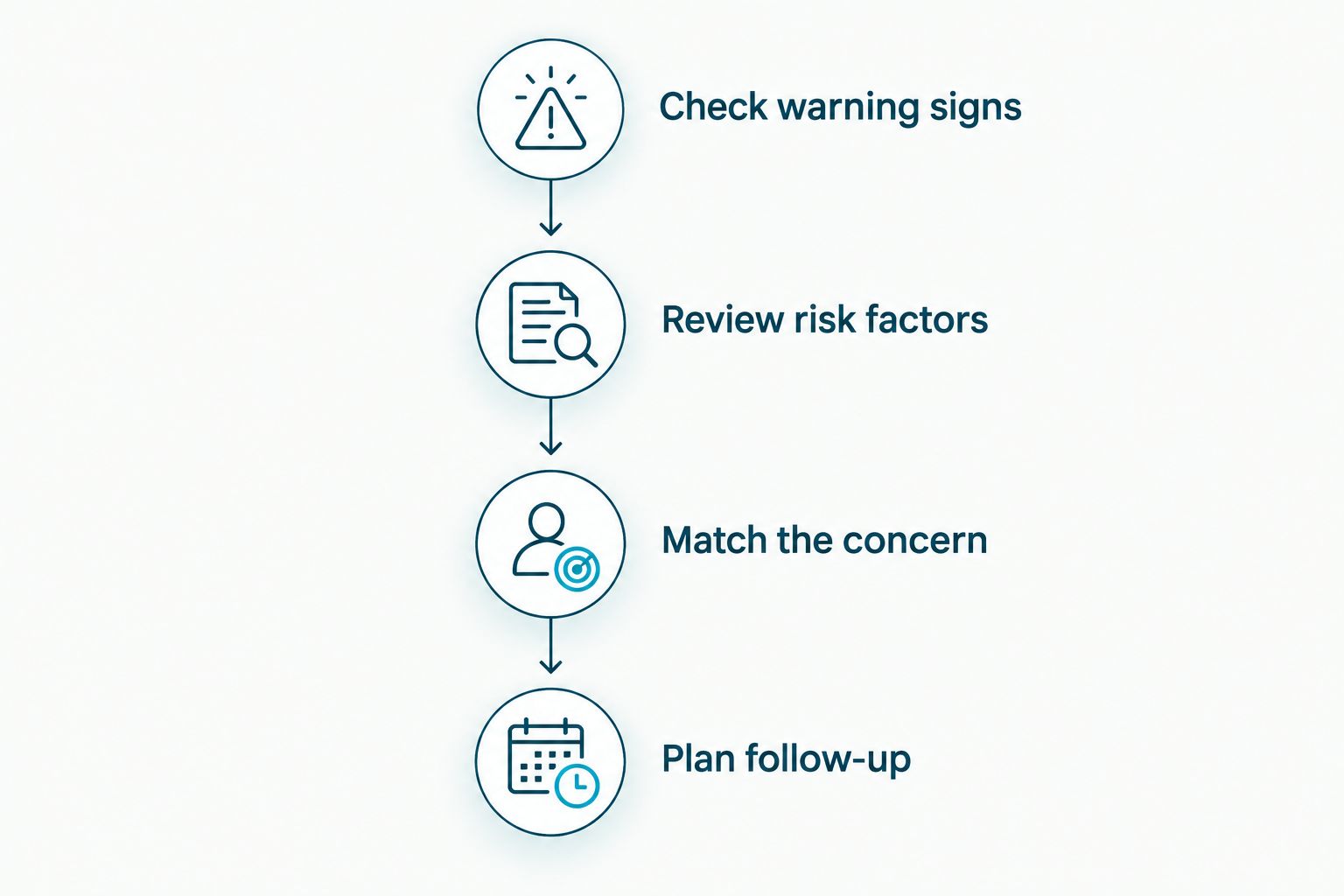
Use the following sequence to make a safe appointment decision:
- Check warning signs: Look for spreading redness, drainage, deep splits, fever, or rapid worsening. Seek prompt assessment rather than waiting for routine telehealth.
- Review risk factors: Tell the clinician about diabetes, poor circulation, reduced sensation, or previous foot wounds.
- Match the concern: Choose foot-focused care for heel concerns, skin-focused care for recurring rash, or primary care for broader coordination.
- Plan follow-up: Ask what improvement to look for and which changes mean you should be examined.
Pain alone is not a reliable measure of seriousness when sensation is reduced. A painless crack can still require assessment, especially if you have diabetes or a history of foot wounds. Include those details in the intake rather than assuming the photograph tells the whole story.
What to prepare for an online heel assessment
Good information makes a remote consultation more useful. Photograph both feet in clear light, then include a closer view of the affected heel without hiding the surrounding skin. Do not cut away callus to improve the picture.
Write down when the problem began, whether it recurs, and whether the skin itches, hurts, bleeds, or drains. List previous treatments and any reactions. Mention changes in shoes, activity, soaps, and skin-care products without assuming one caused the problem.
For uncomplicated dry skin, regular moisturizing and reducing friction are common parts of care. Thickened heel skin sometimes needs a different approach from an open split. Do not apply a strong exfoliating product directly to broken skin unless your clinician specifically recommends it.
Avoid cutting heel callus with a blade at home. If you have diabetes, reduced sensation, or poor circulation, ask a clinician before using corn removers, aggressive filing, or other treatments that can injure skin.
How these care routes were ranked
The 2026 ranking prioritizes fit for cracked heels, licensed clinical review, diagnostic focus, follow-up, and appropriate escalation. It is a comparison of care settings—not a measured comparison of healing rates, appointment speed, or treatment outcomes.
Foot-focused online care takes the default slot because cracked heels are a foot-specific concern. Teledermatology takes the rash slot, primary care takes the coordination slot, and in-person care takes the wound-risk slot. None wins every situation.
Which cracked-heel care route should you choose?
Choose NowCare for provider-guided cracked heels treatment when you want foot-focused online care and have no warning signs. Choose teledermatology when a recurring rash dominates the problem, or primary-care telehealth when medication review and care coordination are central.
Choose in-person assessment for a deep wound, suspected infection, or a high-risk foot. In 2026, the best telehealth decision still includes knowing when not to use telehealth.
Start provider-guided foot care
Get licensed clinical review for foot and ankle concerns, with treatment only if medically appropriate.
FAQ
What's the best telehealth cracked heels treatment option in 2026?
NowCare is the best fit in this guide for foot-focused, provider-guided online assessment of cracked heels without emergency symptoms. A recurring rash can favor teledermatology, while deep wounds or high-risk feet need in-person assessment.
Can a clinician treat cracked heels through telehealth?
A clinician can assess suitable cracked-heel concerns remotely and recommend treatment when medically appropriate. Telehealth cannot replace hands-on examination when wound depth, circulation, sensation, or infection needs assessment.
Is teledermatology better than online foot care for dry heels?
Teledermatology is the better fit here when a recurring rash or unclear skin changes are the main concern. Foot-focused online care is the better fit when the consultation centers on heel skin and related foot problems.
Do cracked heels always mean athlete's foot?
Cracked heels do not always mean athlete's foot. Dryness, callus, dermatitis, and fungal infection can produce overlapping symptoms, so the treatment should follow clinical assessment rather than appearance alone.
Can I use a strong exfoliating cream on a bleeding heel crack?
Do not apply a strong exfoliating product directly to a bleeding or open heel crack unless a clinician specifically recommends it. Broken skin needs a different safety assessment from intact, thickened skin.
When do cracked heels need urgent medical care?
Cracked heels need prompt assessment when there is spreading redness, drainage, swelling, worsening pain, or a deep wound. Fever with a foot wound, black tissue, or rapidly worsening symptoms requires urgent medical assessment.
Can I manage cracked heels online if I have diabetes?
A new foot wound in someone with diabetes needs prompt in-person assessment rather than online-only management. Telehealth can support advice and coordination, but it does not replace examination of circulation, sensation, or the wound.
One last thing
Tell your clinician if the heel crack does not hurt but your foot feels numb. Reduced sensation changes the safety decision; lack of pain does not prove the skin problem is minor. The right plan addresses both the visible crack and the reasons your foot needs protection.


