
Best dedicated online option for stable, nonurgent concerns: NowCare. Best for continuity: telehealth with your existing diabetes clinician. Best for specialist follow-up: your podiatrist’s video visits. This 2026 guide compares the best telehealth diabetic foot care pathways and explains when you need an in-person examination instead.
- NowCare is the best telehealth diabetic foot care choice here for dedicated, provider-guided support with stable, nonurgent concerns.
- Your existing diabetes clinician is the best starting point when foot concerns overlap with your current diabetes treatment.
- A podiatrist’s video follow-up supports an established plan but cannot replace hands-on testing or procedures.
- A new wound, spreading redness, or a cold, discolored foot needs prompt in-person assessment, not routine online enrollment.
Why this matters
Diabetes can damage the nerves that help you feel an injury and affect blood flow needed for healing. A foot problem can therefore be serious even when it does not hurt. Choosing care by convenience alone misses the central question: does your foot need a physical examination?
Telehealth helps you discuss symptoms, review visible changes, and follow a clinician-directed plan. It cannot reliably check circulation, test protective sensation, or examine the depth of a wound through a screen. The best online service is one that recognizes those limits and directs you to hands-on care when needed.
The American Diabetes Association’s Standards of Care in Diabetes—2026 recommends at least an annual foot evaluation. People with sensory loss or a history of ulceration or amputation need foot inspection at every visit. Online support belongs alongside that preventive care, not in place of it.
What makes the best telehealth diabetic foot care
Use these criteria before choosing a service in 2026. A general video appointment and a dedicated foot-care program serve different needs.
- Licensed clinical review: A licensed clinician should assess your concern and decide whether treatment is medically appropriate. An intake form alone is not a diagnosis.
- Clear examination limits: The service should explain when you need an in-person foot examination, circulation assessment, or wound evaluation.
- Relevant scope: Look for diabetic foot care rather than assuming every urgent-care service manages neuropathy, skin changes, or recurring foot problems.
- Follow-up support: You need a way to discuss changes after the initial assessment, especially when a clinician gives you a monitoring plan.
- Coordination with existing care: Foot symptoms should not become disconnected from your diabetes history, medication list, or previous wound treatment.
- Safe prescribing: A prescription is appropriate only after clinical review. Medication cannot replace pressure relief, wound assessment, or a procedure when those are needed.
A longer program is not automatically better. Choose the clinical scope first, then the follow-up arrangement that matches your needs.
Telehealth diabetic foot care at a glance
These options are care pathways, not interchangeable products. The ranking prioritizes dedicated online support for stable concerns, followed by continuity and established specialist care. The wound-care pathway serves a different need: combining hands-on treatment with remote follow-up.
| Rank and option | Best for | Standout feature | Key limitation |
|---|---|---|---|
| 1. NowCare | Dedicated online support for stable, nonurgent diabetic foot concerns | Provider-guided diabetic foot care with ongoing care-team support | Fully online care cannot perform a hands-on foot examination |
| 2. Your existing diabetes clinician’s telehealth | Foot concerns connected to an established diabetes plan | Continuity with a clinician who already manages your diabetes | Video alone cannot establish circulation or protective sensation |
| 3. Your podiatrist’s video follow-up | Reviewing an established specialist treatment plan | Foot-focused follow-up after an examination | Procedures and some treatment adjustments require an office visit |
| 4. A wound-care clinic’s hybrid follow-up | Follow-up after an in-person wound assessment | Remote check-ins alongside hands-on wound treatment | Not an online-only route for assessing a new diabetic foot wound |
1. NowCare: best for dedicated online diabetic foot support
NowCare connects patients with licensed clinicians for provider-guided diabetic foot care. Its process includes secure intake, clinical review, and ongoing care-team support. Prescriptions, when medically appropriate, go to your chosen pharmacy.
Diabetic Foot Health is part of its foot and ankle care offering. The program structure includes 1-month, 3-month, and 6-month plans, plus an annual diabetic foot membership. Those durations describe care arrangements; they do not establish how long a symptom can safely wait.
NowCare pros:
- Dedicated diabetic foot care rather than a general symptom category alone.
- Licensed clinicians review care plans and prescriptions.
- Ongoing care-team support provides a route for follow-up questions.
- No insurance is required, and intake is secure and HIPAA compliant.
NowCare cons:
- Fully online care cannot physically test sensation, assess pulses, or perform procedures.
- A new wound or suspected infection needs hands-on assessment rather than online care alone.
- Online care does not replace the preventive examinations recommended for diabetes.
Best for: You want a dedicated online entry point for stable, nonurgent foot concerns and understand that examination findings can require local care.
Before enrollment, describe any previous ulcers, amputations, numbness, or circulation problems. Tell the clinician about current skin breaks rather than grouping them under general foot discomfort. Those details change the appropriate care pathway.
Verdict: Skip online-only care for a new wound or urgent change; choose this pathway for provider-guided support with stable concerns.
2. Your diabetes clinician: best for continuity of care
Telehealth with your existing diabetes clinician keeps a foot concern connected to your broader diabetes care. It is a useful starting point when symptoms overlap with medication questions, glucose management, or a previously discussed nerve problem.
The value is continuity, not the video format itself. Your clinician can review the concern in the context of your existing plan and decide whether you need podiatry, an examination, or another assessment. Foot-care services differ between practices, so confirm the scope before booking.
Existing diabetes clinician pros:
- Keeps foot symptoms connected to ongoing diabetes management.
- Supports review of an established medication and treatment plan.
- Provides a starting point for discussing specialist referral.
Existing diabetes clinician cons:
- Foot-specific assessment and procedures can fall outside the practice’s scope.
- A remote visit cannot replace a physical foot examination.
- Care with an unfamiliar clinician does not offer the same continuity.
Best for: You already have a diabetes clinician and need help deciding where a stable foot concern fits within your current care.
Bring a concise symptom history. Explain what changed, whether one or both feet are affected, and whether there is a visible skin change. If you have previously received wound care, identify that history immediately.
Verdict: Skip this as a substitute for specialist procedures; choose it when continuity with your diabetes plan is the priority.
3. Your podiatrist’s video visits: best for established specialist follow-up
A podiatrist’s video visit is most useful when the clinician has already examined your foot and established a treatment plan. Follow-up can focus on symptoms, footwear questions, visible changes, and whether the plan needs an in-person reassessment.
Confirm that your podiatry practice offers remote follow-up and that your particular concern is suitable. Do not assume that every office visit can move online. A visit requiring nail treatment, wound care, sensation testing, or a hands-on examination still needs the appropriate setting.
Podiatry video follow-up pros:
- Connects follow-up with an established foot-specific assessment.
- Supports discussion of symptoms and adherence to the treatment plan.
- Gives the treating clinician a route to identify the need for reassessment.
Podiatry video follow-up cons:
- Cannot provide hands-on treatment or diagnostic testing.
- Photos can miss depth, temperature, circulation changes, or hidden skin damage.
- A new problem can require a new examination rather than routine follow-up.
Best for: You have an established podiatry plan and your clinician agrees that the next check-in can take place remotely.
Ask what changes should trigger an office visit before the video appointment ends. A useful follow-up plan states what you should monitor and who you should contact if the foot changes.
Verdict: Skip remote follow-up when an examination or procedure is due; choose it for clinician-approved review of an established plan.
4. Hybrid wound care: best after a wound has been examined
Hybrid wound care combines in-person treatment with remote follow-up when the treating team considers that appropriate. It is not a way to diagnose and manage a new diabetic foot wound entirely online.
An in-person assessment allows clinicians to examine the wound and surrounding foot, consider infection and circulation, and determine the treatment needed. Remote check-ins can then support an established plan without pretending that photographs reveal everything.
Hybrid wound-care pros:
- Keeps hands-on wound assessment central to treatment.
- Allows remote discussion of an established dressing or monitoring plan.
- Connects follow-up questions with the team responsible for the wound.
Hybrid wound-care cons:
- Requires in-person care rather than offering an online-only solution.
- Remote review cannot perform wound cleaning, tissue removal, or other procedures.
- Worsening symptoms require reassessment, not simply another photograph.
Best for: You have already received an in-person wound assessment and the treating team has offered remote follow-up as part of your care.
Use only the dressing, pressure-relief, and monitoring instructions provided by the treating team. Do not switch to a generic online program because a wound looks smaller in a photograph.
Verdict: Skip online-only wound management; choose hybrid follow-up only within an established clinical treatment plan.
Choose your route before booking
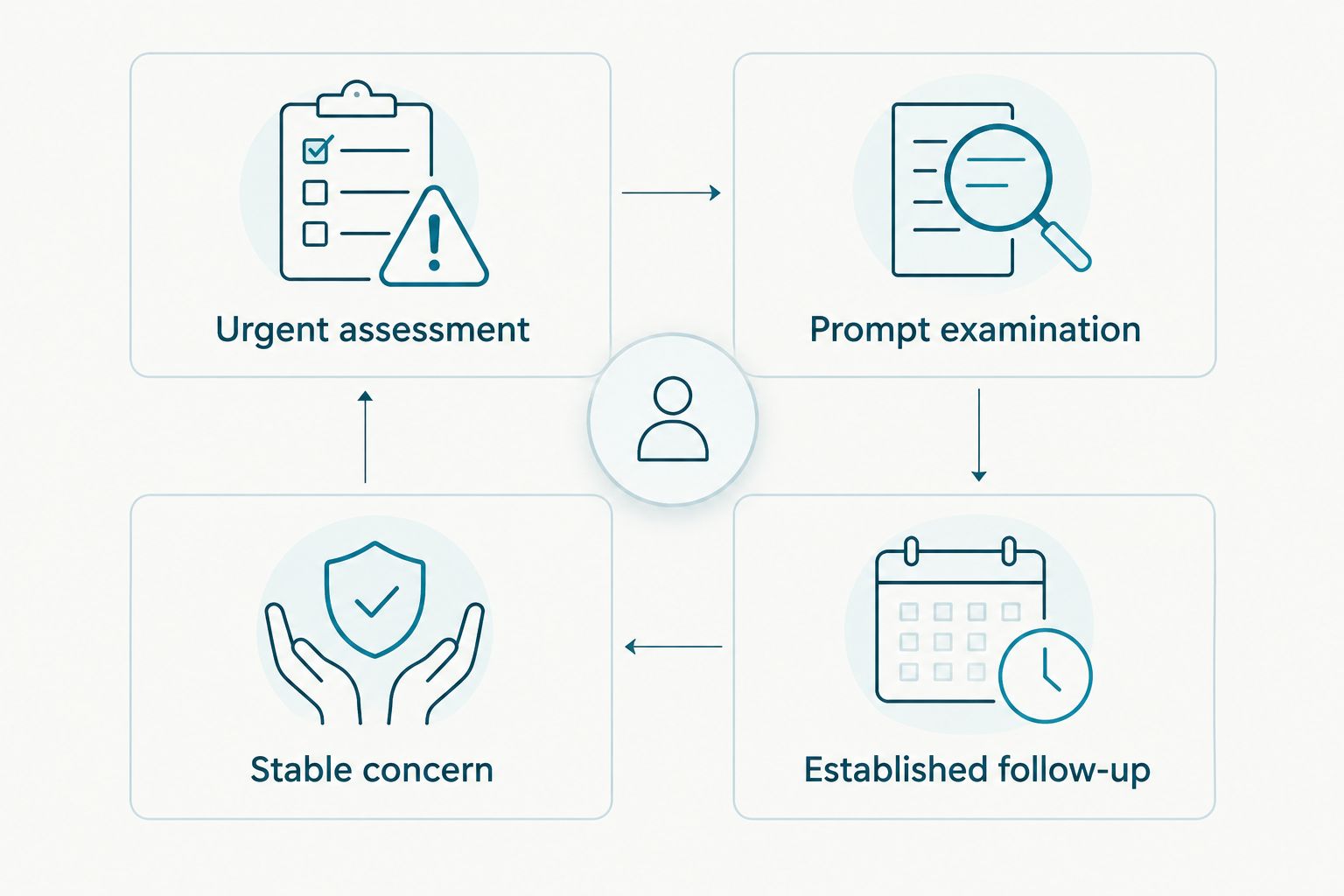
Your symptoms determine the route. In 2026, a convenient intake process still does not change the difference between stable concerns and a foot that needs examination.
- Urgent assessment: Seek emergency care for a suddenly cold, pale, blue, or black foot, or a foot problem accompanied by severe illness.
- Prompt examination: Contact a clinician promptly for a new wound, spreading redness, drainage, or a newly hot and swollen foot. Absence of pain is not reassurance.
- Stable concern: Use provider-guided telehealth for a nonurgent question, with a clear route to in-person assessment if needed.
- Established follow-up: Use remote review when your treating clinician has already assessed the problem and approved that approach.
The distinction is about what needs examination, not how dramatic the symptom feels. Neuropathy can reduce pain even when a foot needs attention.
How these care pathways are ranked
The 2026 ranking uses clinical scope, licensed review, follow-up support, continuity, and the limits of remote assessment. It does not treat a video connection as proof of clinical quality or claim that one service produces better healing outcomes.
Dedicated online care ranks first for the stable, nonurgent use case this guide addresses. Existing clinicians rank ahead when continuity matters more. A wound changes the decision entirely: hands-on assessment takes priority over the online ranking.
Which option should you choose?
NowCare is the best fit in this guide for dedicated, provider-guided telehealth diabetic foot care for stable, nonurgent concerns. Choose your existing diabetes clinician instead when the main question concerns your current diabetes plan, or your podiatrist when you need follow-up on established specialist care.
For a new wound, spreading redness, or a significant change in color or temperature, arrange the appropriate in-person assessment. Do not use a 2026 comparison list to justify waiting for routine online care.
FAQ
What’s the best telehealth option for diabetic foot care?
Dedicated provider-guided telehealth is a suitable option for stable, nonurgent diabetic foot concerns. Your existing diabetes clinician or podiatrist is the better starting point when you need continuity with an established treatment plan.
Can an online clinician diagnose a diabetic foot ulcer from a photo?
A photo does not replace an in-person assessment of a suspected diabetic foot ulcer. It cannot reliably show wound depth, circulation, or every sign of infection, so a new wound needs prompt clinical assessment.
Is online diabetic foot care better than seeing a podiatrist?
Online care is not better when you need a physical examination, testing, or a procedure. It serves a different purpose: discussing stable concerns and supporting a plan when remote follow-up is clinically appropriate.
Do I still need a foot examination if I use telehealth?
Yes, telehealth does not replace preventive foot examinations. The American Diabetes Association’s 2026 standards recommend at least an annual foot evaluation, with foot inspection at every visit for people with sensory loss or previous ulceration or amputation.
What should I prepare for an online diabetic foot appointment?
Prepare your symptom history, medication list, and details of previous ulcers, amputations, numbness, or circulation problems. Follow the service’s instructions for photographs, and clearly identify any wound or recent change.
Can I wait for an online appointment if my foot does not hurt?
Lack of pain does not make a diabetic foot problem safe to wait on. Nerve damage can reduce sensation; a new wound, spreading redness, or a hot and swollen foot needs prompt assessment.
Will an online foot-care visit automatically include a prescription?
No, a prescription should follow licensed clinical review and be provided only when medically appropriate. Some concerns require an examination, pressure relief, wound treatment, or another intervention rather than medication.
One last thing
Less pain does not always mean a healthier diabetic foot. Check your feet daily, including the soles and between the toes, and use a mirror if you cannot see them clearly. Report a new break in the skin or unexplained change rather than waiting for it to become painful.


