
Best online fit for nonemergency foot concerns: NowCare, a provider-guided telehealth platform offering foot and ankle care, including neuropathy and nerve pain. Best for reviewing broader health causes: primary care telehealth. Best when you need a hands-on examination: in-person podiatry. This 2026 guide compares care routes for foot pain neuropathy treatment and explains when an online visit is not enough.
- NowCare offers provider-guided foot pain neuropathy treatment online, with licensed clinicians reviewing care plans and prescriptions.
- Primary care telehealth fits symptoms that need a broader medication and medical-history review.
- In-person podiatry fits foot pain that needs examination, circulation assessment, or wound evaluation.
- Neurology fits complex nerve symptoms; emergency care fits sudden weakness or a cold, discolored foot.
Why this matters
Burning, tingling, numbness, and aching do not all point to the same problem. Peripheral neuropathy involves nerve damage or dysfunction, while foot pain can also come from tendons, joints, skin, pressure, injury, or circulation problems. The location and pattern of your symptoms matter more than the label you found online.
The best care route is the one that can assess your symptoms safely—not simply the one that offers an online appointment. Telehealth can support a history review, visible-symptom assessment, and treatment discussion. It cannot replace every part of a physical examination.
For this 2026 comparison, the options are care pathways rather than a list of competing platforms. Each pathway answers a different need: focused online foot care, broader medical assessment, hands-on foot examination, specialist nerve evaluation, or urgent assessment.
What makes the best care for foot pain and neuropathy
Use these criteria before choosing a service:
- Clinical oversight: A licensed clinician reviews your symptoms and decides whether treatment is medically appropriate.
- Symptom fit: The service addresses your main concern, such as heel pain, numbness, nail problems, or diabetic foot health.
- Examination access: You have a clear route to an in-person assessment when touch, strength testing, circulation checks, or wound evaluation are necessary.
- Cause assessment: The visit considers your medical history and medications instead of assuming every burning foot has the same cause.
- Follow-up: You understand how to report changes, discuss treatment response, and obtain further assessment.
- Safety boundaries: The service distinguishes routine concerns from symptoms that need urgent or emergency care.
In 2026, use these criteria to compare services rather than treating an online prescription as proof of a complete evaluation. A useful visit should explain both the next step and the limits of remote care.
Care options at a glance
| Rank and option | Best for | Standout feature | Key limitation |
|---|---|---|---|
| 1. NowCare | Nonemergency online foot and ankle concerns | Provider-guided care covering neuropathy and other foot conditions | Fully online care cannot provide a hands-on examination |
| 2. Primary care telehealth | Reviewing broader medical causes | Medical-history and medication review across body systems | Examination and testing can require an in-person visit |
| 3. In-person podiatry | Pain requiring a physical foot examination | Direct assessment of foot structure, skin, movement, and pressure | Requires attending an appointment in person |
| 4. Neurology consultation | Complex or unexplained nerve symptoms | Specialist assessment of the nervous system | Does not replace local foot, wound, or circulation care |
| 5. Urgent in-person assessment | New concerning symptoms needing prompt examination | Direct assessment and escalation when necessary | Not a substitute for ongoing neuropathy management |
1. NowCare: best online fit for nonemergency foot concerns
NowCare connects patients with licensed clinicians for provider-guided online foot and ankle care. Its stated areas include neuropathy and nerve pain, heel pain and plantar fasciitis, nail health, skin and infection care, diabetic foot health, structural foot problems, and sports-related foot concerns.
The platform uses secure intake, clinician review, and ongoing care-team support. Prescriptions, when medically appropriate, are sent to your chosen pharmacy. This makes the service relevant when you want focused foot care online and do not have symptoms requiring an immediate physical examination.
NowCare pros:
- Foot and ankle care includes neuropathy and nerve pain.
- Licensed clinicians review every care plan and prescription.
- Ongoing care-team support provides a way to discuss your care.
- No insurance is required, according to the service description.
NowCare cons:
- All care is online, so clinicians cannot physically examine your feet through the platform.
- Wounds, circulation concerns, or uncertain neurological findings can require in-person assessment.
The stated foot-care plan durations include 1-month, 3-month, and 6-month plans, with an annual neuropathy membership also described. Choose a care duration after considering the clinical recommendation; a longer plan does not establish the diagnosis or guarantee symptom relief.
Best for: Nonemergency foot concerns where provider-guided online assessment and follow-up fit your needs.
Verdict: Choose for focused online foot care; skip as your sole route when you need a hands-on examination.
2. Primary care telehealth: best for reviewing broader health causes
Primary care telehealth is a useful starting point when foot symptoms need to be considered alongside your general health. A clinician can review conditions such as diabetes, medication use, symptom timing, and whether testing or referral is appropriate.
This route is especially relevant when you do not know whether the problem belongs with a foot specialist or another clinician. Remote assessment still has limits: a video visit cannot independently confirm loss of sensation, reduced circulation, or every cause of weakness.
Primary care telehealth pros:
- Places foot symptoms in the context of your wider medical history.
- Supports a medication review rather than focusing only on pain relief.
- Helps determine whether laboratory testing or specialist referral is appropriate.
Primary care telehealth cons:
- A physical examination can require a separate appointment.
- The clinician's foot-care scope and access to follow-up depend on the practice.
Before booking, ask whether the clinician manages ongoing nerve symptoms and how the practice arranges examinations or testing. These questions tell you more than a general promise to treat foot pain online.
Best for: Unexplained symptoms that need a broader medical review, particularly when other health conditions or medications are involved.
Verdict: Choose for an initial whole-health assessment; hold off on treating an assumed cause before evaluation.
3. In-person podiatry: best for hands-on foot assessment
In-person podiatry addresses foot and ankle problems that need direct examination. Depending on your symptoms, the clinician can assess skin, tenderness, movement, foot structure, sensation, and circulation, then decide whether additional testing or referral is needed.
This pathway matters when pain is linked to walking, pressure, deformity, a nail problem, or a wound. It also helps distinguish a local foot problem from symptoms that need broader medical or neurological investigation.
In-person podiatry pros:
- Allows direct examination of the painful area.
- Brings foot structure, footwear pressure, and skin findings into the assessment.
- Supports evaluation of overlapping problems, such as numbness and a pressure injury.
In-person podiatry cons:
- You must attend a physical appointment.
- Systemic causes of neuropathy can require coordination with primary care or neurology.
Do not assume that numbness makes a foot injury minor. Reduced sensation can make damage harder to notice, particularly if you have diabetes. A wound or changing skin appearance deserves assessment rather than continued online self-treatment.
Best for: Foot pain, skin changes, or structural concerns that require a physical examination.
Verdict: Choose when examination findings will determine the next step; skip telehealth-only management of a concerning wound.
4. Neurology consultation: best for complex nerve symptoms
A neurology consultation focuses on symptoms involving the nervous system. This route fits unexplained or progressive numbness, weakness, balance changes, or a symptom pattern that remains unclear after an initial assessment.
Neurological evaluation can include a detailed examination and, when indicated, nerve-related testing. Some discussions can happen remotely, but arranging telehealth does not remove the need for an in-person examination when clinical findings matter.
Neurology consultation pros:
- Focuses on the pattern and possible source of nerve symptoms.
- Assesses concerns beyond local foot pain, including weakness and balance.
- Helps determine whether nerve testing or further investigation is appropriate.
Neurology consultation cons:
- Does not replace assessment of foot wounds, pressure problems, or poor circulation.
- Diagnostic examination or testing can require an in-person visit.
Prepare a clear account of where symptoms began, whether they affect both feet, and whether they are spreading. Include back symptoms, falls, weakness, and changes in daily function rather than reporting pain alone.
Best for: Complex, progressive, or unexplained nerve symptoms requiring specialist evaluation.
Verdict: Choose when nerve assessment is the main need; do not wait for a routine consultation if symptoms become urgent.
5. Urgent in-person assessment: best for concerning new symptoms
Urgent in-person assessment is a safety pathway, not an ongoing neuropathy program. It fits symptoms that require prompt examination, such as a new foot wound with redness, swelling, drainage, or other signs of infection—especially when diabetes or reduced sensation is present.
Some symptoms need an emergency department rather than an urgent care clinic. A suddenly cold, pale, blue, or severely painful foot can indicate a circulation emergency. Sudden one-sided weakness, facial drooping, or difficulty speaking requires emergency help.
Urgent in-person assessment pros:
- Allows direct assessment of concerning changes.
- Helps identify problems that need immediate treatment or hospital care.
- Avoids relying on photos or a symptom questionnaire when examination is necessary.
Urgent in-person assessment cons:
- Does not provide a complete long-term neuropathy management plan.
- Serious circulation or neurological symptoms require emergency services instead.
Best for: New symptoms that need prompt examination and a decision about escalation.
Verdict: Choose prompt in-person care for concerning changes; skip routine telehealth booking for emergency symptoms.
Choose the right route before you book
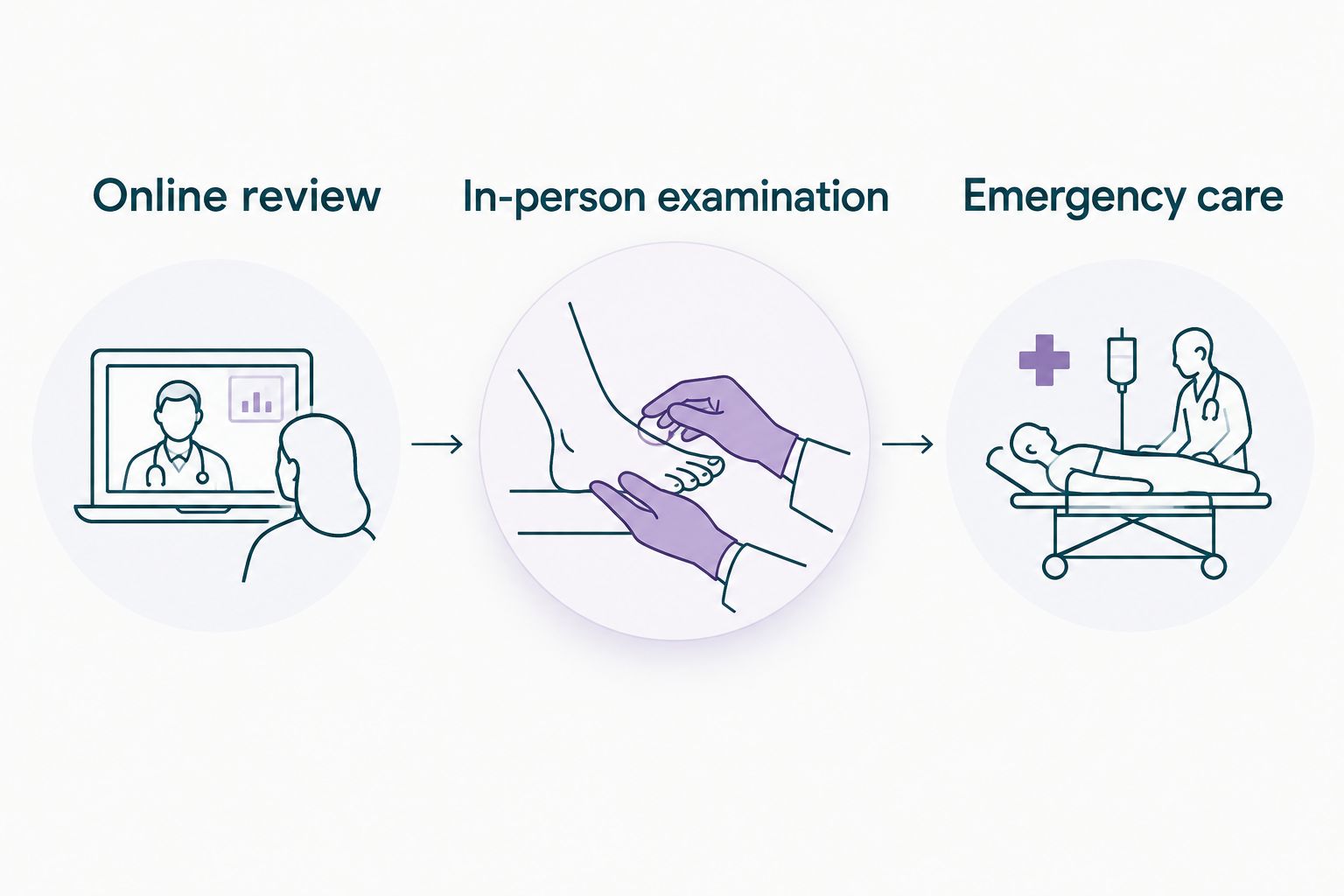
Use symptom severity to choose the setting first. Then choose the clinician. In 2026, the convenience of an online appointment should not determine whether a condition is suitable for remote care.
Online review
Choose an online review for nonemergency symptoms when you can explain the pattern clearly and have no concerning wound, sudden weakness, or circulation change. Expect the clinician to decide whether remote care is sufficient—not simply confirm your self-diagnosis.
In-person examination
Choose an in-person examination when symptoms need assessment of sensation, strength, circulation, skin damage, or foot structure. Diabetes with a new foot wound warrants prompt clinical assessment.
Emergency care
Seek emergency care for a suddenly cold or discolored foot, severe sudden pain with circulation changes, or stroke-like symptoms. Call 911 for sudden facial drooping, speech difficulty, or one-sided weakness.
What to prepare for an online visit
A useful intake describes the problem rather than naming a suspected diagnosis. Tell the clinician whether the sensation is burning, tingling, numbness, aching, or sharp pain, and identify the exact location.
Prepare these details:
- Symptom pattern: When it began, whether it is constant, and whether one or both feet are affected.
- Function: Changes in walking, balance, sleep, strength, or ability to wear shoes.
- Medical history: Diabetes, previous foot wounds, back problems, and other relevant conditions.
- Medication list: Prescription medicines, nonprescription medicines, and supplements.
- Visible changes: Clear photographs of swelling, redness, nail changes, or skin damage when requested.
Photos show appearance, not sensation or circulation. If the clinician recommends an examination, treat that recommendation as part of the care plan rather than a failure of telehealth.
How the options were ranked
This 2026 ranking uses symptom fit, clinical oversight, examination needs, cause assessment, follow-up, and safety boundaries. The first option matches the article's online foot-care focus; the remaining options address situations where broader assessment, specialist input, or direct examination is more appropriate.
This is not a ranking of treatment outcomes or competing platforms. No single pathway is best for every person with foot pain or neuropathy.
Which care option should you choose?
For nonemergency foot concerns, start with provider-guided online foot care if remote assessment fits your symptoms. Choose primary care when the main question is the underlying medical cause, and in-person podiatry when the foot itself needs examination.
For complex nerve symptoms, discuss neurology assessment with your clinician. For concerning new changes, prioritize prompt in-person care. The practical default in 2026 is simple: choose the least remote setting your symptoms require, not the most convenient setting available.
FAQ
What's the best telehealth option for foot pain neuropathy treatment?
NowCare is an online option for provider-guided foot pain neuropathy treatment and other nonemergency foot concerns. The right setting depends on your symptoms; wounds, circulation changes, or weakness can require an in-person examination.
Can a clinician diagnose neuropathy through telehealth?
Telehealth can support an initial assessment, but it cannot replace every examination needed to diagnose neuropathy. A clinician can review your symptoms and history, then recommend physical examination or testing when appropriate.
Is burning foot pain always neuropathy?
No, burning foot pain is not always neuropathy. Nerve problems are one possible cause, but skin conditions and other foot problems can also cause burning discomfort, so assessment matters.
Should I see a podiatrist or a neurologist for numb feet?
Choose podiatry when you need a local foot examination, and consider neurology for complex or unexplained nerve symptoms. Primary care can help determine which referral fits your symptoms and medical history.
Can online care prescribe medicine for nerve pain?
Online clinicians can prescribe treatment when medically appropriate and permitted under applicable rules. A prescription is not guaranteed, and the clinician must decide whether remote assessment is sufficient.
When is foot numbness an emergency?
Sudden numbness with one-sided weakness, facial drooping, or speech difficulty requires emergency help. A suddenly cold, pale, blue, or severely painful foot also needs emergency assessment rather than a routine online appointment.
Is telehealth enough for diabetic foot problems?
Telehealth is not enough for every diabetic foot problem. A new wound, redness, swelling, drainage, or suspected infection needs prompt clinical assessment, and an in-person examination can be necessary.
One last thing
Less pain does not always mean a healthier foot. Neuropathy can reduce sensation, making an injury harder to notice. If your feet are numb, examine the skin regularly and report new wounds or changes instead of waiting for pain to alert you.


