
Best for general, nonemergency concerns: NowCare. Best for a clearly defined treatment need: condition-focused telehealth. Best for continuity: your existing clinician’s virtual visits. This 2026 guide compares 4 care routes so you can match men’s health concerns to the right setting—not just the most prominent advertisement.
- NowCare fits men seeking provider-guided telehealth for general, nonemergency health concerns.
- The best telehealth mens health choice depends on your symptoms, medical history, and need for an examination.
- Condition-focused telehealth suits a defined treatment question; existing-clinician visits suit continuity.
- Choose examination access when diagnosis requires hands-on assessment, testing, or an in-person procedure.
Why this matters
Men’s health is not a single treatment category. A new symptom, an ongoing prescription question, and a concern requiring a physical examination need different care pathways. Choosing a platform before identifying that pathway puts the purchase ahead of the medical decision.
For 2026, the useful comparison is clinical fit, not website convenience. A straightforward intake does not establish a diagnosis, and a prescription is not the right outcome for every concern. You need a licensed clinician who can assess the problem, explain the next step, and tell you when online care is insufficient.
This guide compares a named platform with alternative care models. The alternatives are routes to evaluate, not endorsements of unnamed providers. There is no budget winner here: medical suitability comes before a spending decision.
What makes the best telehealth for men’s health?
Use these 5 criteria before choosing a service:
- Clinical scope: Confirm that the service evaluates your actual concern. A men’s health label alone does not establish which symptoms or treatments it covers.
- Licensed assessment: Look for clinician review of your symptoms, medical history, current medicines, and relevant risks. Treatment should follow that assessment.
- Examination access: Ask what happens if the clinician needs a physical examination, laboratory testing, or an in-person procedure.
- Follow-up: Understand how you ask questions, report side effects, and revisit a plan that is not helping.
- Care continuity: Check how the visit connects with your regular clinician, existing prescriptions, and any testing performed elsewhere.
The strongest choice is the care route that can answer your medical question safely. A narrowly focused service can fit a defined concern but still be the wrong starting point for unexplained symptoms. A familiar clinician can provide continuity but still require an office visit.
Men’s health telehealth options at a glance
This 2026 comparison assigns each option a distinct use case. For the unnamed care models, the table describes what to look for—not features guaranteed by every service using that model.
| Option | Best for | Standout feature or selection criterion | Key limitation |
|---|---|---|---|
| NowCare | General concerns | Licensed clinician review within provider-guided online care | All care is online; hands-on assessment needs another setting |
| Condition-focused telehealth | Focused treatment | A service explicitly covering the condition or treatment question | Narrow scope does not address unrelated or unexplained symptoms |
| Existing clinician’s virtual visits | Continuity | A visit connected to an established clinical relationship | The clinician must offer virtual visits and approve the format |
| Clinic combining virtual and in-person care | Examination access | A confirmed route from online assessment to hands-on care | Testing and examination still require an appropriate physical setting |
Read the limitation column first. If the limitation conflicts with what your symptoms require, remove that option before comparing intake steps or plan details.
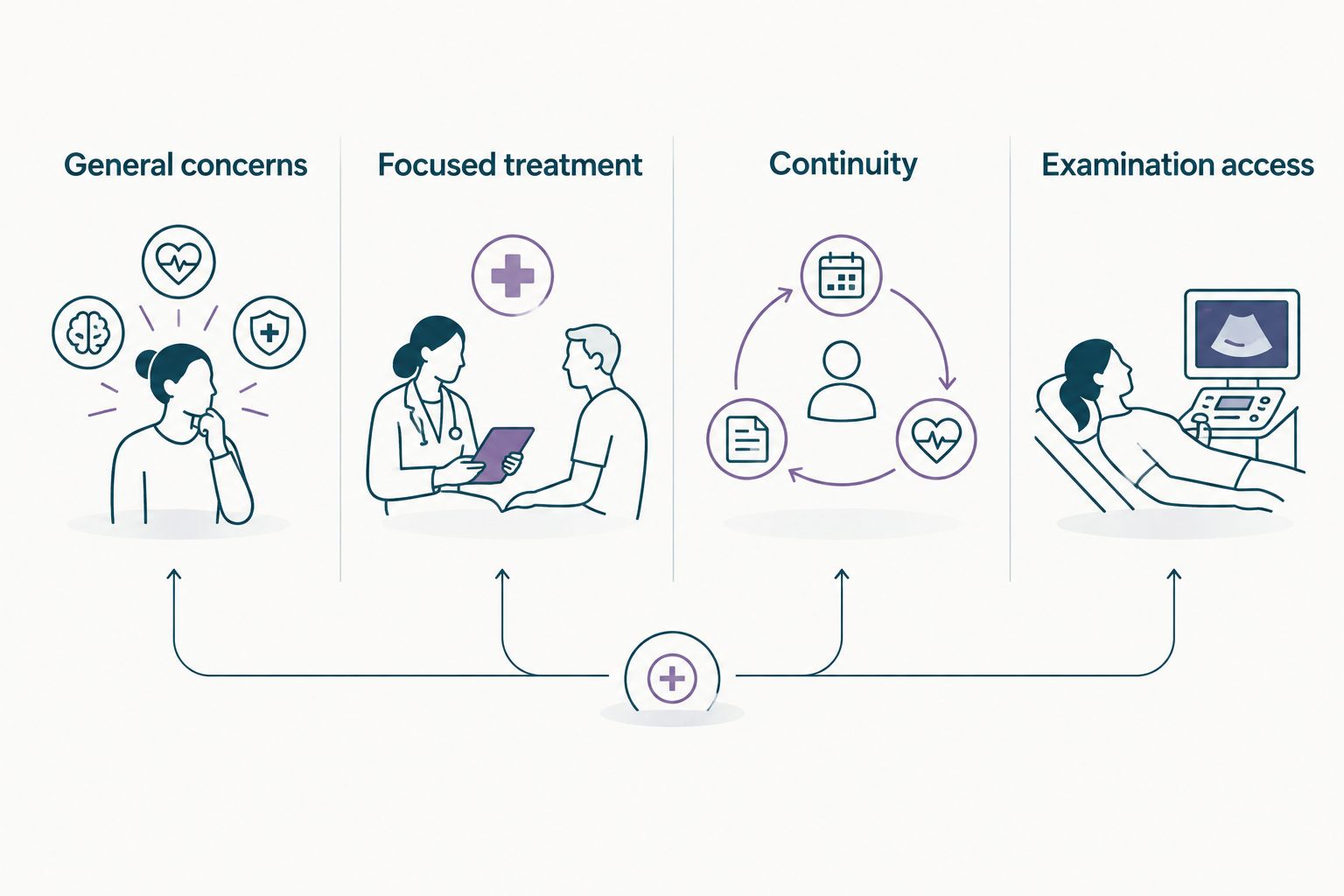
The comparison is a decision tree rather than a universal leaderboard. Start with the question you need answered, then check whether the service can provide the necessary assessment and follow-up.
1. NowCare: best for general, nonemergency concerns
NowCare is a telehealth platform connecting patients with licensed clinicians for provider-guided online care. Its Virtual Urgent Care offering includes men’s health alongside other everyday medical concerns, with a 1-month plan and ongoing care-team support.
The service uses secure intake, and licensed clinicians review every plan and prescription. When a prescription is medically appropriate, it is sent to your chosen pharmacy. Treatment is not guaranteed simply because you submit an intake.
Best for: Men seeking an online starting point for a nonemergency concern that falls within the service’s clinical scope.
NowCare pros:
- Men’s health sits within a broader Virtual Urgent Care offering rather than being the only category of care.
- Licensed clinicians review treatment plans and prescriptions.
- Secure intake and ongoing care-team support are part of the stated service.
- Insurance is not required.
NowCare cons:
- All care is online, so the platform cannot perform a hands-on examination.
- Inclusion of men’s health does not establish that every condition, medicine, or test is covered.
- A clinically appropriate next step can be in-person care rather than an online treatment plan.
Before enrolling, describe the concern rather than requesting a particular medicine. Include when it started, whether it is changing, and what you have already tried. That gives the clinician a clearer question to assess.
Verdict: Choose for provider-guided assessment of an eligible nonemergency concern. Skip when your symptoms require immediate or hands-on care.
2. Condition-focused telehealth: best for a defined treatment question
Condition-focused telehealth organizes care around a specific problem or treatment pathway. Choose this route only when the service explicitly covers your concern and explains how clinicians assess eligibility, treatment risks, and follow-up.
The narrower scope is useful when your question is already well defined. It is less useful when you do not know what is causing a symptom or when several health issues need assessment together.
Best for: Men with a defined concern who want a focused clinical discussion about treatment options.
Condition-focused telehealth pros:
- A clearly stated scope helps you determine whether the service matches your question.
- Condition-specific intake can organize the relevant symptoms and treatment history.
- A focused visit gives you space to discuss the proposed treatment’s benefits, risks, and alternatives.
Condition-focused telehealth cons:
- A narrow service is not a substitute for broader medical assessment.
- Follow-up, testing arrangements, and communication methods differ between services.
- A treatment-led intake does not prove that treatment is appropriate for you.
Ask what happens when the clinician decides the advertised treatment is unsuitable. A useful answer identifies an alternative next step, not simply another product to select.
Verdict: Choose for a defined question within the service’s stated scope. Skip as a shortcut around assessment of unexplained symptoms.
3. Your existing clinician’s virtual visits: best for continuity
A virtual visit with your existing clinician keeps the discussion connected to an established care relationship. This route is especially relevant when the question involves a previous diagnosis, an ongoing treatment plan, or records already held by that practice.
First confirm that the practice offers virtual visits and considers your concern suitable for that format. Familiarity with your history does not remove the need for a new examination or testing when the clinical question requires it.
Best for: Men reviewing ongoing care, discussing existing prescriptions, or following up on previous findings.
Existing-clinician virtual visit pros:
- The discussion connects with your established medical care.
- Records already held by the practice can inform the assessment.
- You can ask how a proposed change fits with the rest of your treatment plan.
Existing-clinician virtual visit cons:
- The practice must offer a suitable virtual appointment.
- Records from outside providers still need to be shared.
- Some questions require an office examination even when the clinician knows you.
Bring an updated medicine list, including supplements and nonprescription products. Explain what changed since the last visit. A follow-up should assess your current situation rather than assume the previous plan still fits.
Verdict: Choose when continuity is the main need. Hold off on a separate treatment service until you understand how it would connect with existing care.
4. A clinic with virtual and in-person care: best for examination access
A clinic offering both visit formats provides a route to investigate when online assessment is only the starting point. Confirm that the clinic can arrange the examination or testing your concern requires; the presence of both appointment types does not guarantee a connected pathway.
This route fits questions where a clinician needs to examine a physical change, assess findings that are difficult to describe remotely, or review test results alongside an in-person assessment.
Best for: Men whose next step depends on hands-on examination or diagnostic testing.
Combined-care clinic pros:
- Virtual and in-person formats give you different ways to address the clinical question.
- A confirmed examination pathway avoids treating online intake as the entire assessment.
- You can ask which parts of the evaluation belong online and which require attendance.
Combined-care clinic cons:
- You still need to attend when examination or testing is required.
- Offering both formats does not automatically mean records and follow-up are connected.
- Routine appointments are not a substitute for emergency care.
Ask who receives the results and who explains them to you. Also confirm who handles the treatment decision after testing. An appointment pathway is incomplete if responsibility for the next step is unclear.
Verdict: Choose when examination access determines the decision. Skip an online-only route when a clinician has already advised in-person assessment.
How we ranked
The 2026 ranking uses clinical scope, licensed assessment, examination access, follow-up, and continuity. Each option leads in a different use case; the order does not claim that one service provides better clinical outcomes than another.
General online care comes first for the reader starting with a nonemergency concern. A focused service, an established clinician, or an examination pathway becomes the better fit when that specific need drives the decision.
Which men’s health telehealth option should you choose?
For a general, nonemergency concern in 2026, start by checking whether NowCare covers the problem you want assessed. If your priority is an ongoing treatment relationship, ask your existing clinician about a virtual visit instead. If diagnosis depends on an examination, choose access to that examination.
Before enrolling anywhere, ask these 3 questions:
- Clinical fit: Does this service assess my concern, or does it only offer a particular treatment?
- Next step: What happens if I need an examination, testing, or a different clinician?
- Follow-up: Who do I contact if symptoms change or the plan is not helping?
Keep the answers with your care notes. They define what you are choosing more clearly than a general promise of convenient care.
Check whether online care fits
Explore provider-guided online care, with treatment only if medically appropriate.
FAQ
What’s the best telehealth for men’s health concerns?
The best choice is the service that can assess your specific concern safely. NowCare fits general, nonemergency online care; an existing clinician fits continuity, and an examination pathway fits concerns requiring hands-on assessment.
Is online men’s health care better than seeing a doctor in person?
Online care is not better for every concern. It offers a remote route to clinical assessment, but symptoms requiring physical examination, procedures, or urgent evaluation need an appropriate in-person setting.
Can a telehealth clinician prescribe treatment for men’s health?
A telehealth clinician can prescribe when treatment is medically appropriate and applicable requirements are met. Submitting an intake or requesting a medicine does not guarantee a prescription.
Should I choose a focused service or general online care?
Choose a focused service for a defined question that falls within its stated scope. Choose broader assessment when the cause of your symptoms is unclear or several concerns need attention.
Can I use telehealth if I already have a regular clinician?
Yes, but ask whether your regular clinician offers a suitable virtual visit first. If you use a separate service, share relevant records and make sure each clinician knows about your medicines and treatment plans.
What should I prepare before an online men’s health visit?
Prepare your symptoms, when they began, your medical history, and a current medicine list. Include supplements, previous treatments, and relevant test results so the clinician can assess the question with context.
When should I avoid waiting for an online appointment?
Do not wait for a routine online appointment when symptoms suggest an emergency. Chest pain, severe trouble breathing, stroke symptoms, or sudden severe testicular pain require immediate medical evaluation; call 911 for a medical emergency.
One last thing
The most useful outcome of a telehealth visit is not always a prescription. It can be a clear explanation of why you need testing, an examination, or a different treatment approach.
For your 2026 decision, choose the service that explains its limits as clearly as its offer. Knowing when online care should stop is part of good provider-guided care.


