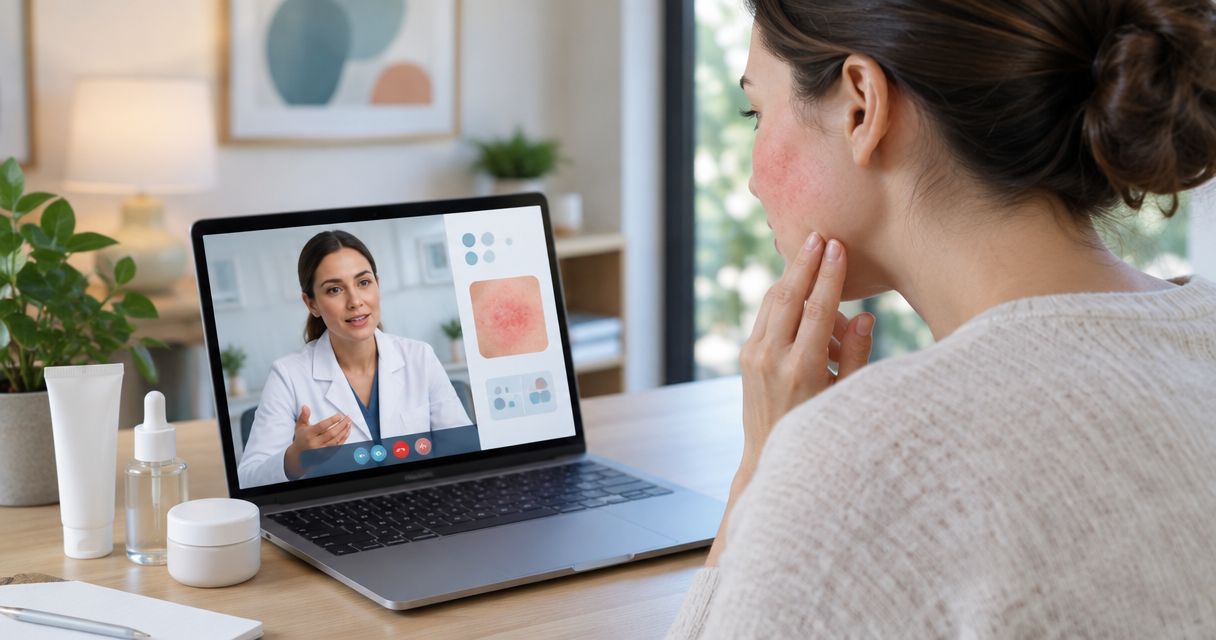
Best overall for specialist-led rosacea care: dermatologist-led video visits. Best for an initial provider-guided skin assessment: Nowcare. Best for convenient follow-up of an established diagnosis: photo-based dermatology, when your clinician considers it appropriate. This 2026 guide compares care models so you can choose the right assessment, not just the easiest appointment.
- The best telehealth rosacea treatment matches your symptoms, diagnosis, and need for specialist assessment.
- Nowcare is best suited to patients seeking provider-guided online skin assessment through its Virtual Urgent Care offering.
- Dermatologist-led video visits are the strongest default for diagnostic uncertainty or persistent rosacea symptoms.
- Photo-based follow-up suits established rosacea when your clinician can assess the concern remotely.
- Eye pain, vision changes, or rapidly worsening symptoms need prompt in-person assessment.
Why this matters
Facial redness is a symptom, not a diagnosis. Rosacea, contact dermatitis, acne, and other conditions can overlap in appearance, while flushing and visible blood vessels do not necessarily need the same treatment as inflammatory bumps.
Choose a service that explains what it can assess remotely and when it will refer you elsewhere. A prescription without a clear diagnosis or follow-up plan does not solve that problem.
For your 2026 decision, separate three questions: Who reviews your symptoms? What information can that clinician assess? What happens if the first approach does not help?
What makes the best telehealth rosacea treatment?
- Licensed clinical review: A clinician should review your history and symptoms before recommending prescription treatment.
- Diagnostic fit: The visit should distinguish suspected rosacea from other causes of redness, rather than treat every red face identically.
- Symptom-specific treatment: Persistent redness, inflammatory bumps, and eye symptoms require different clinical decisions.
- Useful follow-up: You need a way to discuss irritation, response, and changes in symptoms.
- Clear escalation: The service should explain when an examination, specialist assessment, or urgent care is necessary.
- Practical prescribing: Ask how prescriptions reach your pharmacy and who handles treatment questions afterward.
Use these criteria before comparing convenience. In 2026, a polished intake form still cannot replace the information a clinician needs to make a safe decision.
Telehealth rosacea care at a glance
These options describe different ways to receive care, not interchangeable services. Confirm the actual clinician type, appointment format, and scope before choosing a provider.
| Option | Best for | Standout feature | Key limitation |
|---|---|---|---|
| Dermatologist-led video visits | Diagnostic uncertainty or persistent symptoms | Live discussion with a skin specialist | Video cannot provide every part of a physical examination |
| Nowcare provider-guided skin care | An initial online skin assessment | Licensed clinical review through Virtual Urgent Care | Confirm that your specific redness concern fits the service before choosing it |
| Photo-based dermatology | Follow-up of an established diagnosis | Images and written history without a live appointment | Photos do not capture every symptom or examination finding |
| Hybrid dermatology | Symptoms likely to need hands-on assessment | Online discussion combined with access to in-person care | Requires access to a practice offering both formats |
| Primary care telehealth | Redness alongside broader health concerns | Assessment within your general medical history | Some presentations require dermatology referral |
1. Dermatologist-led video visits: best for diagnostic uncertainty
Dermatologist-led video care gives you a live conversation with a clinician specializing in skin conditions. It is the strongest default when you do not know whether your symptoms are rosacea, when previous treatment has not helped, or when several skin problems overlap.
A live visit lets you explain the pattern behind the redness. The dermatologist can ask about flushing, bumps, itching, burning, skincare products, and previous prescriptions rather than rely only on an image.
Dermatologist-led video visit pros:
- Specialist assessment of overlapping skin conditions.
- Real-time questions about symptoms and treatment history.
- Discussion of separate treatment goals for redness and bumps.
- Opportunity to clarify when an examination is needed.
Dermatologist-led video visit cons:
- Lighting and camera quality affect what the clinician sees.
- The clinician cannot perform a hands-on examination remotely.
- Procedures and some diagnostic questions require in-person care.
Best for: You have an uncertain diagnosis, persistent symptoms, or a treatment history that needs specialist review.
Verdict: Choose dermatologist-led video care when getting the diagnosis right is your main priority. Confirm that the clinician is a dermatologist; a service describing itself as skin care does not establish that credential.
2. Nowcare: best for an initial provider-guided skin assessment
Nowcare offers provider-guided online skin care within Virtual Urgent Care. Licensed clinicians review care plans and prescriptions, with treatment only if medically appropriate. Its stated care process includes secure intake, ongoing care-team support, and prescriptions sent to your chosen pharmacy.
That makes the service a fit for patients seeking an initial online skin assessment. Confirm that the service can evaluate your particular rosacea or redness concern before choosing a plan, and ask whether specialist or in-person assessment is needed.
Provider-guided skin care pros:
- Licensed clinicians review treatment decisions.
- Secure intake supports sharing your medical history.
- Prescriptions go to your chosen pharmacy when prescribed.
- Ongoing care-team support is part of the stated service.
Provider-guided skin care cons:
- Online care cannot provide a hands-on skin examination.
- A general skin-care offering is not the same as a confirmed dermatology-specialist appointment.
- Eye symptoms or diagnostically unclear redness can require another care setting.
Best for: You want a provider-guided first assessment and clear direction about an appropriate next step.
Verdict: Choose this route for initial assessment after confirming the service covers your concern; choose specialist care when the diagnosis remains unclear.
3. Photo-based dermatology: best for established-diagnosis follow-up
Photo-based, or asynchronous, dermatology uses submitted images and a written symptom history rather than a live conversation. It is a useful format for following an established diagnosis when your clinician considers the issue suitable for remote review.
The format depends on the information you supply. Include treatment names, changes in symptoms, irritation, and whether the photographs reflect a typical day or a flare.
Photo-based dermatology pros:
- Images give the clinician a visual record to review.
- Written history lets you describe changes carefully.
- Follow-up can focus on response to an existing plan.
Photo-based dermatology cons:
- Images cannot convey every symptom or skin finding.
- Questions and answers are not necessarily immediate.
- Uncertain diagnoses can require a live visit or examination.
Best for: You already have a diagnosis and need a clinician to review a straightforward treatment question or change in symptoms.
Verdict: Choose photo-based follow-up for a defined clinical question, not as a substitute for assessment of unexplained redness. In 2026, the convenience of uploading photographs does not change those limits.
4. Hybrid dermatology: best for care that needs an examination
Hybrid dermatology combines remote appointments with in-person visits within a practice that offers both. This model fits patients whose online assessment needs a hands-on examination, or whose treatment goals involve procedures that cannot happen through telehealth.
For example, visible blood vessels and persistent redness can prompt discussion of laser or light-based treatment. Those procedures require an in-person clinician assessment and treatment setting.
Hybrid dermatology pros:
- Remote discussion can help prepare for an examination.
- In-person care addresses the limits of photographs and video.
- A practice offering both formats can coordinate treatment discussions.
Hybrid dermatology cons:
- You need access to a suitable local practice.
- An online appointment does not replace a required examination.
- Procedures need separate clinical suitability assessment.
Best for: You expect to need examination, procedural advice, or movement between online and office-based care.
Verdict: Choose hybrid dermatology when the next useful step cannot be completed remotely. Ask how the practice transfers information between appointment formats.
5. Primary care telehealth: best for broader medical context
Primary care telehealth provides a starting point when facial redness sits alongside other health concerns or medication questions. Your primary care clinician can assess the history, consider other explanations, and decide whether dermatology referral is appropriate.
This route is especially practical when you already have an established clinical relationship. It does not mean every skin problem belongs in primary care indefinitely.
Primary care telehealth pros:
- Assessment can include your broader medical history.
- You can discuss medicines and other symptoms together.
- The clinician can identify when specialist care is needed.
Primary care telehealth cons:
- Complex skin presentations can require dermatology expertise.
- Telehealth still cannot provide a complete physical examination.
- Procedural treatment requires another care setting.
Best for: You want an initial discussion that considers your general health, not facial redness in isolation.
Verdict: Choose primary care for broader clinical context; move to dermatology when the skin diagnosis or treatment remains unresolved.
Match the appointment to your symptoms
Before booking, identify whether your concern is routine redness, eye involvement, or a more urgent change. This distinction matters more than the appointment format.
- Routine redness: Persistent flushing, facial bumps, or burning without urgent warning signs can be discussed through a suitable online assessment.
- Eye symptoms: Gritty, irritated, or inflamed eyes need explicit discussion with a clinician. Do not assume facial skin treatment also treats the eyes.
- Urgent symptoms: Eye pain, vision changes, marked swelling, or rapidly worsening symptoms warrant prompt in-person assessment rather than waiting for an online message.
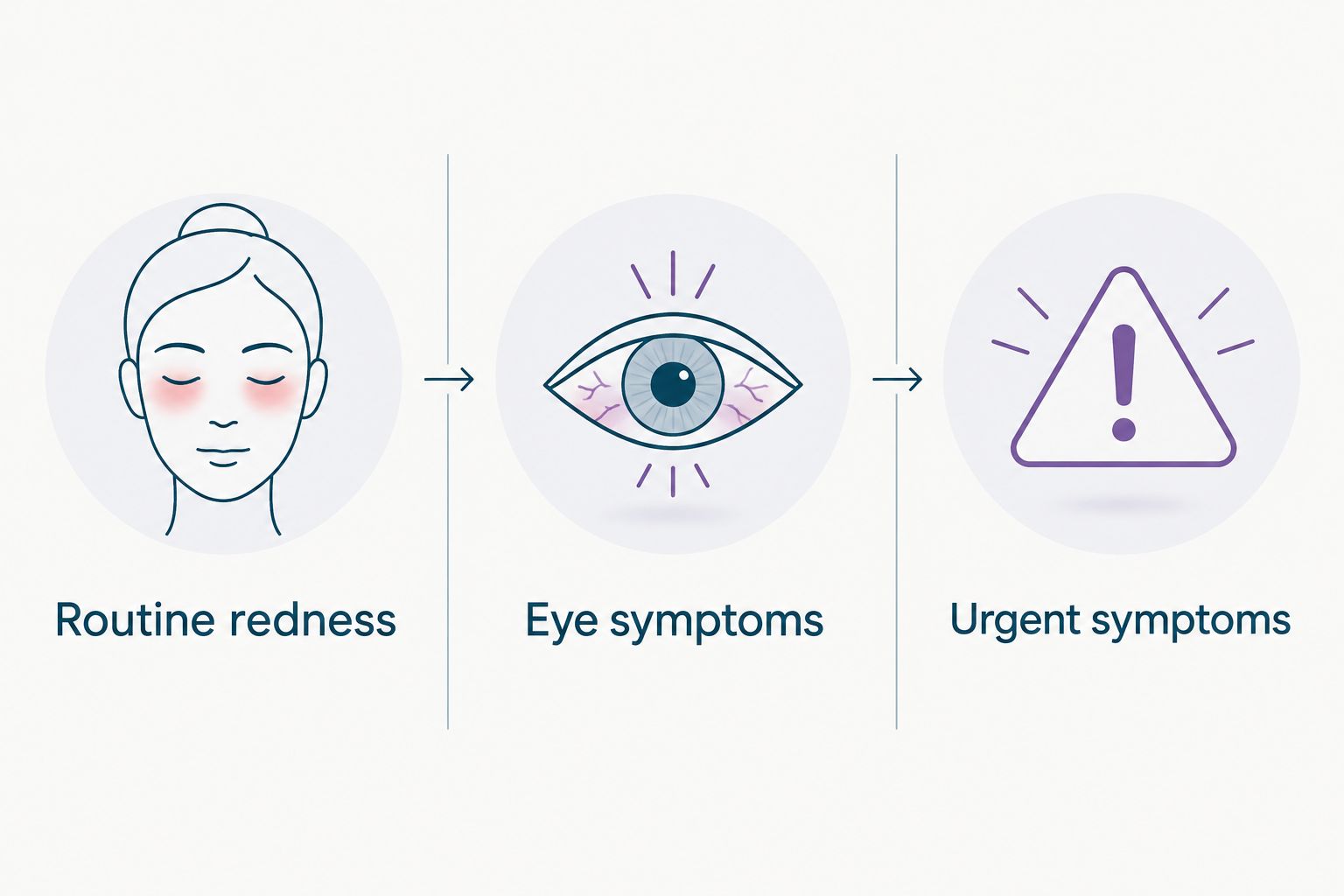
When you describe redness, include how it feels as well as how it looks. Pain, itching, burning, and eye discomfort give the clinician information a photograph cannot provide.
What a useful rosacea treatment discussion includes
Rosacea treatment should target the symptom you want to change. A medicine intended for inflammatory bumps is not automatically a treatment for visible blood vessels or flushing.
Clinicians can consider topical treatments such as azelaic acid, metronidazole, or ivermectin for appropriate presentations. Medicines targeting persistent redness, oral treatment, or in-person procedures involve different suitability decisions. Do not start, combine, or change prescription treatment without clinical guidance.
Your history matters. Tell the clinician about pregnancy or breastfeeding, allergies, other medicines, previous reactions, and any eye symptoms. Ask what improvement to look for and what should prompt you to stop a product or seek review.
For everyday skin care, gentle cleansing, moisturizer, and broad-spectrum sunscreen with SPF 30 or higher are established recommendations. Scrubs and irritating products can aggravate sensitive skin. Avoid turning a treatment plan into a growing collection of new products.
Prepare for an online redness assessment
You can make a 2026 telehealth appointment more useful by organizing the details before you start. Clear information helps the clinician decide what can be managed online.
- Photograph your face in even lighting without filters or makeup covering the affected area.
- Explain when the redness began and whether it comes and goes.
- Separate flushing, bumps, visible vessels, and eye symptoms in your description.
- List skincare products, prescriptions, supplements, and known allergies.
- Describe what previous treatment changed, including irritation or lack of improvement.
- Ask who handles follow-up and what symptoms require an examination.
Do not scrub, squeeze bumps, or deliberately trigger a flare to produce a more dramatic photograph. Show the skin as it is and explain any differences from your usual symptoms.
How these care models were ranked
This ranking prioritizes diagnostic fit, licensed review, follow-up, and access to an examination when needed. It compares appointment models, not measured treatment outcomes or a head-to-head trial of providers.
Dermatologist-led video care takes the overall position because the query concerns a specific skin condition. Initial provider-guided assessment, photo-based follow-up, hybrid care, and primary care each serve a different decision point. The right model changes when your clinical needs change.
Which telehealth rosacea option should you choose?
Choose dermatologist-led video care if you are undecided and the diagnosis is uncertain. Choose Nowcare provider-guided skin care for an initial online assessment after confirming your concern fits its service. Use photo-based care for suitable follow-up, hybrid dermatology for examination or procedural needs, and primary care when broader medical context matters.
Your 2026 choice should leave you with a diagnosis or a clear next step, an explanation of treatment suitability, and a follow-up plan. Do not choose solely because a prescription appears easy to obtain.
FAQ
What's the best telehealth rosacea treatment option?
Dermatologist-led video care is the strongest default for uncertain diagnoses or persistent rosacea symptoms. An initial provider-guided assessment or photo-based follow-up can fit different needs, but the clinician must decide whether remote care is appropriate.
Can rosacea be diagnosed through an online appointment?
A clinician can assess suspected rosacea remotely when the history and visual information are sufficient. Unclear findings, overlapping conditions, or symptoms requiring examination can make an in-person visit necessary.
Is photo-based dermatology better than a video visit?
Photo-based dermatology is better suited to some established-diagnosis follow-ups, while video supports a live discussion. Neither format replaces a physical examination when the clinician needs one.
Can I get a rosacea prescription through telehealth?
A licensed clinician can prescribe through telehealth when treatment is medically appropriate and applicable prescribing requirements are met. A prescription is not guaranteed, and the treatment depends on your assessment.
What should I tell an online clinician about facial redness?
Describe when the redness started, how it feels, and whether you also have bumps, visible vessels, or eye symptoms. Include current products, medicines, allergies, and your response to previous treatments.
When should I avoid waiting for an online rosacea consultation?
Do not wait for routine online care if you have eye pain, vision changes, marked swelling, or rapidly worsening symptoms. Seek prompt in-person assessment so a clinician can evaluate the cause.
Will rosacea treatment remove all facial redness?
Rosacea treatment does not guarantee that all facial redness will disappear. Different symptoms require different approaches, and visible blood vessels can need a discussion about in-person treatment options.
One last thing
Bring a symptom goal, not just a request for a prescription. Tell the clinician whether you most want help with bumps, burning, flushing, persistent redness, or eye discomfort. That detail helps keep the assessment focused on the problem you actually need treated.


