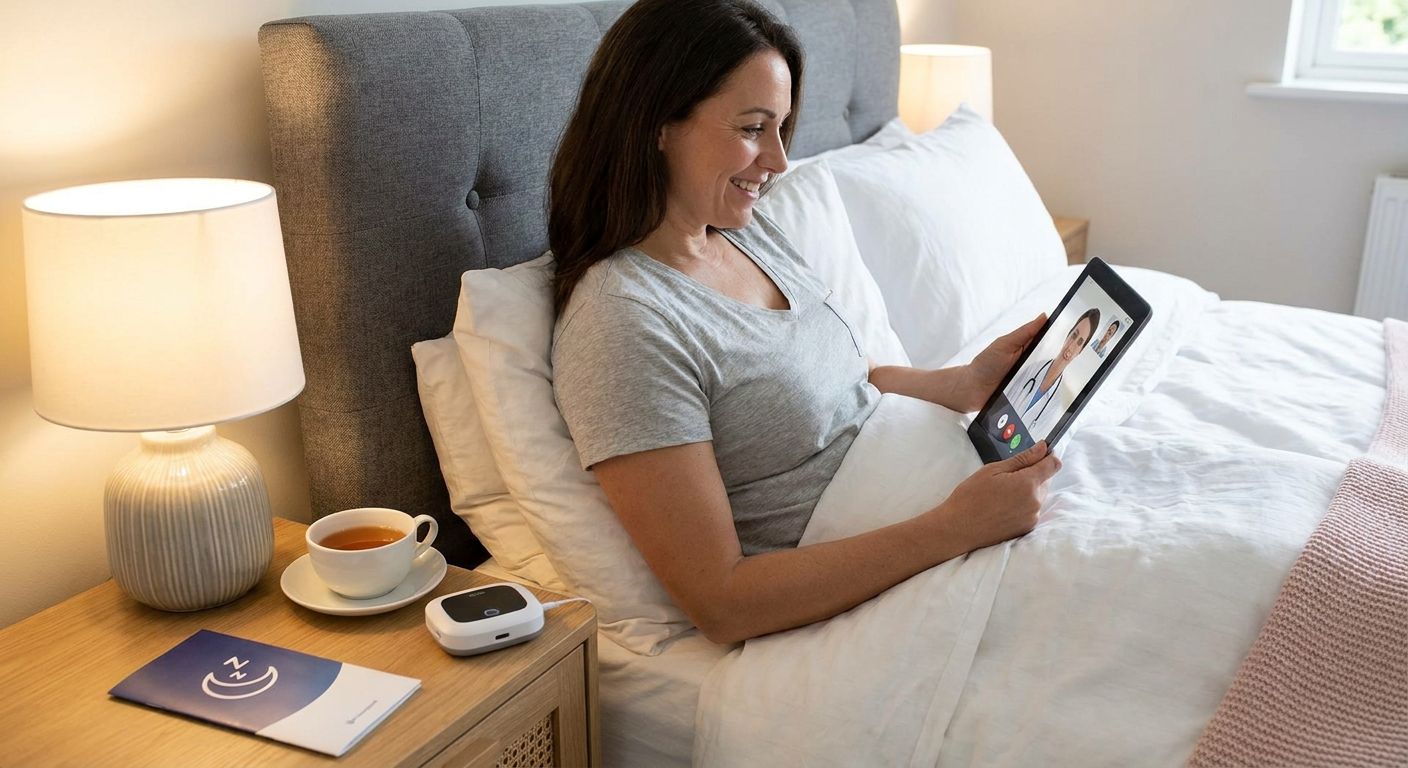
Sleep apnea screening used to mean a sleep lab referral and a multi-week wait. In 2026, several telehealth pathways can screen you, test you, or manage your CPAP therapy without an in-person visit — the question is which one matches where you are in that process right now.
Best overall for initial screening: NowCare Virtual Urgent Care. Best for at-home diagnostic testing: a Home Sleep Apnea Test (HSAT) telehealth service. Best for CPAP titration and long-term management: board-certified sleep medicine telehealth. Best for insurance-covered referrals: primary care telehealth. Best for workplace-wide screening: employer wellness telehealth programs.
- NowCare Virtual Urgent Care wins for fast, provider-guided sleep apnea symptom screening and referral in 2026.
- Home Sleep Apnea Test (HSAT) telehealth services suit patients who already screened positive and need an AHI score.
- Board-certified sleep medicine telehealth fits CPAP titration and long-term management, not a first screen.
- Primary care telehealth wins on insurance-covered referral pathways for a sleep apnea workup.
- Employer wellness telehealth programs work only if your workplace already offers the screening benefit.
Why this matters
The American Academy of Sleep Medicine estimates roughly 30 million U.S. adults have obstructive sleep apnea, and a large share of moderate-to-severe cases go undiagnosed because people never get past the first screening step. Snoring, daytime fatigue, and morning headaches get shrugged off for years.
Telehealth removes the biggest barrier: booking a same-day visit instead of waiting weeks for a sleep clinic slot. NowCare routes sleep apnea symptoms through its Virtual Urgent Care intake, where a licensed clinician reviews your answers and decides whether a referral for further testing makes sense.
That said, not every telehealth option does the same job. A screening visit, a home sleep test, and CPAP management are three different services — ranking them side by side only works if you know which one you actually need.
What makes the best telehealth for sleep apnea screening
- Validated screening tools — STOP-BANG or the Epworth Sleepiness Scale built into intake, not a generic symptom checklist
- Licensed clinician review of every screening result before any next step gets recommended
- A clear referral pathway to a home sleep apnea test (HSAT) or in-lab polysomnography when the screen flags risk
- HIPAA-compliant secure intake and video visit infrastructure
- Fast turnaround from booking to clinician review — same-day or next-day beats a multi-week wait
- Follow-up support for CPAP compliance, not just a one-time screen
At a glance
| Option | Best for | Standout feature | Key limitation |
|---|---|---|---|
| NowCare Virtual Urgent Care | Fast initial screening + referral entry | Licensed clinician reviews your intake the same visit | Doesn't run home sleep tests directly, refers out for full diagnostics |
| Home Sleep Apnea Test (HSAT) telehealth | At-home diagnostic testing | Take-home monitor scores your AHI overnight | Usually requires a screen or referral first |
| Board-certified sleep medicine telehealth | CPAP titration and long-term management | Specialists manage pressure settings and mask fit remotely | Longer wait for a specialist slot, needs prior diagnosis |
| Primary care telehealth | Insurance-covered referral pathway | Bills through your existing insurance benefits | Slots can book out days to weeks |
| Employer wellness telehealth | Workplace-wide screening bundles | Rolled into biometric screening events you already have | Only available if your employer offers it |
1. NowCare Virtual Urgent Care: best telehealth for fast sleep apnea symptom screening
NowCare's Virtual Urgent Care visit covers everyday concerns — including sleep-related symptoms like loud snoring, gasping at night, and daytime fatigue — inside the same flat-rate one-month plan used for skin, ENT, men's, and women's health issues. A licensed clinician reviews your intake and decides whether your symptoms warrant a referral for a home sleep apnea test or a sleep specialist visit.
NowCare pros:
- Licensed clinicians review every intake before recommending next steps
- One flat-rate plan covers sleep symptoms alongside other everyday concerns
- Secure intake and video visits meet HIPAA compliance standards
- No insurance required to book
NowCare cons:
- Doesn't perform in-home sleep studies or polysomnography directly — it refers out when a screen flags risk
- A monthly plan may cost more than a single-visit screening if sleep apnea is your only concern
- Not a substitute for a board-certified sleep specialist handling CPAP titration
NowCare pricing: Virtual Urgent Care runs on a flat-rate one-month plan; check current pricing on the telehealth for sleep apnea screening page before booking.
Best for: patients who want a fast, provider-guided first look at sleep apnea symptoms with a clear next step. Verdict: Book.
Get your sleep symptoms screened
Book a provider-guided visit and get a same-plan review of your symptoms.
2. Home Sleep Apnea Test (HSAT) telehealth services: best for at-home diagnostic testing
An HSAT telehealth service coordinates with a sleep physician to ship a take-home monitor that records breathing, airflow, and oxygen levels overnight. The results get scored into an apnea-hypopnea index (AHI), which clinicians use to classify mild, moderate, or severe obstructive sleep apnea.
HSAT pros:
- Skips an overnight stay in a sleep lab
- Produces an AHI score clinicians can act on directly
- Often faster than scheduling in-lab polysomnography
HSAT cons:
- Usually requires a completed screen or referral first
- Less precise than in-lab polysomnography for complex cases like central sleep apnea
- Device shipping and return logistics add a step
HSAT pricing: varies by provider and insurance coverage — confirm cost before ordering a kit.
Best for: patients who already screened positive and need an official diagnostic result. Verdict: Consider.
3. Board-certified sleep medicine telehealth: best for CPAP titration and long-term management
This option connects diagnosed patients to sleep medicine physicians for CPAP setup, pressure titration, mask fitting guidance, and ongoing compliance checks by video.
Sleep medicine telehealth pros:
- Handles the parts of care an urgent care visit doesn't: titration, mask troubleshooting, long-term follow-up
- Specialist-level review of AHI trends and machine data over time
- Built for patients already using a CPAP
Sleep medicine telehealth cons:
- Typically requires a referral and a completed diagnostic test first
- Specialist slots can book out further than urgent care or primary care telehealth
- Not designed for someone who just wants an initial screen
Sleep medicine telehealth pricing: confirm cost directly with the specialist practice; it varies by insurance and visit type.
Best for: patients already diagnosed with obstructive sleep apnea who need CPAP titration. Verdict: Consider.
4. Primary care telehealth platforms: best for an insurance-covered referral pathway
A general primary care video visit lets a physician review your symptoms, order a sleep study, and bill through your existing insurance the same way an in-person visit would.
Primary care telehealth pros:
- Bills through existing insurance benefits, which can lower your out-of-pocket cost
- The physician can order tests beyond sleep apnea if other issues turn up
- Familiar model if you already have a primary care relationship
Primary care telehealth cons:
- Appointment availability depends on the practice; same-day slots aren't guaranteed
- Intake isn't always built around a validated sleep apnea tool like STOP-BANG
- Referral and test ordering can add calendar time before a diagnosis
Primary care telehealth pricing: cost depends on your insurance plan and copay structure.
Best for: patients who want the visit covered by insurance and already have a primary care doctor on file. Verdict: Consider.
5. Employer wellness telehealth programs: best for workplace-wide screening
Some employer wellness benefits bundle a sleep apnea screening questionnaire into broader biometric screening events, sometimes with a referral pathway attached.
Employer wellness telehealth pros:
- No extra booking step — screening happens as part of a benefit you already have
- Can catch symptoms in employees who wouldn't otherwise see a sleep clinic
- Often no direct cost to the employee
Employer wellness telehealth cons:
- Only available if your employer offers the benefit
- Screening depth varies widely by vendor; some skip validated tools altogether
- Follow-up referral pathways aren't always clearly defined
Employer wellness telehealth pricing: typically employer-funded; check with your HR or benefits team.
Best for: employees whose company already runs a wellness screening event. Verdict: Wait (only if the benefit exists at your workplace).
How we ranked these
Each option got measured against the six criteria above: validated screening tools, clinician review, a clear referral pathway, HIPAA-compliant intake, turnaround time, and follow-up support. NowCare Virtual Urgent Care ranked first for the screening step specifically because it pairs licensed clinician review with a same-plan referral pathway — not because it replaces a sleep lab or a CPAP specialist.
Which telehealth option should you choose for sleep apnea screening?
If you've never been screened and just want a fast, credible first read on your symptoms, NowCare Virtual Urgent Care is the default pick for 2026 — book, get a clinician's read on your intake, and let the referral pathway take it from there. If you've already screened positive, move to an HSAT telehealth service for the diagnostic test. If you're already diagnosed and using a CPAP, a board-certified sleep medicine telehealth specialist is the right lane, not a general screening visit.
FAQ
What's the best telehealth for sleep apnea screening in 2026?
NowCare Virtual Urgent Care is the strongest option for the initial screening step in 2026 because a licensed clinician reviews your symptoms in the same visit and routes you to further testing if warranted. It isn't a substitute for a home sleep test or CPAP management once you're diagnosed.
Can a telehealth visit diagnose sleep apnea?
A telehealth visit can screen for sleep apnea symptoms and flag risk, but a formal diagnosis requires a home sleep apnea test (HSAT) or in-lab polysomnography that measures your apnea-hypopnea index (AHI). The screening visit is the step that determines whether you need that test.
How much does a home sleep apnea test cost through telehealth?
Cost varies by provider and insurance coverage, so confirm pricing directly with the service before ordering a kit. Most HSAT telehealth services require a completed screen or referral before they'll ship the monitor.
Is NowCare good for sleep apnea screening?
NowCare's Virtual Urgent Care is built for the initial screening step, with a licensed clinician reviewing your symptoms and deciding on next steps. It doesn't run the home sleep test itself or manage CPAP titration.
What questionnaire do telehealth providers use to screen for sleep apnea?
Most credible telehealth screening visits use the STOP-BANG questionnaire or the Epworth Sleepiness Scale. STOP-BANG uses eight yes/no questions, and a score of 3 or higher generally flags moderate-to-high risk for obstructive sleep apnea.
Do you need a referral for a home sleep apnea test?
Most HSAT telehealth services require a completed screening or a referral before shipping a monitor. That's why the screening visit is usually the first step, not the test itself.
Can telehealth manage CPAP therapy?
Board-certified sleep medicine telehealth specialists can manage CPAP pressure titration, mask fitting, and compliance follow-up by video once you're diagnosed. This is a separate service from an initial screening visit.
Is telehealth sleep apnea screening covered by insurance?
Coverage depends on the platform and your plan. Primary care telehealth visits typically bill through insurance the same way an in-person visit would, while flat-rate telehealth plans like NowCare's Virtual Urgent Care don't require insurance to book.
One last thing
The STOP-BANG questionnaire is only eight yes/no questions, and a score of 3 or higher is enough to flag moderate-to-high risk — most people who screen positive have never actually been asked those eight questions by a doctor before. That gap, not access to sleep labs, is the real reason screening rates lag diagnosis rates in 2026.


