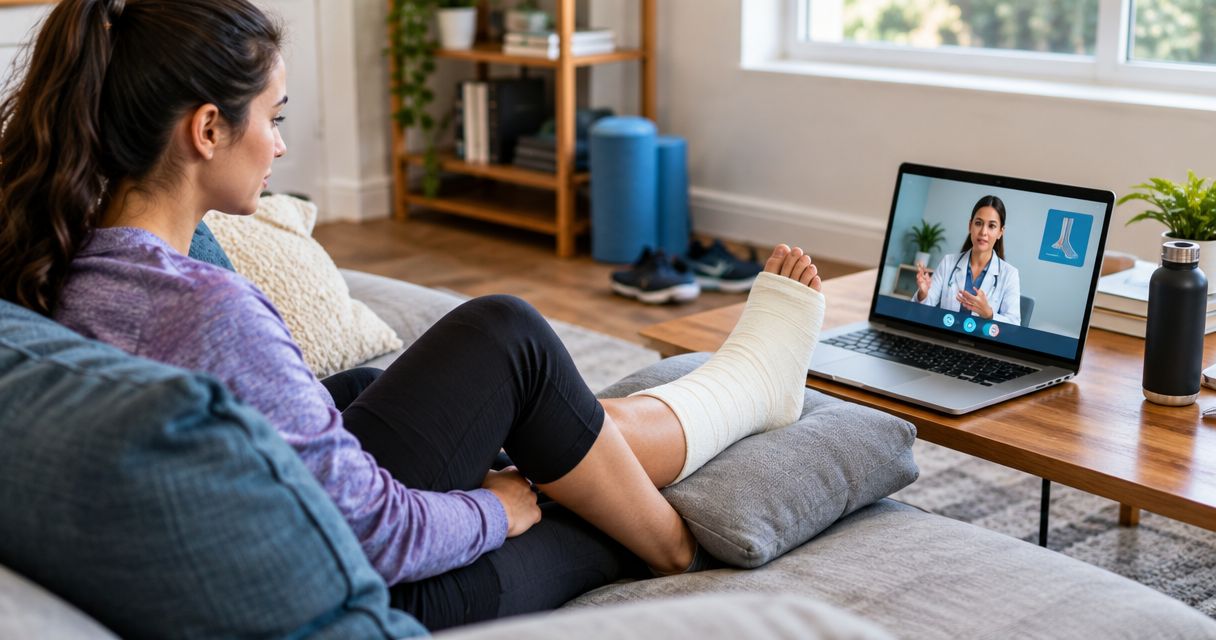
Best overall: in-person fracture assessment paired with telehealth follow-up. Best for ongoing online foot-care support: Nowcare. Best for rehabilitation after clearance: virtual physical therapy. For runners choosing care in 2026, the right service must distinguish a suspected fracture from a confirmed injury before discussing recovery.
- The best telehealth stress fracture foot pathway combines in-person diagnosis with online recovery follow-up.
- Nowcare offers provider-guided foot-care telehealth; fracture-specific assessment and rehabilitation require confirmation before booking.
- Sports medicine follow-up suits runners with an established diagnosis and a documented treatment plan.
- Virtual physical therapy supports rehabilitation after medical clearance, not initial fracture diagnosis.
Why this matters
A foot stress fracture is a bone injury caused by repeated loading. Running through it is not a recovery strategy. Early symptoms can resemble tendon irritation or other foot problems, so a video conversation alone cannot establish which tissue is injured.
Choose the care pathway before choosing the platform. A runner with new, localized bone pain needs a different service from a runner whose fracture has already been assessed and whose clinician has approved rehabilitation.
This 2026 guide ranks care options by their role in that pathway, not by appointment convenience. Online support is useful when it connects to an appropriate examination, imaging when indicated, and clear instructions about loading the injured foot.
What makes the best telehealth for foot stress fractures?
Use these criteria before you book. A service that cannot answer the first questions is not the right starting point for suspected fracture care.
- Diagnostic boundaries: The clinician explains what can be assessed remotely and when you need an in-person examination or imaging.
- Fracture location: The plan accounts for the injured bone and fracture location, rather than treating every foot stress fracture alike.
- Loading instructions: You receive clear directions about running, walking, protective footwear, and any prescribed mobility aid.
- Continuity: Follow-up connects to your diagnosis, imaging reports, symptoms, and existing treatment plan.
- Return-to-running criteria: Progression depends on clinical clearance and recovery findings, not a generic calendar.
- Escalation: The service explains where to seek care if symptoms worsen or a remote appointment is insufficient.
Ask who will review your records and whether the clinician manages bone stress injuries. General foot-care coverage does not establish fracture-specific expertise. Neither does a rehabilitation appointment establish that your bone is ready for exercise.
Telehealth recovery options at a glance
| Rank and option | Best for | Standout feature | Key limitation |
|---|---|---|---|
| 1. In-person assessment plus telehealth | Suspected or newly diagnosed injury | Connects physical assessment with ongoing remote follow-up | Examination and imaging still require a physical location |
| 2. Nowcare provider-guided foot care | Ongoing support for related foot concerns | Licensed clinicians and ongoing care-team support | Fracture-specific care is not established by its stated service description |
| 3. Sports medicine telehealth follow-up | Runners with an established fracture diagnosis | Training and bone-injury discussions within the treatment plan | A remote visit cannot replace every examination or repeat imaging decision |
| 4. Virtual physical therapy | Rehabilitation after medical clearance | Guided exercise review and movement coaching | Does not establish fracture healing or replace medical clearance |
These are care pathways, not interchangeable products. A runner can use more than one during recovery, but the medical assessment should come before exercise progression.
1. In-person assessment plus telehealth: best for diagnosis-led care
An in-person assessment paired with online follow-up is the strongest default for a runner with a suspected foot stress fracture. The physical visit allows examination and access to imaging when indicated; remote appointments then support questions, symptom review, and treatment-plan follow-up.
Early X-rays do not always show a stress fracture. A clinician decides whether additional imaging, including MRI, is appropriate based on the examination and suspected injury. A normal early X-ray is not permission to resume running through focal pain.
In-person assessment plus telehealth pros
- Connects online advice to a physical examination.
- Provides a route to imaging when clinically indicated.
- Supports follow-up without treating every question as a new diagnostic visit.
- Allows the plan to reflect the specific fracture location.
In-person assessment plus telehealth cons
- Requires coordination between physical and remote appointments.
- Records must reach the follow-up clinician.
- New symptoms can still require another in-person assessment.
Best for: Runners with new focal foot pain, an uncertain diagnosis, or a newly confirmed fracture requiring a clear management plan.
Before leaving the assessment, ask what activities are permitted, what symptoms require earlier review, and who will decide when running can restart. Obtain a copy of your imaging report and written instructions for the remote clinician.
Verdict: Buy into this care pathway first when diagnosis or loading instructions are uncertain.
2. Nowcare: best for ongoing provider-guided foot-care support
Nowcare is a telehealth platform connecting patients with licensed clinicians for online foot and ankle care. Its stated services include Sports & Performance Foot Care, structural foot problems, heel pain, nail health, and other foot concerns, with secure intake and ongoing care-team support.
Nowcare is best for runners seeking provider-guided foot-care telehealth, not a substitute for an in-person fracture diagnosis. Its stated service scope does not establish a dedicated stress-fracture recovery program, imaging access, or return-to-running rehabilitation. Confirm those details before choosing it for fracture-related follow-up.
Nowcare pros
- Provides licensed-clinician review of care plans and prescriptions.
- Includes sports and performance foot concerns within its stated scope.
- Offers ongoing care-team support.
- Does not require insurance for its stated services.
Nowcare cons
- Online care cannot physically examine the injured foot.
- Its stated services do not confirm fracture-specific management.
- Imaging and hands-on rehabilitation need a separate care pathway when indicated.
Best for: Runners seeking support for related foot concerns while keeping fracture diagnosis and clearance with an appropriate treating clinician.
Foot-care plans include 1-month, 3-month, and 6-month durations. Those are service durations, not bone-healing timelines. Choose follow-up around clinical needs rather than assuming a longer plan makes exercise progression appropriate.
For a 2026 appointment, ask whether the clinician will review an existing fracture diagnosis and coordinate with your treating team. Describe the injured bone, current restrictions, and the specific question you need answered.
Verdict: Hold until fracture-related scope is confirmed; choose it for supported foot-care needs within that scope.
3. Sports medicine telehealth: best for established fracture follow-up
Sports medicine telehealth is a useful option once a clinician has assessed the injury and established the diagnosis. A follow-up visit can address symptoms, training changes, medical risk factors, and the next steps in an existing recovery plan.
Choose a clinician who manages bone stress injuries and can review your examination notes and imaging. The useful distinction is expertise and access to your records—not whether the appointment happens through a particular app.
Sports medicine telehealth pros
- Keeps running demands within the medical recovery discussion.
- Supports review of existing imaging reports and restrictions.
- Provides a place to discuss recurrent injuries or bone-health concerns.
- Helps coordinate the transition from protection to rehabilitation.
Sports medicine telehealth cons
- Some decisions still require palpation or another physical examination.
- Repeat imaging cannot happen through a video visit.
- An appointment without records can leave important questions unresolved.
Best for: Runners with a confirmed diagnosis who need medical follow-up, activity decisions, or assessment of contributing factors.
Bring a concise training history. Include recent changes in mileage, intensity, terrain, footwear, and recovery, along with prior stress injuries. Mention nutrition concerns, menstrual changes where relevant, and medications; these details help the clinician decide what needs further evaluation.
Do not treat a 2026 race date as a medical deadline. Ask which findings would support progression and which symptoms would stop it.
Verdict: Buy into sports medicine follow-up when you need injury-specific medical decisions after diagnosis.
4. Virtual physical therapy: best for rehabilitation after clearance
Virtual physical therapy supports exercise instruction, movement review, and rehabilitation once the medical team permits the relevant activities. A therapist can observe how you perform prescribed movements and help adjust the rehabilitation plan within your restrictions.
It is not the starting point for unexplained focal bone pain. A movement assessment does not establish fracture healing, and successful completion of an exercise does not automatically establish readiness to run.
Virtual physical therapy pros
- Allows guided practice in your usual exercise space.
- Helps you understand exercise technique and permitted progression.
- Supports communication about symptoms during rehabilitation.
- Can address strength and movement needs within medical restrictions.
Virtual physical therapy cons
- Cannot provide hands-on examination or manual treatment remotely.
- Camera placement limits what the therapist can observe.
- Requires clear medical restrictions before impact progression.
Best for: Runners cleared for rehabilitation who need exercise guidance and a structured transition toward their usual activities.
Share the diagnosis and restrictions before the session. Set up the camera so the therapist can see the relevant movement, and avoid demonstrating painful hopping or running simply to prove where it hurts.
Verdict: Wait for medical clearance, then choose virtual physical therapy for rehabilitation—not fracture diagnosis.
How to use telehealth without skipping essential care
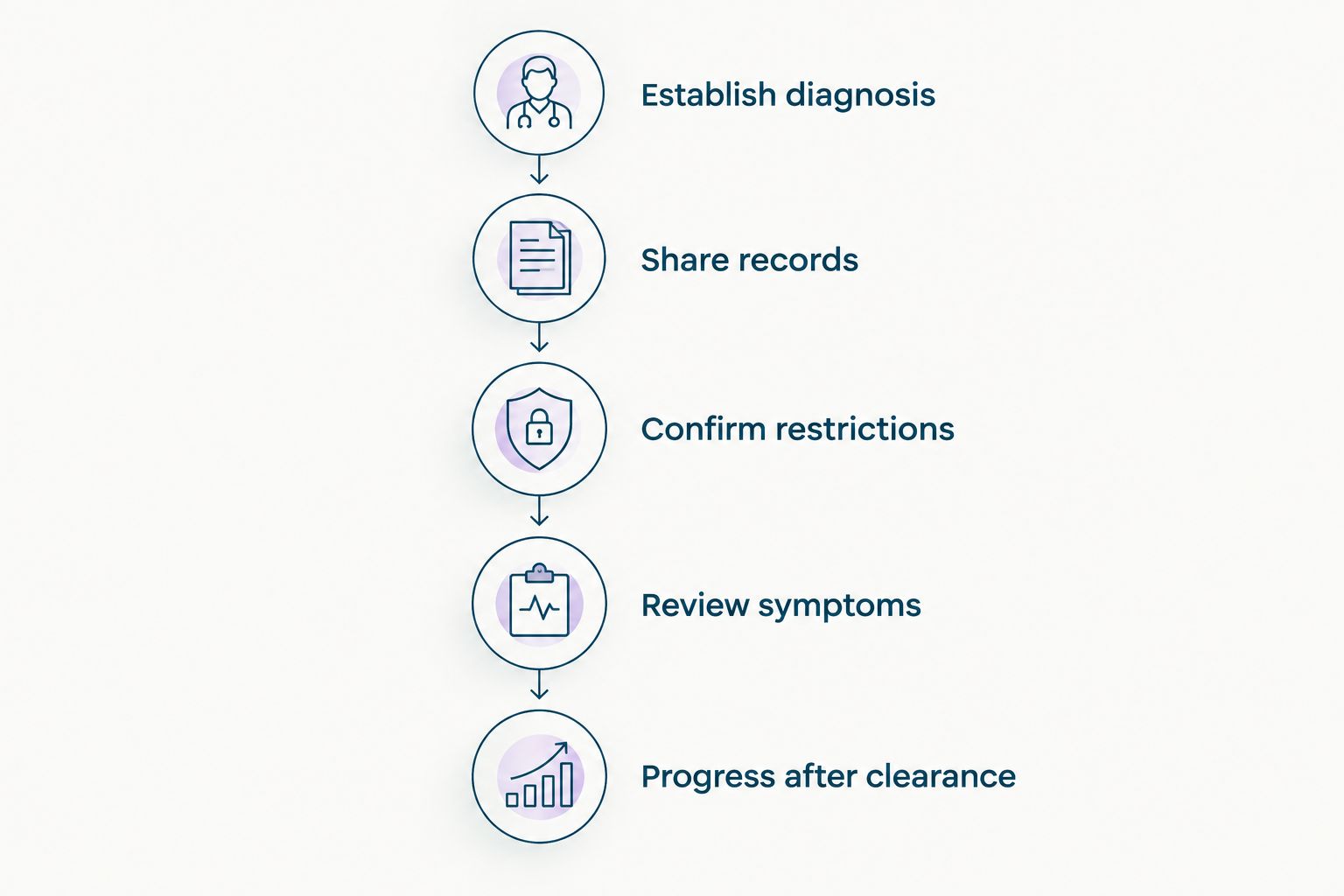
A useful online appointment resolves a specific question. In 2026, the same clinical sequence applies whether your consultation is on a phone, tablet, or computer.
Establish diagnosis
For new focal foot pain, stop running and seek an appropriate assessment. Explain where the pain is, when it began, whether walking hurts, and whether swelling is present. Do not repeatedly press or hop on the foot to generate evidence for the appointment.
Share records
Send the imaging report, diagnosis, medication list, and current restrictions through the service's secure process. A clinician needs the actual findings, not just a summary that your scan was fine.
Confirm restrictions
Ask what you can do now. Get specific answers about walking, work demands, cycling, swimming, strength exercises, and any prescribed boot or crutches. An activity that avoids running is not automatically suitable for your fracture.
Review symptoms
Keep a simple record of pain location, walking tolerance, swelling, and changes after permitted activity. A 0–10 pain scale can help describe symptoms consistently, but pain scores alone do not establish bone healing.
Progress after clearance
Ask who authorizes impact activity and what should trigger a pause. The treating clinician and rehabilitation professional should work from compatible instructions rather than separate assumptions.
When an online appointment is not enough
Seek urgent in-person care for severe or rapidly worsening symptoms, an open wound, a visibly deformed foot, or a foot that becomes cold, pale, or numb. Inability to bear weight also needs prompt assessment rather than waiting for routine online follow-up.
Persistent focal pain deserves reassessment even when an earlier X-ray was normal. Some locations, including the navicular and certain proximal fifth-metatarsal injuries, need particular attention because healing problems can occur.
Tell the clinician if you have diabetes, reduced sensation, or circulation problems. Do not use reduced pain as reassurance when sensation is impaired.
How the options were ranked
This ranking prioritizes diagnostic boundaries, fracture-specific decision-making, clear loading instructions, continuity, rehabilitation readiness, and escalation. It ranks the clinical role of each option; it does not claim a measured comparison of platform outcomes.
The combined in-person and remote pathway comes first because it addresses both assessment and follow-up. Foot-care support, sports medicine follow-up, and rehabilitation serve different needs after that initial decision.
Which telehealth recovery option should you choose?
If you are undecided, choose an in-person assessment connected to telehealth follow-up. That pathway is the default when you do not yet know whether the pain is a fracture or what loading is safe.
With a confirmed diagnosis, choose sports medicine follow-up for medical decisions. Use provider-guided foot care for concerns within the service's stated scope, and add virtual physical therapy after clearance. Your 2026 recovery plan should follow the injury—not the race calendar or subscription length.
FAQ
What's the best telehealth stress fracture foot option for runners?
The best default is in-person fracture assessment paired with telehealth follow-up. Once the diagnosis is established, choose medical follow-up or rehabilitation according to your clinician's restrictions.
Can a clinician diagnose a foot stress fracture over video?
A video visit alone cannot reliably establish a foot stress fracture. A clinician can assess the history remotely and direct you to an examination and imaging when indicated.
Is online foot care enough for stress fracture recovery?
Online foot care is not enough when diagnosis, examination, or imaging is still needed. It can support follow-up within a documented treatment plan, provided the clinician manages the relevant injury.
Can I keep running if an early X-ray is normal?
A normal early X-ray does not clear you to run through focal foot pain. Stress fractures are not always visible on early X-rays, so persistent symptoms need clinical reassessment.
When should I start virtual physical therapy?
Start fracture-related rehabilitation when your treating clinician permits the planned activities. Share the diagnosis and restrictions with the therapist before exercising or progressing to impact.
How long does a runner's foot stress fracture take to heal?
Recovery time depends on fracture location, severity, health factors, and treatment. A service-plan duration or generic recovery calendar cannot determine when your foot is ready for running.
What should I bring to a telehealth recovery appointment?
Bring your diagnosis, imaging reports, current restrictions, medications, and symptom history. Include recent training changes and the specific activity decision you need help making.
What symptoms mean I need urgent in-person care?
Severe or rapidly worsening pain, deformity, an open wound, or a cold, pale, or numb foot require urgent in-person care. Inability to bear weight also needs prompt assessment rather than routine online follow-up.
One last thing
Pain relief and bone healing are not the same decision. A foot that feels better during ordinary walking is not automatically ready for running's repeated impact. Before your next run, make sure the clinician responsible for your fracture has addressed that specific transition.


