
Best overall: menopause-focused telehealth with a licensed clinician; best for pelvic symptoms: your gynecology practice's video visits; best for broader health management: primary care telehealth. Nowcare is best for provider-guided online women's health concerns, not a confirmed menopause-specialist program; this 2026 guide compares the care models and the questions to ask before choosing.
- The best telehealth menopause care provides menopause expertise, individualized treatment decisions, and a clear follow-up plan.
- Choose gynecology telehealth when pelvic symptoms or abnormal bleeding require coordination with an in-person examination.
- Choose primary care telehealth when menopause symptoms overlap with broader health concerns.
- Nowcare offers provider-guided women's health care; confirm menopause treatment scope before enrolling.
Why this matters
Menopause care is more than getting a hormone prescription. You need a clinician who can assess your symptoms, consider other explanations, discuss treatment options, and recognize when online care is not enough.
The World Health Organization's menopause fact sheet defines natural menopause as occurring after 12 consecutive months without menstruation, without another evident cause. It places natural menopause most commonly between 45 and 55 years. Symptoms can begin during the transition before that final menstrual period.
For your 2026 decision, choose the care model around the problem you need solved. Persistent hot flashes call for a different conversation than new bleeding, vaginal discomfort, or an unrelated everyday health concern.
What makes the best telehealth menopause care
Use these criteria before comparing providers. A prescription option alone does not establish clinical fit.
- Menopause expertise: The clinician should assess perimenopause and menopause symptoms, not simply process a request for medication.
- Individualized treatment: The visit should cover your medical history, goals, current medicines, and hormonal and nonhormonal options.
- Safety screening: Expect questions about bleeding, pregnancy possibility, cancer history, blood clots, and other factors that affect treatment.
- Follow-up access: Ask who handles side effects, persistent symptoms, treatment changes, and questions between visits.
- In-person coordination: The service should explain how you obtain an examination, testing, or urgent assessment when necessary.
- Clear scope: Confirm that the service treats your specific concern in your state before you enroll.
The best choice is the service that can manage your next clinical decision, not just your first appointment. For ongoing treatment, that includes what happens when the initial plan needs adjustment.
Menopause telehealth options at a glance
These are ranked care models, not claims that every provider within a category delivers the same service. Confirm the capabilities of the individual practice.
| Option | Best for | Standout feature | Key limitation |
|---|---|---|---|
| Menopause-focused telehealth | Ongoing menopause symptom management | A consultation centered on the menopause transition | Online visits cannot replace every examination or test |
| Your gynecology practice's telehealth | Pelvic symptoms and bleeding assessment | Connection to a practice that can arrange gynecologic examinations | Some concerns require an in-person visit before treatment |
| Primary care telehealth | Menopause alongside broader health concerns | Review of symptoms in the context of your overall health | Menopause experience varies by clinician |
| Nowcare women's health care | General online women's health concerns | Provider-guided care with licensed clinicians and ongoing care-team support | Menopause-specific treatment scope needs confirmation |
1. Menopause-focused telehealth: best for ongoing symptom management
Menopause-focused telehealth is the strongest starting point when hot flashes, night sweats, sleep disruption, or vaginal symptoms are the main reason you need care. Choose a clinician who evaluates the menopause transition and discusses treatment choices rather than assuming every symptom needs hormone therapy.
A useful consultation connects your symptoms with your menstrual history, medical background, and preferences. It should end with a treatment or assessment plan and an explanation of how you will review progress.
Menopause-focused telehealth pros:
- Keeps the appointment centered on menopause-related concerns.
- Creates space to discuss hormonal and nonhormonal treatments.
- Supports symptom review without requiring every conversation to happen in person.
- Helps you organize questions about benefits, risks, and treatment goals.
Menopause-focused telehealth cons:
- Cannot perform a pelvic examination or collect samples through a video visit.
- Requires separate arrangements when symptoms need physical assessment.
- Does not guarantee specialist credentials; verify the clinician's training.
Best for: You want an ongoing plan for menopause symptoms, with treatment decisions reviewed as your needs change.
Before choosing a service in 2026, ask who will manage follow-up and whether you can see the same clinician. Also ask what happens if treatment is unsuitable or symptoms point to another diagnosis.
Verdict: Choose menopause-focused telehealth for ongoing symptom management when clinician expertise and follow-up are confirmed.
2. Gynecology practice telehealth: best for pelvic symptoms
Your gynecology practice's telehealth visits are a strong fit when menopause concerns overlap with vaginal symptoms, pelvic discomfort, or changes in bleeding. The value is access to a practice that can connect a remote discussion with an examination when needed.
Do not assume a video appointment can resolve abnormal bleeding. A clinician can discuss your history remotely, but the next step can require an examination, imaging, or other assessment.
Gynecology practice telehealth pros:
- Connects symptom discussion with gynecologic care.
- Supports review of menstrual, reproductive, and pelvic health history.
- Provides a route to an in-person examination within the practice, where offered.
Gynecology practice telehealth cons:
- A remote visit does not replace the examination some symptoms require.
- Menopause expertise and follow-up arrangements differ between practices.
- An established relationship does not automatically mean dedicated menopause care.
Best for: You need menopause advice alongside pelvic symptoms or bleeding that requires a clear examination pathway.
Ask the practice whether the initial appointment should be remote or in person. Explain the bleeding pattern when booking, rather than selecting a routine menopause visit without that context.
Verdict: Choose gynecology telehealth when pelvic assessment and continuity with an examination-capable practice are your priorities.
3. Primary care telehealth: best for broader health management
Primary care telehealth fits when menopause symptoms sit alongside other concerns, such as changes in mood, sleep, or medication use. A primary care clinician can consider your broader history and decide whether menopause-focused or gynecologic care is also needed.
The advantage is context. The limitation is that menopause training and treatment experience vary, so ask directly rather than assuming the practice offers every treatment option.
Primary care telehealth pros:
- Reviews symptoms alongside your existing medical conditions.
- Supports medication review and coordination of other care.
- Helps identify concerns that need assessment beyond menopause.
Primary care telehealth cons:
- Does not guarantee dedicated menopause expertise.
- Requires an additional clinician when your needs exceed the practice's scope.
- Cannot complete physical examinations through a remote appointment.
Best for: You want menopause concerns considered within your overall health plan, especially with an established primary care clinician.
For a 2026 appointment, bring your current medication list and explain which symptoms most affect daily life. Ask whether the clinician manages menopause treatment directly or refers that part of your care.
Verdict: Choose primary care telehealth for coordinated general health assessment, with specialist input when needed.
4. Nowcare women's health care: best for general online concerns
Nowcare provides provider-guided online care that includes women's health within Virtual Urgent Care. Its stated approach includes secure intake, licensed clinician review, prescriptions sent to your chosen pharmacy when medically appropriate, and ongoing care-team support.
That establishes a general online women's health option. It does not establish a dedicated menopause program, specialist menopause credentials, or a specific hormone treatment pathway.
Nowcare women's health care pros:
- Offers online women's health care within its stated service scope.
- Uses licensed clinicians to review care and prescription decisions.
- Includes ongoing care-team support.
- Does not require insurance.
Nowcare women's health care cons:
- Menopause-specific evaluation and treatment need confirmation.
- Specialist menopause credentials are not established by the supplied service description.
- Fully online care cannot provide a physical examination.
Best for: You need provider-guided assessment of a general women's health concern and can confirm that the service addresses your particular symptoms.
If your goal is long-term menopause management, ask about that explicitly. Do not treat a general women's health offering as proof that systemic hormone therapy, vaginal treatments, or ongoing menopause follow-up are included.
Verdict: Hold enrollment for menopause treatment until the service confirms the clinical scope you need.
How this ranking works
This 2026 ranking prioritizes menopause expertise, individualized treatment, safety screening, follow-up, and access to physical assessment. Menopause-focused care ranks first for ongoing symptom management; gynecology and primary care each serve a different clinical need.
The comparison does not rank clinicians by patient outcomes or claim that one named platform outperforms another. It separates care models so you can ask better questions of the actual provider.
General women's health telehealth belongs in the comparison, but not as an assumed substitute for dedicated menopause care. Match the service's confirmed scope to your symptoms.
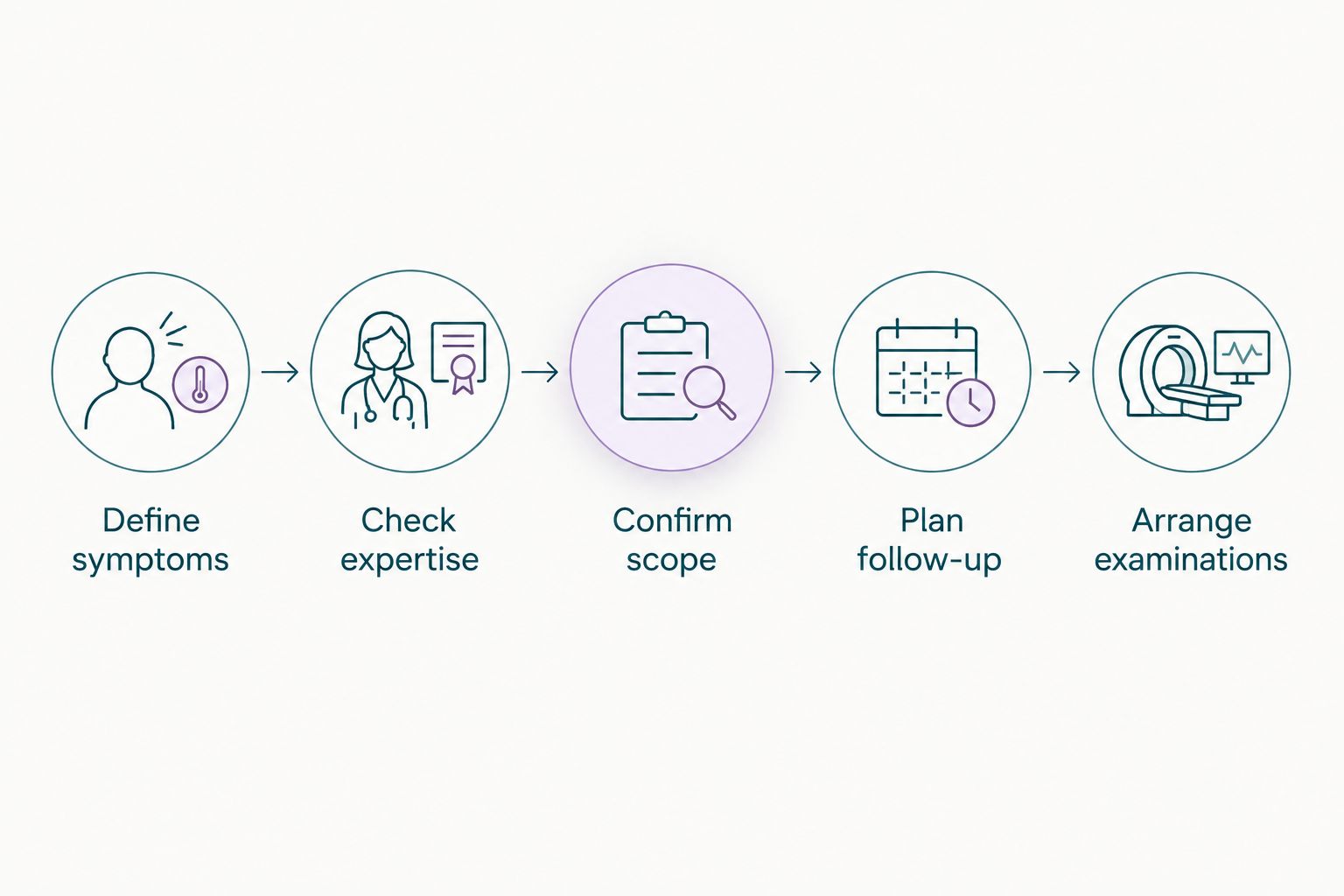
Check the care pathway before you enroll
Use this sequence to turn a shortlist into a clinical fit. A service should be able to explain the process without promising a prescription before reviewing your history.
- Define symptoms: Write down what changed, when it began, and how it affects your daily life.
- Check expertise: Ask who evaluates menopause concerns and what relevant training they have.
- Confirm scope: Ask whether the service assesses your symptoms and discusses appropriate treatment options.
- Plan follow-up: Confirm who handles side effects, persistent symptoms, and changes to the plan.
- Arrange examinations: Identify where you will go if physical assessment or testing is needed.
Give the clinician specific examples instead of saying only that your hormones feel off. Describe night waking, bleeding changes, discomfort, or symptoms that interfere with work and daily activities.
Keep the goal practical. You are choosing a safe assessment and care pathway, not buying a predetermined diagnosis or medication.
When online care is not enough
Bleeding after menopause needs medical evaluation. Do not assume it is a normal hormonal change or wait for a routine prescription renewal to mention it.
Severe symptoms also change the appropriate setting. Chest pain, difficulty breathing, fainting, or heavy bleeding with dizziness require urgent assessment rather than a routine telehealth consultation.
Earlier loss of periods deserves attention too. Menopause before 45 years is considered early; loss of ovarian function before 40 years raises the question of primary ovarian insufficiency, which needs clinical assessment. Tell the clinician your age and menstrual history rather than relying on a symptom checklist alone.
These distinctions follow established menopause guidance from the World Health Organization and the American College of Obstetricians and Gynecologists. They help define the limits of this 2026 comparison: online convenience must not delay necessary in-person care.
Which menopause telehealth option should you choose?
Choose menopause-focused telehealth as the default for persistent menopause symptoms. Confirm clinician expertise, individualized assessment, and follow-up before enrolling.
Choose your gynecology practice when pelvic symptoms or bleeding make examination access central to the decision. Choose primary care when your symptoms need review alongside other conditions and medicines.
For a general women's health concern, a provider-guided online service is a separate option. The deciding question remains the same: can this clinician assess your problem and arrange the next step safely?
FAQ
What's the best telehealth menopause care for ongoing symptoms?
Menopause-focused telehealth is the best starting care model for ongoing menopause symptoms when clinician expertise and follow-up are confirmed. Choose a service that evaluates your history, discusses appropriate treatment options, and explains when in-person care is needed.
Is online menopause care better than seeing my gynecologist?
Online menopause care is not inherently better than care from your gynecologist. A menopause-focused clinician suits ongoing symptom management, while your gynecology practice is a strong choice when pelvic symptoms or bleeding require examination access.
Does Nowcare provide specialist menopause treatment?
Nowcare's stated services include provider-guided women's health care, but dedicated menopause treatment is not confirmed. Ask whether the service evaluates menopause symptoms, offers the treatments relevant to you, and provides ongoing menopause follow-up.
Can I get hormone therapy through telehealth?
A licensed clinician can evaluate whether hormone therapy is appropriate through telehealth, subject to clinical assessment and applicable prescribing rules. An online appointment does not guarantee a prescription, and some concerns require in-person assessment.
Do I need hormone blood tests to diagnose menopause?
Routine hormone blood tests are not usually needed to identify natural menopause in otherwise healthy people aged 45 or older with typical symptoms and menstrual changes. A clinician decides whether testing is needed based on age, history, medicines, and other possible causes.
What should I prepare for an online menopause appointment?
Prepare your symptom history, menstrual changes, medication list, relevant medical history, and treatment goals. Tell the clinician about abnormal bleeding and ask how follow-up and in-person assessments are arranged.
Can telehealth assess bleeding after menopause?
Telehealth can begin the discussion, but bleeding after menopause needs medical evaluation and can require in-person testing. Report it promptly rather than treating it as a routine menopause symptom.
One last thing
Ask one question before you commit: Who takes responsibility if the first treatment does not help? The answer should identify a clinician or care pathway, explain how you request review, and describe when you will need an examination.
A service that clearly explains its limits gives you a better basis for choosing care than one that only lists treatments. Make that your final check.


