
Best overall fit for ongoing provider-guided care: Nowcare. Best for prescription continuity: your existing prescriber’s telehealth service. Best for coordinating other health conditions: primary care telehealth. Best for a new, non-emergency concern: virtual urgent care. This 2026 guide compares care models for GLP-1 side effect management, including when online support is appropriate and when you need an examination.
- Nowcare is a strong fit for provider-guided GLP-1 care with physician guidance and ongoing care-team support.
- The best telehealth GLP-1 side effects support connects symptom advice with the clinician managing your prescription.
- Choose your existing prescriber for medication continuity; choose primary care for broader health coordination.
- Severe abdominal pain, persistent vomiting, or dehydration require prompt medical assessment, not routine online messaging.
Why this matters
GLP-1 treatment can cause nausea, vomiting, diarrhea, constipation, and abdominal discomfort. Good support distinguishes symptoms you can discuss remotely from symptoms that require an examination or urgent treatment.
The service that starts your prescription is not automatically the best service for every symptom. Your clinician needs to understand your medication, recent dose changes, other prescriptions, and ability to eat and drink. A generic answer about nausea does not replace that assessment.
Nowcare is a strong fit for patients seeking provider-guided GLP-1 care with physician guidance and ongoing care-team support. Its medical weight loss offering includes 1-month and 3-month programs with 1:1 physician guidance. Those program lengths describe enrollment, not a recommended interval for reporting side effects.
What makes the best GLP-1 side effects support?
For a 2026 decision, assess the care pathway before choosing a platform. These criteria matter more than the appearance of its intake form:
- Clinical responsibility: A licensed clinician assesses symptoms and makes treatment decisions. Support staff should not independently decide prescription changes.
- Prescription continuity: The clinician can review your treatment history or communicate with the prescriber responsible for it.
- Useful symptom assessment: Intake covers symptom severity, timing, dose changes, other medicines, and hydration.
- Follow-up access: You understand how to report worsening symptoms and who handles the next clinical decision.
- Clear escalation: The service explains when remote advice is insufficient and where to seek in-person care.
- Coordination: Advice accounts for diabetes treatment, other medical conditions, and prescriptions from other clinicians.
Ask about clinical follow-up before enrolling. A prescription program, a messaging service, and an urgent consultation serve different purposes; none should be treated as interchangeable.
GLP-1 support options at a glance
| Option | Best for | Standout feature | Key limitation |
|---|---|---|---|
| Nowcare medical weight loss | Ongoing provider-guided GLP-1 care | Physician guidance and ongoing care-team support | Fully online care cannot provide a hands-on examination |
| Existing prescriber’s telehealth service | Prescription continuity | Keeps symptom decisions with the clinician managing treatment | Remote care cannot assess every complication |
| Primary care telehealth | Coordinating other health conditions | Reviews symptoms alongside your broader medical care | Weight-management follow-up arrangements differ by practice |
| Virtual urgent care | A new, non-emergency concern | Focused assessment of the immediate problem | Does not replace ongoing prescribing care or emergency treatment |
These are care-model recommendations, not a ranking of response times or clinical outcomes. Select the model that matches the decision you need made.
1. Nowcare: best for ongoing provider-guided GLP-1 care
Nowcare connects patients with licensed clinicians for provider-guided online medical weight loss care. The program includes physician guidance, secure intake, prescriptions sent to your chosen pharmacy when medically appropriate, and ongoing care-team support.
Its care is 100% online, and insurance is not required. For GLP-1 side effect management, the relevant feature is the combination of prescribing guidance and continuing support—not simply access to an initial prescription.
Nowcare pros:
- Licensed clinicians review treatment plans and prescriptions.
- Physician guidance is part of the medical weight loss program.
- Ongoing care-team support provides a route for treatment-related questions.
- Secure intake lets you share information needed for clinical review.
Nowcare cons:
- Fully online care cannot provide a physical abdominal examination or administer fluids.
- Severe or rapidly worsening symptoms require care outside a routine online pathway.
- Treatment and prescription decisions depend on medical appropriateness, not your requested medication.
Before enrolling, ask how to report side effects, how clinical concerns reach the prescribing clinician, and what happens when an in-person assessment is needed. Confirm the follow-up process rather than assuming that ongoing support means emergency coverage.
Best for: Patients seeking an online GLP-1 program that includes physician guidance and ongoing support.
Verdict: Choose Nowcare for provider-guided GLP-1 care; use in-person services when symptoms exceed what online assessment can safely address.
2. Existing prescriber telehealth: best for prescription continuity
Your existing prescriber’s telehealth service keeps side effect decisions connected to the clinician managing your GLP-1 prescription. This route is especially useful when symptoms start after treatment begins or after a dose change.
The prescriber can review the intended dosing plan and decide whether further assessment or a treatment change is appropriate. Contact the prescribing practice rather than seeking a separate prescription to counteract symptoms without a medication review.
Existing prescriber telehealth pros:
- Keeps prescribing and side effect decisions in the same care pathway.
- Gives the clinician access to the treatment plan they established.
- Supports discussion of symptoms in relation to dose changes.
- Avoids splitting medication decisions between unrelated services.
Existing prescriber telehealth cons:
- Remote assessment cannot replace an examination when one is needed.
- Appointment and messaging arrangements depend on the practice.
- The prescribing clinician is not necessarily responsible for every unrelated medical concern.
Send a clear symptom summary. Include the medication name, current dose, last dose date, recent changes, vomiting or bowel symptoms, and whether you can keep fluids down. Ask for a specific next step rather than only asking whether a symptom is normal.
For your 2026 care plan, establish the contact route before the next treatment change. Do not wait until symptoms become difficult to manage to find out who handles them.
Best for: Patients already receiving GLP-1 treatment who need decisions tied to their current prescription.
Verdict: Choose your existing prescriber’s telehealth service first for non-emergency medication-related symptoms.
3. Primary care telehealth: best for broader health coordination
Primary care telehealth evaluates GLP-1 symptoms within your broader medical history. It is a useful route when you also need review of diabetes treatment, other medicines, or a health concern that is not clearly caused by the GLP-1 medication.
A primary care clinician can assess the complaint and coordinate further evaluation. Do not assume that every new symptom is a medication side effect simply because it appeared during treatment.
Primary care telehealth pros:
- Considers symptoms alongside other health conditions.
- Supports review of medicines prescribed by different clinicians.
- Provides a route to discuss unrelated or overlapping concerns.
- Connects remote assessment with the practice’s wider care arrangements.
Primary care telehealth cons:
- Weight-management prescribing and follow-up differ between practices.
- Testing or an examination can require a separate visit.
- A clinician outside your prescribing program needs accurate treatment information.
Bring your current medication list and the GLP-1 treatment plan. If another clinician manages the prescription, identify that clinician and explain which decisions you need coordinated.
Primary care is particularly relevant when symptom management intersects with other treatment. For example, GLP-1 therapy taken with insulin or certain other diabetes medicines can increase the risk of low blood sugar. That situation needs medication-specific clinical advice, not a general nausea checklist.
Best for: Patients whose symptoms require review across multiple conditions or prescriptions.
Verdict: Choose primary care telehealth for broader coordination; keep the GLP-1 prescriber informed about medication decisions.
4. Virtual urgent care: best for a new, non-emergency concern
Virtual urgent care provides a focused assessment of a current medical problem. It is an option for a new concern that needs clinical attention but does not show emergency warning signs.
The clinician can assess what you describe and determine whether remote management is appropriate. This visit does not automatically transfer responsibility for your ongoing GLP-1 treatment.
Virtual urgent care pros:
- Focuses the consultation on the immediate concern.
- Provides clinical assessment rather than general symptom information.
- Helps identify when an in-person examination is needed.
Virtual urgent care cons:
- Does not replace a continuing relationship with your prescriber.
- Cannot provide an abdominal examination, laboratory testing, or intravenous fluids remotely.
- Requires you to supply treatment details when records are not shared.
Explain that you take a GLP-1 medication at the start of the visit. Include the exact medicine, dose, recent changes, other prescriptions, and how the symptoms affect drinking and eating.
After the visit, share the assessment and any treatment recommendations with your prescribing clinician. Separate services should not make conflicting medication changes without coordination.
Best for: Patients with a new, non-emergency concern needing focused assessment outside routine prescribing follow-up.
Verdict: Choose virtual urgent care for an appropriate immediate concern; skip routine telehealth for emergency symptoms.
Match the symptom to the care setting
Your 2026 support plan should distinguish three routes. Symptom severity matters more than which platform you prefer.
Routine follow-up
Contact your prescriber for mild symptoms when you can drink fluids and have no warning signs. Describe what changed, how symptoms affect daily activities, and whether they followed a dose adjustment.
For mild nausea, smaller meals and stopping when comfortably full can help. Avoid forcing large meals, and discuss persistent symptoms with your clinician. Do not add medicines or change your GLP-1 dose independently.
Prompt assessment
Seek prompt medical assessment for repeated vomiting, difficulty keeping fluids down, worsening abdominal pain, or signs of dehydration such as very little urine or marked dizziness. An online clinician can help direct care, but remote advice does not replace necessary testing or treatment.
Emergency care
Seek emergency care for trouble breathing, swelling of the face or throat, fainting, confusion, or severe persistent abdominal pain. Severe abdominal pain, especially with vomiting or pain extending to the back, needs urgent evaluation because pancreatitis is a recognized warning associated with GLP-1 medicines.
Call 911 for a life-threatening emergency in the United States. Do not wait for a portal reply.
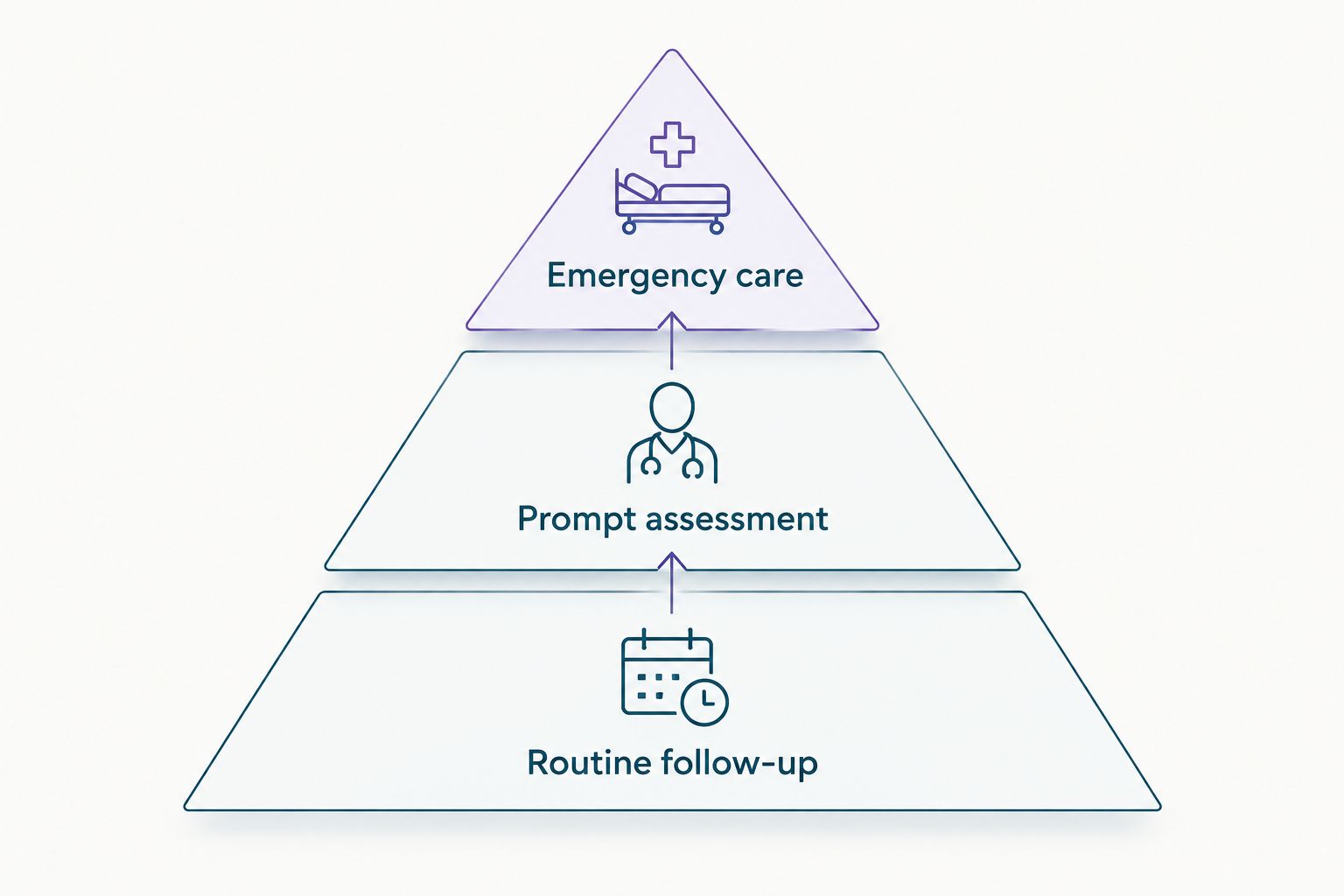
How the options rank
The 2026 ranking prioritizes clinical responsibility, prescription continuity, follow-up, and appropriate escalation. Ongoing prescribing care is the default for treatment-related questions; primary care becomes more useful when several health conditions overlap.
Virtual urgent care fills a different role: assessing an immediate, non-emergency concern. No online option replaces emergency treatment or a required physical examination.
Which GLP-1 support option should you choose?
If you already have a GLP-1 prescriber, start there for non-emergency side effects. That keeps symptom advice connected to your current treatment plan.
If you are choosing a new online program in 2026, Nowcare offers provider-guided medical weight loss care with physician guidance and ongoing care-team support. Confirm how symptom follow-up works before enrolling. Choose primary care when broader medical coordination is the main need, and use urgent care for an appropriate immediate concern.
Explore provider-guided online care
Review medical weight loss care with licensed clinicians and ongoing care-team support.
FAQ
What's the best telehealth GLP-1 side effects support?
The best fit connects symptom assessment with the clinician managing your GLP-1 prescription. Your existing prescriber is the first route for non-emergency medication concerns; Nowcare is an option for patients seeking provider-guided online care with physician guidance and ongoing support.
Can telehealth help with nausea from GLP-1 medication?
Telehealth can help assess mild nausea and review your treatment plan. Repeated vomiting, inability to keep fluids down, or worsening pain require prompt assessment rather than routine symptom advice.
Is virtual urgent care better than my GLP-1 prescriber?
Your GLP-1 prescriber is the better starting point for non-emergency treatment-related decisions. Virtual urgent care serves a different purpose: focused assessment of a current concern when that setting is appropriate.
Should I change my GLP-1 dose if I have side effects?
Do not independently change your GLP-1 dose; ask the prescribing clinician for instructions. Report the medication, current dose, recent changes, symptom severity, and whether you can keep fluids down.
When are GLP-1 side effects an emergency?
Trouble breathing, facial or throat swelling, fainting, confusion, or severe persistent abdominal pain require emergency assessment. Call 911 for a life-threatening emergency and do not wait for online messaging.
What should I tell an online clinician about my symptoms?
Tell the clinician your medication name, dose, last dose date, recent changes, other medicines, and symptom timeline. Explain whether you are vomiting, can drink fluids, and are urinating normally.
Does online GLP-1 support replace in-person care?
Online GLP-1 support does not replace in-person care when an examination, testing, or urgent treatment is needed. A useful remote service recognizes that limit and directs you to the appropriate setting.
One last thing
Record when symptoms start relative to your dose—not just whether you feel unwell. A short note about the last dose, recent changes, meals, vomiting, bowel symptoms, and fluid intake gives the clinician a clearer picture.
Keep that record with your medication list. When you need help, send both through your care team’s secure intake or communication channel; seek urgent care instead when warning signs are present.


