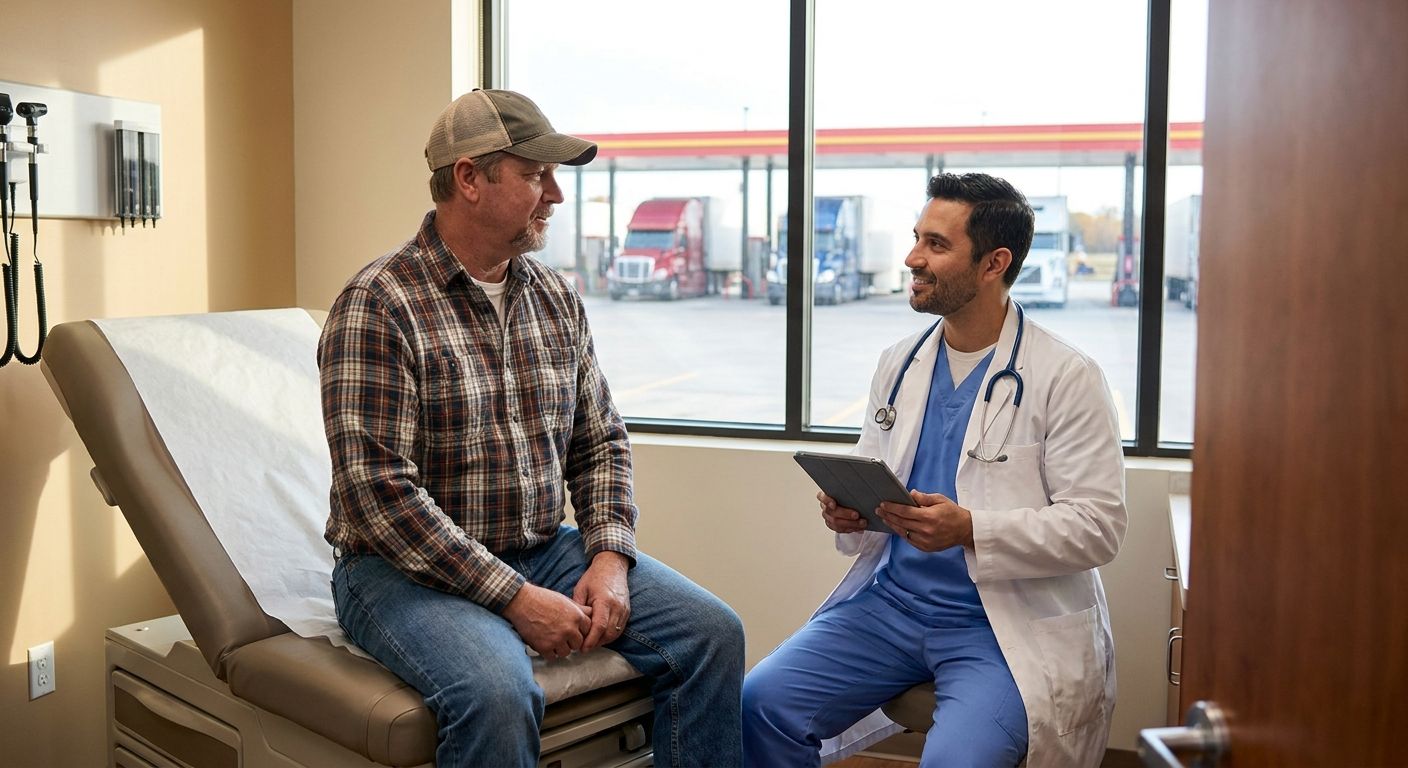
Long-haul driving wrecks a normal healthcare routine — no fixed clinic, no predictable hours, and a DOT medical certificate that expires whether you're home or three states away. Direct primary care for truck drivers solves the access problem: a licensed clinician you can reach from the cab, on your schedule, without burning a rest day on a waiting room.
- NowCare's DOT physical pre-screening catches disqualifying issues before the in-person exam — book it, don't skip it.
- Diabetic foot and neuropathy checks matter more for drivers than any other occupation; 10+ hours seated daily accelerates nerve damage.
- Maintenance medication refills (blood pressure, cholesterol) can run through telehealth without a missed load or an ER visit.
- Membership-style virtual primary care beats one-off urgent care apps for drivers who need continuity across state lines in 2026.
Why this matters for drivers in 2026
CDL holders face a medical certification cycle every 24 months minimum, and a failed or delayed exam can pull a truck off the road. A DOT physical exam pre-screening done by video before the in-person exam catches blood pressure, vision, or medication issues early enough to fix them — not discover them at the medical examiner's office with a load waiting.
Brick-and-mortar primary care assumes you'll be in the same zip code next Tuesday. Direct primary care for truck drivers assumes the opposite: irregular routes, irregular sleep, and a body that sits still for 10-11 hours a day, five or six days a week. That combination shows up in the data every fleet safety officer already knows about — elevated blood pressure, foot and nerve complaints, and weight gain tied to sedentary shifts and truck-stop food. A provider-guided telehealth plan built around those realities does more for a driver than a generic urgent care app built for sprained ankles and pink eye.
Who this is for
This guide is for owner-operators and company drivers running regional or long-haul routes who can't reliably make a 9-to-5 clinic appointment, don't have a regular doctor near home, and need medical care that travels with the job — DOT recertification, chronic condition management, and the foot and circulation issues that come from a career spent behind the wheel.
What to look for in direct primary care for truck drivers
Multi-state licensing and video access
A driver crossing from Ohio to Texas needs a clinician licensed to treat them wherever the truck happens to be, not just at home. Telehealth platforms that only serve single-state patients fall apart the moment a route changes, which for long-haul drivers is every week.
DOT physical support, not just sick visits
Most telehealth apps handle colds and rashes and stop there. Drivers need a platform that pre-screens for the specific things a DOT medical examiner checks — blood pressure, blood sugar, sleep apnea risk — so the in-person exam isn't a surprise.
Foot, nerve, and circulation care
Seated for most of a shift, drivers see disproportionate rates of numbness, tingling, and slow-healing foot issues. A plan that includes actual foot and nerve care, not just general medicine, catches diabetic foot problems and neuropathy before they turn into a missed DOT renewal.
Medication refills that don't require an office visit
Blood pressure and cholesterol medications are maintenance drugs — routine, predictable, and a poor use of a rest day if refilling them means driving to a clinic. Refill support built into the plan keeps drivers compliant without the detour.
Transparent, flat pricing with no insurance requirement
Many drivers are 1099 owner-operators without employer coverage. A flat-rate membership or plan price beats guessing what an insurance claim will cost after a random urgent care visit.
Fast turnaround
A driver on a tight delivery window can't wait three days for a callback. Same-day or next-day video visits are the baseline, not a premium feature.
Top picks for truck drivers in 2026
The DOT compliance pick — DOT physical exam pre-screening This is the pick that keeps you legal to drive. It reviews blood pressure, vision history, and medication lists against DOT medical examiner standards before you sit in front of one, so a fixable issue doesn't become a failed exam and a parked truck. Every review runs through a licensed clinician, not an automated checklist. Verdict: Book.
The everyday-care pick — Affordable virtual primary care membership This is the closest thing to direct primary care for truck drivers who want one relationship instead of a new app for every symptom. It covers routine concerns, follow-ups, and ongoing management under one flat-rate plan, with no insurance required. For a driver without a regular doctor near home, this is the anchor. Verdict: Book.
The foot-and-nerve pick — Diabetic foot care Drivers with prediabetes, diabetes, or just years of seated shifts are the exact population this pillar was built for. Numbness, slow-healing cuts on the feet, and circulation complaints get triaged by a licensed clinician who can escalate to in-person care when something looks structural rather than routine. Verdict: Consider — especially past age 40 or with any diabetes diagnosis.
The refill pick — Maintenance medication refills Blood pressure and cholesterol meds shouldn't cost a rest day. This pick handles routine refills with prescriptions sent to the pharmacy of your choice along the route, reviewed by a clinician before anything goes out. Verdict: Book if you're on any daily medication.
What to avoid
- Generic urgent care apps with no DOT support. They handle a cold fine but have nothing built for medical certification, which is the recurring cost drivers actually face every two years.
- Single-state telehealth platforms. If the clinician isn't licensed where your route takes you, the visit doesn't count, and you find that out at the worst possible time.
- One-time visit pricing with no continuity. Foot, nerve, and blood pressure issues need tracking over months, not a single disconnected video call.
Get provider-guided care built for the road
Licensed clinicians, flat pricing, no insurance required.
Verdict comparison
| Pillar | Best for | Plan style | Verdict |
|---|---|---|---|
| DOT physical pre-screening | Keeping your medical certificate current | Single pre-screening visit | Book |
| Virtual primary care membership | Drivers without a regular doctor | Flat-rate membership | Book |
| Diabetic foot care | Numbness, circulation, foot pain from long shifts | 1/3/6-month plan | Consider |
| Maintenance medication refills | Blood pressure, cholesterol, daily meds | Ongoing refill support | Book if on daily medication |
“If your medical certificate renewal keeps getting pushed back by your route, the renewal itself is the emergency.”
FAQ
What is direct primary care for truck drivers?
Direct primary care for truck drivers is a flat-rate telehealth relationship with a licensed clinician that covers routine care, medication refills, and condition management without requiring insurance or an in-person clinic visit. In 2026, it typically runs as a membership or short-term plan rather than a per-visit fee.
Can truck drivers get a DOT physical done online?
The full DOT physical must be completed by a certified medical examiner in person, but a telehealth pre-screening can review blood pressure, vision history, and medications beforehand. That catches disqualifying issues early so the in-person exam goes smoothly.
Does virtual primary care work across state lines for CDL drivers?
It depends on the platform's clinician licensing. Drivers should confirm the telehealth provider licenses clinicians in the states their routes actually cross, not just their home state.
How much does direct primary care cost for truck drivers in 2026?
Pricing varies by platform, but flat-rate membership and one-time plan pricing is the standard model for drivers without employer insurance in 2026. Check current pricing directly on the provider's site since rates change by plan length.
Can I refill blood pressure or cholesterol medication online while on the road?
Yes, maintenance medication refills for conditions like hypertension and high cholesterol can be reviewed by a licensed clinician online and sent to a pharmacy along your route. This avoids an office visit for a routine, ongoing prescription.
Is telehealth useful for foot numbness or diabetic foot issues in drivers?
Yes. Numbness, tingling, and slow-healing foot issues from long seated shifts are exactly what diabetic foot and neuropathy telehealth visits are built to triage, with escalation to in-person care when needed.
Do truck drivers need insurance to use direct primary care?
No. Most direct primary care and telehealth plans for drivers are priced as flat-rate, one-time, or membership plans specifically because many owner-operators don't carry employer coverage.
What's the difference between direct primary care and urgent care apps for drivers?
Urgent care apps handle one-off symptoms like colds or rashes. Direct primary care builds continuity — the same clinician tracking chronic issues, medications, and DOT certification needs over months, which matters more for a driving career than a single sick visit.
One last thing
The biggest gap in trucking healthcare isn't access to a doctor when something's wrong — it's the total absence of anyone tracking blood pressure, foot health, or medication compliance between DOT renewals every 24 months. A driver who books a pre-screening a few weeks before the actual exam, every cycle, turns the DOT physical from a pass/fail event into a routine checkpoint. That's the entire value of direct primary care for truck drivers in 2026: not a single fix, but a clinician who's already seen the trend line before the exam does.


