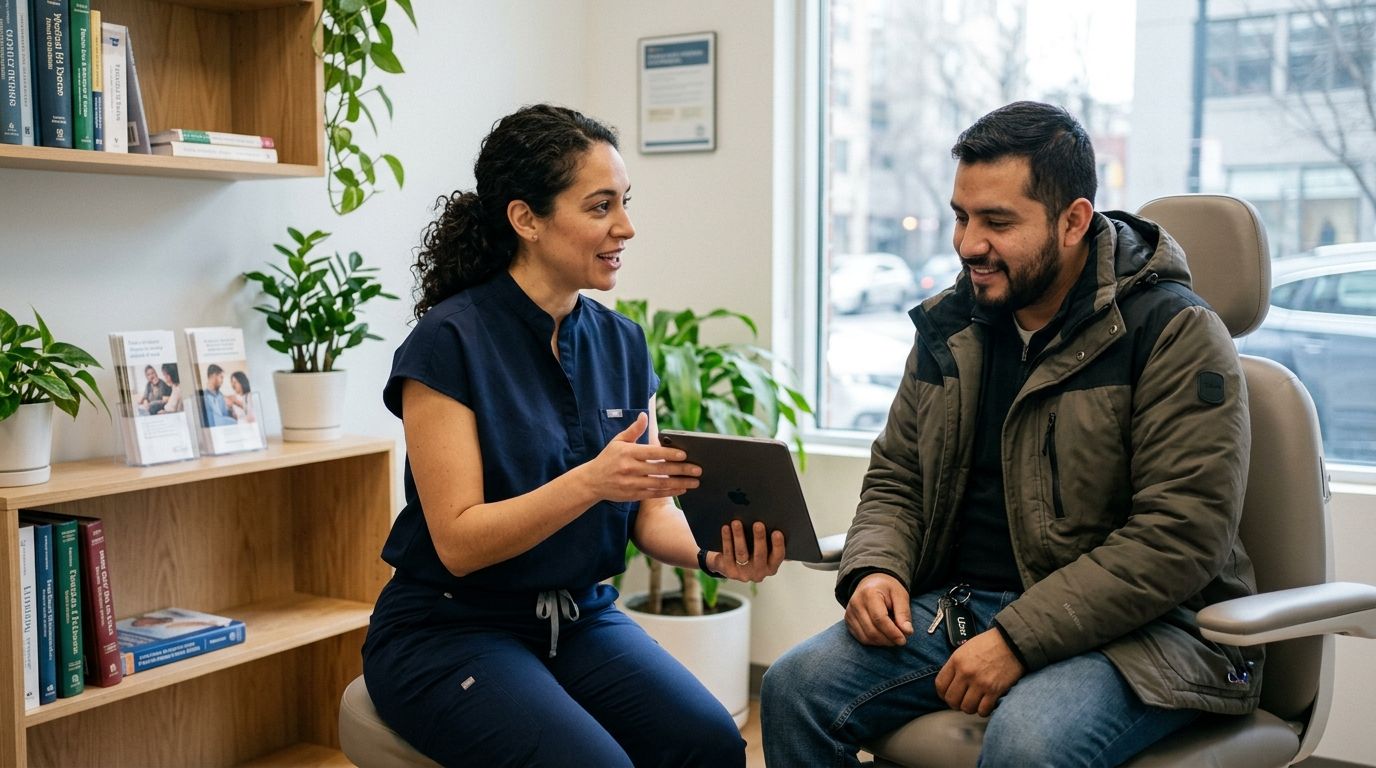
Rideshare and delivery drivers lose income every hour they're not behind the wheel, which makes waiting-room medicine a bad fit for how they actually work. Direct primary care for rideshare drivers means getting diagnosed, prescribed, and refilled entirely on a phone, on a break, between rides — no clocking out for a half-day clinic visit. This guide breaks down what to fix first, what it costs you to ignore it, and where a service like NowCare fits into a driving schedule that never looks the same two days in a row.
- Direct primary care for rideshare drivers replaces the missed-shift clinic visit with a same-day video appointment.
- NowCare's Virtual Urgent Care plan covers everyday concerns like UTIs, pink eye, and strep without an office wait.
- Sitting 8+ hours a day drives back, hip, and foot pain that most drivers never get screened for in 2026.
- Gig income has no sick pay, so the real comparison is a 30-minute telehealth visit versus a lost shift.
- Refills for blood pressure or anxiety medication can run through telehealth without a driving-day office visit.
Why direct primary care matters for rideshare and delivery drivers
Most rideshare and delivery drivers are classified as independent contractors, which means no employer health plan, no paid sick day, and no built-in reason to see a doctor unless something is already wrong. That structure pushes preventive care to the bottom of the list — until a UTI, a flare of plantar fasciitis, or blood pressure nobody has checked in two years turns into an emergency room visit.
The schedule problem compounds the coverage problem. A driver working split shifts around school pickup or dinner rush can't reliably book a 10 a.m. slot three weeks out. The real barrier isn't the cost of care, it's the four hours of lost driving time a standard clinic visit demands. Direct primary care for rideshare drivers exists specifically to remove that four-hour tax.
“If a checkup costs you more driving time than the checkup is worth, you skip it — and that is exactly the gap direct primary care is built to close.”
How rideshare and delivery drivers get direct primary care set up
Book a visit that fits between rides, not around them
The manual approach is calling around for same-day slots at urgent care clinics, which usually means a waiting room and an unpredictable wait even after you get an appointment. A video visit skips both.
- Use a 20-30 minute gap between airport runs or after a lunch-rush delivery block
- Keep a list of symptoms and how long they've lasted so the visit moves fast
- Have your pharmacy name and address ready so a prescription can route immediately
- Check that the platform is HIPAA compliant before you hand over symptom details
- With NowCare's Virtual Urgent Care plan, skin and hair issues, men's and women's health concerns, ENT complaints, and everyday medical issues route to a licensed clinician
Set up prescription refills that don't need an office visit
Drivers on maintenance medication — blood pressure, cholesterol, anxiety — are the group most likely to let refills lapse simply because the pharmacy calls for a new script and the doctor's office wants an in-person recheck.
- Track refill dates in your phone calendar two weeks ahead, not the week you run out
- Ask your current provider if e-prescribing to any pharmacy is supported
- Confirm whether a telehealth visit is required annually or per refill
- Route new or renewed prescriptions to the pharmacy nearest your usual driving zone
- A primary care setup built for gig workers means the refill visit happens on your schedule, not the pharmacy's
Address the physical toll of sitting eight-plus hours
Lower back pain, hip tightness, and heel pain are the most common physical complaints among drivers who spend a full shift in a seat, and almost none of them get addressed until the pain is constant.
- Stand and stretch for two minutes every hour you're parked waiting on a ride
- Adjust seat lumbar support weekly instead of leaving it fixed for months
- Swap flat driving shoes for ones with arch support if heel pain shows up in the morning
- Note whether pain is worse getting out of the car versus during the drive — that detail matters for diagnosis
- Flag chronic heel or foot pain early, since untreated plantar fasciitis gets harder to resolve the longer it's ignored
Screen for the risks that build quietly on an irregular schedule
Blood pressure, weight changes, and sleep debt creep up on drivers precisely because there's no annual physical forcing a check-in.
- Get blood pressure checked at a pharmacy kiosk between shifts if a visit isn't due yet
- Track hours slept per night for two weeks if fatigue behind the wheel is recurring
- Note any weight change over 3 months, up or down, and raise it at the next visit
- Ask about baseline bloodwork if it's been over a year since your last check
- A telehealth visit can order labs without requiring a separate in-person appointment first
Handle urgent issues without losing a full shift
A UTI, pink eye, or strep throat doesn't need an ER visit or a half-day clinic wait — it needs a diagnosis and a prescription, fast.
- Note symptom onset time and severity before the call so triage is quicker
- Ask directly whether the visit can result in a same-day prescription
- Confirm the pharmacy can fill the order before your next driving block starts
- Rule out anything needing in-person care immediately — a telehealth clinician should say so when it's beyond scope
Build a mental health check-in around inconsistent income
Income volatility is a real stressor specific to gig work, and it shows up as anxiety, disrupted sleep, or irritability long before a driver calls it a mental health issue.
- Track weeks where earnings dropped sharply and note mood changes alongside them
- Bring up sleep disruption at a primary care visit even if it feels unrelated
- Ask whether medication management runs through the same telehealth relationship
- Separate a bad week of driving from a pattern lasting a month or more
Compare the real cost against a missed shift
The math that matters for a driver isn't the visit cost against a copay — it's the visit cost against a canceled shift.
- Estimate what your typical 4-hour driving block earns before choosing an in-person visit
- Weigh a 30-minute telehealth visit against a clinic visit that eats a half-day
- Factor in whether a missed shift also costs you platform priority or surge eligibility
Comparing your options as a rideshare or delivery driver
| Option | Best for | Key limitation |
|---|---|---|
| Urgent care walk-in clinic | One-off injuries needing an in-person exam or imaging | Wait times can eat a full shift |
| ACA marketplace plan | Drivers wanting broad coverage including specialists | Enrollment windows are fixed, not same-day |
| Free or community clinic | Uninsured drivers with no other option | Limited hours, often booked weeks out |
| NowCare Virtual Urgent Care | Everyday concerns and prescription refills without missing a shift | Not a substitute for emergency or in-person surgical care |
Verdict: for a driver whose income depends on hours on the road, a same-day telehealth visit built around direct primary care for rideshare drivers beats a walk-in clinic on time cost almost every time — the walk-in still wins when an exam or imaging can't be done remotely.
Book a visit between rides
See a licensed clinician online without blocking off a driving shift.
Common mistakes rideshare and delivery drivers make
- Waiting until a symptom is unbearable. A minor UTI or early strep throat is a 15-minute fix; the same issue ignored for a week can mean days off the road.
- Skipping refills because the office visit feels like a hassle. Lapsed blood pressure or anxiety medication doesn't pause because a driver's schedule got busy.
- Ignoring foot and back pain as part of the job. Plantar fasciitis and chronic hip pain get harder to treat the longer they're left alone, not easier.
- Never getting a baseline check. Drivers without an annual physical often don't learn about blood pressure or weight trends until a number is already a problem.
- Treating income-swing stress as unrelated to health. Sleep and mood changes tied to inconsistent gig earnings are a legitimate reason to book a visit in 2026, not something to push through.
FAQ
What is direct primary care for rideshare drivers?
It's a telehealth-based care model that lets rideshare and delivery drivers see a licensed clinician on a flexible schedule instead of booking in-person clinic visits that cost driving hours. Prescriptions, refills, and everyday medical concerns get handled over video.
Can I get a prescription refilled without an office visit?
Yes, most maintenance medications can be reviewed and refilled through a telehealth visit as long as the medication doesn't require in-person monitoring. Check with the provider whether an annual in-person check is still required for your specific prescription.
Is telehealth good for urgent issues like a UTI or pink eye?
Yes, conditions like UTIs, pink eye, and strep throat are commonly evaluated and treated over video without an in-person exam. A telehealth clinician will redirect you to in-person or emergency care if the issue is outside what can be safely handled remotely.
How much time does a telehealth visit save compared to a clinic?
A telehealth visit typically runs 15-30 minutes and can happen during a break between rides, while a clinic visit often takes a half-day once travel and wait time are included. For a driver earning by the hour, that difference is the whole point.
Does direct primary care replace health insurance?
No, direct primary care covers ongoing and everyday medical needs but doesn't replace insurance for hospitalization, surgery, or specialist procedures. Many drivers pair a telehealth plan with a high-deductible or catastrophic policy for larger events.
Can I get help for back or foot pain from sitting all day?
Yes, a telehealth visit can evaluate driving-related pain like lower back tightness, hip pain, and heel pain, and recommend next steps including a physical therapy referral. Chronic foot pain responds better to early evaluation than to waiting it out.
What if my symptoms need an in-person exam?
A telehealth clinician will tell you directly when something needs imaging, a physical exam, or emergency care rather than guessing over video. That boundary is what makes a video visit a reliable first stop.
Is telehealth care in 2026 available without insurance?
Many direct primary care and telehealth services in 2026 run on transparent one-time or membership pricing with no insurance required. Check the specific plan for what's included before booking, since models vary by provider.
One last thing
The drivers who get the most out of direct primary care for rideshare drivers aren't the ones waiting for an emergency — they're the ones who use a 20-minute gap between rides to fix a small problem before it becomes a missed week of shifts. In 2026, the fastest route back to full earning capacity after a UTI, a sinus infection, or a flare of foot pain is usually a same-day video visit, not a walk-in clinic queue. Build the habit of checking in before something forces you to.


