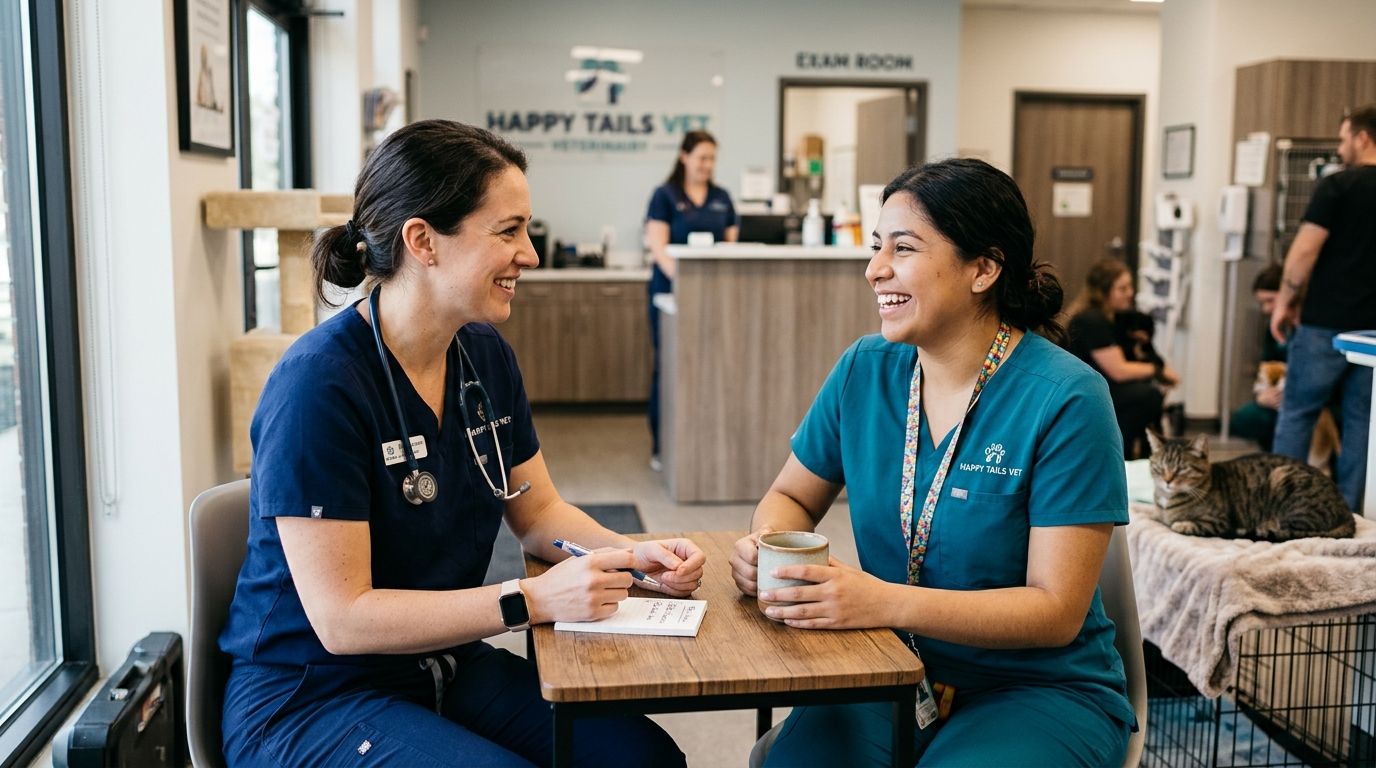
Vet techs, veterinarians, and clinic support staff work hours that mirror a typical doctor's office schedule, which makes squeezing in a same-day appointment nearly impossible without missing a shift. Direct primary care for veterinary staff solves that mismatch by moving routine and urgent visits online, on a clock built around clinic shifts instead of banker's hours.
- Direct primary care for veterinary staff works best when visits happen before or after clinic shifts, not during them.
- NowCare books same-day virtual urgent care visits outside standard 9-to-5 hours for clinic staff.
- Animal bites and scratches need a documented visit fast, but suspected rabies exposure still requires in-person evaluation.
- Part-time and 1099 clinic staff without group insurance are the group most helped by a flat monthly direct primary care plan in 2026.
Why direct primary care matters for veterinary clinic staff
Clinic doors open around 7 a.m. and close around 6 or 7 p.m. in most independent veterinary practices — the same hours a typical primary care office runs. Direct primary care for veterinary staff isn't the only field facing this mismatch: direct primary care for nurses and hospital shift workers hits the same wall in hospitals, and the fix looks the same. Move the visit off the shift clock.
Staff who work clinic hours can't leave mid-shift for their own appointment without finding coverage for a treatment room or burning a full sick day. Add the physical side of the job — lifting animals, restraining scared or aggressive patients, handling sharps around anesthesia and vaccine stations — and bite or scratch injuries become routine enough that most clinics keep an incident-report form printed and ready.
Most veterinary practices are independently owned small businesses, and group health plans vary widely from clinic to clinic. Part-time kennel staff, veterinary assistants, and even some associate veterinarians go without employer coverage that matches what a large corporate practice offers. Veterinary medicine has also been flagged in occupational health research for elevated burnout and compassion fatigue for years — a pattern documented widely enough that mental health support belongs in routine care for this workforce, not treated as an extra.
Audit what your clinic's benefits actually cover
Start with the plan you already have before assuming you need something new.
- Pull your deductible and out-of-pocket max from HR or your insurance card
- Check whether the plan covers virtual visits at the same rate as in-person ones
- Confirm whether urgent care and ER copays differ under your plan
- Ask if the clinic offers any stipend for part-time or 1099 staff
- Note what's excluded — many small-clinic plans skip mental health medication management entirely
Match care hours to your actual shift pattern
Calling your current PCP's office and asking about early or late slots is the free first move — most won't have any.
- Look for same-day virtual visit windows before opening or after closing
- Check whether the platform offers weekend hours for staff who work Saturday appointments
- Confirm on-call and overnight staff can book a visit without waiting for standard business hours
A flat-rate NowCare virtual urgent care plan schedules same-day visits without asking what your shift looks like. The visit follows your clock, not the clinic's, which is the whole point for staff who can't predict their week two shifts out.
Get bite, scratch, and exposure incidents handled fast
Clinic incident protocol still comes first, no telehealth visit replaces that.
- Clean and document the wound immediately per your clinic's incident-report process
- Book a same-day virtual visit for antibiotic evaluation on scratches and minor bites
- Escalate to in-person urgent care or an emergency department for suspected rabies exposure, deep punctures, or facial involvement
- Keep a copy of the visit note for workers' comp paperwork
- Photograph the wound at intake and again at follow-up to track healing
Build burnout and compassion fatigue into your care plan
Track the pattern before deciding it's just the job.
- Note sleep and mood changes over a few weeks rather than a single bad shift
- Ask about medication management options that don't require a separate psychiatrist referral
- Request ongoing care-team follow-ups instead of a single one-off visit
- Separate physical exhaustion from symptoms that look more like clinical depression
Keep chronic conditions managed without missing a shift
Monitoring visits get skipped first when a schedule is unpredictable, and that's exactly backwards.
- Schedule refill and monitoring visits around 12-hour shifts instead of skipping them
- Ask for a 90-day supply where the prescription allows it
- Use virtual lab orders to avoid a separate in-person blood draw
- Confirm how prescriptions route to the pharmacy you actually use
Set up prescription refills around an unpredictable schedule
- Request refills at least a week before running out, not the day of
- Confirm the pharmacy is open when you actually have time to pick up
- Ask whether e-prescribing routes directly to a 24-hour pharmacy near you
- Keep an updated medication list on hand for every visit, virtual or not
Comparing care options for veterinary clinic staff
| Option | Best for | Care hours | Key limitation |
|---|---|---|---|
| Traditional PCP office | Staff with predictable daytime schedules | Weekday business hours | Rarely open before or after clinic shifts |
| Walk-in urgent care clinic | Same-day minor injuries | Extended daytime and evening | Wait times vary, no ongoing relationship |
| Emergency room | Rabies exposure risk, deep wounds, facial bites | 24/7 | Highest cost and longest wait for non-emergencies |
| Employer group health plan | Full-time staff at larger practices | Depends on network | Inconsistent at small, independent clinics |
| NowCare virtual urgent care | Same-day visits scheduled around shift work | Extended hours, same-day booking | Not a substitute for in-person exams needing imaging or suspected rabies exposure |
Verdict: direct primary care for veterinary staff works best as the everyday layer — refills, minor injuries, chronic condition checks — while the ER and in-person urgent care stay reserved for exposure risk and anything requiring imaging.
Get care that fits your shift
Same-day virtual visits built around clinic hours, not the other way around.
Common mistakes veterinary clinic staff make with primary care
- Treating every bite or scratch as routine and skipping documentation — undocumented incidents complicate workers' comp claims later
- Treating burnout as a personality problem instead of a medical one a care team can manage
- Skipping refills because the on-shift pharmacy run never lines up with pickup hours
- Assuming direct primary care requires going through HR, when many plans are available directly to part-time and 1099 staff
- Waiting for a rabies exposure risk assessment through a virtual-only visit when it needs in-person evaluation
FAQ
What is direct primary care for veterinary staff?
Direct primary care for veterinary staff is a flat-rate care model that moves routine and urgent visits online so vet techs, veterinarians, and clinic support staff can get seen without leaving a shift. NowCare's virtual urgent care plan schedules same-day visits outside standard business hours.
Is direct primary care different from urgent care for vet techs?
Yes — direct primary care covers ongoing management like refills and chronic conditions, while urgent care handles one-off issues like an infected scratch. Most clinic staff need both, and a virtual plan can cover the direct primary care side without adding a second appointment to a packed week.
Can virtual primary care handle an animal bite or scratch?
A same-day virtual visit can evaluate a minor bite or scratch and decide if antibiotics are needed. Deep punctures, facial wounds, or any suspected rabies exposure still require in-person evaluation, not a virtual-only visit.
Do veterinary clinic employees get better health coverage than other retail workers?
Not consistently. Most veterinary practices are small, independently owned businesses, so group health plans vary widely from clinic to clinic, and part-time or 1099 staff often go without coverage entirely.
How does direct primary care work for overnight or on-call veterinary shifts?
A virtual plan with extended hours lets on-call and overnight staff book a visit without waiting for the next business day. NowCare schedules same-day virtual urgent care visits built around shift patterns instead of standard office hours.
What if I need a rabies exposure risk assessment?
A rabies exposure risk assessment requires in-person evaluation at an emergency department or occupational health clinic, not a virtual-only visit. No telehealth platform, including NowCare, can complete that assessment remotely.
Can direct primary care refill prescriptions for veterinary staff?
Yes, for maintenance medications a virtual visit can review and send a refill to the pharmacy of your choice. Requesting the refill at least a week before running out avoids a gap caused by mismatched pharmacy and shift hours.
Does NowCare accept insurance for veterinary clinic employees?
NowCare's virtual urgent care is offered as a flat-rate plan, which matters for clinic staff whose insurance status varies by employer and by full-time versus part-time classification. Check current plan details directly on the NowCare site for the specific coverage terms.
One last thing
The one veterinary-specific reason to skip virtual care entirely: suspected rabies exposure. No telehealth platform, NowCare included, can complete a post-exposure risk assessment without an in-person start — that decision needs a clinician who can examine the wound directly and pull an exposure history in person. Everything else on this list, from a mid-shift scratch to a burnout check-in, is exactly what direct primary care for veterinary staff was built to absorb in 2026.


