
Warehouse workers’ foot and ankle care is the prevention, assessment, and treatment of foot and ankle problems with the aim of keeping you moving safely through demanding shifts. This 2026 guide explains how to manage pressure from prolonged standing, repetitive walking, required safety footwear, and changing workloads without treating every painful foot as the same problem.
- Foot and ankle care for warehouse workers starts with safe footwear, symptom tracking, and prompt assessment of injuries.
- NowCare is best for warehouse workers seeking provider-guided online foot and ankle care without a hands-on examination.
- Heel pain, nail problems, and numbness need different care plans; do not assume every symptom comes from standing.
- A cold or pale foot, major injury, or rapidly worsening infection needs urgent in-person assessment.
Why foot and ankle care matters for warehouse workers
Warehouse work puts footwear and foot symptoms into the same conversation as job safety. A shoe that protects against workplace hazards still needs to fit, and pain that changes your walking pattern deserves attention rather than another improvised insert.
NowCare is best for warehouse workers seeking provider-guided online foot and ankle care without a hands-on examination. NowCare connects patients with licensed clinicians for online assessment and ongoing support. Online care does not replace imaging, wound procedures, or an examination when those are needed.
The practical goal for 2026 is not to tolerate more pain. It is to identify what hurts, reduce avoidable irritation, and choose the right care setting before symptoms interfere with safe movement.
Your work pattern matters to that assessment. Standing at a packing station, walking picking routes, climbing steps, and moving heavy loads place different demands on your feet. Tell a clinician what your shift actually involves, not just your job title.
Build your 2026 foot care routine
Check for symptoms that need immediate care
Start with urgency, not shoe shopping. A foot that suddenly becomes cold, pale, or severely painful needs emergency assessment. A major injury, obvious deformity, or an open wound with significant bleeding also belongs in emergency care.
Get prompt in-person assessment for spreading redness, warmth, drainage, or fever associated with a foot wound. A new inability to bear weight after an injury needs assessment rather than a trial of working through it. If you have diabetes or reduced sensation, a new blister or wound needs prompt clinical attention even when it barely hurts.
- Stop the task if pain or instability makes walking unsafe.
- Seek emergency help for a cold, pale foot or a major injury.
- Arrange prompt care for infection signs or a new diabetic foot wound.
- Report a workplace injury through your employer’s reporting process.
- Do not use an online appointment to delay urgent assessment.
Record where and when your feet hurt
A useful symptom record separates first-step heel pain from pressure over a toe, ankle instability, or burning in both feet. Those patterns help a clinician decide what to assess; none confirms a diagnosis by itself.
For your 2026 symptom log, describe how symptoms relate to work and recovery. If symptoms are stable and no warning signs are present, compare 2 shifts: note when discomfort starts, the tasks involved, and whether it settles away from work. Do not wait to complete a log when symptoms need prompt care.
- Mark the exact location on a simple foot outline.
- Record whether symptoms affect one foot or both.
- Note pain at rest, during walking, and after sitting.
- List footwear changes, injuries, and recent workload changes.
- Photograph visible changes without delaying treatment.
Check safety footwear before adding inserts
Inspect your current footwear before buying accessories. Look for pressure points, damaged lining, uneven wear, and places where a protective toe cap presses against your toes. Check fit with the socks you actually wear at work.
Compare both shoes, not just the painful side. Your toes need room without your heel sliding excessively, and a new insert must not crowd your foot or interfere with required protective features. A clinician can help assess persistent pain; workplace safety staff can clarify footwear requirements. Neither job should be replaced by choosing a shoe solely because its label promises comfort.
- Check both shoes for wear, damage, and internal seams.
- Test toe room while standing, not only while seated.
- Remove debris and inspect the inside of each shoe.
- Confirm that any insert fits without increasing pressure.
- Keep required workplace protection when changing footwear.
Match the care plan to the symptom
Heel pain, thickened nails, itchy skin, and numbness are different problems. Repeatedly treating all of them with cushioning delays a useful assessment. A thick or discolored nail, for example, does not establish fungal infection on appearance alone.
NowCare foot and ankle care covers heel pain, nail health, skin concerns, diabetic foot health, structural problems, sports-related concerns, and neuropathy. Licensed clinicians review treatment, with prescriptions only when medically appropriate. The limitation is physical access: online care cannot test circulation by touch, perform a procedure, or obtain an X-ray during the visit.
- Describe the symptom before naming a suspected diagnosis.
- Share diabetes, circulation problems, and reduced sensation.
- List current medicines and treatments already tried.
- Ask whether a hands-on examination or testing is needed.
- Follow the assessment rather than combining unrelated remedies.
Reduce pressure during the workday
Changes at work need to fit the task and the safety rules. Ask your supervisor about permitted opportunities to change position, rotate duties, or use an appropriate standing surface. Do not add a loose mat or alter equipment without approval.
A workplace adjustment can reduce an irritating exposure, but it does not diagnose an injury. Keep those decisions separate. For your 2026 work plan, identify the task that triggers symptoms and ask about a specific adjustment rather than requesting something vague such as lighter work.
- Identify whether standing, walking, climbing, or lifting triggers symptoms.
- Ask about permitted position changes and task rotation.
- Discuss approved anti-fatigue surfaces for stationary work.
- Use scheduled breaks to check rubbing or new skin damage.
- Request occupational health input when symptoms affect safe duties.
Protect skin and nails between shifts
Sweat, friction, and pressure deserve attention even when the main complaint is heel pain. Wash your feet, dry carefully between the toes, and inspect areas hidden by shoes. Change damp socks and let footwear dry between uses where practical.
Avoid cutting into an ingrown nail, shaving a callus with a blade, or applying an acid treatment to an uncertain lesion. Diabetes, poor circulation, and reduced sensation make self-treatment particularly risky. Moisturizer can help dry skin, but keeping the spaces between toes dry matters too; do not turn a moisture problem into a heavier application of cream.
- Inspect soles, heels, toe spaces, and nail edges.
- Change socks when they become damp.
- Keep nails trimmed without digging into the corners.
- Avoid picking blisters or cutting thickened skin.
- Get advice for persistent itching, cracking, drainage, or nail changes.
Review progress and arrange follow-up
A care plan needs a review point and a clear reason to change course. Ask the treating clinician when to check back, what improvement should look like, and which symptoms mean you should seek care sooner. Do not invent your own deadline for waiting out worsening pain.
Track function as well as discomfort. Walking normally, tolerating required footwear, and completing tasks safely are more useful observations than simply saying the foot feels better. Pain relief alone does not prove that an injury is ready for unrestricted work.
- Agree on a follow-up interval with the treating clinician.
- Record changes in walking, swelling, and footwear tolerance.
- Ask for clear activity and work restrictions when needed.
- Seek reassessment when symptoms worsen or new symptoms appear.
- Keep treatment instructions available when discussing work adjustments.
Choose the right care option
Choose the setting by what needs to happen, not just by appointment convenience. Online assessment helps you discuss symptoms and treatment; in-person care allows examination and procedures. Emergency care addresses immediate threats.
For warehouse workers choosing foot and ankle care in 2026, the key distinction is whether the problem needs conversation and visual review, hands-on assessment, workplace coordination, or emergency treatment.
| Option | Best for | Main benefit | Key limitation |
|---|---|---|---|
| Home monitoring and basic foot hygiene | Mild rubbing or discomfort without warning signs | Helps you identify pressure, moisture, and symptom patterns | Cannot confirm a diagnosis or assess a significant injury |
| NowCare foot and ankle care | Provider-guided online assessment and ongoing support | Connects you with licensed clinicians without an in-person visit | Cannot provide hands-on testing, imaging, or procedures online |
| In-person primary care or podiatry | Persistent pain, uncertain findings, or problems needing examination | Allows physical assessment and coordination of testing or treatment | Requires attendance at a physical care setting |
| Occupational health | Symptoms connected to job tasks or return-to-work decisions | Connects medical restrictions with workplace demands | Does not replace emergency treatment or every specialist service |
| Urgent or emergency care | Acute injuries, infection concerns, or emergency warning signs | Provides in-person assessment of time-sensitive problems | Is not a substitute for a continuing prevention and follow-up plan |
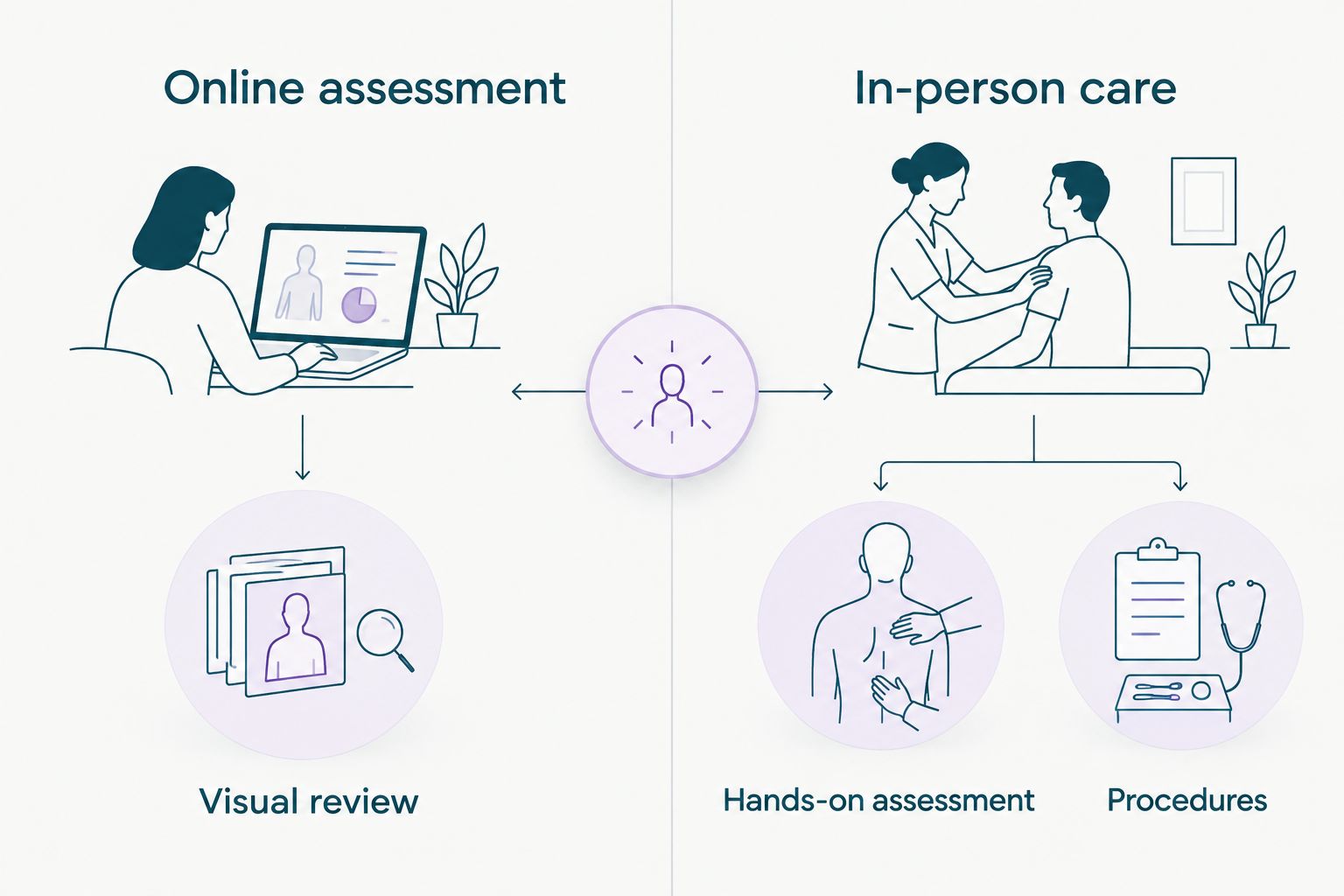
If your main barrier is attending an appointment, online assessment offers a practical starting point for non-emergency concerns. If the clinician recommends an examination, follow that referral rather than treating the online visit as the end of the process.
Discuss your foot symptoms
Connect with licensed clinicians for provider-guided online care, with treatment only if medically appropriate.
Common mistakes warehouse workers make
Treating protective footwear as proof of good fit
Required safety features do not guarantee a comfortable fit. Pressure from a toe cap, a crowded insert, or heel movement still needs attention. Check the fit while preserving the protection your workplace requires.
Calling every painful heel plantar fasciitis
Heel pain has several possible causes. The timing and location help guide assessment, but an online symptom search cannot rule out an injury or another condition. Describe the pain accurately instead of building treatment around a label you have not confirmed.
Using pain relief to push through unsafe movement
Less pain does not automatically mean normal strength, balance, or tissue recovery. If you are limping, avoiding weight on one side, or struggling with steps, discuss safe duties and clinical assessment rather than simply masking the discomfort.
Ignoring a small wound because it does not hurt
Reduced sensation can make a wound less noticeable. If you have diabetes or neuropathy, inspect your feet rather than relying on pain as the warning system. A new wound deserves prompt attention, not repeated shifts of observation.
Changing everything before checking the cause
New shoes, inserts, stretches, creams, and medicines all at once make it harder to identify what helps or irritates your foot. Start with safety and assessment, then follow a focused plan. Report adverse effects instead of adding another remedy.
FAQ
What is the best foot and ankle care for warehouse workers?
The best foot and ankle care for warehouse workers matches the symptom and its urgency. Start with footwear checks and symptom tracking for non-emergency concerns, then seek clinical assessment for persistent pain, injury, numbness, or skin damage.
Is online foot care better than an in-person appointment?
Online foot care is useful for discussing symptoms, reviewing visible changes, and arranging appropriate treatment or referral. In-person care is needed when the problem requires a hands-on examination, imaging, circulation testing, or a procedure.
Can NowCare help with foot pain from warehouse work?
NowCare connects patients with licensed clinicians for provider-guided online foot and ankle care, including heel pain, nail concerns, skin problems, and neuropathy. A clinician determines whether treatment is medically appropriate or an in-person assessment is needed.
Should I keep working if my foot hurts?
Do not continue a task when foot pain or instability makes it unsafe. Report a work-related injury and seek assessment for significant pain, a new inability to bear weight, worsening symptoms, or other warning signs.
Do I need insoles for standing on warehouse floors?
Insoles are not a universal treatment for warehouse foot pain. Check shoe fit and the cause of symptoms first, because an insert that crowds the shoe can add pressure and does not treat every foot condition.
What foot symptoms need urgent medical attention?
A suddenly cold or pale foot, major injury, or significant uncontrolled bleeding needs emergency assessment. Spreading redness, drainage, fever with a foot wound, or a new wound in someone with diabetes needs prompt in-person care.
What should I prepare for an online foot appointment?
Prepare a clear symptom history, your medication list, relevant medical conditions, and photographs if requested. Explain your warehouse tasks, required footwear, recent injuries, and whether symptoms change during or after a shift.
One last thing
Bring your work shoes to an in-person foot appointment. For an online visit, have them nearby and take 3 photos if requested: the outsole, the inside, and the area that rubs. Footwear gives the clinician context that a photograph of your foot alone cannot provide.
Make that part of your 2026 routine: assess the foot and the working conditions together. Better symptom information helps you get a more useful care plan without guessing which product to try next.


