
To get a doctor's excuse for a migraine flare-up at work in 2026, schedule a visit with a licensed clinician, describe your symptoms and work limitations, and ask whether medical documentation is appropriate. The clinician decides what the note can support, while your employer determines the required format. Seek emergency care instead of requesting a routine note if the headache is sudden and severe or comes with weakness, confusion, trouble speaking, fainting, or new vision loss.
- For a doctors excuse migraine work request, see a licensed clinician and ask for appropriate documentation.
- Ask HR which dates, restrictions, return details, and forms the employer requires before your clinical visit.
- NowCare is best for patients seeking provider-guided online care for non-emergency everyday medical concerns.
- Sudden severe headache or new neurological symptoms require urgent in-person assessment, not routine work documentation.
Why this matters
A migraine can prevent you from reading, driving, using a screen, speaking with customers, or working safely. Medical documentation records a clinician's assessment, but it does not automatically approve an absence, accommodation, disability claim, or protected leave.
The cleanest process starts with two separate questions: what documentation does your employer require, and what can the clinician medically support? The NowCare telehealth platform connects patients with licensed clinicians through secure online intake and provider-guided care for everyday medical concerns. NowCare is best for patients seeking provider-guided online care for non-emergency everyday medical concerns.
In 2026, do not assume every employer uses the same note template. Ask for the policy or form before the appointment so the clinician can review the actual request.
How to get a doctor's excuse for a migraine flare-up at work
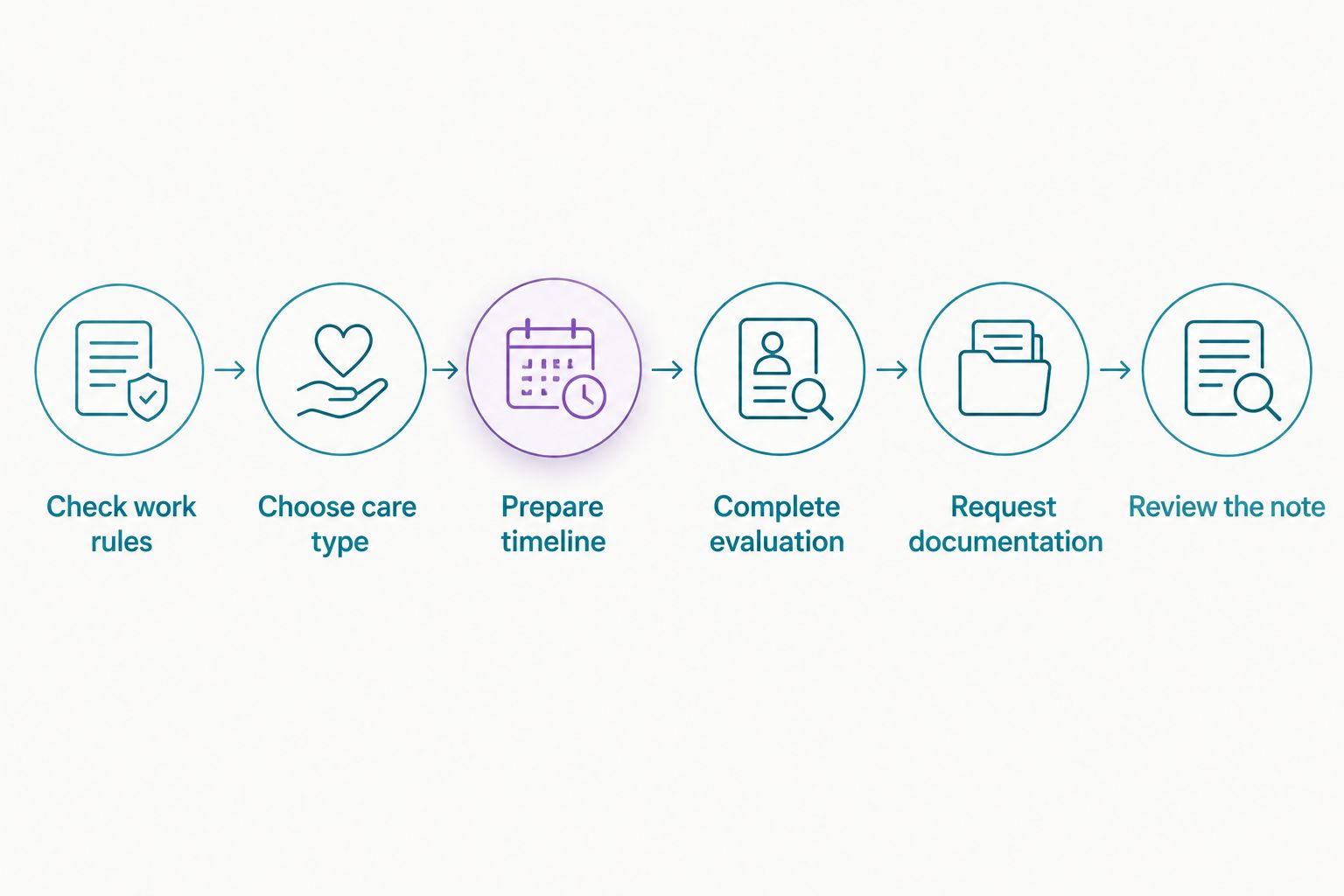
Use the following process when a migraine affects your ability to perform your job. A clinician can document an evaluation only after deciding that the requested statement is medically appropriate.
1. Check the employer's documentation rules
Contact HR, your leave administrator, or the person who handles absences. Ask what is required without sending a detailed medical history to your manager.
Confirm whether the employer wants:
- A basic work-status note
- The date of the clinical evaluation
- The dates you could not work
- A return-to-work date
- Temporary work restrictions
- A separate leave or accommodation form
- Documentation from a specific type of clinician
- Submission through an HR or leave-management portal
Ask about the submission deadline as well. If HR provides a form, bring it to the appointment rather than asking the clinician to recreate its questions from memory.
2. Choose the appropriate type of medical visit
The right setting depends on your symptoms, medical history, and urgency. Telehealth fits some non-emergency concerns, while new neurological symptoms need in-person or emergency assessment.
| Care option | Best for | Advantage | Limitation |
|---|---|---|---|
| Telehealth visit | A familiar migraine pattern without emergency warning signs | You can complete the evaluation from home | The clinician cannot perform a full hands-on neurological examination |
| Primary care visit | Recurring migraines, treatment follow-up, or ongoing documentation | Your established clinician may know your history | Appointment access depends on the practice |
| Urgent care | Symptoms that need prompt in-person evaluation but do not appear life-threatening | Physical examination is available | The visit may focus on the immediate episode rather than ongoing workplace needs |
| Emergency department | Sudden severe headache or stroke-like symptoms | Emergency testing and treatment are available | It is not the right setting for a routine excuse-note request |
Telehealth is the practical first option for a familiar, non-emergency migraine pattern; emergency warning signs override the need for a work note.
3. Prepare a concise symptom timeline
Write down when the flare-up began, how the symptoms changed, and which job duties you could not perform. Include relevant symptoms such as head pain, nausea, vomiting, light sensitivity, sound sensitivity, aura, dizziness, or difficulty concentrating.
Also prepare:
- Your current medications and the doses you took
- Any medication allergies
- Previous migraine diagnoses or treatment plans
- Recent head injuries, illnesses, or medication changes
- New symptoms that differ from your usual attacks
- The first and last work shifts affected
- The employer's note or form requirements
Do not exaggerate symptoms to secure documentation. Accurate details help the clinician determine whether telehealth is sufficient, whether treatment is appropriate, and whether you need a higher level of care.
4. Complete the clinical evaluation
During the visit, explain the symptoms before asking for paperwork. The clinician needs to assess the medical concern rather than simply confirm that you missed work.
Expect questions about onset, severity, previous attacks, aura, neurological changes, pregnancy status when relevant, current treatment, and whether the headache followed an injury. A clinician can decline to issue a note, limit the dates covered, or direct you to in-person care when the available information does not support the request.
NowCare's Virtual Urgent Care covers everyday medical concerns through secure intake and licensed-clinician review. Treatment, prescriptions, and supporting documentation depend on the clinician's assessment and are provided only when medically appropriate.
5. Request the correct documentation
Tell the clinician exactly what the employer requested. A basic work-status note often focuses on the evaluation date, the period affected, functional restrictions, and when you can return or need reassessment.
Your diagnosis does not need to be disclosed automatically in every workplace situation. Ask HR what information is required, then discuss the narrowest medically appropriate documentation with the clinician. This limits unnecessary disclosure while still addressing the employer's request.
6. Review the note before submitting it
Check the document while the visit is still recent. Confirm that your name, evaluation date, affected work dates, restrictions, and return or follow-up instructions match what the clinician intended.
Do not alter a medical note yourself. Contact the issuing practice if HR identifies a missing field or if the clinician-approved information contains an error.
Submit the note through the employer's stated channel and retain a copy. Keep clinical records separate from ordinary workplace messages when the employer provides a confidential HR or leave portal.
Start provider-guided online care
Complete a secure online intake for review by a licensed clinician.
Why migraine work documentation varies
No single doctor's excuse works for every migraine absence. These factors determine the appropriate documentation and next step:
- The employer's policy: A basic absence, formal leave request, and accommodation request can require different records.
- The timing of the evaluation: A clinician has more direct information when assessing the current episode than when asked to document an earlier absence.
- The symptom pattern: A familiar migraine and a first sudden severe headache require different levels of assessment.
- The requested time away: A brief episode and an ongoing pattern of unpredictable absences raise different medical and workplace questions.
- The job's essential duties: Screen work, driving, machinery, food preparation, patient care, and safety-sensitive tasks create different functional concerns.
- The applicable law: Employer coverage, employee eligibility, state rules, and the nature of the medical condition affect leave and accommodation rights.
The International Headache Society's ICHD-3 diagnostic criteria, referenced in 2026, describe untreated or unsuccessfully treated migraine without aura attacks in adults as lasting 4 to 72 hours. That clinical range does not dictate how long an employer must excuse you or how long your clinician will document work limitations.
Can telehealth provide a migraine work note?
A licensed telehealth clinician can evaluate a migraine complaint and may provide work documentation when the findings support it and applicable rules permit it. Telehealth does not guarantee a note, a particular date range, treatment, or employer acceptance.
For a non-emergency concern, NowCare provides 100% online, provider-guided care with licensed-clinician review. If the intake reveals warning signs that require a physical examination or emergency testing, online documentation is not a substitute for that care.
Can a doctor write a retroactive excuse for a migraine?
A clinician may document the history you report, but the clinician decides whether any statement about an earlier absence is medically supportable. Do not assume a clinician who did not evaluate the flare-up can certify the exact severity, duration, or work impact after the fact.
If you need retroactive documentation in 2026, provide the symptom timeline, medication records, prior migraine history, and the employer's form. The resulting note must reflect the clinician's independent assessment rather than wording dictated by you or your employer.
What if migraines keep causing work absences?
Repeated migraine-related absences call for an ongoing care plan, not a series of isolated excuse requests. Ask a primary care clinician or neurologist about diagnosis, treatment, prevention, triggers, and whether workplace restrictions or accommodations are medically appropriate.
For eligible employees of covered employers, the U.S. Department of Labor's FMLA guidance provides up to 12 workweeks of protected leave in a 12-month period for qualifying serious health conditions. When an employer requests medical certification, federal rules generally allow at least 15 calendar days to provide it, subject to the rule's conditions. Those numbers do not mean every migraine case or employee qualifies.
The Americans with Disabilities Act can also require reasonable accommodation when migraine substantially limits a major life activity, but eligibility is assessed individually. The U.S. Equal Employment Opportunity Commission explains the federal accommodation process; state laws can provide additional rights.
When should you seek emergency care instead of a note?
Call 911 or seek emergency assessment for stroke warning signs, including sudden one-sided weakness or numbness, trouble speaking, confusion, severe balance problems, or sudden vision changes. A sudden headache that reaches extreme intensity quickly, a headache after a significant injury, or a headache with fever and neck stiffness also needs prompt medical assessment.
Do not drive yourself when neurological symptoms make driving unsafe. The work note can be addressed after urgent medical needs are handled.
FAQ
How do I get a doctor's excuse for a migraine at work?
Schedule a clinical evaluation, explain the migraine symptoms and work limitations, and ask whether documentation is medically appropriate. Confirm the employer's required dates, restrictions, form, and submission deadline before the visit.
Can an online doctor provide a migraine work note in 2026?
An online clinician may provide a migraine work note in 2026 when the evaluation supports it and applicable rules permit it. A telehealth appointment does not guarantee documentation or employer acceptance.
What should a migraine work note include?
A migraine work note should address the employer's requested work-status information that the clinician can medically support. Common fields include the evaluation date, affected dates, restrictions, and return or reassessment instructions.
Does my employer need to know my migraine diagnosis?
A diagnosis does not need to be disclosed automatically in every situation. Ask HR what documentation is required and discuss the minimum appropriate medical information with the clinician.
Can I get a retroactive doctor's note for a migraine?
A clinician decides whether retroactive documentation is supportable based on the available history and records. The clinician may document what you reported without certifying facts that could not be independently assessed.
How long does a migraine attack last?
ICHD-3 criteria describe migraine without aura attacks in adults as lasting 4 to 72 hours when untreated or unsuccessfully treated. This range does not determine the work dates a clinician will document.
Can migraines qualify for FMLA leave?
Migraines can qualify for FMLA leave when the employee, employer, and medical condition meet the federal requirements. Eligible employees of covered employers can receive up to 12 workweeks in a 12-month period for qualifying conditions.
When is a migraine an emergency?
A migraine-like headache is an emergency when it is sudden and severe or includes stroke warning signs such as weakness, confusion, speech difficulty, or new vision loss. Call 911 rather than waiting for routine telehealth documentation.
One last thing
The most useful step in 2026 happens before the appointment: obtain the employer's exact form or written requirements. That keeps the visit focused on your symptoms and gives the clinician a clear document to evaluate. Never edit, recreate, or backdate a medical note yourself; request any correction from the issuing clinician.


