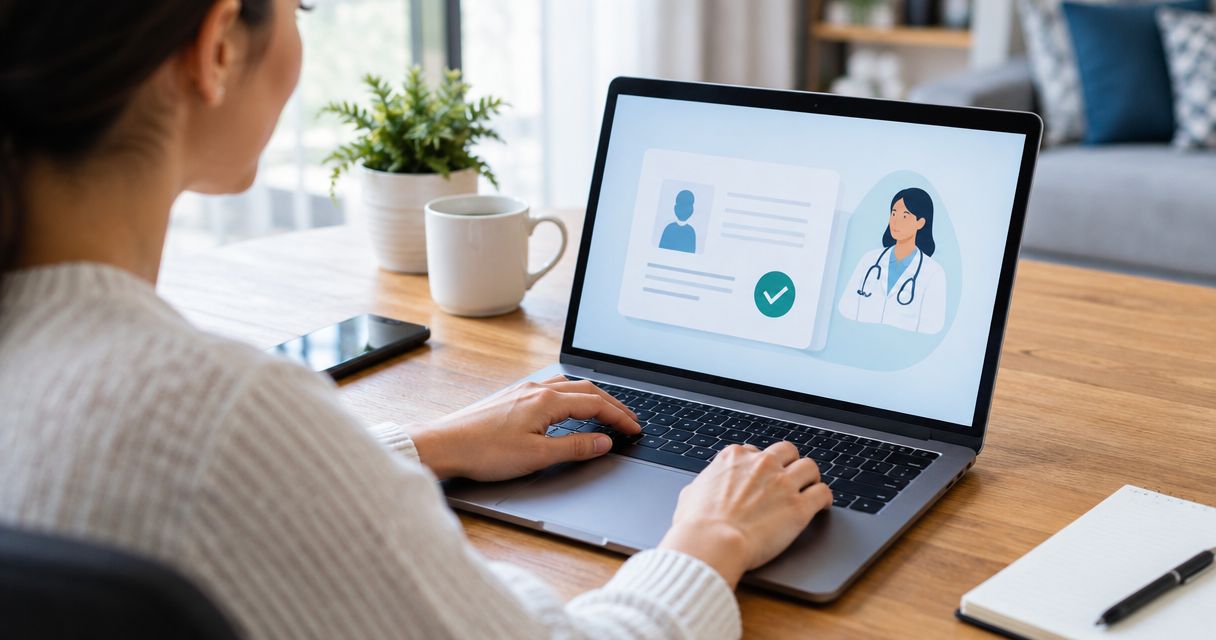
A driver's license medical form can't be finished entirely online for most drivers in 2026 - the DMV or the FMCSA still requires an in-person check of your vision, hearing, blood pressure, and reflexes before a physician can sign off. What you can do online is complete the paperwork, medical history questionnaire, and scheduling steps that lead up to that visit, which cuts real time off the appointment itself.
- A driver's license medical form online usually covers paperwork and history only - the physical exam still happens in person in 2026.
- Vision, hearing, blood pressure, and reflex checks can't be verified over a video call, so no telehealth visit replaces them.
- CDL and other commercial driver medical certificates require an FMCSA-certified examiner who checks you in person.
- NowCare's provider-guided telehealth supports ongoing management of conditions like diabetic foot health and neuropathy that often surface during a fitness-to-drive review.
Why this matters
Most people searching for a driver's license medical form online aren't trying to skip a doctor's visit - they're trying to avoid wasting one. Showing up to a DMV-approved exam without the history form filled out, or without the right documentation from a specialist, means a second trip. Getting the paperwork done ahead of time through a telehealth intake, including with platforms like NowCare, shortens the in-person part to the parts a computer genuinely can't check: reflexes, vision acuity, and blood pressure.
That distinction matters more in 2026 than it used to, because more DMV portals and third-party medical exam networks now offer digital intake forms. The confusion is thinking that digital intake means the whole exam is digital. It isn't, and treating it that way is the most common reason people get turned away at the exam.
Can a driver's license medical form be completed online in 2026?
Part of it, yes. The table below separates the pieces that move online from the pieces that still require a physical visit.
| Step | Can be done online | Needs an in-person visit |
|---|---|---|
| Medical history questionnaire | Yes | |
| Vision acuity test | Yes | |
| Hearing test | Yes | |
| Blood pressure and pulse check | Yes | |
| Neurological / reflex screening | Yes | |
| Physician review of a chronic condition (diabetes, neuropathy, etc.) | Partial - initial review possible via telehealth | Final sign-off usually needs an in-person exam |
| Scheduling and intake paperwork | Yes |
The pattern is simple: anything that requires a physical measurement stays in person. Anything that's a written record, a history, or a scheduling task can move online.
What you can finish online before your exam
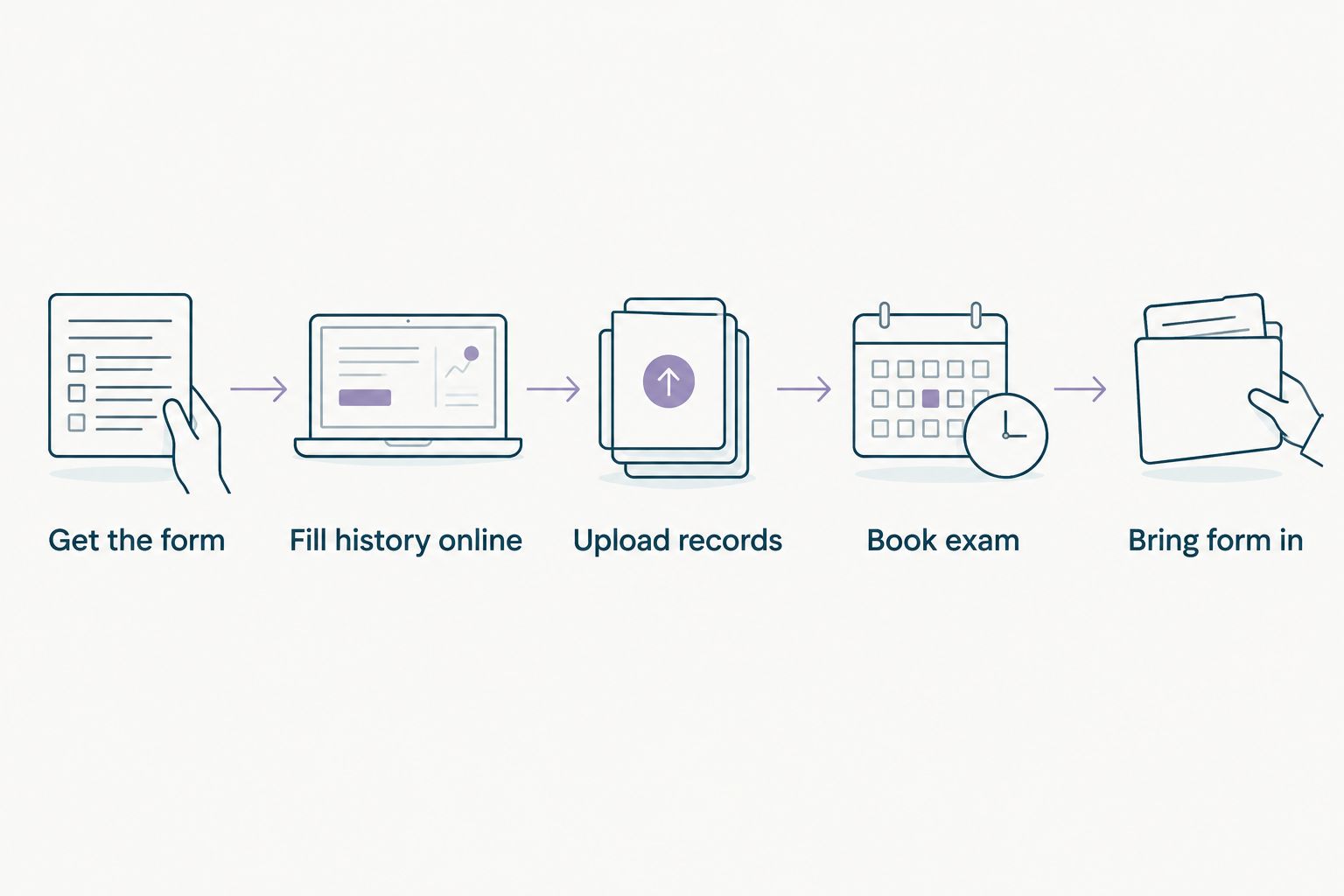
- Get the correct form from your state DMV, or from the FMCSA National Registry if you're being certified for a commercial license.
- Fill out the patient-reported medical history section from home - most exam networks and telehealth intake portals allow this before you book.
- Upload prior test results or specialist letters if your state accepts them - an ophthalmologist's note on vision or an endocrinologist's note on diabetes control, for example.
- Book the in-person portion with a certified examiner. DMV sites list approved medical providers, and FMCSA-certified examiners handle CDL exams specifically.
- Bring the completed intake form to the appointment so the physical exam moves faster - most of the delay in these visits is paperwork done on-site instead of ahead of time.
Why driver's license medical exam rules vary
Not every driver faces the same requirements, and the rules that apply depend on a handful of factors:
- License class. A standard license usually needs less documentation than a commercial license, which falls under federal FMCSA rules rather than state DMV rules.
- Age. Several states require more frequent medical review at renewal once a driver reaches a certain age.
- Underlying condition. Diabetes, seizure disorders, and significant vision loss commonly trigger extra documentation or a specialist's signature.
- New application vs. renewal. A first-time medical certification often requires a fuller exam than a renewal with no new health changes since the last one.
- State jurisdiction. DMV rules differ state to state; commercial driving certification runs through the federal FMCSA system instead.
- Specialist involvement. Some forms require a specific specialist's sign-off - an ophthalmologist for vision, a cardiologist for heart conditions - rather than a general practitioner's.
Where telehealth fits into your driving fitness plan
Telehealth doesn't replace the in-person exam, and no legitimate platform will tell you it can. What it can do is manage the underlying conditions the DMV cares about between renewals. Conditions like diabetic foot health and neuropathy affect sensation in the feet and reflex response on the pedals - both things a fitness-to-drive review looks at closely.
Staying on top of that care between DMV visits, rather than only thinking about it at renewal time, tends to produce a smoother in-person exam when the date arrives. Provider-guided telehealth care for those specific conditions is one piece of preparing for that exam, not a substitute for it.
Manage the conditions the DMV checks
Provider-guided care for diabetic foot health and neuropathy between renewals.
Related questions
Do all states require an in-person exam for a driver's license medical form?
Most state DMVs require an in-person exam for any medical form used to certify fitness to drive, because the exam includes measurements - vision, hearing, blood pressure, reflexes - that a video call can't verify. Requirements for exactly which conditions trigger a medical form, and how often it's renewed, vary by state.
Can a telehealth visit satisfy a DOT medical certificate for commercial drivers?
No, a telehealth visit cannot satisfy a DOT medical certificate on its own. Commercial drivers still need to be examined in person by a medical examiner listed on the FMCSA National Registry, because the exam includes physical measurements the registry requires be taken hands-on.
What happens if my driver's license medical form flags a health condition?
If your driver's license medical form flags a condition, the DMV may request additional documentation from a treating physician or specialist before finalizing the license. Depending on the condition, this can result in a restricted license or a shorter renewal interval instead of an outright denial.
FAQ
Can I get a driver's license medical form completed 100% online in 2026?
No, most driver's license medical forms still require an in-person exam in 2026 because the DMV or FMCSA needs a hands-on check of vision, hearing, blood pressure, and reflexes. Paperwork and medical history can typically be completed online ahead of the visit.
What parts of a driver's medical exam can be done through telehealth?
The medical history questionnaire, intake paperwork, and scheduling can be done through telehealth or an online portal. The physical measurements - vision, hearing, blood pressure, and reflex screening - still require an in-person visit.
Is a driver's license medical form the same as a DOT physical?
No, a standard driver's license medical form and a DOT physical are not the same thing. A DOT physical is a specific exam for commercial drivers performed by an FMCSA-certified medical examiner, while a standard license medical form applies to non-commercial drivers under state DMV rules.
Who can sign a driver's license medical form?
A licensed physician, and in many states a nurse practitioner or physician assistant, can sign a standard driver's license medical form. Commercial license certificates require a medical examiner listed on the FMCSA National Registry.
How often does a driver's license medical form need to be renewed?
Renewal frequency for a driver's license medical form depends on the state, the license class, and the underlying condition being monitored. Commercial license medical certificates and forms tied to conditions like diabetes or seizure disorders are often reviewed more frequently than a standard renewal.
Does diabetes automatically disqualify someone from getting a driver's license?
No, diabetes does not automatically disqualify a driver in 2026. It typically requires additional documentation from a treating physician confirming the condition is managed and stable, which can affect how often the medical form needs renewal.
Can telehealth help manage a condition that affects my driving fitness review?
Yes, provider-guided telehealth can help manage ongoing conditions like diabetic foot health or neuropathy that come up in a fitness-to-drive review, though it does not replace the in-person portion of the DMV or FMCSA exam itself.
One last thing
The single biggest reason people get sent home from a driver's medical exam isn't a failed vision test - it's an incomplete form. Filling out the history questionnaire and gathering specialist letters before you walk in turns a two-visit process into one, which is the actual time savings behind "getting it done online" in 2026.


