
An online consult for medication side effects means completing a secure intake form describing your symptoms and current prescriptions, then having a licensed clinician review your case and decide on next steps, all without booking an office visit. NowCare runs this through its Virtual Urgent Care pillar, where a provider reviews history and medications before recommending any change. The one thing the process can't replace: bloodwork, imaging, or an in-person exam, so a clinician may still send you elsewhere if the side effect signals something that needs hands-on testing.
- An online consult for medication side effects starts with a secure intake form and a licensed clinician review, no office visit required.
- NowCare's Virtual Urgent Care pillar handles common side effects like rashes, GI upset, dizziness, and dosage questions.
- Severe reactions, breathing trouble, or chest pain still need emergency care, not a telehealth visit.
- Clinicians can adjust or send new prescriptions to your pharmacy after reviewing your case in 2026.
- Multiple medications or complex histories often mean a longer review, not a same-visit answer.
Why this matters
A new prescription causing nausea, a rash, or brain fog doesn't always mean stopping the medication cold or waiting three weeks for a callback from your prescriber's office. Side effects that show up in the first days or weeks of a new drug are common enough that most telehealth platforms, including NowCare, built a specific intake path for them.
The risk of skipping this step is bigger than the inconvenience. Stopping a medication abruptly without provider input can be more dangerous than the side effect itself, especially with blood pressure drugs, antidepressants, and some diabetes medications. An online consult gives a licensed clinician a chance to weigh in before you make that call yourself.
How to get an online consult for medication side effects
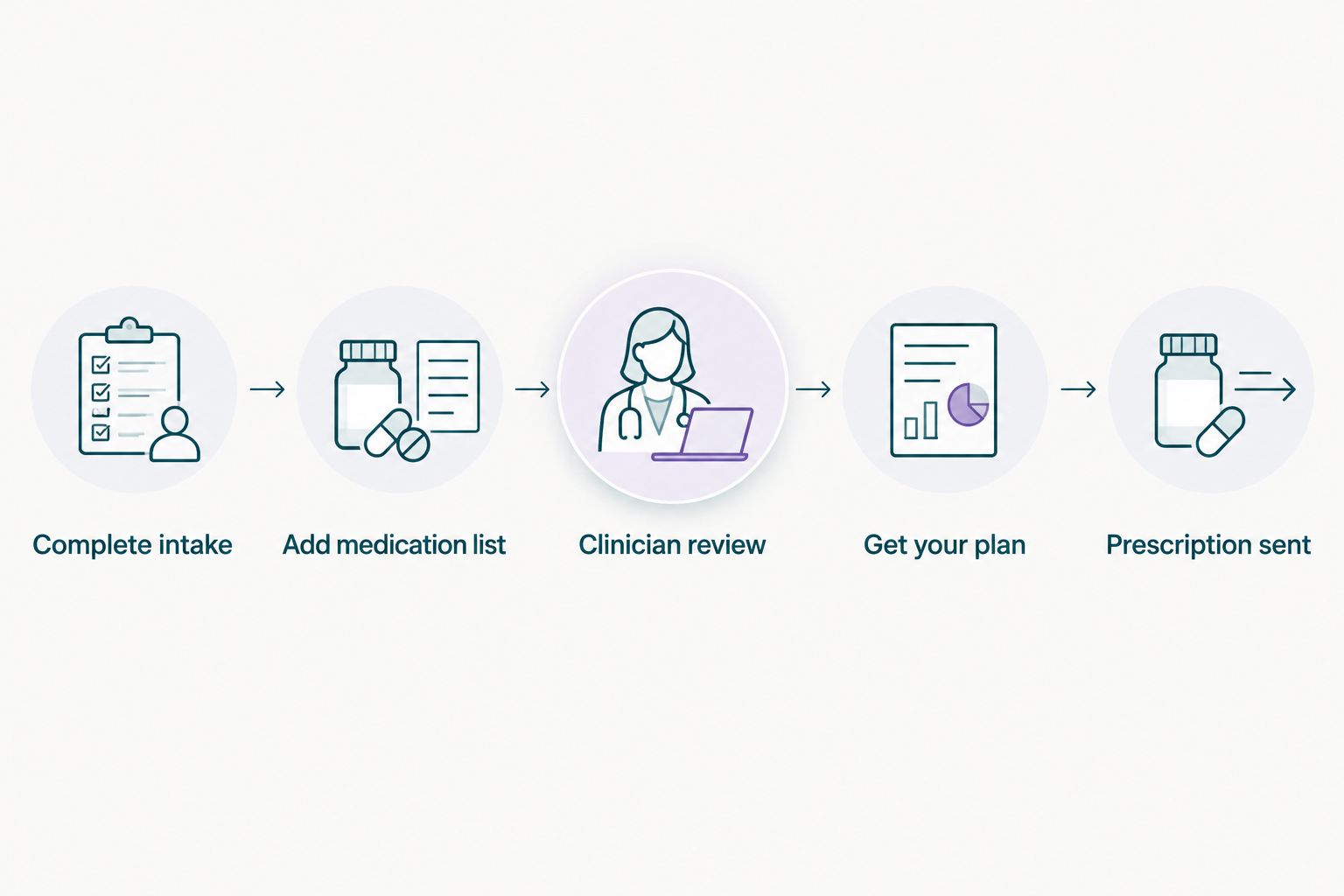
The process runs in a fixed sequence regardless of which telehealth platform handles it. Here's the version NowCare uses for its Virtual Urgent Care visits in 2026:
- Complete the intake form. List the medication, dose, when you started it, and exactly what the side effect feels like and when it started.
- Add your full medication list. Interactions between drugs cause a meaningful share of reported side effects, so a clinician needs the complete picture, not just the newest prescription.
- Submit relevant history. Allergies, prior reactions, pregnancy status, and existing conditions change what a clinician is willing to recommend.
- Wait for clinician review. A licensed provider reads the intake, checks for red flags, and decides whether the case is appropriate for virtual management.
- Get your plan. That might mean a dosage adjustment, a switch to a different medication, monitoring instructions, or a referral to in-person or emergency care if the symptom doesn't fit a virtual visit.
- Prescription sent if needed. Any new or adjusted prescription goes straight to the pharmacy you choose during intake.
Verdict: NowCare's Virtual Urgent Care consult works for common, non-emergency side effects — rashes, nausea, fatigue, dizziness, mild GI symptoms — and it's the wrong tool for chest pain, difficulty breathing, or a severe allergic reaction, which need emergency care instead.
What to have ready before your online consult
A faster, more accurate review depends on what you submit at intake, not on how quickly you click through the form. Have these ready before you start:
- The exact medication name, dose, and how long you've been taking it
- A list of every other prescription, supplement, and over-the-counter drug you're currently using
- A short description of the side effect: onset, severity, and whether it's getting worse or staying the same
- Any known drug allergies or past adverse reactions
- Your preferred pharmacy for a new or adjusted prescription
Skipping any of these doesn't stop the consult from happening, but it usually means a follow-up question before a clinician finalizes anything.
Why the process varies
Not every side effect consult moves at the same pace or ends the same way. A handful of factors decide whether you get a same-visit answer or a longer review:
- Severity of the symptom. Mild fatigue gets handled faster than a symptom that could signal an allergic reaction.
- Number of medications you're on. Patients managing several prescriptions at once, which is common among older adults, take longer to review because interactions have to be ruled out. This is also why people juggling multiple long-term prescriptions often keep an established relationship with primary care for seniors alongside any one-off virtual consult, since a primary provider tracks the full prescription history over time in a way a single visit can't.
- Whether the medication was prescribed elsewhere. A clinician reviewing a prescription from another provider needs more context than one reviewing their own patient's plan.
- State prescribing rules. Controlled substances and certain drug classes carry restrictions that limit what a telehealth clinician can adjust remotely.
- History of allergic reactions. A patient with a documented drug allergy gets a more cautious, sometimes slower, review.
- Whether labs are involved. Side effects tied to blood sugar, kidney function, or liver enzymes usually require in-person labs before any adjustment.
Start your side effect consult
Secure intake, licensed clinician review, no office visit needed.
Related questions about online consults for medication side effects
What side effects need emergency care instead of an online consult?
Chest pain, trouble breathing, swelling of the face or throat, and severe rash with fever need emergency care, not an online consult. These are signs of a reaction that can escalate faster than a telehealth review can respond to, so they go to an ER or urgent in-person care first.
Can an online clinician change your prescription dose?
An online clinician can change your prescription dose after reviewing your intake, medication history, and the specific side effect you're reporting. Whether they do depends on the drug class, your state's telehealth prescribing rules, and whether the medication was originally prescribed by a different provider.
How is an online consult different from calling your pharmacist?
An online consult involves a licensed clinician who can adjust or send a new prescription, while a pharmacist can flag interactions and side effects but generally can't change your prescription. Pharmacists are a fast first check; a clinician review is what actually changes the treatment plan.
FAQ
How do I get an online consult for medication side effects in 2026?
You get an online consult for medication side effects by completing a secure intake form with your symptom, medication list, and history, then waiting for a licensed clinician to review your case and recommend next steps. NowCare handles this through its Virtual Urgent Care pillar without requiring an office visit.
Is an online consult enough for a severe medication reaction?
No, a severe medication reaction with swelling, breathing trouble, or chest pain needs emergency care, not an online consult. Telehealth visits are built for common, non-emergency side effects like rashes, nausea, or fatigue.
Can a telehealth clinician send a new prescription to my pharmacy?
Yes, a telehealth clinician can send a new or adjusted prescription directly to the pharmacy you list during intake once they've reviewed your case. This applies to most non-controlled medications, though state rules limit some drug classes.
Do I need to stop my medication before an online consult?
No, you generally shouldn't stop a medication before an online consult unless a clinician tells you to. Stopping certain drugs abruptly can cause worse effects than the side effect you're reporting.
What information does a clinician need to review a side effect?
A clinician needs the medication name, dose, how long you've taken it, your full current medication list, and a clear description of the side effect's onset and severity. Missing details usually mean a follow-up question before a plan is finalized.
How long does an online medication side effect consult take?
Review time depends on the complexity of your case; straightforward, single-medication side effects tend to move faster than cases involving multiple prescriptions or lab-dependent symptoms. NowCare's clinicians review intake before responding rather than working from a fixed script.
Will an online clinician always change my medication?
No, an online clinician only changes a medication when it's medically appropriate for the side effect reported. Sometimes the plan is monitoring instructions or a referral rather than a dosage change or new prescription.
One last thing
The most common reason an online side effect consult stalls isn't the clinician's review time, it's an incomplete medication list at intake. Listing every supplement and over-the-counter drug alongside your prescriptions in 2026, not just the one causing the problem, is what actually speeds up the plan you get back.


