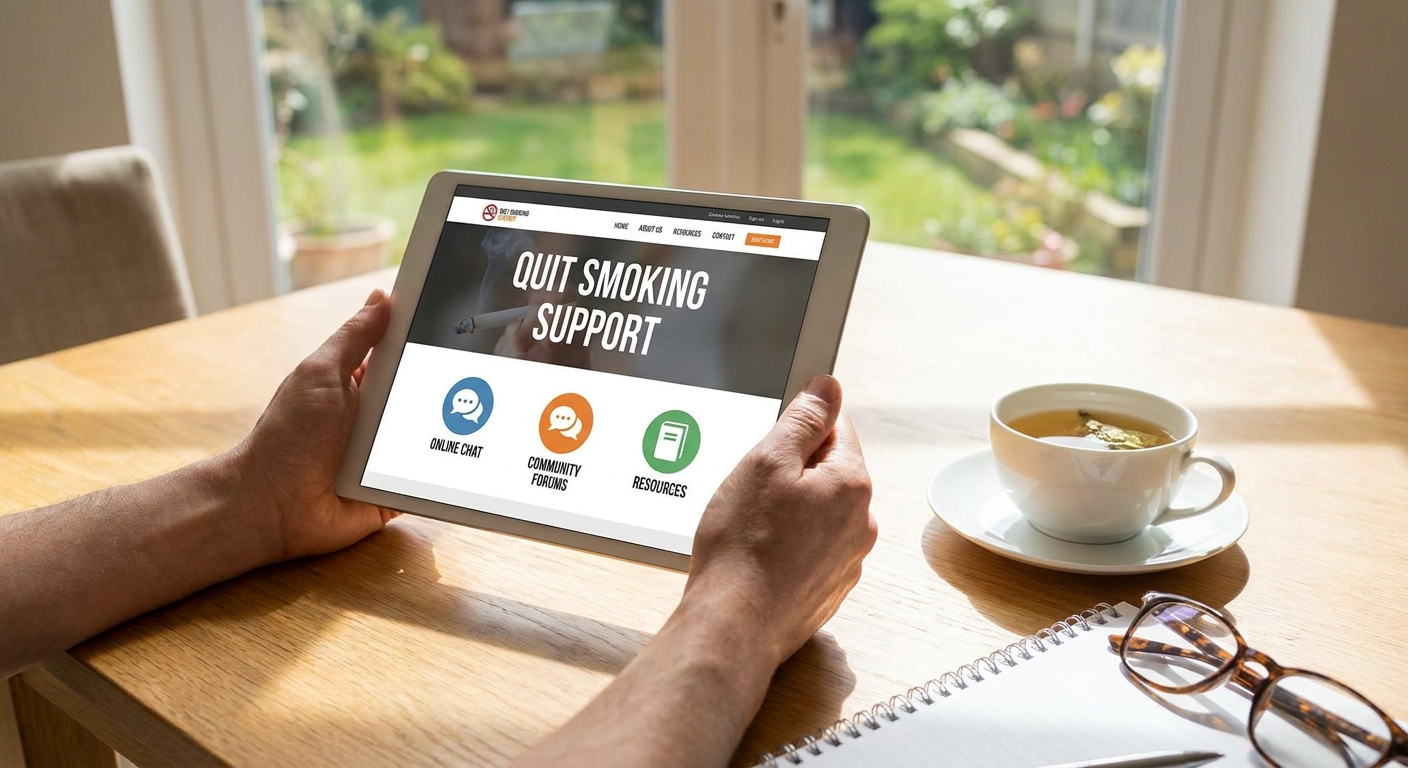
Quitting smoking gets easier when a licensed clinician is guiding the plan instead of a phone app or a stack of pamphlets — here's the exact path to get that support online in 2026.
- NowCare's telehealth smoking cessation support connects you with a licensed clinician for a personalized quit plan — start online today.
- Most virtual intake visits run 15-20 minutes and can lead to a same-day prescription if medically appropriate.
- Nicotine replacement therapy and prescription options like bupropion or varenicline are both available through telehealth review.
- Combining medication with craving-management coaching roughly doubles quit success compared to willpower alone, per longstanding clinical guidance.
- No insurance is required to start an online smoking cessation visit in 2026 — you pay directly for the visit.
Why this matters
Quitting smoking without a plan fails most of the time — the CDC has tracked this pattern for decades, and unassisted quit attempts succeed for only a small fraction of people who try. A licensed clinician can match you to nicotine replacement therapy, a prescription medication, or a combination, based on your smoking history and health profile, instead of leaving you to guess.
Online smoking cessation support closes the biggest access gap: getting an appointment. Instead of waiting weeks for a primary care slot, a telehealth visit for smoking cessation support can happen the same day you decide to quit, and a licensed clinician reviews your intake before anything gets prescribed.
What you'll need
- A device with a camera and stable internet — phone, tablet, or laptop all work
- 15-20 minutes for the initial intake and visit
- Your smoking history: how long you've smoked, how many cigarettes or vapes per day, and prior quit attempts
- A list of current medications and any health conditions (heart disease, seizure history, pregnancy status)
- Your preferred pharmacy name and address, in case a prescription is appropriate
- A quit date in mind, even a rough one — clinicians use this to time medication starts
The steps
1. Start the intake on a smoking cessation support page
Begin at NowCare's telehealth for smoking cessation support page rather than a general contact form. This routes your intake straight to clinicians who handle cessation cases, which cuts down on back-and-forth questions later.
Expected outcome: a short intake form covering smoking history, health background, and quit goals. Common mistake: underreporting daily cigarette count — clinicians dose nicotine replacement therapy based on actual use, and understating it can leave you under-treated for cravings.
2. Complete your health history honestly
The intake asks about cardiovascular history, mental health conditions, pregnancy, and current medications. This isn't a formality — bupropion is not appropriate for people with a seizure history, and varenicline requires dose adjustment for kidney function.
Be specific about dates and dosages if you're on other prescriptions. Common mistake: leaving out over-the-counter nicotine patches or gum you've already tried, since that history changes what a clinician recommends next.
3. Attend the virtual visit with a licensed clinician
A licensed clinician reviews your intake and meets with you by video or secure messaging, depending on the platform's format. This is where you set a real quit date and discuss which option — nicotine replacement therapy, prescription medication, or a combination — fits your smoking pattern.
Expected outcome: a personalized plan with a specific quit date, usually within 1-2 weeks of the visit. Common mistake: picking a quit date around a high-stress week (a work deadline, a move) — clinicians generally recommend a lower-stress window for the first 72 hours.
4. Get your prescription sent to your pharmacy, if appropriate
When medication is part of the plan and medically appropriate, the prescription goes directly to the pharmacy you listed during intake. You don't pick it up from the clinician or handle paperwork between visits.
Expected outcome: prescription ready within the pharmacy's normal fill window, typically same-day or next-day. Common mistake: listing a pharmacy you rarely use — mismatched pharmacy addresses are the most common reason for prescription delays in telehealth visits.
5. Build a craving-management routine before your quit date
Medication handles the physical nicotine withdrawal; it doesn't handle the habit loop — the coffee-and-cigarette pairing, the after-meal routine. Use the days between your visit and your quit date to identify your top three trigger moments and plan a substitute action for each.
Expected outcome: a written list of triggers and swaps, not just a mental note. Common mistake: relying on willpower alone for trigger moments instead of a concrete substitute — gum, a walk, a phone call.
6. Check in during the first two weeks
The first 2 weeks after quitting carry the highest relapse risk, especially days 3 through 5 when nicotine withdrawal peaks. Ongoing care-team support during this window — even a quick message thread — catches problems like insomnia or intense cravings before they derail the quit.
Expected outcome: a brief follow-up touchpoint, virtual or messaging-based, within the first two weeks. Common mistake: assuming no news is good news and skipping the check-in — most successful quits involve at least one follow-up adjustment to dosage or approach.
7. Adjust the plan if the first attempt doesn't hold
Most people who eventually quit smoking for good needed several attempts first — that's documented, not a personal failure. If cravings break through, a follow-up telehealth visit can adjust dosage, switch medication types, or add nicotine replacement therapy on top of a prescription.
Expected outcome: a revised plan, not a restart from zero. Common mistake: treating a slip as proof the plan failed instead of a data point for the next adjustment.
Start your quit plan online
Get matched with a licensed clinician for smoking cessation support today.
Troubleshooting
- Cravings spike around day 3-5: This is peak nicotine withdrawal, not a sign the plan isn't working — flag it at your next check-in so dosage can be adjusted.
- Insomnia after quitting: Sleep disruption is a common withdrawal symptom. If it persists past the first week, a visit for telehealth for insomnia and sleep issues can address it directly instead of letting poor sleep undermine the quit attempt.
- Irritability and anxiety spikes: Nicotine withdrawal amplifies stress response. If anxiety symptoms feel unmanageable on their own, telehealth for anxiety and stress management covers that separately from the cessation plan.
- Prescription didn't show up at the pharmacy: Double check the pharmacy name and address you submitted during intake — mismatched details are the top cause of delayed fills.
- Nicotine replacement therapy isn't cutting cravings: This usually means the dose is too low for your prior cigarette count. Flag it at your follow-up rather than doubling up on patches or gum on your own.
- Relapsed after a stressful event: One slip doesn't erase the plan. Restart your quit date and bring the trigger event up at your next visit so the plan accounts for it.
Tools and resources
- Telehealth for smoking cessation support — the intake page to start your plan
- How to prepare for your first telehealth appointment — what to have ready before your video visit
- A written trigger-and-swap list (coffee, driving, after meals)
- Your pharmacy's name, address, and phone number
- A quit-date calendar reminder set 1-2 weeks out
“Most successful quits aren't the first attempt — they're the one where the plan got adjusted instead of abandoned.”
What to do next
If you're not sure a video visit is the right first step, read how to prepare for your first telehealth appointment so the intake moves faster once you do book. Everything above assumes provider-guided care — a licensed clinician reviewing your history before anything gets prescribed, which is standard for telehealth smoking cessation support in 2026.
FAQ
What's the best way to get help for smoking cessation online?
The most reliable path is a telehealth visit with a licensed clinician who reviews your smoking history and prescribes nicotine replacement therapy or medication if appropriate. Self-directed apps without clinician review skip the dosing and health-screening step that improves quit rates.
Is telehealth smoking cessation as effective as in-person visits?
Yes — the clinical assessment and prescribing process is the same whether it happens by video or in an office. The main difference is convenience: a virtual visit can happen the same day you decide to quit.
How much does online smoking cessation support cost in 2026?
Costs vary by platform and whether medication is prescribed, so check current pricing directly on the intake page before booking. No insurance is required to start a visit.
Can a telehealth doctor prescribe medication to quit smoking?
Yes, a licensed clinician can prescribe bupropion, varenicline, or nicotine replacement therapy through a telehealth visit when medically appropriate. The prescription is sent directly to the pharmacy you choose.
How long does a virtual smoking cessation visit take?
An initial intake and visit typically runs 15-20 minutes. Follow-up check-ins during the first two weeks after quitting are usually shorter.
Do I need insurance for telehealth smoking cessation help?
No, most telehealth smoking cessation visits in 2026 don't require insurance — you pay for the visit directly. This removes the wait for a covered in-network appointment.
What happens after my first online smoking cessation visit?
You'll have a quit date, a medication plan if one was prescribed, and a follow-up touchpoint scheduled for the first two weeks, which is when relapse risk peaks. Any prescription is sent straight to your chosen pharmacy.
Is nicotine replacement therapy available through telehealth?
Yes, nicotine replacement therapy is one of the standard options a licensed clinician can recommend during a telehealth smoking cessation visit, often alongside or instead of prescription medication.
One last thing
The two-week mark after quitting matters more than the quit date itself — most relapses happen in that window, not on day one, which is exactly why a follow-up check-in (not just the initial visit) is the step people skip most often.


