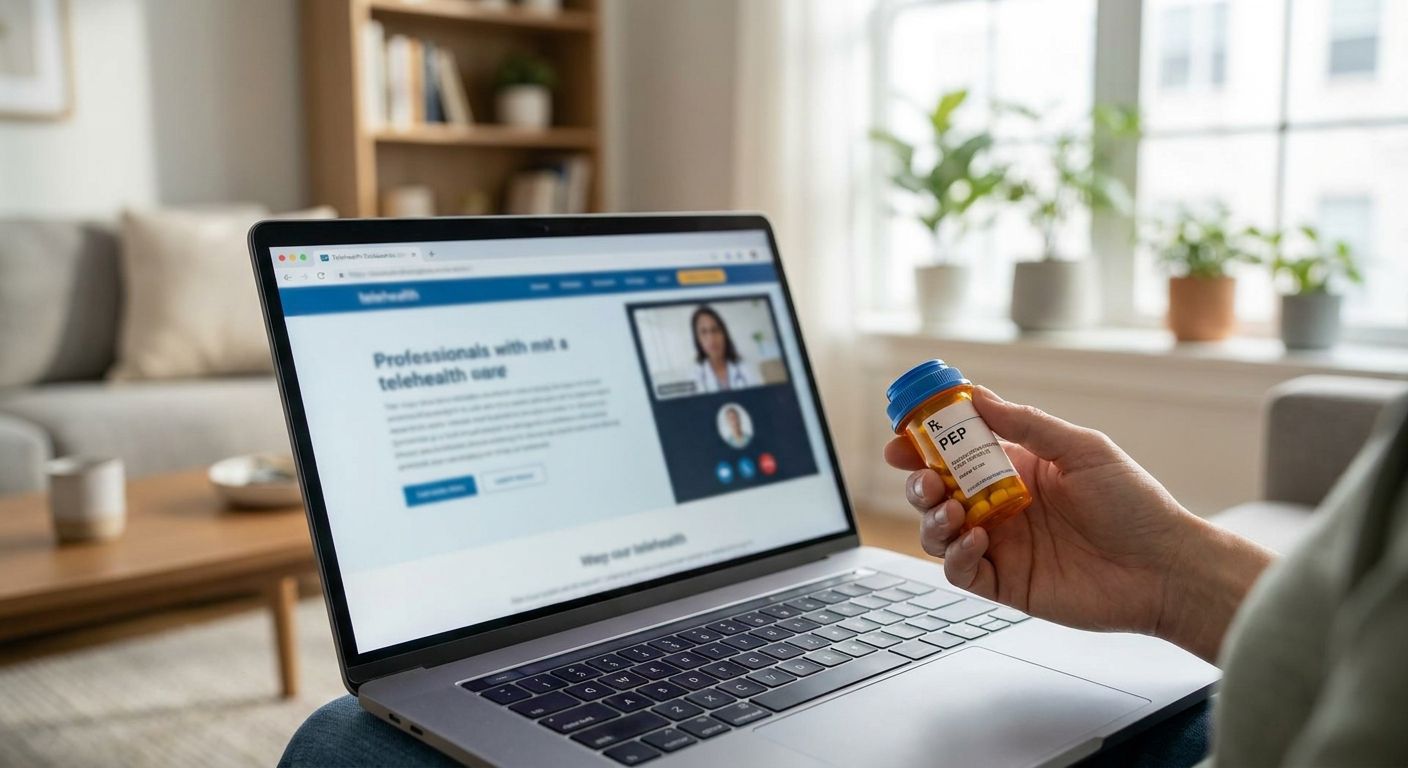
Post-exposure prophylaxis (PEP) is not something you order through a mail-order telehealth intake form — it's a 28-day emergency medication you need to start within 72 hours of a possible HIV exposure, and the fastest path to it in 2026 is still an emergency room or a same-day urgent care visit. Telehealth can help with the booking and the follow-up care around it, but it can't skip the clock.
- PEP must start within 72 hours of exposure — the emergency room is the fastest route in 2026.
- Same-day virtual urgent care visits can evaluate exposure and route a prescription, but timing is tight.
- After 72 hours, PEP won't prevent infection — ask about ongoing PrEP instead.
- NowCare's telehealth platform handles STD testing, HIV PrEP prescriptions, and same-day urgent care visits.
- The full PEP course runs 28 days, with follow-up HIV testing at 4-6 weeks and 3 months.
Why this matters
HIV exposure is a narrow-window medical emergency, not a routine same-day med refill. The CDC has said for years that post-exposure prophylaxis only works when started within 72 hours, and the closer you wait to that limit, the less protective it is — the hour matters more than which pharmacy fills the script.
Most people searching for PEP medication online in 2026 are trying to skip a waiting room, but skipping the medical evaluation isn't an option. A clinician has to confirm your HIV status, check kidney function, and rule out drug interactions before anyone writes the prescription. If the same incident raises concerns about other infections, get tested for STDs online once the PEP decision is handled — that follow-up testing matters as much as the antiretroviral course itself.
How do you get PEP medication online after HIV exposure?
- Call or go to the nearest emergency room immediately if the exposure happened in the last few hours. EDs stock antiretrovirals and can start PEP the same visit — no telehealth appointment needed first.
- If the ER isn't accessible, book a same-day urgent care or telehealth visit inside the 72-hour window. A licensed clinician still has to assess exposure risk before any prescription goes out.
- Complete baseline labs. An HIV antibody/antigen test and a kidney function panel are standard before starting PEP, since the medication clears through the kidneys.
- Pick up the 28-day prescription same day at a local pharmacy. PEP doesn't ship overnight the way a maintenance medication refill does — same-day pickup is the norm.
- Return for follow-up HIV testing at 4-6 weeks and again at 3 months to confirm the exposure didn't result in infection.
Within 2 hours: go to the emergency room
The emergency room remains the fastest way to start PEP medication after HIV exposure, especially in the first two hours when the exposure details are freshest and lab draws are simplest. EDs carry antiretrovirals on-site and don't wait on a pharmacy transfer.
Verdict: go to the ER first if you're within a few hours of exposure — it's still the most reliable option in 2026.
Within 24-72 hours: urgent care or same-day telehealth
Between 24 and 72 hours out, a same-day urgent care visit or a same-day telehealth evaluation can still get PEP started, but only if a clinician can see you and route a prescription to a pharmacy the same day. Book an urgent care video visit if the ER line is long or the exposure happened after hours — speed of access matters more than the format of the visit at this stage.
Verdict: use whichever option gets you seen fastest, not whichever feels most convenient.
After 72 hours: PEP won't work — ask about PrEP instead
Past the 72-hour mark, PEP is no longer recommended because the medication can't reliably stop HIV from establishing infection once that window closes. If there's ongoing exposure risk — a partner living with HIV, inconsistent condom use, or repeated potential exposures — a telehealth HIV PrEP prescription is the right tool for protecting against future incidents, not this one.
Verdict: missing the window means switching from emergency response to prevention planning.
Why PEP access varies
- Time elapsed since exposure — the closer to 72 hours, the fewer clinics will start treatment.
- Local ER wait times and whether a same-day telehealth slot is available at all.
- Occupational versus non-occupational exposure — a workplace needlestick often triggers a different reporting and evaluation path than a personal exposure.
- Insurance status and prior authorization requirements at the clinic or pharmacy.
- Pharmacy stock of the specific antiretroviral combination the clinician prescribes.
- Whether baseline labs can be drawn same-day at the visit location.
Need a same-day visit today?
Book a same-day virtual urgent care visit for exposure evaluation and follow-up care.
Related questions
Can you get PEP through telehealth?
Yes, but only if the visit happens within 72 hours of exposure and the same day it's booked — a licensed clinician still has to evaluate risk and order labs before any prescription goes out. Telehealth works best as the booking method here, not a shortcut around the medical evaluation itself.
What's the difference between PEP and PrEP?
PEP is a 28-day emergency course started within 72 hours after a specific exposure, while PrEP is a daily or long-acting medication taken on an ongoing basis to prevent HIV before any exposure happens. Someone who just finished a PEP course and still has ongoing risk typically transitions into a PrEP prescription for future protection.
How effective is PEP after HIV exposure?
PEP significantly lowers the risk of HIV infection when it's started within 72 hours and taken correctly for the full 28 days, per CDC guidance, though it isn't a guarantee. Missing doses or starting late reduces how well it works, which is why same-day access matters more than which provider writes the script.
FAQ
Can you get PEP medication online?
You can't order PEP through a standard mail-order telehealth flow — you need a same-day medical evaluation, in person or virtual, within 72 hours of exposure. Booking that visit is the part telehealth can speed up.
How long do you have to start PEP after HIV exposure?
You have 72 hours after exposure to start PEP, and starting sooner within that window improves how well it works. Waiting until hour 60 is riskier than starting at hour 4, even though both technically qualify.
Is PEP available without a prescription?
No, PEP requires a clinician to evaluate your exposure, order baseline labs, and write a prescription before any pharmacy can fill it. There's no over-the-counter or self-service version of this medication.
What happens if you miss a dose of PEP?
Take the missed dose as soon as you remember and continue the regular schedule — don't double up. Consistency across the full 28-day course matters more than any single missed dose.
Can urgent care prescribe PEP?
Yes, urgent care clinics can prescribe PEP if you're seen the same day and still inside the 72-hour window. The visit still requires baseline HIV and kidney function testing before the prescription goes out.
Is PEP the same medication as PrEP?
No, PEP is a 28-day emergency regimen started after a specific exposure, while PrEP is an ongoing medication taken to prevent HIV before exposure occurs. They use different dosing schedules and serve different purposes.
Do you need an HIV test before starting PEP?
Yes, a baseline HIV antibody/antigen test is standard before starting PEP, along with a kidney function panel. This confirms your current status and checks that your kidneys can process the medication.
One last thing
PEP works best measured in hours, not days. CDC guidance is clear that efficacy declines the longer you wait even inside the 72-hour window, so starting at hour 4 versus hour 60 is a real difference in outcome, not a technicality. If the window has already closed, the conversation shifts from emergency treatment to ongoing prevention — that's where a telehealth HIV PrEP prescription and regular STD testing through NowCare become the more useful tools for 2026 and beyond.


