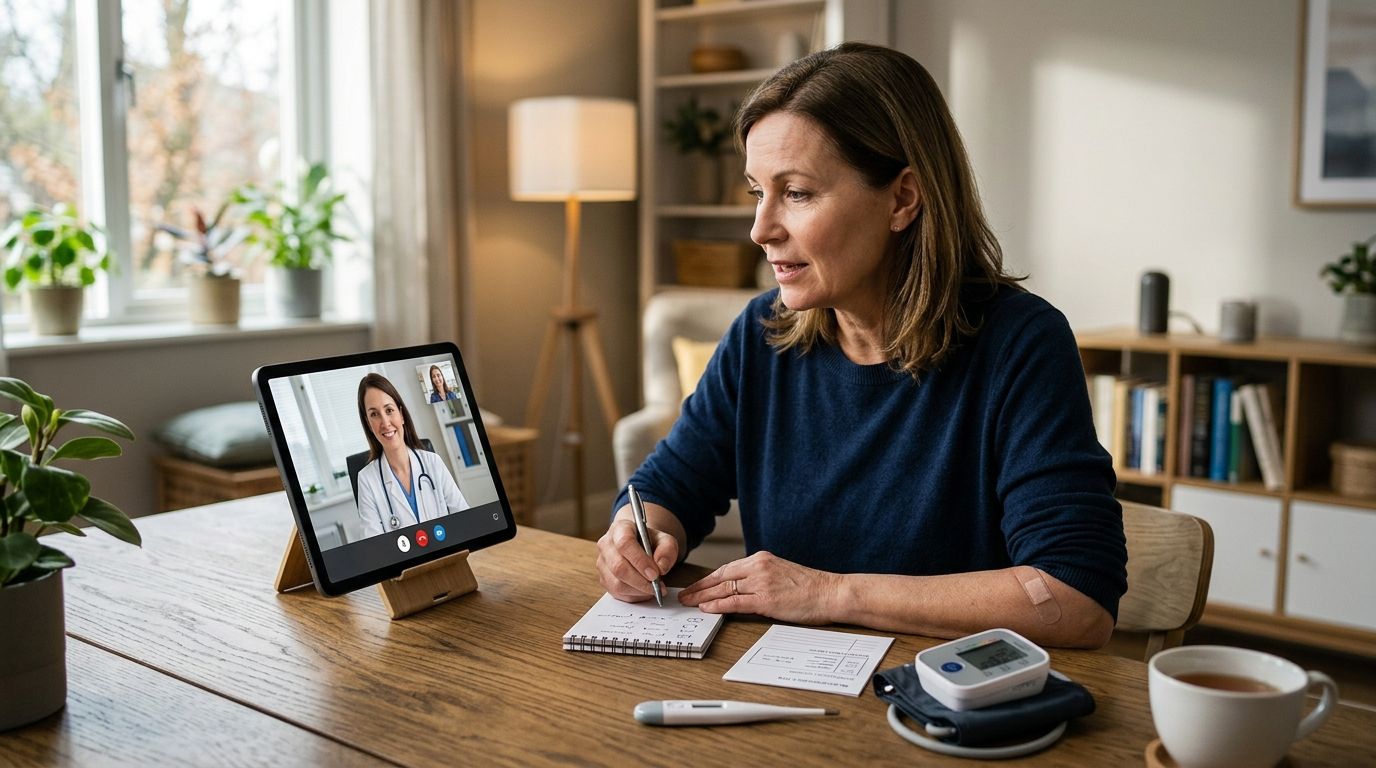
Telehealth can complete part of your pre-op medical clearance — health history review, medication reconciliation, and screening questions — but it cannot replace the in-person physical exam, vitals check, and lab work most surgical centers require before an operating date in 2026.
- Pre-op medical clearance telehealth visits cover history review and medication checks, not the physical exam.
- Most surgery centers in 2026 still require an in-person history and physical dated within 30 days of the procedure.
- Virtual visits work best for paperwork, low-risk minor procedures, and pre-clearance questions — not general anesthesia clearance.
- Skipping the in-person exam to save a step risks a canceled surgery date when the surgeon's office rejects the packet.
Why this matters
Surgical schedulers reject incomplete clearance packets, and a canceled surgery date means rebooking the operating room, the anesthesiologist, and your own time off work. Telehealth platforms like NowCare can handle pieces of the clearance process online, which saves a trip for the parts that don't require a stethoscope. The mistake is assuming a virtual visit alone satisfies a surgeon's full checklist — it almost never does in 2026, and finding that out three days before surgery is the expensive version of finding out.
Pre-op clearance exists so the surgical team knows your heart, lungs, and medication list can handle the procedure and the anesthesia. That's a physical-exam job in most cases, not a video-call job.
How to get pre-op medical clearance through telehealth
The process has a telehealth-eligible half and an in-person half. Here's the order that avoids wasted visits:
- Get the exact checklist from your surgeon's office first. Every surgical practice has its own clearance form — history and physical (H&P), labs, EKG, anesthesia questionnaire. Don't guess.
- Book a virtual visit for the parts that qualify. A telehealth primary care or urgent care visit can cover your health history, current medications, allergies, and a symptom screen.
- Get any required labs or EKG done locally. A telehealth clinician can order labs or an EKG, but someone has to draw the blood or run the leads in person — that part doesn't move to a screen.
- Send results back for review. The virtual clinician reviews lab and EKG results and can often sign off on the portions within their scope.
- Confirm whether the surgeon's office accepts a virtual-only signature. Many require the final H&P to be signed by a clinician who has physically examined you within the required window.
- Submit the completed packet before the deadline — most centers want it finalized 1-2 weeks ahead of the surgery date, not the morning of.
| Clearance task | Telehealth | In-person required |
|---|---|---|
| Health history & medication review | Yes | |
| Symptom / risk screening questionnaire | Yes | |
| Physical exam (heart, lungs, abdomen) | Yes | |
| Labs / EKG collection | Yes | |
| Final signed clearance letter | Depends on surgeon's policy | Often required |
Verdict: telehealth speeds up the paperwork half of pre-op clearance in 2026, but almost every surgical center still requires an in-person exam for the physical findings.
Why pre-op clearance requirements vary
Not every surgery needs the same clearance depth. What drives the difference:
- Type of anesthesia — general anesthesia triggers a much stricter clearance than local anesthesia or sedation.
- Surgery risk level — a minor outpatient procedure clears faster than a multi-hour operation.
- Age — older patients often need cardiac screening (EKG, sometimes stress testing) that younger patients skip.
- Existing conditions — diabetes, heart disease, or blood clotting disorders add specialist sign-offs to the checklist.
- Hospital or surgery center policy — some centers accept a clearance letter from any licensed clinician; others require it from your own primary care provider.
- Insurance or facility accreditation rules — accreditation standards commonly require the H&P to be dated within 30 days of the procedure, which limits how early you can start the process.
Talk to a licensed clinician online
NowCare connects you with licensed clinicians for provider-guided virtual visits.
Can a virtual visit satisfy pre-op clearance requirements?
A virtual visit satisfies part of pre-op clearance requirements but rarely all of them in 2026 — it covers history, medications, and screening, while the physical exam and any testing still need an in-person appointment. Ask your surgeon's office directly whether they accept a telehealth-only clearance letter before you book anything, since policies differ by facility.
How soon before surgery do I need medical clearance?
Most hospitals and surgery centers require the history and physical to be dated within 30 days of the procedure, a standard that comes from longstanding hospital accreditation requirements rather than any single surgeon's preference. Book your telehealth portion early in that window so there's time left to schedule any labs, an EKG, or a follow-up in-person exam before the deadline.
What happens if I'm not cleared for surgery?
If clearance isn't finished or a clinician flags a risk, the surgical team typically postpones the procedure until the issue is addressed. That can mean a delayed surgery date, an added specialist visit, or in some cases a switch to a lower-risk anesthesia plan — all reasons to start the clearance process well before the week of surgery.
Platforms offering virtual urgent care, including NowCare's telehealth visits, can handle the medication reconciliation and history-review portion for lower-risk, minor procedures — but check with your surgical team first, since anything requiring vitals or an EKG still needs an in-person stop. Treat telehealth as the fast lane for paperwork, not a replacement for the exam room.
FAQ
What is pre-op medical clearance?
Pre-op medical clearance is a written sign-off from a clinician confirming you're healthy enough for a planned surgery and its anesthesia. It typically includes a health history, physical exam, and sometimes labs or an EKG.
Can telehealth fully replace an in-person pre-op physical?
No, telehealth cannot fully replace an in-person pre-op physical in 2026 because the exam requires listening to the heart and lungs and checking vitals directly. Virtual visits cover history, medications, and screening questions instead.
Do all surgeries require the same level of clearance?
No, clearance depth depends on the type of anesthesia, the surgery's risk level, your age, and any existing conditions like diabetes or heart disease. Minor outpatient procedures under local anesthesia usually need less than major surgery under general anesthesia.
How far in advance should I start pre-op clearance?
Start pre-op clearance at least 30 days before surgery since most facilities require the history and physical to be dated within that window. Starting later risks not having time for labs or an in-person exam before the deadline.
Will my surgeon accept a telehealth clearance letter?
It depends on the surgical facility's own policy, so ask before booking any virtual visit. Some centers accept a clearance letter from any licensed clinician; others require it from your own primary care provider who has examined you in person.
What tests can't be done through telehealth?
Labs, EKGs, and the physical exam itself can't be done through telehealth since they require in-person equipment and hands-on assessment. A telehealth clinician can order these tests, but someone still has to perform them locally.
What happens if clearance isn't finished in time?
If clearance isn't finished in time, the surgical team typically postpones the procedure until the checklist is complete. This is why starting the process 30 days out, not the week before, matters.
One last thing
Ask for your surgeon's clearance checklist before you book a single virtual visit — practices reject telehealth-only clearance letters outright even when every step was done correctly, simply because their policy requires an in-person signature. Confirming that one detail first saves a repeat visit and keeps your 2026 surgery date intact.


