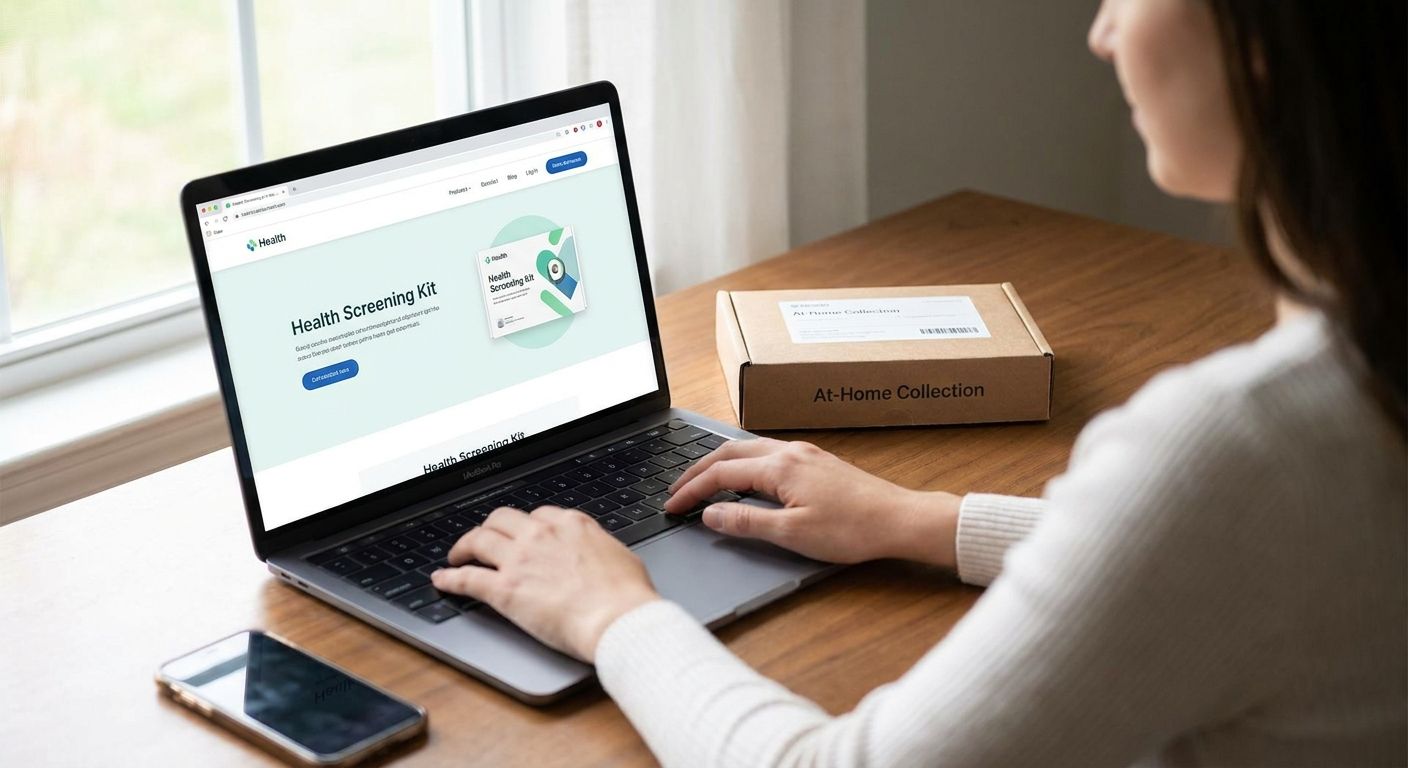
Getting tested for an STD online means completing a secure intake, choosing a virtual visit or an at-home kit, and getting your results through a patient portal — no clinic waiting room required. In 2026, the entire process from screening to treatment can happen on a phone or laptop, with a licensed clinician reviewing every step before anything gets ordered or prescribed.
- Getting tested for STDs online in 2026 means choosing a virtual visit with a lab order or an at-home mail-in kit.
- A standard panel checks for chlamydia, gonorrhea, syphilis, HIV, and herpes — five infections in one order.
- HIV tests carry a window period of 10 to 90 days after exposure, so test timing affects accuracy.
- NowCare's telehealth for STD testing and treatment lets a clinician prescribe treatment the same visit if results come back positive.
- CDC guidance recommends yearly chlamydia and gonorrhea screening for sexually active people 25 and younger.
Why this matters
Waiting rooms and awkward front-desk conversations keep a lot of people from getting tested, even when they already suspect something's wrong. A telehealth visit removes that friction: intake happens through a private form instead of a receptionist, and if you test positive, treatment can be prescribed without booking a second appointment.
The biggest difference between online and in-person testing isn't accuracy — the lab running the analysis is usually the same either way. It's speed of access. NowCare's telehealth for STD testing and treatment page lays out which panels are available and how results reach your portal, which is worth a look before you decide between a kit and a live visit.
How to get tested for STDs online
| Method | Sample collection | Typical turnaround | Best for | Verdict |
|---|---|---|---|---|
| Virtual visit + lab order | Blood draw or urine sample at a partner lab | A few business days after the lab receives the sample | Symptoms present or a same-visit prescription need | Buy |
| At-home mail-in kit | Finger-stick blood spot, urine, or swab, collected yourself | A few business days plus mail transit both ways | Asymptomatic screening, privacy-first testing | Hold if you need fast confirmatory results |
Six steps cover nearly every online STD testing pathway in 2026:
- Pick a testing method. Choose a live virtual visit that ends in a lab order, or an at-home kit shipped to your door.
- Complete a secure intake. Enter symptoms, exposure history, and current medications so a clinician can match you to the right panel.
- Get clinician review. A licensed clinician confirms which infections to test for — not every panel needs every test, and over-testing adds cost without adding information.
- Provide your sample. Walk into a partner lab for a blood draw or urine sample, or use the kit mailed to you.
- Wait for results. Results post to a secure patient portal, typically within a few business days of the lab receiving your sample.
- Get treatment if needed. A positive result triggers a follow-up message from a clinician, who can send a prescription straight to your pharmacy.
Before any of this, reading through how to prepare for your first telehealth appointment saves real time — most delays trace back to missing ID verification or an incomplete symptom history, not the visit itself.
Start an online STD screening
A licensed clinician reviews your intake before any lab order goes out.
Virtual visit with a lab order: what it covers
A live virtual visit is the faster path when you already suspect an infection or need a specific prescription fast. The clinician reviews your symptoms in real time, decides which tests apply, and generates a lab order you can walk into a partner lab with the same day.
Pros: same-visit prescription if results come back positive, direct symptom review with a clinician, faster turnaround for people who already know what they're testing for.
Cons: requires booking a live appointment slot, and a full syphilis or HIV confirmation usually still needs an in-person blood draw rather than a self-collected sample.
NowCare's model for this is built around the same idea as its other Virtual Urgent Care visits: a licensed clinician reviews the intake before anything gets ordered, and treatment only happens if it's medically appropriate.
At-home mail-in kits: what to expect
A mail-in kit skips the in-person stop entirely for some panels, using a finger-stick blood spot or a self-collected swab instead of a full venous draw. That trade-off suits people who dislike needles or want to test without taking time off, but it can mean a longer wait if the lab needs a full serum sample to confirm a result.
For anyone juggling multiple lab orders across conditions, not just STD panels, comparing platforms built for lab work and bloodwork orders shows how turnaround time and portal design actually differ between services.
Pros: no live appointment required, sample collection on your own schedule, private by design.
Cons: no real-time symptom review, and a positive result still requires a follow-up message to a clinician before treatment starts — a kit alone doesn't close that loop.
Why the testing process varies
The right method depends on what you're screening for and how fast you need an answer. Before you commit to a kit, it pays to compare at-home STD test providers on sample type, turnaround time, and whether a clinician reviews positive results before checkout — some platforms sell the kit and stop there, leaving you to find treatment on your own. That gap is the main reason a kit-only purchase can cost you a second round of shopping once a result comes back positive.
- Panel size — a basic two-test panel for chlamydia and gonorrhea turns around faster than a full panel that adds HIV, syphilis, and herpes.
- Sample type — urine and swab samples ship easily in a kit; a full serum draw for syphilis or HIV confirmation usually needs a lab visit.
- Local lab access — partner labs like Quest and LabCorp cover most metro areas, but rural patients can wait longer on a kit's return shipping.
- Insurance vs. self-pay — a lot of people choose online testing specifically to avoid a claim appearing on an insurance Explanation of Benefits.
- Symptom status — asymptomatic screening moves faster than a visit involving visible symptoms that need photo review or a referral.
- Follow-up treatment — a positive bacterial result resolves same-visit with antibiotics; a positive HIV or herpes result usually starts a referral to ongoing care.
Is online STD testing as accurate as in-person testing?
Online STD testing is as accurate as in-person testing when the sample reaches the same certified lab — the difference is who collects the sample, not who analyzes it. A blood draw at a partner lab and a blood draw at a clinic run through identical lab equipment either way.
How fast do online STD test results come back?
Results typically post to a secure patient portal within a few business days of the lab receiving your sample. Confirmatory tests for syphilis or HIV sometimes take longer because a preliminary positive triggers a second lab step before the portal updates.
Can you get treatment for an STD without an in-person doctor visit?
Yes — a licensed clinician can prescribe treatment for common bacterial infections like chlamydia and gonorrhea entirely online once a lab confirms the result. Viral infections such as herpes or HIV usually start with online treatment for symptoms but move into ongoing, longer-term care.
FAQ
How do I get tested for STDs online in 2026?
You complete a secure intake, choose a virtual visit with a lab order or an at-home kit, provide a sample, and review results through a patient portal. A licensed clinician confirms the panel before anything is ordered and can prescribe treatment if a result comes back positive.
What does a standard STD panel test for?
A standard panel typically tests for chlamydia, gonorrhea, syphilis, HIV, and herpes — five infections covered in one order. Some panels add hepatitis B and C depending on symptoms and exposure history.
How soon after exposure should I get tested?
HIV tests carry a window period of 10 to 90 days after exposure depending on the test type, so testing too early can produce a false negative. Bacterial infections like chlamydia and gonorrhea can often be detected within one to two weeks.
Is an at-home STD kit as reliable as a lab visit?
An at-home kit is reliable when the sample reaches a certified lab, but self-collected finger-stick or swab samples sometimes need a repeat draw if the volume is insufficient. A live visit with a full blood draw reduces that risk for confirmatory testing.
Can I get treated the same day as a positive result?
Bacterial infections like chlamydia and gonorrhea can be treated same-day through a follow-up message with a licensed clinician once results post. Viral results typically start treatment for symptoms online, then move into a longer care plan.
Do I need insurance to get tested for STDs online?
No — most online STD testing platforms, including NowCare's telehealth for STD testing and treatment, run on transparent one-time pricing that doesn't require insurance. That's also why a lot of patients choose it, to avoid a claim appearing on an insurance statement.
How often should sexually active people get tested?
CDC guidance recommends annual chlamydia and gonorrhea screening for sexually active people 25 and younger, with more frequent testing for anyone with multiple partners or new exposure. People outside that age range should test based on symptoms and exposure risk.
One last thing
The window period is the detail most people skip past: antibody-only HIV tests need up to 90 days to reliably detect infection, while newer antigen/antibody combo tests can pick it up at 18 to 45 days. If your exposure was recent, ask whether a follow-up test at the window's end is included before you buy a one-time kit — otherwise you're paying twice for one answer.


