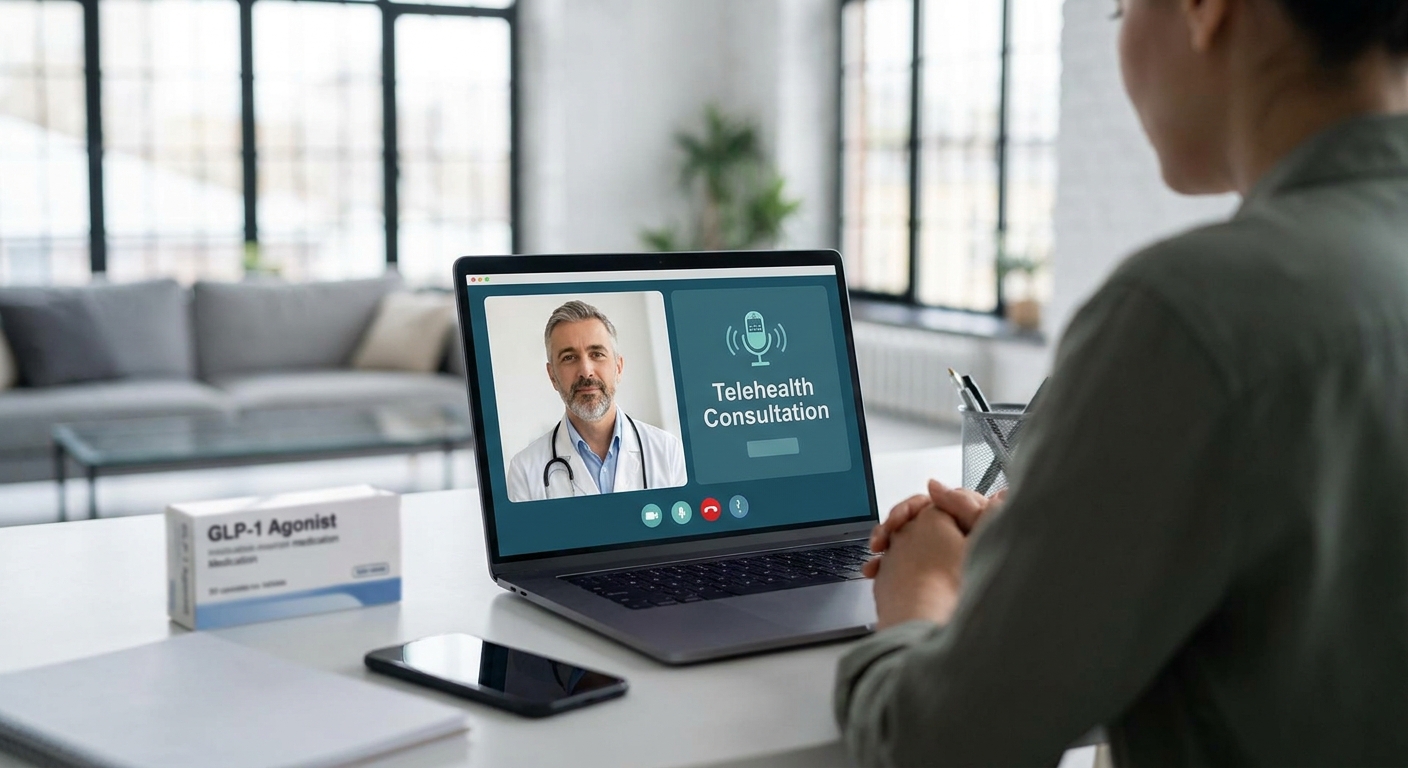
Qualifying for GLP-1 weight loss medication online comes down to three things: your BMI, your health history, and whether a licensed clinician determines the medication is medically appropriate for you after a virtual visit.
TL;DR
Most adults qualify for GLP-1 weight loss medication online if they have a BMI of 30 or higher, or a BMI of 27+ with a weight-related condition like type 2 diabetes, high blood pressure, or sleep apnea. Qualification is decided by a licensed provider during a telehealth visit, not by a quiz alone. NowCare reviews your intake, medical history, and current labs before any prescription decision is made — treatment only proceeds if it's medically appropriate. If you meet the criteria and have no disqualifying conditions, most people complete intake-to-consult in a single week in 2026.
Why this matters
GLP-1 medications changed weight management faster than almost any other drug class in the last decade, and demand hasn't slowed heading into 2026. The catch: these are prescription medications, not supplements, and eligibility isn't just "do you want to lose weight." Clinicians look at BMI, comorbidities, medication history, and contraindications like a personal or family history of certain thyroid cancers or pancreatitis.
The online qualification process exists to protect you, not to gatekeep you. A rushed or skipped intake is the fastest way to get denied, delayed, or prescribed something that isn't right for your body. Knowing exactly what a provider checks before you start saves you a wasted visit.
What you'll need
- A current height and weight (or recent BMI calculation)
- A list of current medications and supplements, including dosages
- Recent labs if you have them: A1C, fasting glucose, lipid panel, thyroid panel
- Any diagnosed conditions tied to weight: type 2 diabetes, prediabetes, hypertension, sleep apnea, PCOS
- A government-issued photo ID for identity verification
- A device with a camera and stable internet for your virtual visit
- 15-20 minutes of uninterrupted time for the consultation
The steps
1. Check your BMI and health history against clinical criteria
Calculate your BMI before you start anything. The general clinical threshold is 30+ on its own, or 27+ with a weight-related condition such as type 2 diabetes, hypertension, or obstructive sleep apnea. If you're under those numbers, expect a provider to decline GLP-1 and suggest another path instead.
Common mistake: people round up their BMI or skip a comorbidity they think "doesn't count." List every diagnosed condition, even ones that feel unrelated to weight — PCOS and prediabetes both factor into eligibility decisions.
2. Gather your medical records and current medications
A provider needs your full medication list to screen for interactions and contraindications, particularly with insulin, sulfonylureas, or other diabetes medications. Pull your most recent labs if you have them; A1C and thyroid panel results speed up review significantly.
If you have a personal or family history of medullary thyroid carcinoma or MEN 2 syndrome, disclose it immediately — these are standard disqualifiers for GLP-1 therapy. Common mistake: leaving off supplements, because clinicians still need to check for interactions.
3. Choose a licensed telehealth provider
Not every online weight loss service uses licensed physicians or nurse practitioners for prescribing decisions. Confirm the platform uses provider-guided review rather than an automated approval system. For anyone juggling a packed calendar, a service built around telehealth weight loss for busy professionals matters as much as the medication itself, since consistent follow-up is what drives results.
Common mistake: picking based on price alone without confirming a real clinician reviews your case.
4. Complete the online intake and health questionnaire
Expect 15-20 questions covering weight history, prior attempts at weight loss, comorbidities, medication use, and any prior GLP-1 experience. Answer with specifics — "lost 12 lbs then regained it in 2024" tells a provider more than "tried dieting before."
If you have PCOS, mention it explicitly in the questionnaire; hormonal conditions change how a provider frames your treatment plan. A dedicated resource on telehealth weight loss for people with PCOS covers how that diagnosis factors into eligibility and dosing conversations.
5. Attend your virtual consultation
This is where qualification actually happens — not the intake form. A licensed clinician reviews your BMI, history, and labs live, asks follow-up questions, and decides whether GLP-1 therapy is medically appropriate for you. Visits typically run 15-20 minutes in 2026, longer if labs are missing or your history is complex.
Common mistake: treating the visit like a formality. Providers deny or defer prescriptions when answers are vague or contradict the intake form.
6. Provide any requested labs or vitals
If you don't have recent A1C or metabolic panel results, expect the provider to request them before finalizing a prescription. This isn't a delay tactic — it's a safety check, especially for anyone with borderline blood sugar or kidney function concerns.
Expected outcome: labs ordered through a partner lab or your own provider, results reviewed within days, and a follow-up message confirming next steps.
7. Receive your treatment plan and prescription decision
If you qualify, you'll get a personalized plan: starting dose, titration schedule, and what to monitor in the first 30 days. If you don't qualify, a legitimate provider explains why and offers alternatives — this is a sign the platform is doing real clinical review, not rubber-stamping approvals.
Common mistake: assuming "approved" means the medication ships instantly. Pharmacy availability and insurance or self-pay logistics still apply.
8. Set up follow-up and ongoing support
GLP-1 treatment isn't a one-time prescription — it requires check-ins to adjust dosing, monitor side effects, and track progress. Confirm your provider offers secure messaging and scheduled follow-up visits, not just an initial script.
Expected outcome: a follow-up visit scheduled within 4-6 weeks and a way to message your care team between appointments if side effects show up.
Troubleshooting
- Denied for BMI under 27: Ask about non-GLP-1 medical weight management options; some providers offer alternative appetite-regulating medications.
- Missing labs delaying approval: Request a lab order through the platform or use recent results (within 6-12 months) from your primary care provider.
- Insurance won't cover it: Ask your provider about self-pay pricing and manufacturer savings programs directly — coverage varies heavily by plan in 2026.
- Nausea or GI side effects after starting: Message your care team before skipping doses; dose adjustments resolve most early side effects.
- Weight loss plateau after a few months: This is common and usually means a dosing conversation with your provider, not a sign the medication stopped working.
- Medication shortage at the pharmacy: Ask your provider about therapeutic alternatives in the same drug class rather than going without.
Tools and resources
- BMI calculator (any reputable clinical calculator) to check eligibility before you apply
- Your most recent lab results, ideally within the last 6-12 months
- NowCare for provider-guided intake and ongoing follow-up support
- A resource on best telehealth weight loss programs compared if you're still evaluating where to start
What to do next
Once you've confirmed your BMI and gathered your medical history, the fastest next step is comparing how different telehealth platforms structure intake, pricing, and follow-up before you commit to one. Reviewing how telehealth weight loss programs compare side by side saves you from starting intake twice.
FAQ
What BMI do you need to qualify for GLP-1 online? Most programs use a BMI of 30+ on its own, or 27+ with a weight-related condition like type 2 diabetes or hypertension. A licensed provider confirms this during your consultation, not an automated form.
Can you qualify for GLP-1 without a diagnosed condition? Yes, if your BMI is 30 or higher on its own. Below that threshold, a comorbidity like prediabetes or sleep apnea is usually required.
How long does it take to qualify for GLP-1 online? Most people complete intake, consultation, and receive a treatment decision within a single week in 2026, faster if labs are already on file.
Do you need blood work to qualify? Not always upfront, but providers commonly request A1C, metabolic panel, or thyroid labs before finalizing a prescription, especially if you don't have recent results.
Is GLP-1 telehealth qualification different for PCOS? The BMI and comorbidity criteria stay the same, but PCOS changes how a provider frames dosing and monitoring since insulin resistance is often part of the picture.
What disqualifies you from GLP-1 medication? A personal or family history of medullary thyroid carcinoma, MEN 2 syndrome, or a history of pancreatitis are standard disqualifiers a provider screens for during intake.
Does insurance cover GLP-1 prescribed through telehealth? Coverage depends entirely on your specific plan; ask your provider directly about self-pay options since coverage rules shifted heavily going into 2026.
Can you qualify for GLP-1 online if you've never tried it before? Yes — prior use isn't a requirement. Providers evaluate current BMI, labs, and history regardless of whether this is your first prescription or a restart.
One last thing
The detail most people miss: qualification isn't a one-time checkpoint. Providers reassess as your labs and weight change, which means someone who didn't qualify at 27 BMI with borderline labs in early 2026 might qualify three months later if an A1C crosses the threshold — or might need a dose adjustment if it drops. Treat the intake as the start of an ongoing clinical relationship, not a single gate you pass through once.


