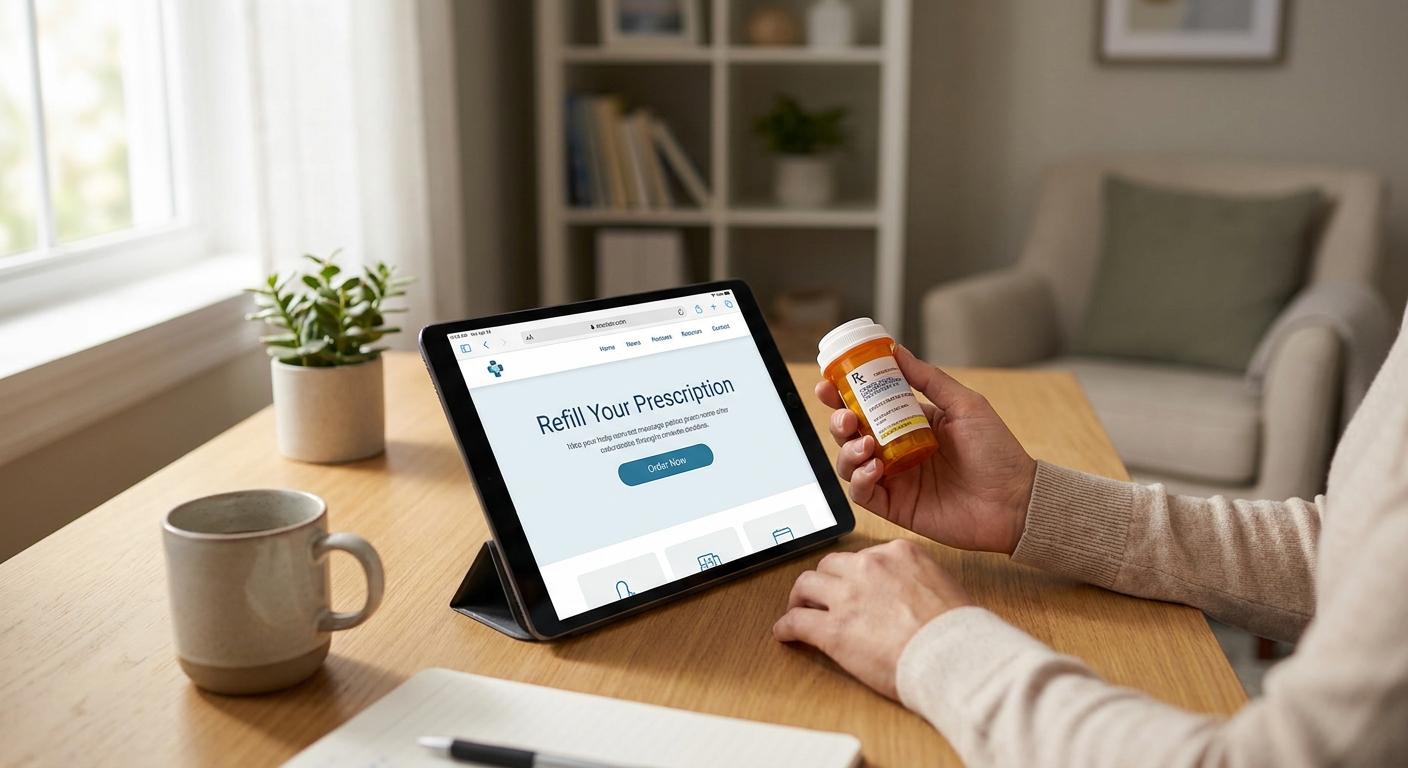
Refilling a prescription without stepping into a waiting room is standard practice in 2026 — if the medication qualifies and a licensed provider reviews it first.
This guide walks through exactly how to refill a prescription online, what disqualifies a refill from being done remotely, and what to do when the process stalls.
TL;DR
Most routine prescriptions — including many foot and ankle medications like topical antifungals, neuropathy support, and chronic condition maintenance drugs — can be refilled online in 2026 through a patient portal and a brief clinical review, no office visit required. Controlled substances and prescriptions past their expiration window almost always need a new visit. Verdict: online refill works for the majority of maintenance medications, but confirm eligibility before you assume it's a one-click process. Platforms like NowCare use provider-guided review, meaning a licensed clinician signs off before anything gets sent to the pharmacy.
Why this matters
A missed refill isn't just an inconvenience. Gaps in medication for chronic conditions, diabetic foot complications, or neuropathy management can undo months of progress in a matter of days. Scheduling an in-person visit just to get a signature on a refill wastes a slot that could go to a patient who actually needs a hands-on exam.
Online refill workflows exist to separate the two: routine continuation of a working treatment plan doesn't need a physical exam, but it still needs clinical eyes on the chart. That's the whole model behind provider-guided telehealth — the technology handles logistics, the clinician handles judgment.
What you'll need
- An active patient account or portal login with your provider
- The name and dosage of the medication you're refilling
- Your pharmacy name, address, or preferred delivery option
- A recent update on symptoms or side effects (most portals ask for this)
- Insurance or payment information on file
- 10-15 minutes for the intake, plus wait time for clinical review
If you don't have an account yet, setting one up is usually the first bottleneck. Patients moving away from a traditional clinic model often start here — see how to switch to online primary care if you're building your full care relationship online rather than just chasing a single refill.
The steps
1. Confirm the medication is refill-eligible
Not every prescription can move through an online workflow. Chronic maintenance medications, most topical treatments, and many hormone or metabolic therapies typically qualify. Controlled substances, expired prescriptions, and anything requiring in-person monitoring (like certain wound checks for diabetic foot complications) usually don't.
Common mistake: assuming a refill request will auto-approve because it worked last time. Providers re-review eligibility at each refill, not just the first prescription.
2. Log into your patient portal
Access your existing account or create one if this is your first request. This is where your medication history, past visit notes, and secure messaging live.
Common mistake: creating a duplicate account instead of recovering an old login, which fragments your medical history across two profiles.
3. Submit a refill request or symptom update
Most portals ask a short set of questions: is the medication working, any new symptoms, any side effects since the last fill. This isn't busywork — it's the clinical checkpoint that keeps the process compliant and safe.
Be specific. "Heel pain reduced from 7/10 to 3/10 since starting treatment" gives a clinician something to act on. "Fine" doesn't.
4. Message your care team if anything has changed
If your symptoms shifted, if you missed doses, or if you're not sure the medication is still the right fit, say so in secure messaging before submitting the refill. A provider reviewing a flagged note responds differently than one rubber-stamping a routine request.
Common mistake: staying silent about a side effect out of a wish to "just get the refill through." This delays things more than it speeds them up if the pharmacy later flags an interaction.
5. Wait for clinical review
A licensed clinician reviews the request, checks it against your chart, and either approves it, asks a follow-up question, or requests a video visit if something doesn't add up. Turnaround is typically same-day to 24 hours for straightforward requests in 2026, though this varies by provider and medication type.
6. Confirm the pharmacy send-through
Once approved, the prescription routes electronically to your pharmacy of choice or, in some cases, ships directly. Double-check the pharmacy name and address in your profile — a stale address is the single most common cause of a refill going to the wrong location.
7. Schedule a follow-up if flagged
Some refills come back with a note: "approved, but let's do a video visit next cycle." That's not a rejection — it's a provider making sure a chronic condition is still on track before continuing treatment long-term. If you're managing an ongoing condition, a chronic condition management visit at this stage keeps your care plan current instead of just extending an old one indefinitely.
Troubleshooting
Refill request denied with no explanation. Check secure messaging first — most denials come with a clinician note explaining what's missing, often a symptom update or a request for a video visit.
Prescription is expired. Standard prescriptions typically expire after a set period regardless of refills remaining. This requires a new visit, not a refill request — book one instead of resubmitting the same form.
Insurance isn't recognized on the account. Update payment and insurance details in your profile before submitting; a mismatch here is one of the most common reasons refills stall in the queue.
Pharmacy shows no incoming prescription. Confirm the pharmacy name and address match exactly what's on file — electronic routing fails silently when there's a name mismatch between two locations of the same chain.
No response after 48 hours. Send a follow-up message rather than resubmitting a duplicate request, which creates confusion in the queue and can slow things down further.
Medication requires monitoring you haven't had recently. Certain chronic and hormone therapies need periodic labs or check-ins. If it's been a while, expect a request for a quick video visit before the refill clears.
Tools and resources
- Patient portal with secure messaging (standard on most telehealth platforms in 2026)
- Your current pharmacy's contact info, saved and up to date
- A running list of your active medications and dosages
- How to book an urgent care video visit if your refill request gets escalated to a live visit
- Provider-guided platforms that require clinical sign-off before dispensing, rather than auto-approving requests
What to do next
If you're refilling one prescription but still driving to a physical office for everything else, the bigger fix is moving your whole primary care relationship online. Patients without an existing provider, especially those without insurance, often assume online care isn't an option — it is. Start with online primary care for young adults without insurance if cost or lack of coverage has been the thing holding you back from establishing care in the first place.
FAQ
Can you refill any prescription online without an office visit? No — routine maintenance medications typically qualify, but controlled substances and expired prescriptions almost always require a new visit or video consultation first.
How long does an online prescription refill take in 2026? Most straightforward requests clear within 24 hours, though anything flagged for clinical review can take longer if a provider requests more information.
Is online prescription refill covered by insurance? Coverage depends on your plan and the platform; update your insurance details in your patient profile before submitting to avoid a stalled request.
What happens if my prescription is expired? An expired prescription needs a new visit, not a refill request — the online refill workflow only extends an active, unexpired prescription.
Do I need a video call to refill a prescription? Not for most routine refills — a secure intake form and provider review is usually enough, though your clinician can request a video visit if something in your chart needs a closer look.
Can foot and ankle prescriptions like antifungals or neuropathy medications be refilled online? Yes, in most cases — these fall into the routine maintenance category, though clinical review still applies at every refill cycle.
What if my pharmacy doesn't receive the prescription? Check that the pharmacy name and address on file match exactly; electronic routing errors are the most common cause of a refill not arriving.
Is refilling a prescription online safe? Yes, when a licensed clinician reviews the request before it's sent — that clinical checkpoint is what separates a legitimate refill workflow from an unsupervised auto-fill.
One last thing
The fastest refills in 2026 aren't the ones submitted last-minute — they're the ones messaged to a care team three to five days before the medication runs out, giving a clinician time to review without the pressure of an empty pill bottle. Build that buffer into your routine once, and refills stop being a recurring scramble.


