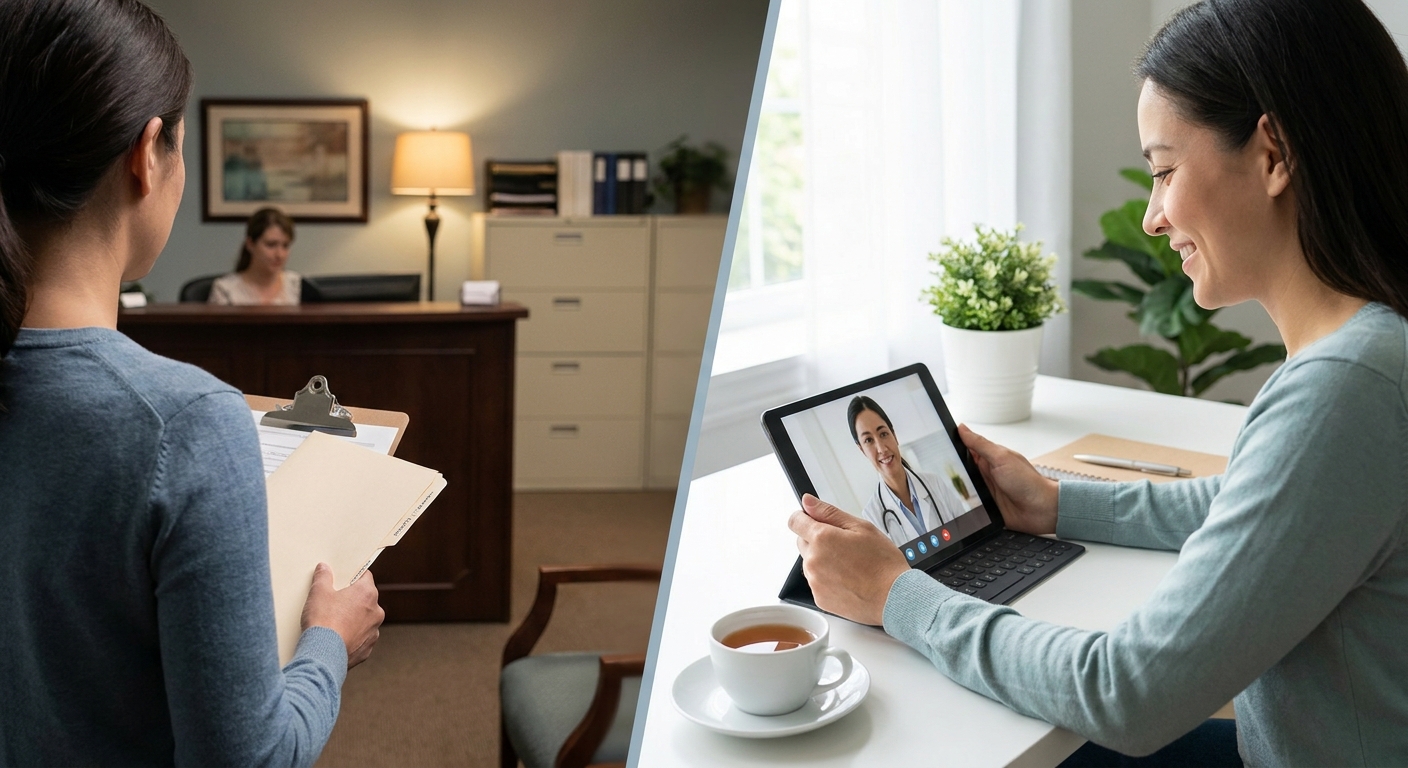
Switching your primary care doctor to a telehealth provider in 2026 means moving your medical records, picking a licensed clinician who can actually prescribe and refer in your state, and closing the old relationship without leaving a gap in your care.
- Switching a primary care doctor to telehealth in 2026 takes 10-14 days if you request records first.
- HIPAA gives your old office up to 30 days to release records — ask in writing, not by phone.
- Keep specialty telehealth like NowCare's foot and ankle care running separately during the switch — do this.
- Confirm your new telehealth doctor is licensed in your state before you cancel anything — non-negotiable.
Why this matters
A botched switch costs you a prescription refill, a lab order, or a referral you needed three weeks ago. The risk isn't the technology — video visits work fine for most primary care — it's the handoff between doctor one and doctor two.
Most people who run into trouble skipped one thing: they canceled the old doctor before the new one had their history. Switching to online primary care only goes smoothly when the records move before the relationship ends, not after.
If you're also managing something specialized — diabetic foot care, chronic heel pain, nail fungus — that piece doesn't have to move at all. A platform like NowCare that connects you with licensed clinicians for podiatric care can keep running in parallel with a new telehealth primary care doctor. You're not required to consolidate everything into one provider on day one.
What you'll need
- Government ID and your current insurance card
- A list of active medications with dosages and prescribing doctor
- Contact info and portal access for your current primary care office
- Two years of visit summaries, or written authorization for the new provider to request them
- 15-30 minutes to complete new-patient intake forms
- A working camera and stable internet connection for the video visit
The steps
1. Pull your records before you touch anything else
Request your chart now, while you're still an active patient at the old office. Under HIPAA, providers have up to 30 days to release records once you submit a written request — most offices with electronic charts do it in 5-10 business days in 2026.
Ask for the last two years of visit notes, current medication list, immunization history, and any lab or imaging results. Common mistake: requesting records verbally over the phone. Put it in writing through the patient portal or a signed release form so there's a paper trail if the office is slow.
2. Vet the new telehealth doctor's license and prescribing scope
A telehealth doctor can only treat you legally if they're licensed in the state where you're physically sitting during the visit, not where the company is headquartered. Confirm this before you book, especially if you split time between two states.
Also confirm what they can prescribe. Most telehealth primary care doctors handle maintenance medications — blood pressure, cholesterol, thyroid — without issue, but controlled substances often require an in-person visit at some point under federal telehealth prescribing rules. Common mistake: assuming every telehealth doctor can refill every prescription type.
3. Submit a written records-release request
Send a signed authorization to your old office naming the new provider as the recipient. This moves faster than requesting records for yourself and forwarding them, because it skips a step and creates a direct provider-to-provider transfer.
Most offices use a standard release-of-information form. If yours doesn't have a portal, a signed fax or mailed form still works — just keep a copy with the date you sent it.
4. Book your first telehealth visit and finish intake early
Schedule the first visit for after you expect records to arrive, not before. Complete intake forms 24-48 hours ahead so the visit time is spent on your actual health history, not paperwork.
Bring a written list of every medication, dose, and the reason you take it. Common mistake: logging in five minutes before the visit and rushing through intake, which leads to an incomplete medication reconciliation.
5. Transfer active prescriptions to the new provider
Once the new doctor has your chart, ask them to review and re-authorize your current prescriptions during the first visit. Don't let a refill lapse while records are in transit — most pharmacies can bridge a short gap with a provider call, but that's a fallback, not a plan.
Maintenance medications for chronic conditions are usually the easiest to transfer cleanly since they don't require controlled-substance rules.
6. Set a firm cutover date
Don't run two active primary care relationships indefinitely. Pick a date — typically once the new doctor confirms they have your records and an active prescription plan in place — and formally end the old one on that day.
Common mistake: letting the old relationship stay technically active for months out of habit, which creates confusion if both offices try to manage the same prescription.
7. Schedule labs and follow-ups so nothing lapses
If you had annual labs, imaging, or a follow-up scheduled with your old doctor, get those orders reissued by the new telehealth provider or confirm they'll accept results sent directly from the lab. Chronic condition management especially depends on this — a missed A1C check or lipid panel just because paperwork didn't transfer is entirely avoidable in 2026 with electronic labs.
Troubleshooting
- Old office won't release records within 30 days — file a formal complaint with your state's medical board; the HIPAA deadline is enforceable.
- New telehealth doctor can't prescribe a controlled substance — ask about their in-person partnership network or plan a one-time in-office visit for that medication only.
- Insurance doesn't cover the new provider — check if the visit qualifies for out-of-network reimbursement before assuming it's a total loss.
- No next-day appointment when you're sick — ask about same-day sick-visit availability before you cancel your old doctor, not after.
- Portal messages go unanswered for days — call during business hours; portals are often triaged slower than phone lines.
- You travel between states often — confirm your telehealth doctor holds licenses in every state where you spend meaningful time, not just your home address.
“A telehealth primary care doctor only works if you actually get a next appointment when you're sick — check average time-to-visit before you cancel your old doctor.”
Tools and resources
- Signed HIPAA authorization form (from your current office's front desk or portal)
- A running medication list with dosages, updated before each visit
- How to prepare for your first telehealth appointment for what to have ready before you log in
- Your state medical board's website, to confirm the new doctor's license status
- A calendar reminder set for the day records are due, so a slow office doesn't quietly slip past 30 days
If your foot and ankle care is separate from this switch — heel pain, diabetic foot checks, nail fungus — NowCare keeps that provider-guided relationship intact regardless of who your primary care doctor is. You don't need to fold every condition into one provider to make the switch clean.
FAQ
What's the best way to switch a primary care doctor to telehealth in 2026?
Request your records in writing before canceling your old doctor, confirm the new telehealth provider is licensed in your state, then set a firm cutover date once records and prescriptions have transferred. Skipping the records request first is the most common reason people lose a prescription refill during the switch.
Is telehealth primary care as good as in-person care in 2026?
For most routine visits — medication management, chronic condition check-ins, sick visits — telehealth primary care works as well as an office visit. Conditions needing a physical exam, imaging, or in-person labs still require occasional in-person coordination.
How long does it take to transfer medical records to a new telehealth doctor?
Most offices with electronic health records release your chart in 5-10 business days once you submit a written request. Federal law under HIPAA sets 30 days as the maximum turnaround time.
Can a telehealth doctor prescribe controlled substances?
Some can, but federal telehealth prescribing rules often require at least one in-person evaluation for controlled substances. Ask the new provider directly about their process before you assume a full transfer is possible.
Does insurance cover switching to a telehealth primary care doctor?
Most major insurers cover telehealth primary care visits the same as in-person visits, but coverage depends on your specific plan and whether the provider is in-network. Check with your insurer before booking the first visit.
What happens if my new telehealth doctor isn't licensed in my state?
They legally cannot treat you, and any prescription written would be invalid. Confirm state licensing before you book, especially if you split time between two states.
How much does it cost to switch primary care doctors to telehealth?
The switch itself is typically free — records requests and the first telehealth visit cost the same as a standard office copay under most insurance plans. Costs vary by provider and plan, so confirm before your first visit.
Can I keep a specialist like a podiatrist while switching my primary care doctor to telehealth?
Yes — specialty telehealth care, like NowCare's provider-guided foot and ankle treatment, runs independently of your primary care relationship. Switching your primary care doctor doesn't require changing or pausing specialist care.
One last thing
The step people skip most in 2026 isn't the records request — it's asking the new telehealth doctor directly how fast they can see you when you're actually sick. A primary care switch that looks perfect on paper still fails if the next-day sick visit doesn't exist when you need it, so ask that question in the first call, not after you've already canceled the old doctor.


