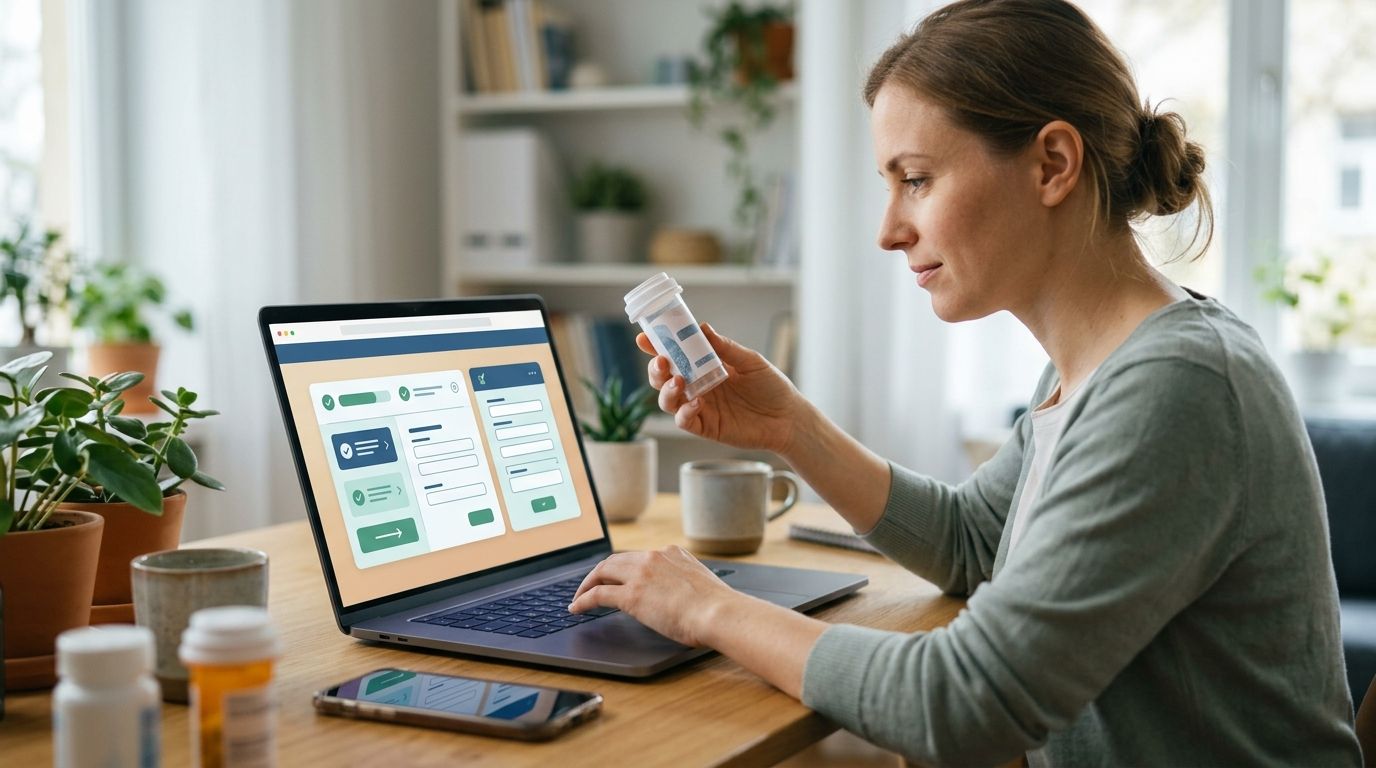
Transferring a prescription to a new pharmacy online takes about two minutes to request and usually finishes within 24 to 48 hours in 2026. The catch: controlled substances (like ADHD medication or certain pain relievers) often cannot be transferred between pharmacies at all, and some states cap transfers to one per prescription — check with your new pharmacy before you count on a same-day switch.
- Transferring a prescription to a new pharmacy online usually completes within 24-48 hours in 2026.
- Most chain pharmacy apps (CVS, Walgreens, Walmart) let you submit the request directly online or in-app.
- Controlled substances often cannot transfer between pharmacies, or only once, depending on state law.
- A NowCare visit sends your prescription straight to the pharmacy you choose, so there's nothing to transfer later.
- Calling the new pharmacy's transfer line is still the most reliable backup if the online form stalls.
Why this matters
A slow prescription transfer means missed doses, especially for time-sensitive medication like antibiotics or GLP-1 programs where a gap in supply matters. Most people don't find out about transfer restrictions until they're standing at the counter with an empty bottle. Knowing the process, and the exceptions, before you switch pharmacies saves a trip and a wasted day.
How do you transfer a prescription to a new pharmacy online?
The fastest route is to let the new pharmacy do the work — you request it, they contact your old pharmacy directly.
- Open the new pharmacy's app or website (CVS, Walgreens, Walmart, Rite Aid, and most grocery-chain pharmacies all support this in 2026).
- Search for "transfer prescription" in the app menu or account dashboard.
- Enter the medication name and your old pharmacy's name and location. You don't need a prescription number for most requests — the pharmacy looks it up.
- Submit the request. The new pharmacy contacts the old one, usually by phone or a shared pharmacy network, and pulls the prescription file.
- Wait for confirmation, typically a text or email within 24 to 48 hours confirming the medication is ready.
| Method | Typical time | Best for |
|---|---|---|
| New pharmacy's app/website | 24-48 hours | Most standard medications, non-controlled |
| Phone call to new pharmacy | Same day to 48 hours | Backup when the app request stalls |
| New e-prescription from your provider | Minutes to same day | Avoiding a transfer entirely |
Verdict: the app-based transfer request is the fastest legitimate path for non-controlled medications in 2026 — skip the phone tag unless the online request goes nowhere after 48 hours.
Transferring by phone: same-day to 48 hours
Calling the new pharmacy's transfer line still works when the app has a glitch or your medication needs a pharmacist-to-pharmacist verification. Ask for the "pharmacy transfer department" specifically — general customer service lines route slower.
Getting a new e-prescription instead of transferring: minutes to same day
Skipping the transfer altogether is often faster. If you're seeing a provider anyway — through an in-person visit or a telehealth platform like NowCare — ask them to send the prescription directly to your preferred pharmacy rather than transferring an existing one. This avoids the old-pharmacy lookup step entirely and is usually the quickest way to have medication ready same day.
Why prescription transfer times vary
- Medication classification. Controlled substances (Schedule II-V) face state and DEA restrictions; some states allow only one lifetime transfer per prescription.
- State law differences. Transfer rules for controlled substances vary by state, and some states require the transfer to happen pharmacist-to-pharmacist by phone, not app.
- Refills remaining. A prescription with zero refills left can't transfer — your provider has to authorize a new one instead.
- Pharmacy chain vs. independent. Transfers within the same chain (CVS to CVS) are often near-instant because records already live on a shared system; chain-to-independent transfers take longer.
- Business hours. Pharmacist-to-pharmacist verification calls only happen during open hours, so a Friday evening request often waits until Monday.
- Insurance re-verification. If your insurance changed along with the pharmacy, the new pharmacy may need extra time to confirm coverage before filling.
“The fastest way to switch pharmacies isn't transferring the old prescription at all — it's getting a new one sent straight to the pharmacy you actually want.”
Getting care through a provider-guided telehealth visit sidesteps the whole transfer question. When you complete an intake with NowCare, a licensed clinician reviews your case and, if a prescription is medically appropriate, sends it directly to the pharmacy you select during checkout — no transfer request, no waiting on a chain-to-chain lookup. That matters most for time-sensitive conditions like infections or ongoing GLP-1 medical weight loss programs, where a delay of a day or two isn't trivial.
Skip the pharmacy transfer entirely
See a licensed clinician online and send your prescription straight to your pharmacy of choice.
Can you transfer a prescription with no refills left?
No — a prescription with zero refills remaining can't be transferred; it has to be reauthorized by your prescribing provider before any pharmacy can fill it. The new pharmacy will typically contact your provider's office directly to request the renewal once you initiate the transfer request.
Is it free to transfer a prescription online in 2026?
Yes, transferring a prescription between pharmacies is free in 2026 — pharmacies don't charge a transfer fee, and the cost of the medication itself doesn't change because it moved locations. Your copay or cash price is set by your insurance plan or the pharmacy's cash pricing, not by the transfer.
How long does an online pharmacy transfer take?
Most online prescription transfers complete within 24 to 48 hours in 2026, though same-chain transfers can finish within hours. Controlled substances and out-of-state transfers commonly take longer or aren't possible at all, depending on the medication and your state's pharmacy board rules.
FAQ
How do I transfer a prescription to a new pharmacy online?
Open the new pharmacy's app or website, search for the transfer request form, enter the medication name and old pharmacy location, and submit — the new pharmacy contacts the old one directly. Most requests finish within 24 to 48 hours in 2026.
Can every prescription be transferred?
No, controlled substances often can't be transferred, or only once, depending on your state's pharmacy laws. Non-controlled medications with refills remaining transfer without issue in most cases.
Does transferring a prescription cost anything?
Transferring a prescription is free in 2026 — pharmacies don't charge for the transfer itself. Your medication cost is set by insurance or cash pricing, unaffected by the switch.
What information do I need to transfer a prescription?
You typically need the medication name, your name and date of birth, and the old pharmacy's name and location. A prescription number speeds things up but isn't always required.
Can I transfer a prescription between different pharmacy chains?
Yes, transfers work between different chains, though same-chain transfers (CVS to CVS, for example) tend to complete faster because records already sit on a shared system.
What happens if my prescription has no refills left?
A prescription with zero refills can't transfer until your provider authorizes a new one. The new pharmacy usually contacts your provider's office to request the renewal as part of the transfer process.
Is it faster to get a new prescription than to transfer one?
Often yes — if you're already seeing a provider, asking them to send a new prescription directly to your chosen pharmacy can be faster than waiting on a pharmacy-to-pharmacy transfer, sometimes completing the same day.
One last thing
The detail most people miss: transfer restrictions on controlled substances aren't a pharmacy policy, they're state law, so the same medication that transfers instantly in one state might require a brand-new prescription across state lines. If you moved states in 2026 and take a controlled medication, call your new pharmacy before assuming a transfer is even legal, not just possible.


