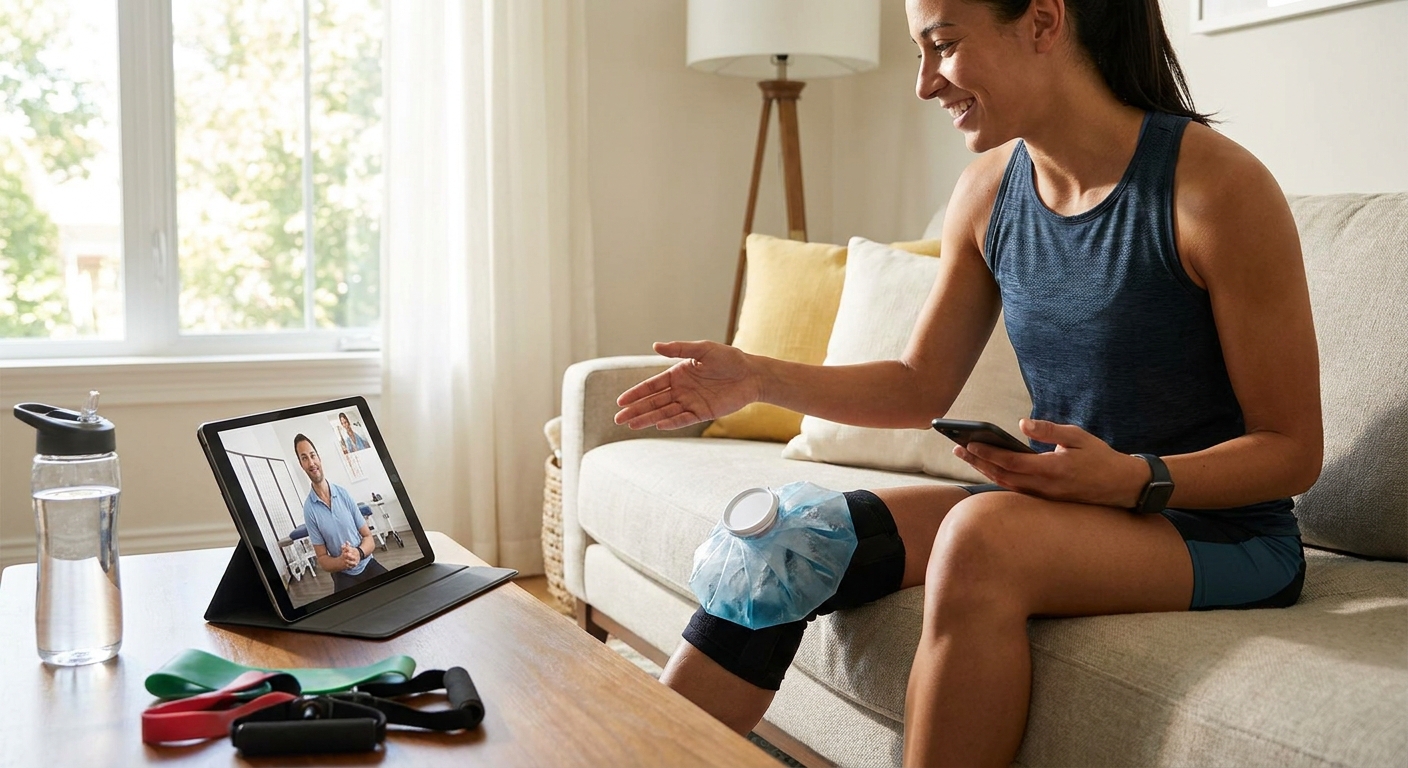
A sprained ankle on the sideline or a jammed finger in a pickup game doesn't always need an ER trip — a licensed clinician can assess the injury, rule out red flags, and set a treatment plan over video in under 20 minutes. Here's the exact process for how to treat a sports injury with telehealth, from triage to follow-up.
- Most sprains, strains, and minor sports injuries can be triaged over video within 24 hours in 2026 — no waiting room required.
- Telehealth for sports injury assessment catches red flags (fracture signs, ligament tears) that need in-person imaging.
- A 10-minute video visit typically ends with a written care plan, medication if needed, and a referral if imaging is required.
- Concussions and suspected fractures still need same-day in-person evaluation — telehealth triages, it doesn't replace an X-ray.
Why this matters
Most sports injuries aren't emergencies, but they still cost time. A twisted ankle on Saturday used to mean an urgent care wait on Monday or an insurance runaround before anyone looked at it. In 2026, a video visit gets a licensed clinician looking at the injury, asking the right questions, and building a plan the same day — before swelling or guesswork make things worse.
The catch: telehealth can't x-ray a bone or feel for instability with hands-on pressure. Knowing what a video visit can handle versus what still needs a physical exam is the difference between fast relief and a delayed diagnosis.
What you'll need
- A phone or laptop with camera access and a stable connection
- Good lighting — natural light or a lamp pointed at the injury site, not behind you
- 10-15 minutes of uninterrupted time
- A list of when the injury happened, what caused it, and what makes it worse
- Any prior imaging or notes if this is a repeat or chronic issue
- Access to a telehealth visit for sports injury assessment or a general urgent care video visit
The steps
1. Triage the injury before you book
Check for the signs that mean skip telehealth and go straight to urgent care or the ER: visible deformity, inability to bear any weight at all, numbness below the injury, or a pop followed by immediate swelling. If none of those apply, a video visit is the right first stop. This step matters because it saves you a wasted appointment and gets you to the right level of care in one move.
Common mistake: waiting two or three days to see if it "just gets better" before booking anything — delayed care is the single biggest reason minor sprains turn into six-week recoveries.
2. Book the visit and describe the mechanism of injury
When you book, be specific: "rolled my ankle inward stepping off a curb during a run" tells a clinician far more than "hurt my ankle." The mechanism (twist, direct blow, overuse) narrows down what's likely torn, sprained, or strained before the camera even turns on. For anything involving a joint that gave way or a loud pop, mention it up front — that changes the exam.
3. Show the injury on camera, from multiple angles
During the call, the clinician will ask you to move the joint, point to the exact spot of pain, and compare it to the uninjured side. Position the camera 2-3 feet away with the injured limb well lit, and follow instructions for active range-of-motion tests (pointing your toes, bending the knee, rotating the wrist). This is how a telehealth visit approximates a hands-on exam — it substitutes visual and functional testing for palpation.
Common mistake: holding the camera too close or too far, which hides swelling and bruising the clinician needs to see clearly.
4. Get the working diagnosis and grade
Most sprains and strains get graded 1 through 3 based on severity — grade 1 is mild stretching, grade 3 is a full tear. The clinician will give you a working diagnosis based on what's visible and reported, and flag if imaging is needed to confirm anything beyond grade 1. This step sets expectations: a grade 1 ankle sprain heals in 1-3 weeks, a grade 3 can take 6-8 weeks and may need a brace or PT referral.
5. Walk out with a written treatment plan
A proper visit ends with more than "rest it." Expect specifics: RICE protocol duration (rest and ice for 48-72 hours, then gradual reintroduction of movement), an anti-inflammatory dose if appropriate, and a timeline for when to check back in. If the injury is a repeat issue or involves the back, ask about a physical therapy referral as part of the plan.
Common mistake: treating "rest it and see" as a full plan — a real telehealth for sports injury visit should give you a specific return-to-activity timeline, not a vague suggestion.
6. Escalate if red flags appear during recovery
If swelling gets worse after 72 hours, if you develop numbness, or if weight-bearing pain hasn't improved by day 5-7, that's the signal to escalate to in-person imaging. Telehealth clinicians will tell you this threshold during the visit — write it down. Missing this step is how a grade 1 sprain gets misdiagnosed as a grade 3 tear three weeks late.
7. Schedule the follow-up before you hang up
Book the check-in visit at the same time as the initial one, whether that's 5 days out for a sprain or a longer window for a strain. A follow-up confirms the plan is working and catches slow healers early. For head injuries specifically, concussion follow-up care usually means a structured check-in schedule, not a one-and-done call.
Troubleshooting
- The clinician says they can't rule out a fracture over video. That's expected for anything with point tenderness over bone or visible deformity — get an X-ray in person, then bring results back to a follow-up telehealth visit.
- Pain isn't improving after the recommended rest period. Don't wait past the escalation window given during your visit; book a same-day in-person evaluation instead of another telehealth call.
- The injury is a repeat of one from months ago. Mention the history explicitly — recurring sprains often point to instability that needs a structural workup, not another round of RICE.
- You can't get good camera lighting at home. Use your phone's flashlight held by a second person, or step outside — poor lighting is the top reason video assessments run long or get inconclusive.
- Swelling makes it hard to move the joint on camera. Tell the clinician exactly what you can't do rather than forcing the motion; inability to move is diagnostic information on its own.
- You're not sure if it's a sprain or a strain. Sprains involve ligaments (connecting bone to bone), strains involve muscle or tendon — describe where the pain sits (near a joint vs. mid-muscle) and let the clinician sort the rest.
Get a sports injury assessed today
Video visit with a licensed clinician, care plan same day.
Tools and resources
- Telehealth for sprains and minor injuries — for injuries that don't clearly fit "sports" but follow the same triage logic
- Best telehealth options for physical therapy referrals — when the plan includes structured rehab
- A phone with a working camera and flashlight
- A notepad for tracking symptom changes day by day
What to do next
If this is your first video visit of any kind, read how to prepare for your first telehealth appointment before you book — it covers the intake questions and camera setup that make a 10-minute visit actually take 10 minutes instead of 20.
FAQ
Can telehealth actually diagnose a sports injury?
Telehealth can diagnose and grade most sprains, strains, and soft tissue injuries in 2026 using visual exam and range-of-motion testing. Suspected fractures or ligament tears still need in-person imaging to confirm.
How fast can I get a sports injury assessment online?
Same-day video visits are standard for sports injuries in 2026, with many booked within a few hours of the injury. Speed matters most in the first 48-72 hours when RICE protocol is most effective.
Is telehealth better than urgent care for a minor sprain?
For a grade 1 sprain with no deformity or numbness, telehealth is faster and avoids a waiting room, and it produces the same RICE-based care plan. Urgent care wins when imaging is needed on the spot.
What sports injuries should skip telehealth entirely?
Visible deformity, complete inability to bear weight, numbness, or a loud pop with immediate swelling should go straight to urgent care or the ER. Telehealth triages everything else first.
Does a telehealth visit for a sports injury include a physical therapy referral?
Yes, when the injury or recovery timeline calls for it, clinicians can issue a physical therapy referral as part of the care plan. Recurring or slow-healing injuries are the most common reason for one.
How much does a telehealth sports injury visit cost?
Pricing is transparent and one-time per visit, with no insurance required to book. Check current pricing directly on the booking page before your visit.
Can telehealth follow up on a concussion?
Yes, concussion follow-up care in 2026 is commonly done through structured video check-ins rather than repeat in-person visits, once the initial diagnosis is confirmed. This works well for tracking symptom resolution over 1-2 weeks.
What information should I have ready before a sports injury telehealth visit?
Have the mechanism of injury, exact location of pain, and how long ago it happened ready before the call starts. Good lighting on the injured area matters as much as the information you bring.
One last thing
The single biggest mistake in treating a sports injury with telehealth isn't the visit itself — it's skipping the follow-up. Most people feel better by day 4 or 5, cancel the check-in, and never confirm the joint actually healed correctly before returning to activity. Book the follow-up when you book the first visit, not after.


