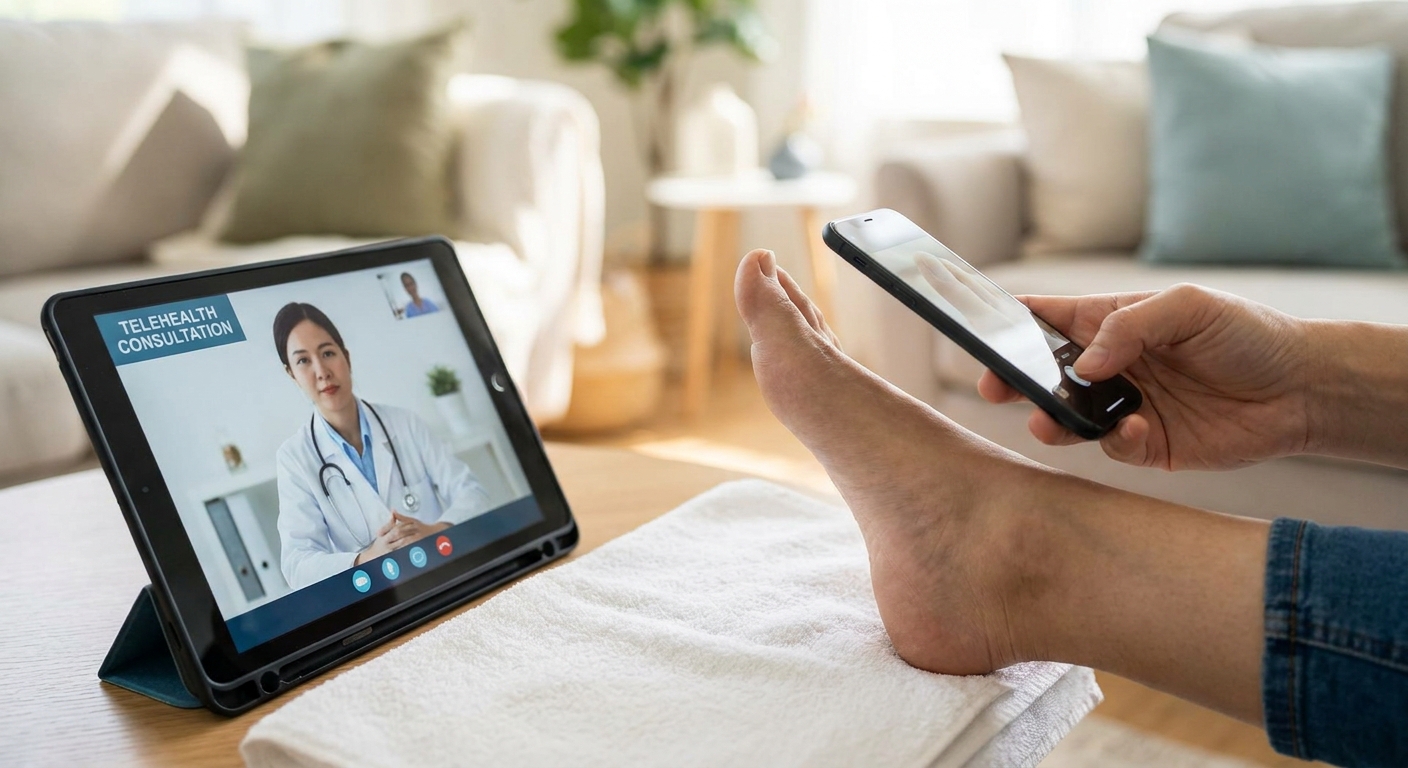
An ingrown toenail turns a five-minute nail trim mistake into days of throbbing pain, and in 2026 you don't have to sit in a waiting room to get it treated. This guide walks through what a virtual visit for an ingrown toenail actually involves, what a licensed clinician can and can't do remotely, and when you need to skip the screen and see someone in person.
- Ingrown toenail telehealth works well for early-stage cases with redness and mild swelling but no deep infection.
- A typical virtual visit runs about 15 minutes from photo upload to a treatment plan and prescription.
- NowCare's Nail Health plan pairs patients with licensed clinicians who can prescribe topical or oral antibiotics same-day.
- Pus, red streaking up the toe, or fever mean telehealth isn't enough — that toe needs in-person care.
- Diabetic patients should treat any ingrown toenail as a same-day issue, not a wait-and-see one.
Why this matters
Most ingrown toenails start small: one edge of the nail digs into the skin, the skin gets red and tender, and walking in closed shoes becomes annoying rather than agonizing. That early window is exactly when telehealth is most useful — a clinician can look at the toe, rule out active infection, and get you a treatment plan without you leaving the couch.
Wait past that window and the toenail can develop paronychia (infected skin fold) or a small pocket of pus, and at that point a virtual visit is a triage step, not the finish line. Knowing which stage you're in changes everything about how you use online podiatrist care for this specific problem.
The upside of doing this online in 2026: no drive, no waiting room, and a prescription sent straight to your pharmacy if the clinician decides one is medically appropriate.
What you'll need
- A smartphone or laptop with a camera and stable internet
- Good lighting — natural daylight or a bright lamp, not overhead fluorescent
- 5 minutes to describe your symptoms: when it started, pain level, any drainage
- A list of current medications and allergies, especially to antibiotics
- Epsom salt or plain table salt for a warm soak (helps before and after the visit)
- A quiet 15-20 minutes for the actual appointment — review what to expect before your first telehealth appointment if this is your first virtual visit
If you're diabetic, have poor circulation, or take blood thinners, have that information ready to state up front — it changes the treatment path immediately.
The steps
1. Photograph the toe from three angles
Good photos are the entire foundation of a remote diagnosis. Take one shot straight down at the nail, one from the side showing the nail edge and surrounding skin, and one further back showing the whole foot for context. Shoot in daylight if you can — yellow indoor lighting hides redness and makes assessment harder. Skip this step and the clinician has less to work with, which slows down the visit or triggers a request for more photos.
2. Soak the foot before you book
A 15 to 20 minute warm water soak, plain or with Epsom salt, softens the skin and nail and reduces swelling before your visit. Do this twice a day starting now regardless of when your appointment lands. It also makes the photos clearer since swelling goes down slightly right after soaking. Common mistake: soaking in water that's too hot, which can worsen inflammation on already irritated skin.
3. Book the visit and describe the timeline
Book a video visit and be specific: which toe, how many days it's hurt, whether there's any yellow or white drainage, and your pain level on a 1-10 scale. Vague descriptions like "my toe hurts" slow the clinician down. Specific ones like "big toe, right side, 3 days, mild yellow discharge starting yesterday" get you a faster, more accurate plan.
4. Let the clinician review symptoms and photos
A licensed clinician reviews your photos and history and determines whether this is a straightforward ingrown toenail, an infected one, or something else entirely — a subungual wart or fungal thickening can mimic ingrown toenail pain. This review typically takes place within the same visit window, not days later. Expected outcome: a clear read on severity and a plan, whether that's home care, a topical prescription, or a referral for in-person nail avulsion.
5. Get a prescription sent to your pharmacy if needed
If infection is present, an oral or topical antibiotic can be prescribed and routed to the pharmacy of your choice — no separate errand to a doctor's office first. Treatment only happens if it's medically appropriate for your specific case; not every ingrown toenail needs antibiotics. Mistake to avoid: requesting antibiotics preemptively when the toe just looks pink — clinicians will hold off if there's no sign of infection, and that's the right call.
6. Follow the home care plan exactly
Most plans include daily soaks, gently lifting the nail edge with a small wisp of cotton or waxed dental floss (never forced under a swollen edge), and switching to open-toe or wide-toe shoes for a week. Do this every day, not just when it hurts. Skipping days is the single most common reason a mild ingrown toenail turns into a recurring one.
7. Check in if it's not better in 3 to 5 days
Redness, swelling, and drainage should visibly improve within 3 to 5 days of starting antibiotics or home care. If it's the same or worse, that's your signal to follow up, not wait it out. A second virtual check-in can confirm whether the plan needs adjusting or whether in-person removal of the nail edge is the next step.
Troubleshooting
Pain isn't improving after 3-5 days of antibiotics. This usually means the infection is deeper than surface-level or the offending nail spike hasn't been addressed. Flag it in a follow-up visit rather than restarting the same home care routine.
The toe has pus, red streaking, or you have a fever. Stop trying to manage this remotely — these are signs of spreading infection (cellulitis) and need same-day in-person evaluation, sometimes urgent care or an ER visit.
You're diabetic and noticed an ingrown toenail. Any foot issue in a diabetic patient carries higher infection and healing risk. Treat it as a same-day concern and mention your diabetes status the moment you book.
This is your third ingrown toenail on the same toe this year. Recurring ingrown toenails on the same nail usually mean the nail is growing incorrectly at the root, and no amount of home care fixes that long-term. That's a conversation about whether partial nail removal makes sense, and it typically needs an in-person procedure.
You had an allergic reaction to a prescribed topical. Stop the medication and report it in a follow-up message or visit immediately — clinicians can swap to a different treatment class quickly.
The nail edge is too swollen to lift with floss. Don't force it. Extra soaking for a few more days is safer than tearing the skin trying to get under a nail that isn't ready.
Get your toe looked at today
Licensed clinicians review photos and symptoms, then send treatment to your pharmacy if needed.
Tools and resources
- A well-lit phone camera — your most important diagnostic tool for any remote foot visit
- Epsom salt or plain table salt for twice-daily soaks
- Wide-toe or open-toe footwear for the healing week
- If you're evaluating whether a telehealth service is trustworthy with your health data before booking anywhere, check how to choose a HIPAA-compliant telehealth platform — secure intake and encrypted records matter for any medical visit, not just this one
- Keep a note of pain level and photos day-by-day so a follow-up visit has clear before/after context
What to do next
An ingrown toenail is one condition inside a bigger picture of foot health. If this isn't your first foot issue this year — heel pain, nail fungus, or nagging nerve pain in your feet — it's worth looking at NowCare as an ongoing care option rather than a one-off visit, since recurring foot problems often share root causes like footwear, circulation, or nail structure.
FAQ
What is the best way to treat an ingrown toenail with telehealth in 2026?
Photograph the toe in good light, soak it twice daily, and book a virtual visit describing symptoms and timeline clearly. A licensed clinician can then prescribe antibiotics if infection is present or guide home care if it's not.
Is ingrown toenail telehealth as effective as seeing a podiatrist in person?
For early-stage ingrown toenails without deep infection, telehealth is effective for diagnosis and prescription treatment. Recurring cases needing partial nail removal still require an in-person procedure.
Can a telehealth doctor prescribe antibiotics for an infected ingrown toenail?
Yes, if a licensed clinician determines antibiotics are medically appropriate based on your photos and symptoms, a prescription can be sent directly to your pharmacy. Not every case needs one — mild redness without drainage often just needs home care.
When should I skip telehealth and see a podiatrist in person for an ingrown toenail?
Skip straight to in-person care if you see pus, red streaking up the toe, fever, or if you're diabetic with any foot infection signs. Recurring ingrown toenails on the same nail also usually need in-person removal.
How long does a virtual visit for an ingrown toenail take?
A typical visit runs about 15 minutes from photo upload to a treatment plan. Follow-up check-ins if the toe isn't improving after 3 to 5 days are usually shorter.
Do I need insurance for ingrown toenail telehealth?
No — plans are typically priced as transparent one-time or monthly fees without requiring insurance. Pricing details and plan lengths vary, so check current options before booking.
Can telehealth help with recurring ingrown toenails?
Telehealth can manage flare-ups and prescribe treatment for infection, but a nail that keeps growing into the skin at the root usually needs an in-person conversation about permanent options. Ongoing virtual care can still monitor and manage the condition between flare-ups.
What's the difference between a mild and infected ingrown toenail?
Mild cases show redness and tenderness with no drainage. Infected ones show yellow or white discharge, increased swelling, and sometimes red streaking — that combination is what triggers an antibiotic prescription rather than home care alone.
One last thing
The detail most people miss: how you trim your toenails after the ingrown toenail heals determines whether it comes back. Cut straight across, not curved to match the shape of your toe, and leave the corners slightly longer than the skin fold beside them. That single habit change prevents more repeat ingrown toenails than any soak or antibiotic ever will.


