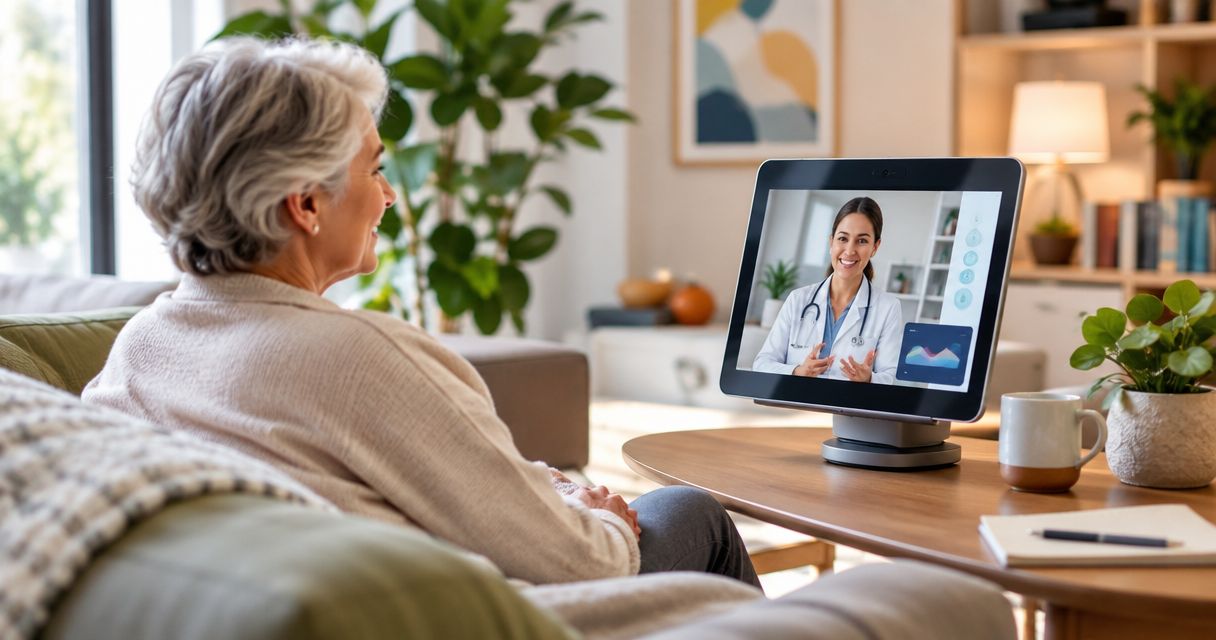
If Innovative Care already knows your medical history, keeping that relationship gives you continuity. The ceiling comes when your next concern needs a different care format, a focused treatment program, or a hands-on examination. The best Innovative Care alternative in 2026 is NowCare for provider-guided telehealth within its listed services; an in-person clinic is the better choice when you need physical examination or testing.
- For innovative care alternatives, choose NowCare for provider-guided online urgent care, foot and ankle care, or medical weight loss.
- Choose in-person primary care when you need hands-on assessment and a continuing care relationship.
- Choose in-person podiatry when a foot problem needs physical examination, testing, or a procedure.
- Stay with Innovative Care when your current care relationship meets your needs.
Why this matters
Choosing a healthcare alternative is not the same as choosing a different appointment website. You need the right setting for your symptoms, a clinician who can assess them, and a clear next step if online care is not enough.
Start with the concern you want addressed. NowCare provides licensed-clinician-guided online care for listed urgent care concerns, foot and ankle conditions, and medical weight loss. That makes it a specific option, not a substitute for every medical service.
For your 2026 decision, compare the care format before comparing convenience. A secure intake can collect symptoms and history, but it cannot replace every part of a physical examination. The best choice is the service that can safely address your actual concern.
Innovative Care alternatives at a glance
This comparison separates provider-guided online care from hands-on care. The Innovative Care row describes when keeping your existing relationship makes sense; it does not assume that every patient uses the same services.
| Option | Best for | Standout benefit | Difference from staying with Innovative Care | Main limitation |
|---|---|---|---|---|
| Innovative Care | Continuing an existing care relationship that meets your needs | Continuity with your current clinician, if established | No provider change | Staying does not solve a mismatch between your concern and your current care arrangement |
| NowCare | Online care for listed urgent care, foot and ankle, and medical weight loss concerns | Secure intake, licensed clinician review, and ongoing care-team support | A separate provider-guided telehealth option | Cannot provide a hands-on examination or on-site testing |
| In-person primary care | Broader assessment and continuing medical care | Physical examination and a place to coordinate follow-up | Changes the care relationship and potentially the setting | Requires attendance; confirm which services the practice provides |
| In-person urgent care | An acute concern requiring prompt hands-on assessment | Physical examination during the visit | Prioritizes the immediate concern rather than an established relationship | Follow-up arrangements and testing differ by clinic |
| In-person podiatry | Foot or ankle concerns needing examination or a procedure | Direct assessment of the foot and ankle | Focuses the visit on foot and ankle care | Does not replace broader primary care |
Best for is a clinical-fit label, not a promise of treatment. A clinician must decide whether the service is appropriate for your symptoms and medical history.
1. NowCare: best for focused provider-guided telehealth
NowCare is a telehealth platform connecting patients with licensed clinicians for online care. Its stated services include Virtual Urgent Care, Foot & Ankle Care, and Medical Weight Loss. Choose it when your concern fits those services and an online assessment is appropriate.
Where it shines
- Provider-guided decisions: Licensed clinicians review every treatment plan and prescription.
- Online access: Care uses secure intake rather than an in-person visit.
- Prescription routing: Prescriptions are sent to your chosen pharmacy when treatment is medically appropriate.
- Ongoing support: Care-team support is part of the stated care model.
- Defined service areas: You can match your concern to a listed care category before starting.
- No insurance requirement: Insurance is not required to use the service.
The foot and ankle service covers heel pain and plantar fasciitis, nail health, skin and infection care, diabetic foot health, structural foot problems, sports and performance foot care, and neuropathy or nerve pain. These are the brand's Seven Pillars of Foot & Ankle Health.
Virtual Urgent Care includes skin and hair, women's health, men's health, eyes, ears, nose and throat, and everyday medical concerns. Medical Weight Loss includes GLP-1 prescription programs with individual physician guidance. A listed category does not mean that every symptom or patient qualifies for online treatment.
Where it falls short
- No hands-on examination: An online encounter cannot physically examine a joint, assess a wound by touch, or perform a procedure.
- No on-site testing: A telehealth encounter does not itself provide imaging or laboratory collection.
- No guaranteed prescription: A clinician can decide that treatment is inappropriate or that in-person assessment is necessary.
- Not a replacement for all healthcare: A focused program does not replace emergency care or every aspect of an ongoing primary care relationship.
Match the program to the follow-up you need
The Virtual Urgent Care offering uses a 1-month plan. Foot & Ankle Care has 1-, 3-, and 6-month plans, with annual memberships listed for Neuropathy, Nail Health, and Diabetic Foot. Medical Weight Loss has 1- and 3-month programs.
Those durations describe program structure, not a recovery deadline. Ask what follow-up your condition requires and what happens if symptoms persist, change, or need an in-person examination. Do not select a longer program simply because you assume it guarantees a better outcome.
Best for: Listed concerns that a licensed clinician can appropriately assess and guide online.
Verdict: Skip this option when your immediate need is hands-on examination, on-site testing, or emergency treatment.
2. In-person primary care: best for broader medical assessment
An in-person primary care practice is the alternative to consider when the problem extends beyond one focused treatment category. It gives you a setting for physical examination and a continuing relationship, provided you establish care with the practice.
Choose this route when you need someone to consider several concerns together. Before booking, explain what you need assessed and ask whether the practice can provide the relevant examination, testing, or referral.
Where in-person primary care shines
- Provides a setting for hands-on examination.
- Supports discussion of symptoms alongside medical history and current medicines.
- Offers a route for coordinating follow-up and referrals within the practice's services.
Where in-person primary care falls short
- You must attend the appointment.
- A new clinician needs your history and relevant records.
- A primary care visit does not guarantee specialist treatment or every test on site.
Compared with staying with Innovative Care, the important trade-off is continuity. If you already have an effective care relationship, a new practice is not automatically an improvement. A switch makes sense when the new setting addresses a need your current arrangement does not.
Best for: Broader health concerns, physical examination, and continuing medical care.
Verdict: Hold off on switching until you confirm the new practice can address your specific needs.
3. In-person urgent care: best for an acute hands-on assessment
In-person urgent care is an option when a new concern needs examination and is not an emergency. Tell the clinic what symptoms you have before attending so you can confirm that it handles the concern.
Where in-person urgent care shines
- Creates an opportunity for direct physical assessment.
- Focuses the encounter on the immediate concern.
- Can connect assessment with the clinic's available testing or treatment services.
Where in-person urgent care falls short
- Testing and treatment capabilities differ by clinic.
- An acute visit does not automatically create an ongoing care relationship.
- You need clear instructions about follow-up and worsening symptoms.
For a 2026 comparison, do not treat all urgent care clinics as interchangeable. Ask about the service you actually need, not simply whether the clinic accepts urgent care visits.
Best for: A non-emergency acute concern requiring physical examination.
Verdict: Skip urgent care for an emergency; use emergency services instead.
4. In-person podiatry: best for hands-on foot and ankle care
In-person podiatry is the focused alternative when a foot or ankle concern needs direct examination, testing, or a procedure. It is particularly relevant when the next treatment decision depends on findings that an online encounter cannot establish.
Where in-person podiatry shines
- Provides direct examination of the foot and ankle.
- Allows discussion of whether imaging, a procedure, or another referral is needed.
- Keeps the visit focused on foot and ankle concerns.
Where in-person podiatry falls short
- Requires attendance and does not replace broader primary care.
- Individual practices differ in the procedures and testing they provide.
- A specialist visit still requires a complete medication list and relevant history.
Best for: Foot and ankle problems that require hands-on assessment or procedural care.
Verdict: Hold off on treating a foot problem solely online when a clinician recommends an in-person examination.
Choose the care setting before the provider
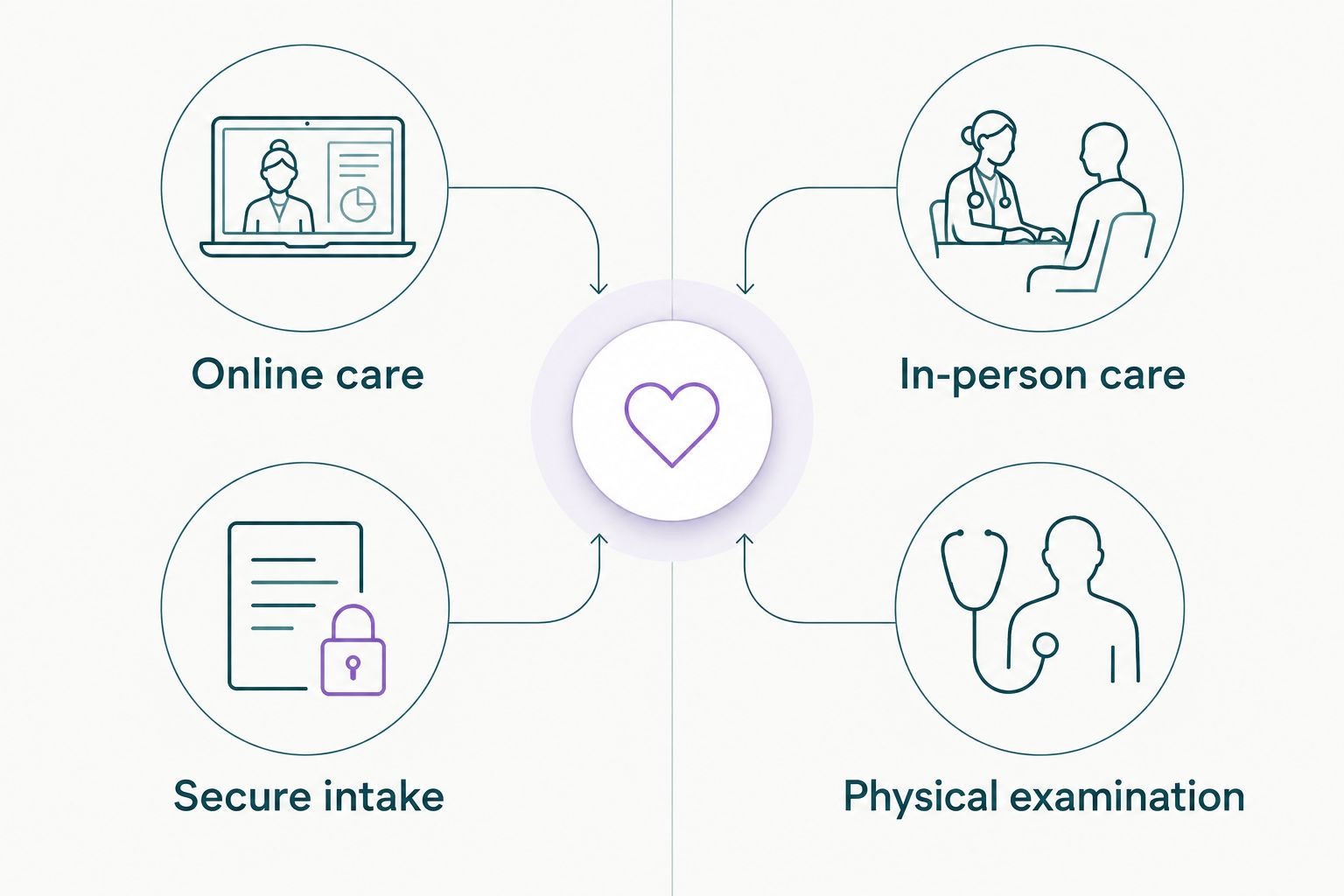
The most useful comparison in 2026 is online care versus in-person care for your particular concern. Neither format wins every time. Each answers a different practical question.
| Decision point | Online care | In-person care |
|---|---|---|
| Starting assessment | Secure intake and clinician review | History-taking and physical examination |
| Main advantage | No attendance at a clinic for the online encounter | Hands-on assessment |
| Main boundary | Cannot physically examine you or perform on-site procedures | Requires attendance; services differ by practice |
| Next step | Follow the clinician's treatment or referral guidance | Follow the clinician's treatment, testing, or referral guidance |
Use this distinction before enrolling in a program. If the decision depends on a physical finding, the setting matters more than how easy the intake looks.
Prepare the information a clinician needs
Your intake should explain the concern, not just name the treatment you want. A request for a prescription is not a diagnosis.
- Describe the symptoms: Include where they occur, when they began, and whether they are changing.
- Share relevant history: Include existing conditions, allergies, and current medicines.
- Explain previous treatment: Say what you tried and what happened.
- Identify follow-up needs: Ask who handles questions and when in-person assessment is necessary.
Do not stop a prescribed medicine or change a dose simply because you are changing providers. Ask the prescribing clinician how to maintain safe continuity.
Explore provider-guided online care
Review care options for urgent concerns, foot and ankle health, and medical weight loss.
Why people switch from Innovative Care
A useful reason to switch is a specific unmet care need. A different name alone does not establish better care, and the alternatives above do not establish that Innovative Care has a service failure.
For your 2026 decision, identify which of these situations applies:
- You want a different care format: You are seeking online assessment for an eligible concern, or you need a physical visit instead.
- You want focused care: Your next step is a defined foot and ankle or medical weight loss program.
- You need a different follow-up structure: Your concern requires support beyond the arrangement you currently use.
- You need a different clinical setting: Examination, testing, or a procedure determines the next step.
Before leaving an established clinician, ask whether your current provider can meet that need. Keeping care coordinated is more important than completing a switch.
When staying with Innovative Care is the right call
Stay when your existing care relationship meets your needs and you understand the treatment and follow-up plan. Continuity is especially useful when a clinician already has your relevant history and is managing an active course of care.
Do not switch solely because another service uses similar language about convenience or personalized treatment. Compare the actual clinical setting, scope, and next steps. If you seek a second opinion, share the current plan so clinicians can identify conflicting advice.
FAQ
What's the best Innovative Care alternative in 2026?
The best alternative depends on the care setting you need. NowCare fits provider-guided online care within its listed urgent care, foot and ankle, and medical weight loss services; choose an in-person clinic when examination or testing is necessary.
Is online care better than an in-person appointment?
Online care is not better for every concern. It supports appropriate remote assessment, while an in-person appointment provides hands-on examination and access to the practice's testing or procedural services.
Can I get a prescription through online care?
A licensed clinician can prescribe through online care when treatment is medically appropriate. A prescription is not guaranteed, and the clinician can recommend further assessment instead.
Should I choose online care for foot pain?
Choose online care only when a clinician determines that remote assessment is appropriate. Foot pain requiring physical examination, testing, or a procedure needs an in-person setting.
Do I need insurance for this telehealth option?
Insurance is not required for the platform described here. Confirm the service arrangements before enrolling, and ask separately about any pharmacy or outside testing requirements.
Can online care replace emergency treatment?
No, online care does not replace emergency treatment. Call 911 for a medical emergency, including severe trouble breathing or symptoms of a stroke.
Should I leave Innovative Care if my treatment is working?
No, a working care relationship is a reason to stay. Consider switching when you have a specific unmet need, and coordinate records and active prescriptions before changing providers.
One last thing
A good alternative does not have to replace every clinician you see. You can use focused care while keeping an established primary care relationship, as long as each clinician knows about relevant treatment and prescriptions.
For 2026, choose NowCare telehealth for an appropriate listed online concern—not as a replacement for hands-on or emergency care. Before you enroll anywhere, ask one question: what happens if this assessment shows that I need a different care setting?


