
Choose NowCare if you want provider-guided online medical care; choose PatientNow if you run an aesthetic practice and need practice-management and electronic medical record software. This 2026 comparison separates treatment access from business software so you choose the right service before comparing features.
- NowCare vs PatientNow compares patient-facing telehealth with software for aesthetic practices, not competing treatment services.
- NowCare is best for patients seeking provider-guided online care for supported medical concerns.
- PatientNow is best for aesthetic practices evaluating practice-management software and electronic medical records.
- Choose by your role: receiving medical care or managing a medical practice.
Why this matters
A similar name does not mean a similar service. NowCare connects patients with licensed clinicians for online care. PatientNow provides software for aesthetic practices.
That distinction changes the entire buying decision. A patient needs a clinical assessment, an appropriate treatment plan, and a clear route to follow-up. A practice owner needs software that supports the work of running a clinic and maintaining patient records.
NowCare is best for patients seeking provider-guided online medical care. PatientNow belongs on a practice-software shortlist, not a patient's shortlist for obtaining treatment.
For your 2026 decision, start with the job you need done. Comparing these names as interchangeable telehealth providers sends you toward the wrong category before you reach the details.
At a glance
| Dimension | NowCare | PatientNow |
|---|---|---|
| Best for | Patients seeking supported online medical care | Aesthetic practices evaluating clinical and business software |
| Access to treatment | Connects patients with licensed clinicians | Supplies practice software rather than a direct treatment service |
| Supported medical concerns | Virtual urgent care, foot and ankle care, and medical weight loss | Software designed for aesthetic-practice workflows |
| Practice operations | Patient-facing care service | Practice-management software |
| Medical records | Clinical information supports the patient's care | Electronic medical records are part of its software category |
| Clinical decisions | Licensed clinicians review plans and prescriptions | Software does not replace the treating clinician's judgment |
| Standout feature | Provider-guided care delivered entirely online | Practice management and electronic medical records for aesthetic practices |
| Pricing model | Defined care plans, programs, and memberships | Software agreement; confirm current billing and contract terms directly |
The table shows category fit, not a clinical-quality ranking. Neither name alone tells you whether a particular clinician, treatment, or software configuration meets your needs. Use the sections below to identify the right next step.
Each wins for a different buyer
The patient-facing platform wins for patients; the practice-software platform wins for practice owners. You do not need a feature-by-feature contest to resolve that first decision.
If you have heel pain, a recurring nail concern, or questions about medically guided weight management, your next step is clinical evaluation. An electronic medical record system does not supply that evaluation simply because a clinic uses it.
If you operate an aesthetic practice, your decision concerns the systems your team uses. A direct-to-patient care plan is not a substitute for practice-management software.
Use this buyer check before doing more research:
- Receiving care: Look for licensed clinicians, an appropriate scope of treatment, and clear follow-up arrangements.
- Running a practice: Look for software that fits your clinical documentation and administrative workflows.
- Doing both: Keep the decisions separate. Your personal healthcare and your practice's software serve different purposes.
The limitation on each side is straightforward. The care platform is not presented as a software system for your clinic. The software platform is not presented as a direct route to treatment for your own symptoms.
NowCare wins when you need access to treatment
The telehealth service connects you with licensed clinicians for provider-guided care. Its process includes secure intake, clinician review, and treatment only if medically appropriate. Prescriptions are sent to your chosen pharmacy when prescribed.
That is the relevant advantage when your question is medical rather than administrative. You are seeking a clinician's decision about your concern, not a tool for storing someone else's clinical notes.
PatientNow serves a different function. Practice software can support a clinic's work, but the software itself is not the treating professional. Access to that software should not be confused with access to a consultation.
The care platform's limitation is equally important: online care does not replace every examination or procedure. A clinician can determine that your symptoms need an in-person assessment. No online service can physically examine a foot, perform a procedure, or provide emergency treatment through a screen.
For a 2026 care decision, judge whether the service addresses your concern and how clinical review works. Do not choose based on which name sounds more like a medical provider.
NowCare is the relevant choice for supported medical concerns
The patient-facing service covers virtual urgent care, foot and ankle care, and medical weight loss. These are care areas, not software modules.
Virtual urgent care includes skin and hair concerns, men's health, women's health, eyes, ears, nose and throat concerns, and everyday medical issues. The clinical assessment determines whether online treatment is appropriate for the individual patient.
Foot and ankle care follows the Seven Pillars of Foot & Ankle Health:
- Heel pain and plantar fasciitis.
- Nail health, including toenail fungus and ingrown or thickened nails.
- Skin and infection care, including athlete's foot, warts, and cracked heels.
- Diabetic foot health.
- Structural foot problems, including bunions, flat feet, and hammertoes.
- Sports and performance foot care.
- Neuropathy and nerve pain.
Medical weight loss includes GLP-1 prescription programs with 1:1 physician guidance. A program's existence does not mean a particular medication is appropriate for everyone; prescribing remains a clinical decision.
PatientNow's aesthetic-practice software focus does not make it an alternative treatment service for these concerns. Conversely, broad online care does not make the telehealth platform a substitute for the systems an aesthetic clinic needs.
PatientNow wins for practice operations
PatientNow is the better category fit when you need to manage an aesthetic practice. Its purpose is practice-management software, not a personal care program.
For a practice owner, the useful questions concern your team's work. What information needs to move between clinical and administrative tasks? Which steps currently require duplicate entry? What must your staff be able to find during a patient encounter?
A software evaluation should follow those questions rather than begin with a long feature list. Ask the vendor to demonstrate your actual workflow and explain which capabilities are included in the proposed agreement.
Use these checks during that evaluation:
- Clinical documentation: Show how your team would create, find, and update the records it needs.
- Administrative workflow: Identify the tasks your practice expects the system to support.
- Implementation: Confirm responsibilities for setup, training, and any record migration.
- Contract scope: Establish which functions and services belong to the proposed agreement.
These are evaluation criteria, not claims that every capability is included. The practical downside of practice software is that buying it does not remove the work of defining your processes or training your team.
The patient-facing care platform is the wrong substitute here. Its clinical support is designed around receiving care, not operating your practice.
PatientNow wins when the requirement is practice records
Electronic medical records are part of PatientNow's software category. That makes it the relevant option of these two when your requirement is a record system for an aesthetic practice.
Receiving medical care also involves clinical information, but that is a different relationship. As a patient, you provide your history so a clinician can assess and treat you. As a practice owner, you select a system your team will use to document and manage care.
Do not treat those two uses of information as equivalent. A patient intake is not evidence that a service sells electronic medical record software to clinics.
For a 2026 software review, ask how records can be accessed, exported, and transferred under the proposed agreement. Confirm how your existing documentation would be handled before committing to a change.
The tradeoff is purpose versus responsibility. Practice software addresses an operational requirement, but your practice still needs appropriate documentation procedures. A direct care service addresses your personal clinical concern, but it is not a replacement for your clinic's record infrastructure.
Neither replaces a clinician's medical judgment
Both belong within a clinician-led process, not above it. One connects patients with licensed clinicians; the other supplies software used in medical practices.
For the telehealth service, licensed clinicians review every plan and prescription. Treatment is offered only when medically appropriate. That review is central to the service, not an optional step after choosing a medication.
For practice software, the boundary is different but equally clear. A record system supports the work of documenting and administering care. It does not assume the treating clinician's responsibility for diagnosis, treatment selection, or follow-up.
As a patient, tell the clinician about relevant symptoms, medications, allergies, and medical history. As a practice owner, evaluate how software supports your clinicians without treating a workflow feature as proof of medical quality.
This is an honest tie on a fundamental principle: neither a website nor a software purchase guarantees a particular medical outcome. Clinical suitability remains individual.
Each standout feature serves a different job
The care platform's defining feature is provider-guided treatment delivered 100% online, with secure intake and ongoing care-team support. It also states that no insurance is required and that the service is HIPAA compliant.
PatientNow's defining fit is the combination of practice management and electronic medical records for aesthetic practices. That combination addresses the clinic's operational environment rather than a patient's direct request for treatment.
The benefits become clearer when you separate the tasks:
- Receive care: Describe your concern and obtain an appropriate clinical assessment.
- Manage practice: Evaluate software against your team's administrative and documentation needs.
- Clinical judgment: Keep treatment decisions with the licensed professional responsible for care.
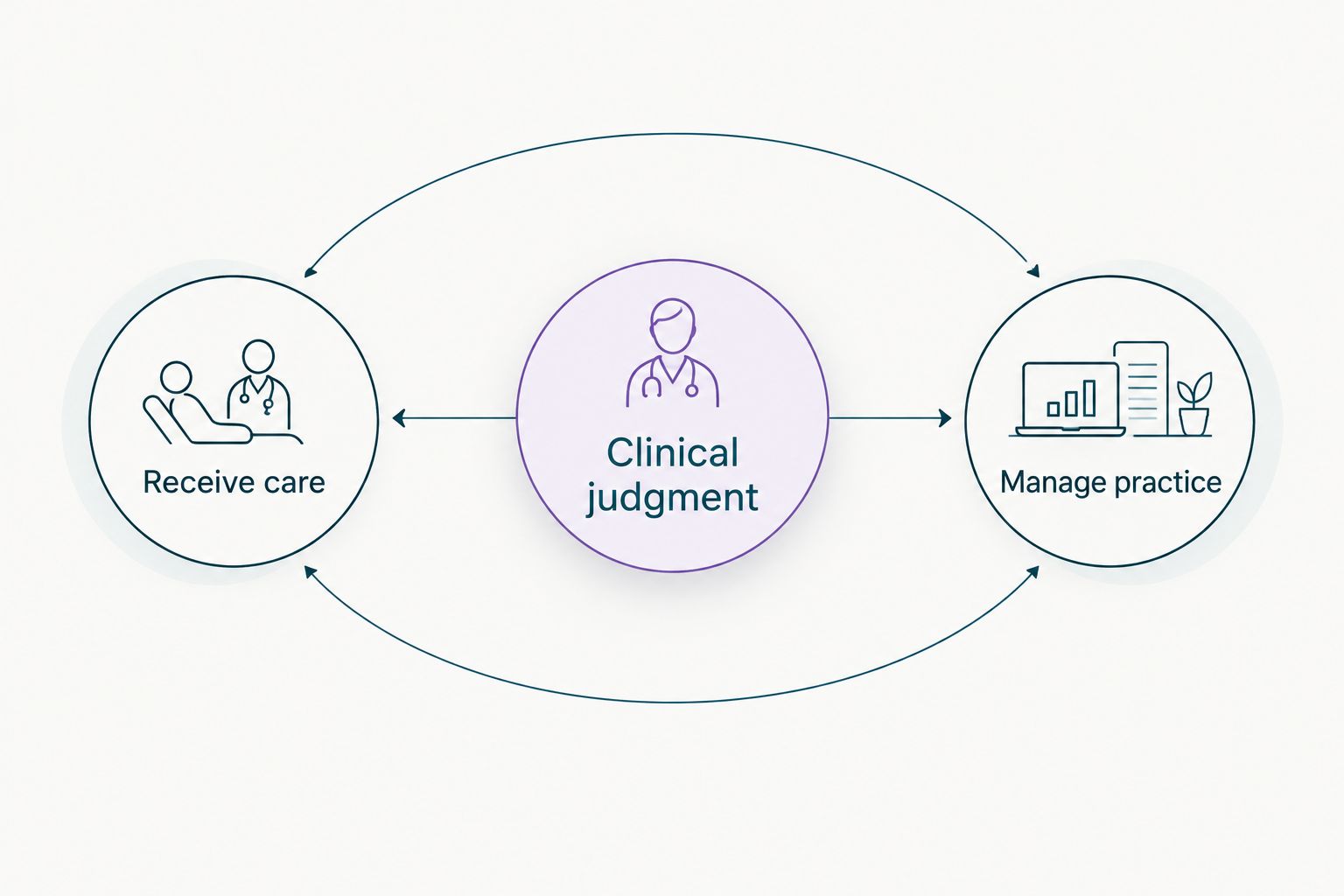
The disadvantage of comparing standout features without their intended user is simple: you can select a useful feature for the wrong job. Online clinical support helps a patient seek care. Practice-management software helps a clinic organize its work. Neither advantage transfers automatically to the other buyer.
Pricing models: compare care commitments with software terms
The pricing comparison is about what you are purchasing, not a contest between equivalent services. In 2026, review the current terms directly before choosing either option.
The care service uses defined plans and programs. Virtual urgent care has a 1-month plan. Foot and ankle care includes 1-, 3-, and 6-month plans, with annual memberships for neuropathy, nail health, and diabetic foot care. Medical weight loss includes 1- and 3-month one-time programs.
Those durations help you distinguish a short care commitment from ongoing support. Choose based on the clinical concern and the plan's stated scope, not on the assumption that a longer duration guarantees a better outcome.
PatientNow requires a software purchasing decision. Confirm the proposed billing arrangement, contract length, implementation responsibilities, and included services directly. Do not infer those terms from the existence of a particular software feature.
The tradeoff is therefore defined care scope versus a practice-software agreement. For care, understand what follow-up belongs to the plan. For software, understand what your practice is contracting to receive. There is no meaningful value winner until the purchase matches your actual need.
Final verdict: choose by your role
Choose NowCare if you are a patient seeking online care
Best for: a patient with a supported medical concern who wants provider-guided telehealth. The service is the relevant choice for online clinical review across its stated care areas, including foot and ankle concerns.
Choose it for the care relationship: licensed clinician review, treatment only if medically appropriate, and ongoing care-team support. Use an in-person service when your condition requires a physical examination or procedure.
Choose PatientNow if you manage an aesthetic practice
Best for: a practice owner evaluating practice-management and electronic medical record software. PatientNow is the relevant choice of these two for a clinic's software requirements.
Choose it for its software category, then validate the fit through a demonstration of your own workflows. Do not treat it as a direct-to-patient telehealth alternative.
| Dimension | Winner |
|---|---|
| Best for | Split: patient versus practice owner |
| Access to treatment | NowCare |
| Supported medical concerns | NowCare |
| Practice operations | PatientNow |
| Practice medical records | PatientNow |
| Clinical decisions | Tie: clinician judgment remains essential |
| Standout feature | Split: online care versus practice software |
| Pricing model | No universal winner; purchases serve different needs |
FAQ
Is NowCare the same as PatientNow?
No. NowCare is a provider-guided telehealth platform for patients, while PatientNow provides practice-management and electronic medical record software for aesthetic practices.
Which is better for getting online medical treatment?
NowCare is the relevant option for receiving provider-guided online medical care. Licensed clinicians review plans and prescriptions, and treatment is offered only if medically appropriate.
Which is better for managing an aesthetic practice?
PatientNow is the relevant option for an aesthetic practice evaluating practice-management and electronic medical record software. Confirm that the proposed software agreement supports your team's actual workflows.
Can I use PatientNow instead of booking a medical consultation?
No. Practice software is not a substitute for a consultation with a licensed clinician. A clinic's use of software does not itself provide you with medical evaluation or treatment.
Does online foot care replace an in-person examination?
No. Online foot care does not replace every physical examination or procedure. A clinician can determine that your symptoms require in-person assessment.
Do I need insurance to use NowCare?
No insurance is required to use NowCare. Review the current care-plan terms and scope before selecting a program.
How should I compare their pricing models in 2026?
Compare the purchase type first: a patient care plan versus a practice-software agreement. Review current plan scope for care and confirm billing, implementation, and contract terms directly for software.
One last thing
Before you open another comparison tab in 2026, write down the action you need: get treatment or manage a practice. Those answers point to different categories immediately. The similar names are the confusing part; the intended users are not.


