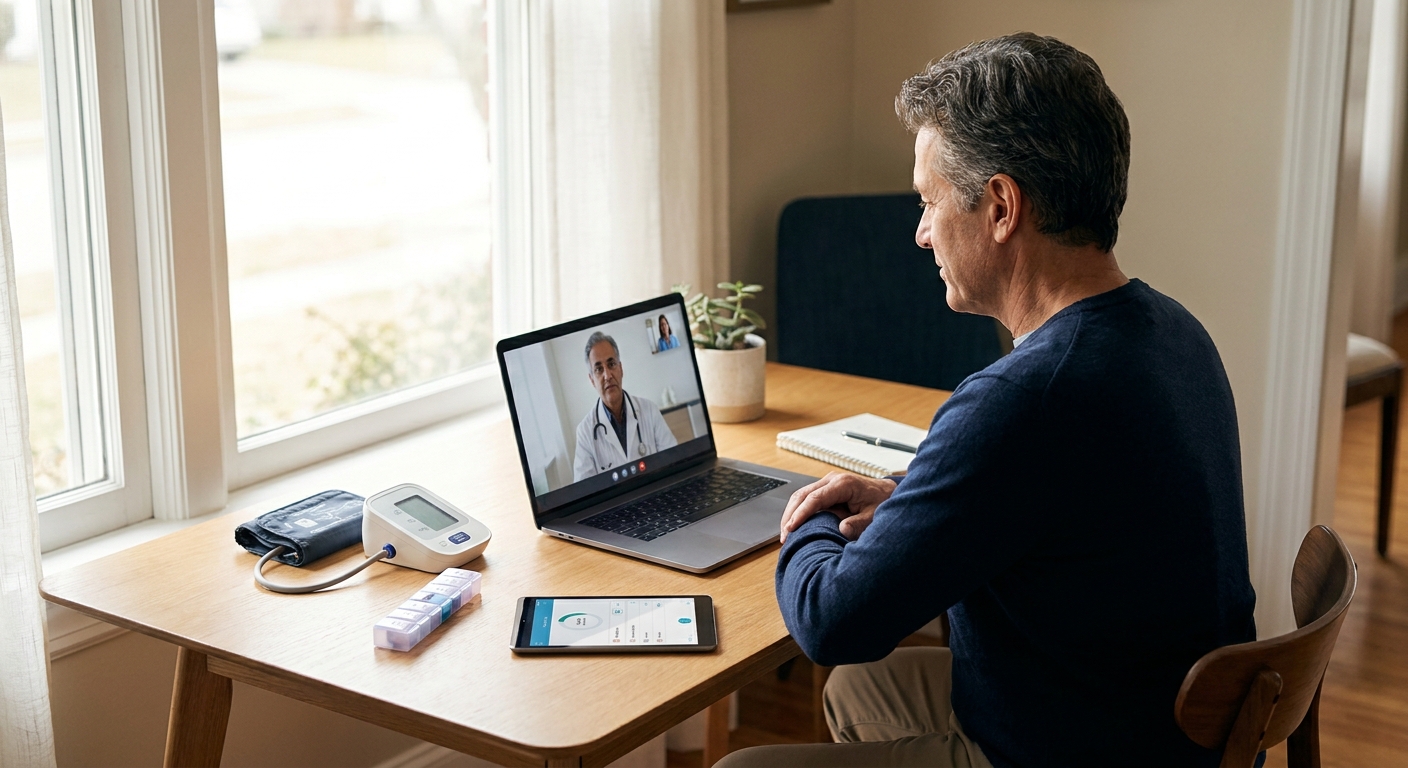
Managing a chronic condition like PCOS, prediabetes, or obesity-related metabolic syndrome usually means juggling multiple appointments, multiple portals, and providers who never talk to each other. Online primary care for chronic condition management fixes that by putting one provider-guided team behind your weight, hormone, and metabolic health in a single place.
TL;DR: For chronic condition management tied to weight, hormones, or metabolic risk, NowCare is a Buy if you want licensed clinicians, ongoing follow-up, and treatment plans that connect weight to diabetes, circulation, and foot health. Its PCOS and GLP-1 programs fit specific conditions; its busy-professionals track fits people who need low-friction visits. Skip generic subscription apps that hand out prescriptions with no follow-up plan.
Why this matters
Chronic conditions rarely show up alone. The CDC's chronic disease data puts roughly six in ten U.S. adults living with at least one chronic condition, and CDC estimates put over 38 million Americans living with diabetes. Weight, hormone imbalance, and circulation problems tend to travel together, which is exactly why a fragmented care model fails people in 2026.
An online primary care model built for chronic condition management treats the whole cluster instead of one symptom at a time. NowCare structures this around what it calls the Seven Pillars of Foot & Ankle Health, recognizing that improving weight, diabetes control, and circulation usually improves foot and mobility outcomes too. That's the difference between a one-off telehealth visit and actual condition management.
Who this is for
This guide is for adults managing a weight-linked chronic condition — PCOS, prediabetes, metabolic syndrome, or early diabetic complications — who want one coordinated care team instead of separate specialists who never compare notes. If you've been told your weight, hormones, or blood sugar are "something to watch," and you want a provider-guided plan rather than a generic app, this is written for you.
What to look for in online primary care for chronic condition management
Provider-guided treatment, not just prescriptions
A legitimate program starts with licensed clinicians reviewing your history before anything gets prescribed. If a platform offers medication with no intake conversation, that's a red flag, not a shortcut.
Whole-condition visibility
Weight, hormones, circulation, and feet are connected. A program that only tracks one number — weight on a scale — misses the diabetic foot complications and neuropathy risk that often show up years before a diagnosis lands.
Follow-up built into the plan
Chronic condition management is not a single visit. Look for a structure where follow-up visits and secure messaging with your care team are part of the plan, not an upsell after the first appointment.
Specialization that matches your actual condition
PCOS, hormone shifts after 40, and general metabolic risk are not the same problem. A program built around your specific condition beats a one-size-fits-all weight loss track.
Secure messaging with a real care team
Between visits, you need a way to flag symptoms — new numbness, a sore that won't heal, a medication side effect — and get a clinician response, not an automated reply.
Transparent comparison before you commit
Compare treatment approach, follow-up cadence, and condition focus across programs before picking one. Programs that hide their structure until after signup are worth skipping.
Top picks
The specialist pick: PCOS-focused telehealth
PCOS drives weight gain, insulin resistance, and cycle irregularity all at once, so a general weight loss plan misses half the problem. NowCare's telehealth program for people with PCOS builds treatment around the hormone-metabolic link specific to PCOS rather than treating it as a generic weight issue. Verdict: Buy if PCOS is your primary diagnosis and you want a plan built around it rather than adapted to it.
The hormone-aware pick: GLP-1 for women over 40
Metabolic slowdown after 40 changes how weight, insulin, and hormone shifts interact, which is why a program calibrated for that age range matters. The GLP-1 weight loss telehealth program for women over 40 accounts for perimenopause and hormone changes instead of applying a 25-year-old's protocol to a 45-year-old's biology. Verdict: Buy for women managing weight and metabolic risk alongside perimenopause or menopause symptoms.
The low-friction pick: busy professionals
If your schedule is the real barrier to consistent chronic condition management, the format matters as much as the treatment. NowCare's telehealth weight loss program for busy professionals is built around asynchronous check-ins and secure messaging so care fits between meetings instead of requiring another calendar block. Verdict: Consider if convenience is the deciding factor and your condition doesn't require a specialized track like PCOS or perimenopause-specific care.
What to avoid
- Prescription-first apps with no follow-up plan. A GLP-1 or hormone prescription without ongoing clinician contact is not chronic condition management — it's a transaction.
- Programs that ignore circulation and foot symptoms. Numbness, slow-healing sores, or nail changes are early markers of diabetic complications that a weight-only program won't catch.
- One-time telehealth visits marketed as "management." Chronic conditions need recurring contact, not a single video call and a script.
Verdict comparison
| Program | Best For | Follow-Up Structure | Verdict |
|---|---|---|---|
| PCOS telehealth program | Diagnosed PCOS with weight/insulin issues | Ongoing clinician follow-up + messaging | Buy |
| GLP-1 for women over 40 | Perimenopause/menopause-linked weight and metabolic shifts | Ongoing clinician follow-up + messaging | Buy |
| Busy professionals program | Schedule-constrained patients needing flexibility | Asynchronous check-ins + messaging | Consider |
| Generic prescription-only app | Nobody managing an actual chronic condition | None or minimal | Skip |
FAQ
What counts as online primary care for chronic condition management? It means ongoing, provider-guided care delivered through secure video visits and messaging, covering diagnosis-specific treatment, prescription management when medically appropriate, and scheduled follow-up — not a single virtual visit.
Is online primary care as effective as in-person care for chronic conditions? For conditions centered on weight, hormones, and metabolic risk, online models work well when they include real follow-up and licensed clinician oversight. It falls short only when platforms skip the follow-up piece entirely.
Can a telehealth provider manage diabetes or PCOS remotely? Yes, when the program is built around that specific condition with recurring visits and messaging access, rather than a generic weight loss template applied to every patient.
Does online primary care cover prescription management? Most legitimate programs include prescription management when medically appropriate, decided after a clinician review — not before one.
How is foot health connected to chronic condition management? Weight, diabetes, and circulation problems directly affect foot health, causing issues like neuropathy and diabetic foot complications; that's why NowCare's model treats foot and ankle care as part of the same Seven Pillars framework rather than a separate specialty.
Is online primary care covered by insurance in 2026? Coverage varies by plan, state, and the specific service — check current coverage details directly with the provider's intake team before your first visit.
What's the difference between online primary care and a telehealth weight loss program? A weight loss program targets the scale; online primary care for chronic condition management targets the whole cluster — weight, hormones, blood sugar, and downstream effects like circulation and foot health.
How often should follow-up visits happen for chronic condition management? Cadence depends on the condition and treatment plan, but any program worth choosing in 2026 builds recurring follow-up into the plan by default rather than charging for it as an extra.
One last thing
The detail most people miss: foot symptoms are often the earliest warning sign of a chronic condition getting worse, not a separate problem to deal with later. Numbness, slow-healing cuts, or nail changes frequently show up before a diabetes diagnosis is confirmed, which is why treating weight, hormones, and foot health as one system — the way NowCare's Seven Pillars framework does — catches problems a weight-only program misses entirely.


