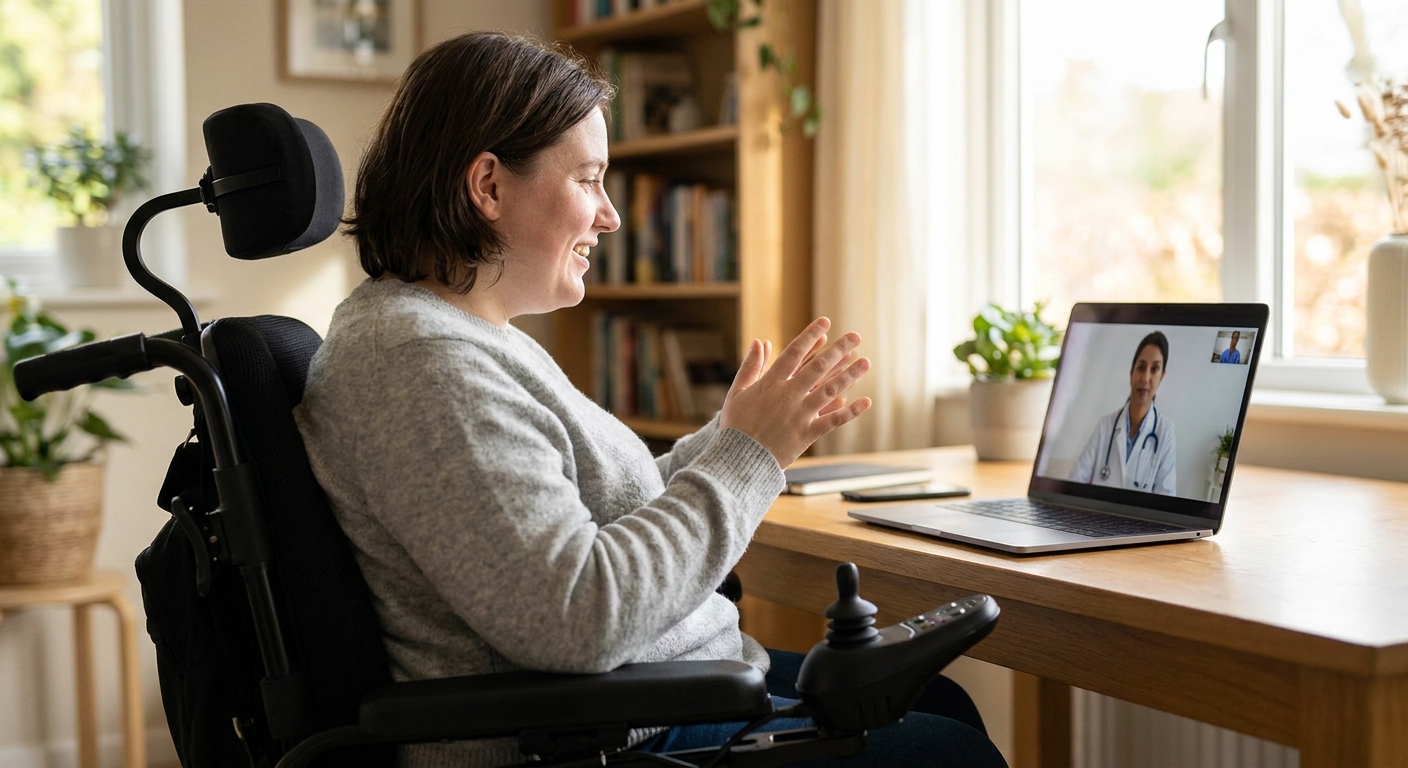
If you live with a disability, finding primary care that doesn't require a transfer, a waiting room, and a half-day off is its own health problem. This guide breaks down what online primary care for people with disabilities should actually deliver in 2026, and where NowCare's telehealth model fits — and where it doesn't.
- Online primary care for people with disabilities works only if refills, follow-ups, and chronic checks happen without an office visit.
- NowCare's chronic condition management pathway handles ongoing needs online. Book it for stable, non-emergency care.
- Skip any platform that still forces an in-person visit before it will touch your medication refill.
- 27% of U.S. adults live with a disability, per CDC data, and most need recurring care, not one-off visits.
- Mental health medication management matters as much as the primary visit — check it's included, not bolted on.
Why this matters
An in-person primary care visit costs more than a co-pay when you have a disability. It costs a transportation booking, a caregiver's afternoon, or a flare-up from sitting in a waiting room too long. NowCare built its telehealth model around secure intake and licensed clinician review specifically so that the visit itself is the only friction point left — not the getting there.
In 2026, that distinction matters more than it did five years ago, because most "telehealth" platforms still route patients back into a clinic for labs, refills, or anything beyond a five-minute cold-and-flu chat. Online primary care for people with disabilities has to do more than that or it isn't solving the actual problem.
Who this is for
This guide is for adults managing a mobility impairment, chronic pain condition, sensory disability, or a chronic illness that requires ongoing check-ins rather than a single sick visit. If you're coordinating multiple specialists and just need a primary point of contact that doesn't require a car, a ramp-accessible building, and a two-hour round trip, keep reading.
What to look for in online primary care for people with disabilities
Medication refills that don't require an office visit
If a platform still makes you come in for a maintenance medication renewal, it isn't built for this audience. A licensed clinician should be able to review and renew a stable prescription remotely, with the script sent to a pharmacy you choose.
Chronic condition coordination, not just sick visits
One-off urgent care telehealth is fine for a sinus infection. It's the wrong tool for diabetes, hypertension, or a condition that needs recurring check-ins. Look for a pathway built around ongoing management, not a single transaction.
Transparent, flat pricing with no insurance gatekeeping
Insurance networks are their own accessibility barrier — prior authorizations, referral requirements, in-network searches. A platform with one-time, disclosed pricing removes a layer of bureaucracy that disproportionately burdens disabled patients managing multiple conditions.
Fast intake without stacked portals
If getting care requires three different logins, a fax number, and a phone tree, the platform has recreated the exact friction telehealth is supposed to remove. Secure, single-session intake is the baseline, not a bonus.
Mental health support built in, not bolted on
Chronic physical conditions carry a documented higher rate of co-occurring depression and anxiety. A primary care telehealth relationship that ignores medication management for those conditions is only doing half the job.
Licensed clinician review on every plan
Algorithm-only triage chatbots are not primary care. Every prescription and every plan should get reviewed by a licensed clinician before anything ships to a pharmacy — that's the difference between provider-guided care and a symptom checker.
Top picks for online primary care for people with disabilities
The steady hand: chronic condition management
Most disabled patients aren't looking for a single sick visit — they need recurring check-ins on a condition that doesn't go away. NowCare's chronic condition management program is built around that pattern: online intake, licensed clinician review, and follow-up without booking a fresh appointment every time something needs adjusting. Verdict: Book it for stable, non-emergency chronic conditions.
The time saver: refills without an office visit
If you're on a maintenance medication and the only thing standing between you and a renewal is a pointless in-person check-in, that's the exact friction to eliminate. NowCare's prescription refill process without an office visit routes every request through licensed clinician review before it hits the pharmacy. Verdict: Book it if your current medication is stable and you just need continuity.
The piece most platforms skip: mental health medication management
A lot of telehealth primary care stops at physical conditions and leaves mental health out entirely — a real gap when co-occurring depression and anxiety are common with chronic illness and disability. NowCare's mental health medication management pathway folds that into the same online, clinician-reviewed model. Verdict: Consider it alongside your primary care plan, not as a separate errand.
The overlooked fit: mobility-limited and Medicare-age patients
A large share of disabled adults are also Medicare-age, and transportation is often the single biggest barrier to any care, not just primary care. NowCare doesn't require insurance at all — pricing is flat and disclosed up front, so a telehealth platform for seniors on Medicare matters here less for billing and more for skipping the trip altogether. Verdict: Consider it if getting to an office is the real obstacle, and confirm current pricing before booking since NowCare runs on one-time, transparent fees rather than insurance claims.
Ready to switch to online primary care?
Move your ongoing care online with licensed clinician review at every step.
What to avoid
- Platforms that require an in-person visit before touching a refill. That defeats the entire point of going virtual and adds a transportation barrier back in.
- Subscription models that hide pricing until checkout. Transparent, one-time pricing should be visible before you enter any medical history.
- Chatbot-only triage with no licensed clinician behind it. If nobody with a license reviews the plan, it isn't primary care — it's a form.
Verdict comparison
| Care pathway | Best for | Visit cadence | Verdict |
|---|---|---|---|
| Chronic condition management | Ongoing conditions (diabetes, hypertension, etc.) | Recurring check-ins | Book it |
| Prescription refill, no office visit | Stable maintenance medications | As needed | Book it |
| Mental health medication management | Co-occurring anxiety or depression | Ongoing | Consider |
| Seniors on Medicare / mobility-limited | Transportation as the main barrier | As needed | Consider |
FAQ
What is online primary care for people with disabilities?
It's ongoing primary care delivered by video or secure messaging instead of in-office visits, covering chronic condition check-ins, medication refills, and follow-ups. In 2026 the model works best when refills and coordination happen entirely online, not just the first visit.
Can I get a prescription refilled online without an office visit?
Yes, if the platform reviews maintenance medications through a licensed clinician and sends the script directly to your chosen pharmacy. NowCare's refill process for maintenance medications is built around exactly that, with no in-person step required.
Does online primary care work for chronic conditions like diabetes?
Yes, when the platform is built for recurring check-ins rather than one-off sick visits. Look for a chronic condition management pathway specifically, since urgent care telehealth is not designed for ongoing management.
Is online primary care covered by Medicare?
NowCare doesn't require insurance of any kind — pricing is flat and disclosed up front, so Medicare status doesn't change the process or the cost. That removes the prior-authorization step that slows down a lot of Medicare-covered care.
How much does a telehealth visit cost without insurance in 2026?
Cost varies by the specific care pathway and plan length, and it's disclosed before checkout on transparent, one-time-pricing platforms. Check current pricing directly on the site you're considering rather than assuming a flat industry rate.
Can I get mental health medication management online?
Yes, and it should be reviewed by a licensed clinician rather than an automated chatbot. NowCare's mental health medication management pathway runs through the same provider-guided review as its other care.
What's the difference between urgent care telehealth and primary care telehealth?
Urgent care telehealth handles a single acute issue, like a sinus infection or a rash, in one visit. Primary care telehealth is built for recurring management of ongoing conditions, which is the model people with disabilities usually need.
Is NowCare HIPAA compliant?
Yes, NowCare's intake and care delivery are HIPAA compliant, with secure intake and licensed clinician review on every plan and prescription. That applies across its telehealth pathways, not just primary care.
One last thing
The biggest access barrier for disabled patients often isn't the visit itself — it's the intake form. A clunky portal with no accessibility settings, five required uploads, and a session timeout undoes the entire point of going virtual. Before booking anywhere in 2026, test the intake flow first; if it takes longer than the actual appointment, that's the real signal.


