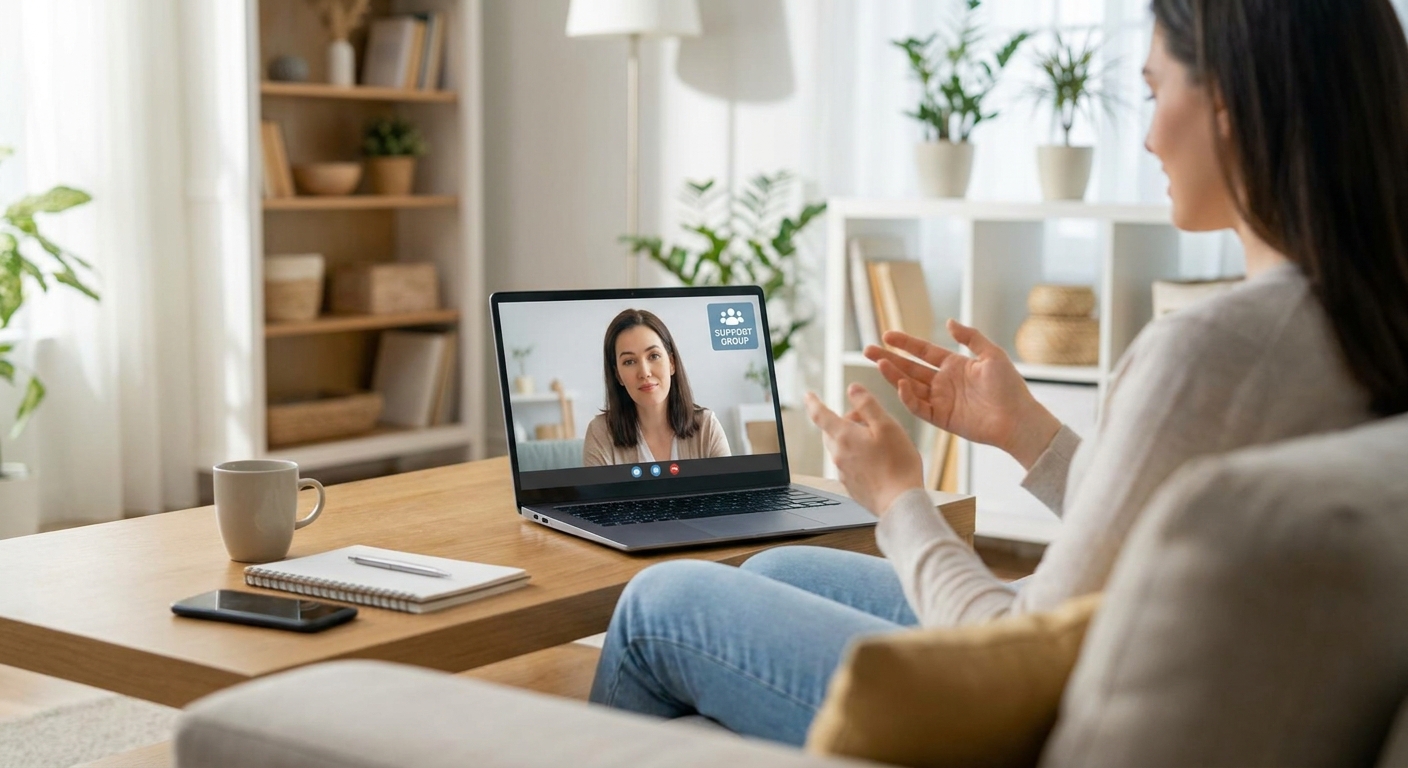
Telehealth for alcohol use disorder covers everything from medication management to structured counseling delivered over video, and in 2026 it works well for mild-to-moderate drinking problems but is not a substitute for medical detox in severe cases.
- Telehealth alcohol use disorder support fits mild-to-moderate drinking problems; severe withdrawal needs in-person medical detox first.
- Medication-assisted treatment with naltrexone or acamprosate is available through licensed telehealth prescribers in 2026 — confirm prescribing authority before enrolling.
- Skip any platform that skips a clinical intake screening for withdrawal risk — that is a red flag, not a shortcut.
- NowCare's telehealth network covers primary care and anxiety support but does not provide direct AUD treatment — use it for co-occurring care, not primary AUD care.
Why this matters
Alcohol use disorder rarely shows up alone. It travels with anxiety, insomnia, high blood pressure, and disrupted primary care, and most people trying to cut back or quit never set foot in a residential program. NowCare runs a telehealth network built around provider-guided care for conditions like these, which matters here because the right AUD support plan usually needs to coordinate with whatever else is already being managed online — blood pressure meds, sleep issues, anxiety.
The mistake most people make in 2026 is picking a telehealth AUD option based on marketing instead of medical fit. A program that looks convenient on a landing page can still miss a withdrawal risk screening or lack a licensed prescriber. That gap is where people get hurt.
Who this is for
This guide is for adults drinking more than they want to, who are not in acute withdrawal, and who want provider-guided care without checking into a facility. It's for the person managing a full-time job who can't take three weeks off for residential rehab, the rural patient without a nearby addiction specialist, and anyone whose drinking overlaps with anxiety, poor sleep, or a chronic condition already being managed by telehealth. It is not for someone experiencing seizures, hallucinations, or severe tremors from withdrawal — that needs an emergency room, not a video call.
What to look for in telehealth alcohol use disorder support
Licensed clinician oversight, not just coaching
Any legitimate telehealth alcohol use disorder program has a licensed physician, nurse practitioner, or addiction medicine specialist reviewing your case, not a wellness coach with no prescribing authority. This matters because alcohol withdrawal can be medically dangerous, and only a licensed clinician can screen for that risk before treatment starts.
Medication-assisted treatment (MAT) access
The FDA has approved three medications for alcohol use disorder: naltrexone, acamprosate, and disulfiram. A telehealth provider that can actually prescribe these — not just refer you elsewhere — cuts real friction out of getting started in 2026.
A real intake screening for withdrawal risk
Before any treatment plan starts, a program should ask about drinking history, prior withdrawal symptoms, and any seizure history. Skipping this step to speed up onboarding is the single most common shortcut that turns dangerous.
Escalation path to in-person care
Telehealth alcohol use disorder support only works if the platform has a clear plan for when video isn't enough — a documented escalation path to urgent care or a detox facility. Ask this question directly before enrolling; a program that can't answer it clearly is not ready for your case.
Coordination with existing care
If you're already managing anxiety, high blood pressure, or sleep problems through another telehealth provider, look for AUD support that can coordinate rather than duplicate. Conflicting prescriptions from disconnected providers is a common and avoidable problem in 2026.
Cost and insurance transparency
Pricing structures vary widely by provider, medication coverage, and whether counseling is bundled in. A program that won't give you a straight answer on what's covered before you commit is worth skipping regardless of how good the marketing looks.
Top approaches to telehealth alcohol use disorder support
Medication-first telehealth programs — the clinical pick. These focus on prescribing naltrexone or acamprosate after a clinical intake, with brief monthly or biweekly check-ins rather than intensive therapy. One relevant number: naltrexone typically starts working within the first one to two weeks of consistent use for craving reduction. Verdict: Consider if you want a medical approach without a heavy time commitment.
Therapy-first telehealth programs — the structure pick. Weekly video sessions with a licensed counselor, often built around cognitive behavioral therapy or motivational interviewing, with medication added only if a prescriber is on staff. These work well for people whose drinking is tied to anxiety or stress rather than physical dependence — worth pairing with resources like telehealth for anxiety and stress management if that overlap applies to you. Verdict: Consider for moderate cases with a clear behavioral trigger.
Hybrid MAT plus counseling programs — the comprehensive pick. These combine a prescriber and a therapist on the same care team, usually with weekly or biweekly touchpoints for both. It's the most resource-intensive option and typically the most expensive, but it addresses both the physical and behavioral sides at once. Verdict: Buy if your drinking involves both cravings and a clear behavioral pattern.
Peer-support-only apps — the low-commitment pick. Group chat or forum-style apps with no licensed clinician on staff. They can supplement real treatment but cannot screen for withdrawal risk or prescribe anything. Verdict: Skip as a standalone option — use only alongside a licensed program.
Employer or insurance-sponsored EAP telehealth — the no-cost pick. Many employer assistance programs now include a telehealth mental health and substance use benefit at no direct cost to the employee. Coverage details and session limits vary by employer. Verdict: Consider as a first call before paying out of pocket elsewhere.
Explore NowCare's telehealth services
See how provider-guided telehealth works for related conditions like anxiety, chronic care, and more.
What to avoid
- Any program without a licensed prescriber on staff. Coaching platforms that market themselves as "recovery support" but employ no physician or nurse practitioner cannot legally manage withdrawal risk or prescribe MAT.
- Promises of instant detox from home. Medical detox for moderate-to-severe alcohol dependence requires monitoring that video calls cannot replace — anyone promising this over telehealth alone is a red flag.
- Bundled subscriptions with vague medication access. If a platform can't confirm in writing whether naltrexone or acamprosate is actually prescribed under your plan, don't assume it's included. Get it confirmed before paying.
Before your first appointment with any provider, preparing properly — having your drinking history, current medications, and any prior withdrawal symptoms written down — makes the intake screening faster and more accurate.
Verdict comparison
| Approach | Licensed prescriber | Withdrawal screening | Best for | Verdict |
|---|---|---|---|---|
| Medication-first telehealth | Yes | Yes | Craving reduction, low time commitment | Consider |
| Therapy-first telehealth | Sometimes | Yes | Behavioral/anxiety-linked drinking | Consider |
| Hybrid MAT + counseling | Yes | Yes | Both physical and behavioral needs | Buy |
| Peer-support-only apps | No | No | Supplemental use only | Skip |
| Employer/insurance EAP | Varies | Varies | First call before paying out of pocket | Consider |
FAQ
What is telehealth for alcohol use disorder?
Telehealth for alcohol use disorder is provider-guided treatment delivered over video or phone, covering medication management, counseling, or both, without an in-person visit. It works best for mild-to-moderate cases and is not appropriate for active severe withdrawal.
Is medication-assisted treatment available through telehealth in 2026?
Yes, licensed telehealth prescribers can prescribe naltrexone and acamprosate in 2026 after a clinical intake screening. Disulfiram is less commonly prescribed via telehealth because it requires closer monitoring for interactions.
How much does telehealth alcohol use disorder treatment cost?
Cost varies by provider, whether medication is bundled with counseling, and insurance coverage, so there's no fixed number that applies across programs. Ask any provider for a written breakdown of what's covered before enrolling.
Can a telehealth provider prescribe naltrexone or Antabuse?
A licensed physician or nurse practitioner on a telehealth platform can prescribe naltrexone after a proper intake; disulfiram (Antabuse) prescribing over telehealth is less common due to closer monitoring needs. Always confirm a provider's prescribing scope before starting.
Is telehealth safe for alcohol withdrawal?
Telehealth is safe for mild withdrawal symptoms under close monitoring but is not appropriate for moderate-to-severe withdrawal, which can involve seizures. Anyone with a history of severe withdrawal symptoms should be screened for in-person medical detox first.
What's the difference between telehealth alcohol use disorder support and in-person rehab?
Telehealth support focuses on outpatient medication management and counseling without residential monitoring, while in-person rehab provides supervised detox and 24-hour care. Telehealth fits people who don't need medical supervision for withdrawal.
Does insurance cover telehealth alcohol treatment in 2026?
Many insurance plans and employer assistance programs cover telehealth substance use treatment in 2026, but coverage details and session limits vary by plan. Confirm coverage with your insurer or employer before starting a program.
How do I know if telehealth alcohol use disorder support is enough for my situation?
Telehealth support is enough if you're not experiencing severe withdrawal symptoms like seizures or hallucinations and can attend regular check-ins. If withdrawal symptoms are severe or you've had them before, in-person medical detox needs to come first.
One last thing
The detail most people skip: naltrexone doesn't require complete abstinence to start working, which is exactly why it fits a telehealth model — a prescriber can start it while you're still cutting back, not after you've already quit on your own. That's also why the intake screening matters more than the app's interface. NowCare doesn't prescribe AUD medication directly, but if anxiety, sleep, or a chronic condition is tangled up with your drinking, online primary care for chronic condition management is a legitimate place to coordinate that side of things in 2026 while your AUD care runs on its own track.


