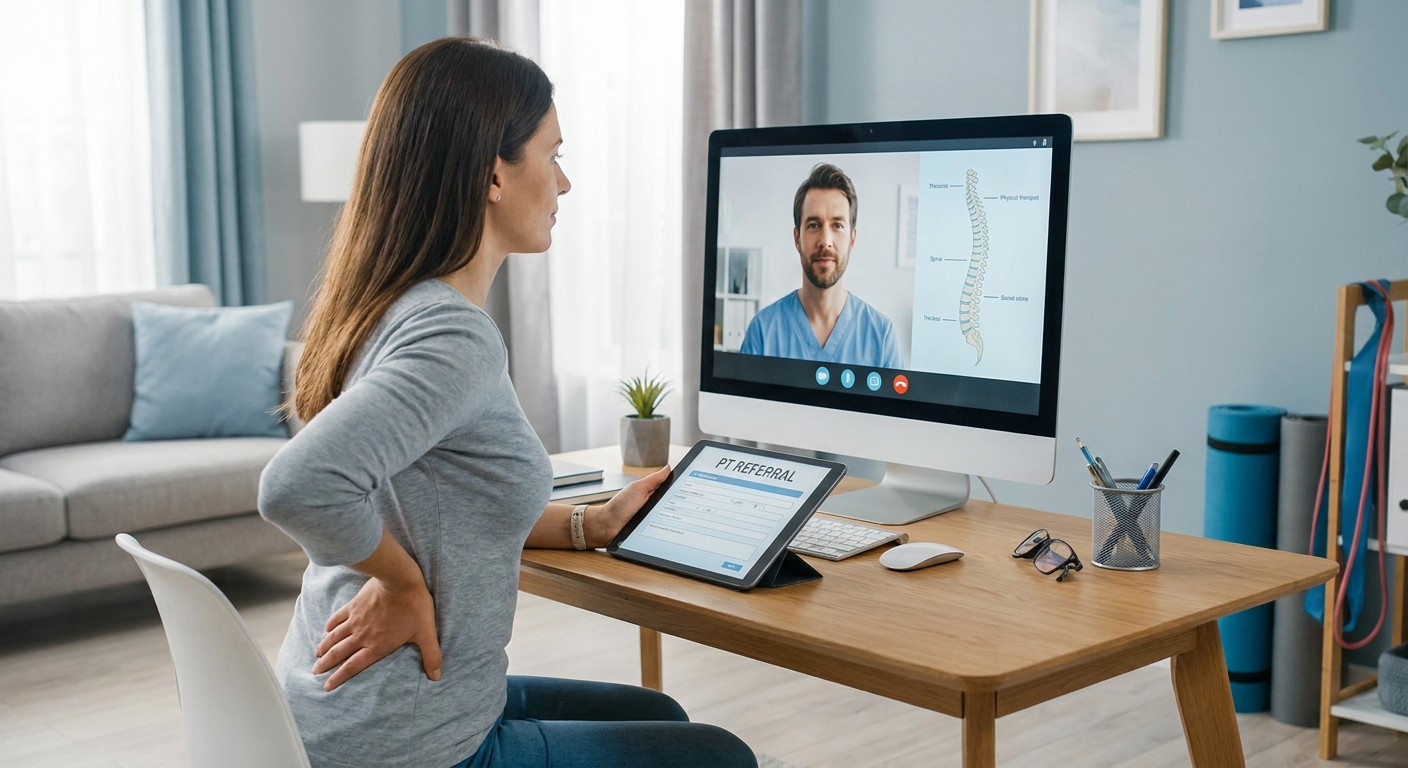
Telehealth physical therapy referral for back pain works only when the visit actually screens you before routing you anywhere — not every online doctor who hands out a PT slip is doing that job well in 2026.
- A real telehealth physical therapy referral starts with red-flag screening, not an automatic PT slip.
- Primary-care telehealth visits typically issue a referral within 24 hours of a completed exam.
- Post-surgical telehealth follow-up usually checks healing at the 2-week and 6-week marks before clearing PT.
- Rural patients wait the longest for in-person PT; telehealth referral cuts that gap to days.
- Skip any service that writes a PT referral without asking about symptom duration or numbness. Verdict: Skip.
Why this matters
Low back pain is one of the most common reasons people book any medical visit, and in 2026 more of those first visits happen over video than in a waiting room. The problem: a telehealth physical therapy referral is only useful if the clinician behind it actually rules out the handful of serious causes — fracture, infection, nerve compression — before sending you off to stretch and strengthen.
NowCare and platforms like it built out primary-care and chronic-condition telehealth specifically so that referral isn't a rubber stamp. That distinction matters more than the word "telehealth" itself. A five-minute video call that ends in a PT referral without a single question about numbness or bowel changes is not the same product as a proper intake, even if both show up in the same app store search.
Who this is for
This guide is for anyone with back pain trying to get to a physical therapist without a week of phone tag: someone whose insurance requires a referral before PT will accept them, someone recovering from spine or joint surgery who needs sign-off before starting exercises, or someone in a rural area where the nearest PT clinic is 45 minutes away and a video visit is the only fast option. It is not for anyone with red-flag symptoms — sudden leg weakness, loss of bladder control, fever with back pain — who needs an in-person evaluation immediately, not a telehealth queue.
What to look for in a telehealth physical therapy referral
A real intake, not a symptom checklist
The visit should ask open-ended questions about how the pain started, how long it's lasted, and whether it radiates down a leg. A service that only offers multiple-choice boxes before generating a referral is optimizing for speed, not accuracy.
Red-flag screening before anything else
Any clinician worth paying should screen for the small set of back pain causes that need imaging or an ER visit, not PT. If a telehealth visit skips this step entirely, the referral it produces is worth less than the ten minutes it took to get.
Speed from visit to referral
Once screening is done, the referral itself should move fast. A 24-hour turnaround from completed visit to signed referral is reasonable in 2026; anything that stretches past 3-5 business days defeats the point of going online in the first place.
Compatibility with your insurance's referral rules
Some insurers require the referral to come from your primary care provider specifically, not any telehealth clinician. Confirm this before booking, or you'll pay for a visit that your PT clinic can't actually use.
Follow-up built in, not a one-and-done
Back pain referrals tied to surgery or a chronic condition need someone checking on progress, not just an initial handoff. Look for a platform that schedules follow-up rather than closing the file the moment the referral is issued.
Access for where you actually live
If the nearest in-person PT clinic is far away, the telehealth platform's value isn't just the referral — it's whether the same platform can keep coordinating care remotely afterward.
“If a telehealth visit can't screen for red-flag symptoms before referring you to PT, that visit isn't doing its job.”
Top picks for getting a telehealth physical therapy referral
The primary-care-first pick
Book a telehealth visit with a primary care provider who can switch you to online primary care permanently if you want ongoing coordination, not just a one-off referral. The spec that matters here: a completed visit typically produces a signed referral within 24 hours, which is fast enough to satisfy most insurance requirements. Verdict: Buy for anyone whose plan requires a PCP-issued referral before PT will see them.
The post-surgical pick
If your back pain started after spine or joint surgery, a platform built around telehealth for post-surgery follow-up visits is the better fit than a generic urgent-care video call. These visits are usually scheduled at the 2-week and 6-week healing marks, and PT clearance typically hinges on the second one. Verdict: Buy if you're inside a post-op recovery window.
The rural-access pick
For patients more than 30-45 minutes from the nearest in-person PT clinic, a rural-focused telehealth platform closes the referral gap without a half-day drive. The tradeoff is that most rural-access services still require an in-person PT visit eventually — telehealth handles the referral, not the treatment itself. Verdict: Consider if driving distance, not insurance rules, is your main obstacle.
The same-day flare-up pick
For an acute flare that just started this week, a same-day video visit can get you a referral fast, but speed cuts both ways: some same-day services skip the deeper intake in favor of throughput. Ask directly whether the visit includes neurological screening before you book. Verdict: Consider, and Skip any service that won't confirm screening is part of the visit.
Get ready for your telehealth visit
Know what to expect before your video appointment starts.
What to avoid
- Referral mills that skip screening. If the visit takes under five minutes and ends in a PT referral without a single question about symptom duration, that's a rubber stamp, not medical judgment.
- Services that bundle a referral with a product sale. Watch for platforms that push a brace, supplement, or device alongside the referral — that's a sales funnel wearing a clinical coat.
- Any provider who won't put screening in writing. Ask what red flags they check for. A vague answer or no answer is a reason to book elsewhere.
Verdict comparison
| Pathway | Best for | Typical turnaround | Verdict |
|---|---|---|---|
| Primary-care telehealth referral | Insurance requires PCP referral | Within 24 hours | Buy |
| Post-surgical telehealth follow-up | Recovering from spine/joint surgery | 2-week and 6-week checkpoints | Buy |
| Rural-access telehealth platform | No local PT clinic nearby | 24-48 hours | Consider |
| Same-day video visit | Acute flare-up this week | Same day | Consider |
| No-screening referral mill | Nobody | Minutes | Skip |
FAQ
Do you need a referral to see a physical therapist in 2026?
It depends on your insurance plan and state. Many plans still require a physician referral before covering PT visits, while some states allow direct access to a physical therapist without one.
Can a telehealth doctor refer you to physical therapy?
Yes, a licensed telehealth clinician can issue a physical therapy referral after a video visit, provided the visit includes a real intake and screening for red-flag symptoms first.
How fast can you get a telehealth physical therapy referral?
A completed primary-care telehealth visit typically produces a signed referral within 24 hours. Same-day services can move faster but sometimes skip a deeper intake to do it.
Is telehealth good for diagnosing back pain?
Telehealth works well for screening and routing back pain to the right next step, but it cannot replace imaging or a hands-on exam when red-flag symptoms like leg weakness or numbness are present.
Does insurance cover telehealth visits for a PT referral?
Most major insurers cover telehealth primary care visits the same way they cover in-person visits, but confirm whether your plan requires the referral to come specifically from your primary care provider.
Can rural patients get a PT referral without traveling?
Yes. A telehealth visit can issue the referral remotely, though the actual physical therapy sessions typically still require an in-person clinic unless your PT offers virtual sessions.
What red flags should stop a telehealth PT referral?
Sudden leg weakness, loss of bladder or bowel control, fever with back pain, or pain following major trauma all require in-person evaluation instead of a telehealth referral.
Is a same-day telehealth visit enough for a back pain referral?
It can be, as long as the visit still includes screening questions about symptom duration and neurological signs. Speed alone isn't a substitute for a proper intake.
One last thing
The single biggest tell of a legitimate telehealth physical therapy referral isn't how fast it arrives — it's whether the clinician asked about your legs before your back. Screening for nerve involvement takes an extra 90 seconds of questions, and any service that skips it to save that time is optimizing for the wrong thing in 2026.


