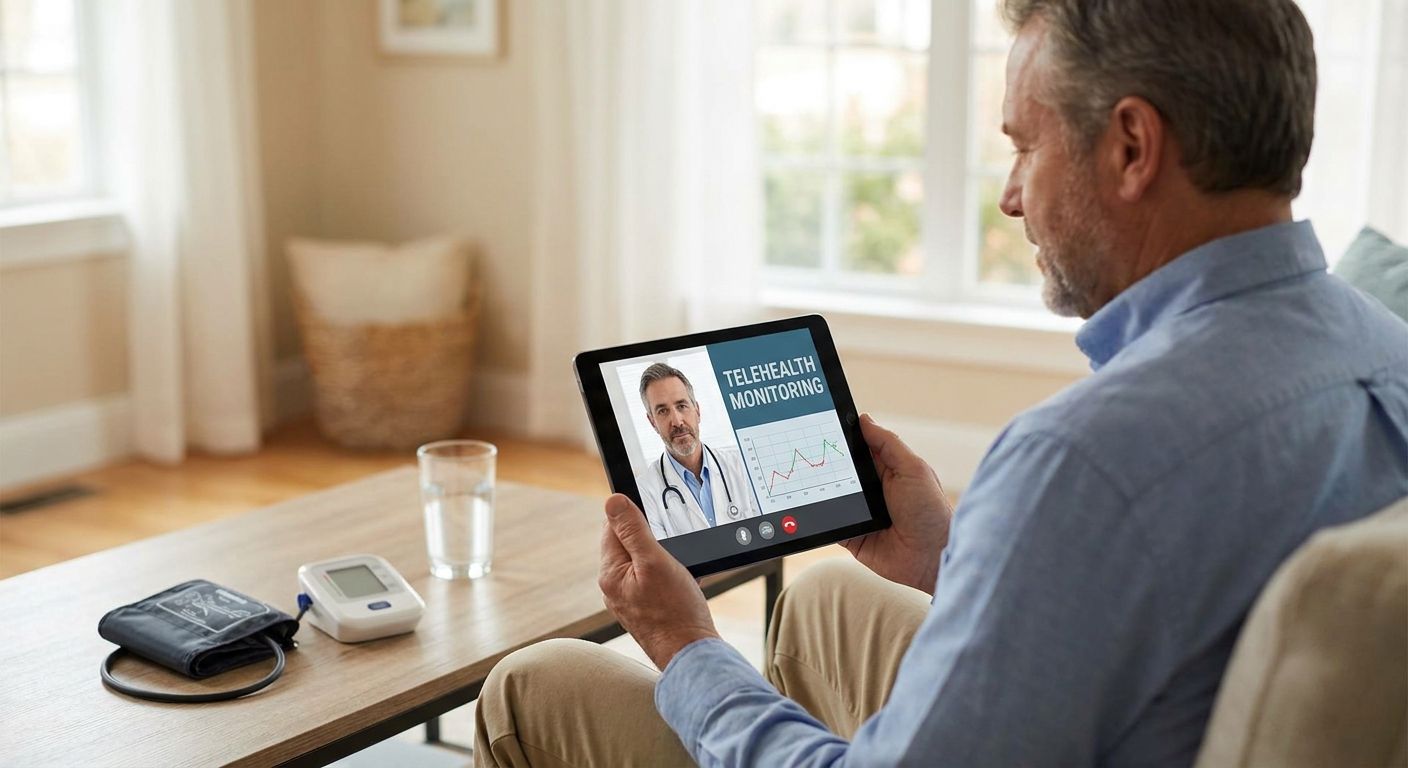
Chronic kidney disease telehealth connects patients managing CKD with licensed clinicians online, with the aim of controlling the blood pressure, blood sugar, and medication risks that drive kidney function decline between nephrology visits. CKD patients don't need a new diagnosis every month — they need someone tracking numbers, refilling maintenance medications, and catching warning signs before a routine problem becomes an ER visit.
- Chronic kidney disease telehealth works best for routine BP checks, diabetes management, and lab orders between nephrology visits.
- NowCare handles hypertension management, diabetes management, and lab work orders online; it does not replace an in-person nephrologist.
- An estimated 1 in 7 US adults has CKD, per CDC data, and most don't know it until stage 3 or later.
- Best for: CKD patients who already see a nephrologist and need remote support managing comorbid conditions in 2026.
Why this matters
CKD doesn't announce itself. Most patients feel fine through stages 1 and 2, which is exactly why the CDC estimates that roughly 1 in 7 US adults has some degree of kidney disease and a large share of them don't know it yet. Once a nephrologist confirms a diagnosis and stages the disease, the actual day-to-day work — blood pressure control, blood sugar control, medication review — is repetitive and doesn't always require a trip to a clinic.
That's the gap telehealth fills in 2026. A condition like CKD is driven mostly by two other conditions: hypertension and diabetes. Getting hypertension management handled consistently, without missing refills or letting readings drift, does more for slowing kidney decline than almost anything else a patient controls directly.
Why telehealth matters for chronic kidney disease patients
CKD patients are, on average, managing more moving pieces than a typical primary care patient: blood pressure targets tighter than the general population (under 130/80 mmHg per KDIGO guidance), blood sugar targets if diabetes is present, and a growing list of medications to avoid — NSAIDs like ibuprofen chief among them, since they stress already-compromised kidneys.
Many of these patients are also older or dealing with fatigue, a common CKD symptom, which makes an in-person visit for a routine BP check or a med refill a bigger ask than it should be. Telehealth doesn't replace the nephrologist who orders imaging or manages advanced-stage decisions. It does replace the unnecessary trip for the stuff that's already stable and just needs monitoring.
Chronic kidney disease telehealth is the right tool for the routine 80% of CKD management — not for staging, biopsies, or dialysis planning.
Track your blood pressure and weight between visits
Blood pressure control is the single biggest lever a CKD patient controls day to day, and it needs tracking more often than a quarterly appointment allows.
- Log home BP readings twice daily and share trends at each visit
- Weigh yourself daily at the same time to catch fluid retention early
- Note any swelling in ankles, hands, or around the eyes
- Flag readings consistently above 130/80 mmHg instead of waiting for the next appointment
- Share a log, not a single number — trends matter more than one reading
Keep diabetes and cholesterol under control
Diabetes is the leading cause of CKD in the US, and cholesterol management is a close second when it comes to slowing progression.
- Check blood sugar at the frequency your care team set, not less
- Keep a log of A1C results over time, not just the latest number
- Ask about statin therapy if cholesterol has crept up
- Review diet changes with a clinician before making major swaps
- Get diabetes management support online if in-person diabetes follow-ups keep slipping
Get labs ordered without an extra office visit
Routine CKD monitoring runs on labs — eGFR, urine albumin-to-creatinine ratio, electrolytes — and none of those require sitting in a waiting room first.
- Ask your care team which labs are due and how often
- Order lab work online and walk into a local draw site instead of booking a full office visit
- Compare results against your last set, not just the reference range
- Flag a rising creatinine or falling eGFR to your nephrologist directly
- Keep a running record so results aren't scattered across different portals
Refill maintenance medications on schedule
A missed ACE inhibitor or ARB refill for even a few days can undo weeks of steady blood pressure control.
- Set refill reminders a week before you run out
- Confirm your pharmacy has the current dose on file
- Ask about combining refills for multiple maintenance drugs into one visit
- Review every new prescription for kidney-related interactions before starting it
Watch for red flags that need in-person or ER care
Telehealth is for routine monitoring, not for symptoms that suggest an acute problem.
- Sudden, significant swelling in the legs or face
- Little to no urination over a full day
- Chest pain, severe shortness of breath, or confusion
- Fever with flank pain, which can signal a kidney infection rather than routine CKD
- Any symptom your nephrologist has specifically told you to treat as urgent
Coordinate your telehealth visits with your nephrologist
The biggest failure mode in CKD telehealth isn't the technology — it's two providers making changes without seeing each other's notes.
- Send telehealth visit summaries to your nephrologist's office
- Ask your nephrologist which routine items are safe to manage remotely
- Keep one master medication list, updated after every visit
- Confirm lab results reach both your primary and specialist records
Manage CKD-related conditions online
Get hypertension, diabetes, or lab work handled between nephrology visits.
Comparing your options for CKD monitoring in 2026
| Option | Best for | Key limitation |
|---|---|---|
| In-person nephrologist | Staging, biopsies, dialysis planning, advanced-stage decisions | Requires travel and often long waits for new-patient slots |
| Telehealth primary care support (e.g., NowCare) | Routine BP and diabetes management, lab orders, medication refills between nephrology visits | Doesn't replace nephrology-specific imaging or dialysis care |
| Remote patient monitoring device programs | Continuous BP or weight data streamed to a care team | Requires device setup and dedicated hardware |
| Emergency or urgent care | Sudden swelling, inability to urinate, chest pain | Not built for routine monitoring or ongoing continuity |
Verdict: NowCare telehealth is best for CKD patients who already have a nephrologist and need consistent support managing hypertension, diabetes, and refills between specialist visits — it is not a nephrology replacement.
Common mistakes CKD patients make with telehealth
- Skipping annual urine albumin tests because there's no in-person reminder to trigger the order
- Adjusting or stopping blood pressure medication without checking in, once symptoms feel stable
- Taking OTC NSAIDs like ibuprofen for joint or back pain without asking about kidney impact first
- Ignoring daily weight changes, missing early fluid retention that a clinician could catch in one message
- Treating a telehealth visit as a full substitute for the annual in-person nephrology follow-up most CKD patients still need
FAQ
What is chronic kidney disease telehealth?
Chronic kidney disease telehealth is remote care — video visits, lab orders, and medication refills — used to manage the blood pressure, diabetes, and medication side of CKD between in-person nephrology visits. It supports routine management; it does not stage kidney disease or replace nephrology imaging.
Can telehealth diagnose chronic kidney disease?
Telehealth alone cannot diagnose CKD, since diagnosis depends on lab values like eGFR and urine albumin that require a blood or urine sample. A telehealth visit can order those labs and review the results with you once they're back.
How often should CKD patients see a doctor if they use telehealth?
Most CKD patients still need an annual in-person nephrology visit, with telehealth filling the gaps for BP checks, medication refills, and lab reviews in between. Frequency depends on CKD stage — earlier stages need less frequent in-person contact than stage 4 or 5.
Is NowCare a nephrology telehealth service?
No. NowCare offers online visits for hypertension management, diabetes management, lab work orders, and maintenance medication refills, which support CKD-related conditions, but it does not replace a nephrologist for staging or advanced-stage care.
Can you get kidney function labs ordered through telehealth?
Yes, a telehealth visit can order routine labs like eGFR, creatinine, and electrolytes, which you complete at a local draw site rather than an office visit. Results get reviewed with a clinician and shared with your nephrology record.
What blood pressure should CKD patients target?
KDIGO guidance targets under 130/80 mmHg for most CKD patients, tighter than the general population's target. Your nephrologist may set a different number based on your specific stage and comorbid conditions.
Does telehealth work for late-stage CKD or dialysis patients?
Telehealth is more limited for late-stage CKD and dialysis patients, since dialysis access, fluid management, and advanced complications need in-person, specialty-level care. Routine items like medication refills or non-kidney-related sick visits can still move online.
Can telehealth manage the conditions that cause CKD?
Yes, telehealth is well suited to managing the two biggest drivers of CKD progression: hypertension and diabetes. Consistent remote management of both is one of the most effective things a CKD patient can do between nephrology visits.
One last thing
The detail that gets missed most in CKD management isn't a lab value — it's the NSAID bottle in the medicine cabinet. Ibuprofen and naproxen are sold over the counter with no kidney warning label, and for a patient with reduced kidney function, regular use can accelerate decline faster than a missed BP reading ever would. Ask about acetaminophen or a kidney-safe alternative before reaching for the orange bottle in 2026.


