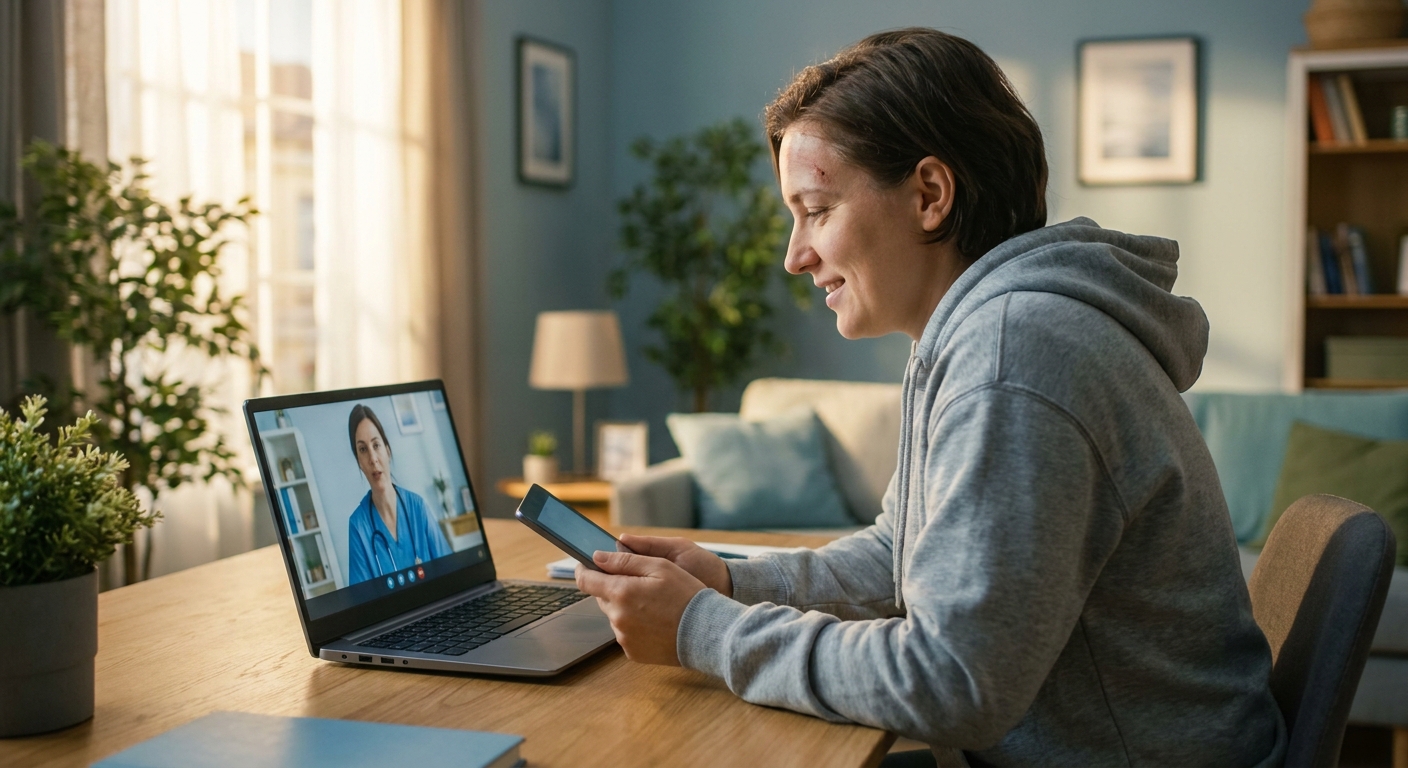
Concussion recovery does not end when you leave the ER or urgent care clinic. The follow-up visits that track symptoms, clear you for activity, and catch complications early are just as critical — and telehealth concussion follow up appointments are now standard practice for handling that phase of care.
- Telehealth concussion follow up works best for symptom monitoring and return-to-activity clearance, not the initial injury evaluation — Book.
- Most concussion symptoms ease within 7 to 10 days per CDC HEADS UP guidance, but persistent cases need in-person neurology, not a video call — Skip video-only for red-flag symptoms.
- NowCare's sports injury assessment and post-surgery follow-up visits both apply the same provider-guided model to concussion recheck visits in 2026.
- A same-day telehealth slot beats a two-week in-office wait for routine symptom recheck — Consider for logistics, not diagnosis.
Why this matters
A concussion isn't a single event — it's a recovery arc that runs anywhere from a few days to several weeks. The sports injury assessment visit and the recheck that follows it are two different jobs: one rules out anything urgent, the other tracks whether you're actually healing on schedule.
Most patients don't need to sit in a waiting room for that second job. A licensed clinician can review symptom checklists, cognitive function, and activity tolerance over video in 2026 just as reliably as in an exam room, provided nothing about the case has changed for the worse.
The catch: telehealth is a follow-up tool, not a diagnostic one. If you're evaluating whether telehealth concussion follow up fits your situation, the split between monitoring and diagnosing is the whole decision.
Who this is for
This guide is for anyone past the acute injury phase — a parent tracking a teen athlete's return-to-play clearance, an adult recovering from a fall or car accident, or a patient whose in-person provider already ruled out a skull fracture or bleed and handed off the recovery plan. It's not for anyone with a fresh head injury showing worsening headache, repeated vomiting, slurred speech, or loss of consciousness — that's an ER visit, full stop, not a video call.
What to look for in telehealth concussion follow up
A clinician who screens for red flags every visit
Every follow-up should start with a quick symptom re-screen, not just a status check. If the platform skips this and jumps straight to how are you feeling, that's a sign the visit is templated rather than clinically driven.
Cognitive and symptom tracking, not just a conversation
A real follow-up compares this week's symptom scale against last week's — headache severity, light sensitivity, balance, sleep. Without a baseline to compare against, you sound better is a guess, not an assessment.
Clear return-to-activity criteria
Athletes and manual laborers need a graded return plan with specific milestones, not a vague ease back in. Look for providers who name a stepwise protocol — light activity, then non-contact drills, then full clearance — because vague clearance is how second concussions happen.
A path to escalate if you're not improving
If symptoms haven't budged by the 7-10 day mark that CDC guidance treats as typical, the platform needs a fast route to imaging or a neurology referral. A telehealth service with no escalation path just delays the specialist visit you actually need.
Support for school, work, or sports paperwork
Return-to-learn and return-to-play forms are often the actual bottleneck for teens and workers. A provider who can document clearance in writing during the same visit saves you a second appointment.
Same-day or next-day availability for rechecks
Symptom trajectory changes fast in the first two weeks. A platform offering same-day telehealth appointments matters more here than for a routine chronic-condition check-in.
Top picks for telehealth concussion follow up
1. The baseline recheck — standard telehealth follow-up visit. The spec that matters: a structured symptom scale compared visit-to-visit, not a freeform chat. This is the right call for the 7-10 day mark most patients hit for meaningful improvement. Book.
2. The athlete's pick — sports injury assessment follow-up. These visits are built around graded return-to-play protocols, which matter if a coach or athletic trainer is waiting on clearance paperwork. The number that matters: a typical youth return-to-play timeline runs 3-4 weeks from symptom-free to full contact clearance. Book for anyone tied to a sport or team schedule.
3. The post-procedure pick — post-surgery follow-up model applied to concussion recovery. If your concussion followed a fall that also required a procedure such as stitches or a fracture set, the post-surgery follow-up visits format works because it's already built to track two overlapping recovery timelines at once. Consider if your case involves more than just the head injury.
4. The first-timer's pick — a prep visit before the real recheck. If you've never done a telehealth visit before, running through how to prepare for your first telehealth appointment beforehand cuts the actual recheck down to real clinical time instead of tech troubleshooting. Consider for first-time telehealth users, especially parents booking on behalf of a teen.
5. The wildcard — a walk-in urgent care video visit for a new symptom. If a new symptom shows up between scheduled rechecks, an on-demand urgent care video visit isn't the same product as a scheduled concussion recheck and shouldn't replace an ER visit for anything acute. Skip this route for anything that looks like a red flag; go straight to in-person urgent care or the ER instead.
Book a provider-guided telehealth visit
Connect with a licensed clinician for follow-up care in 2026.
What to avoid
- A platform that treats every visit the same. Concussion recovery isn't linear — a follow-up in week one should look different from one in week three. If the intake form doesn't change, the care plan probably isn't either.
- Clearance without a written return-to-activity plan. A verbal you're good to go isn't enough for a school, coach, or employer. Get it documented.
- Any telehealth visit for a symptom that's getting worse, not better. Worsening headache, new confusion, or repeated vomiting after day one is an in-person emergency, not a video call — no platform should try to manage that remotely, and a good one will tell you so.
Verdict comparison
| Option | Best for | Typical timing | Verdict |
|---|---|---|---|
| Baseline telehealth recheck | Routine symptom tracking | Day 7-10 | Book |
| Sports injury assessment follow-up | Athletes needing return-to-play clearance | Week 3-4 | Book |
| Post-surgery follow-up format | Concussion plus a concurrent injury | Ongoing, dual-track | Consider |
| Prep visit for first-timers | New telehealth users, parents booking for teens | Before first recheck | Consider |
| On-demand urgent care video visit | New symptom between rechecks | Immediate | Skip for red flags |
FAQ
Can you do concussion follow-up care over telehealth?
Yes, telehealth concussion follow up works well for symptom tracking and return-to-activity clearance once the initial injury has been evaluated in person. It is not a substitute for the first exam after a head injury.
How soon after a concussion should you have a follow-up visit?
Most providers schedule a recheck around the 7 to 10 day mark, which lines up with CDC HEADS UP guidance on typical symptom resolution. Athletes or workers on a clearance deadline sometimes need an earlier check-in.
What symptoms mean you should skip telehealth and go to the ER?
Worsening headache, repeated vomiting, slurred speech, unequal pupils, or loss of consciousness all require in-person emergency care, not a video visit. Telehealth is for monitoring stable recovery, not evaluating a worsening injury.
Is telehealth good enough for return-to-play clearance?
A telehealth visit can issue return-to-play clearance if the graded protocol has been followed and symptoms are fully resolved. Coaches and athletic trainers generally accept documented clearance from a licensed clinician regardless of visit format.
How long does concussion recovery usually take?
Most people recover within two to four weeks, with light symptom improvement often starting by day 7 to 10. A smaller share of patients have symptoms that persist beyond four weeks and need an in-person neurology referral.
Do you need a referral for a telehealth concussion recheck?
Not usually, if the initial evaluation already happened in person or through urgent care. Most telehealth platforms let you book a follow-up directly once the acute injury has been ruled out as serious.
Can telehealth handle concussion follow-up for kids and teens?
Yes, with a parent present, and it is especially useful for coordinating return-to-learn paperwork with a school. The visit structure is the same as for adults, just adjusted for cognitive load and school schedules.
One last thing
The part most people skip is the second recheck. A single follow-up visit tells you where you stood on one day; a second one, a week or two later, is what actually confirms the trend is upward and not just a good day. Book the two-visit pattern before you assume one video call means you're cleared.


