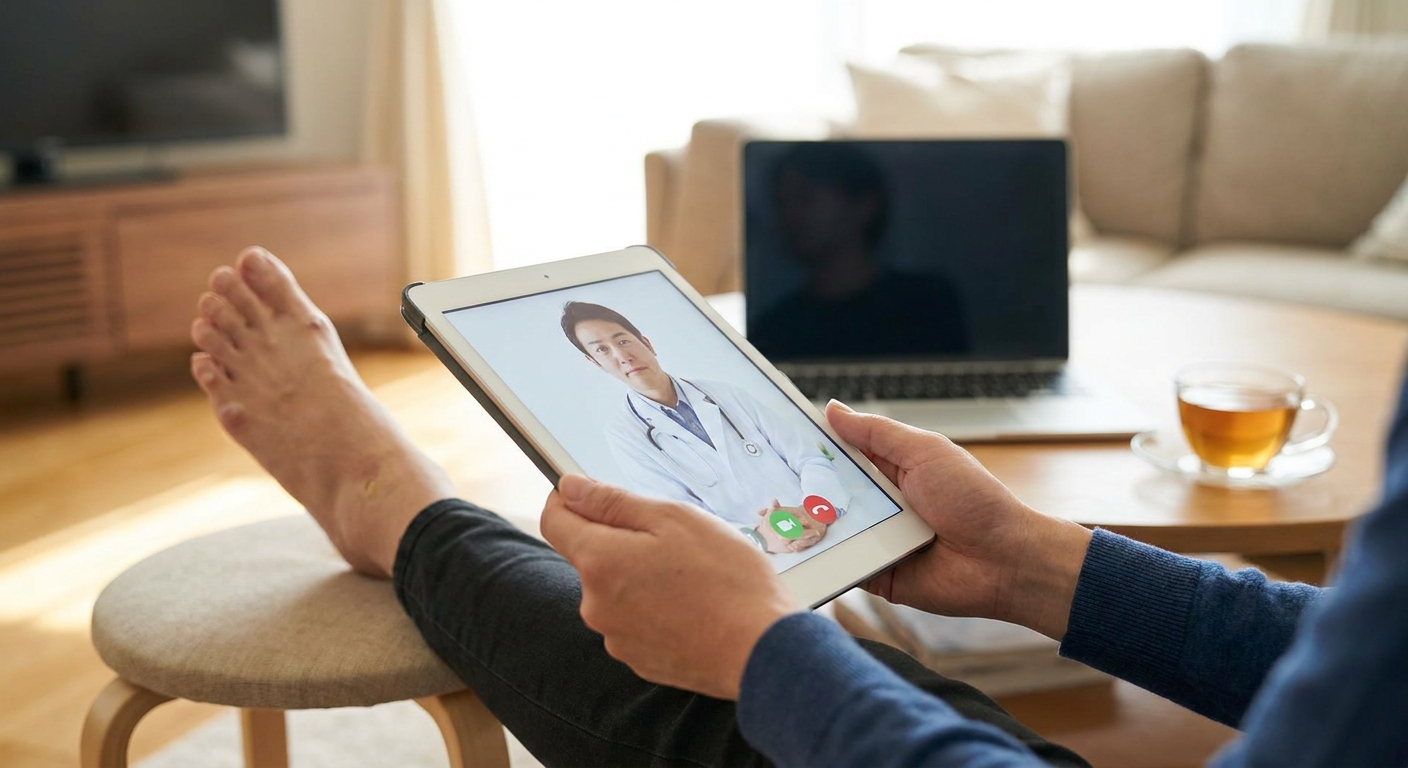
Corns and calluses rarely need a scalpel — most cases respond to pressure relief, footwear changes, and guided care you can start today through corns and calluses telehealth without a trip to a clinic.
- Corns and calluses telehealth works for mild-to-moderate friction lesions — NowCare's Skin & Infection Care pathway is the first call to make.
- Diabetic patients need diabetic-specific foot monitoring, not generic online podiatry advice — thickened skin can hide an ulcer underneath.
- Runners and athletes get more from a sports-focused foot visit than a general urgent care video call this year.
- Bleeding, draining, or spreading lesions need in-person podiatry — no telehealth for corns and calluses skips a hands-on exam for those.
Why this matters
Corns and calluses form from repeated pressure or friction — tight shoes, a shifted bone, an uneven gait. Most people self-treat with drugstore pads for months before asking anyone with a license to look at the problem.
That delay is the actual risk, not the lesion itself. A corn that keeps coming back after shaving usually points to a structural issue underneath it — a hammertoe, a bunion, flat feet — and no amount of pumice stone fixes that. A licensed clinician reviewing photos and history through a provider-guided telehealth visit can flag that in one session, in 2026, without an office wait.
Who corns and calluses telehealth is for
This fits anyone with a friction-based foot lesion that isn't bleeding, draining, or rapidly growing: office workers in ill-fitting shoes, runners logging miles in worn trainers, people with diabetes who need extra eyes on their feet, and anyone who lives an hour or more from a podiatrist. It is not a replacement for urgent in-person care when a lesion looks infected.
What to look for in corns and calluses telehealth
Photo-based visual diagnosis, not a symptom checklist
A corn, a callus, a plantar wart, and a verruca can look nearly identical to an untrained eye. The platform needs a real clinician reviewing images and history, not an algorithm sorting checkboxes into a diagnosis.
A licensed clinician on the other end
Look for language like "provider-guided" and "licensed clinicians" on the intake page, not a vague "care team." Prescriptions, referrals, and treatment plans should come from someone who can be named and credentialed.
Plan length that matches how corns actually heal
A single video call rarely resolves a lesion that took months of friction to build. Plans structured in 1, 3, or 6-month blocks with follow-up built in track recurrence better than a one-off visit.
A diabetic screening path if you have diabetes
Diabetic feet lose sensation before they lose skin integrity. A platform with a dedicated diabetic foot pathway catches pressure sores that a generic corn-removal visit would miss entirely.
A clear line to in-person care when needed
Any telehealth for corns and calluses worth using tells you plainly when a video visit isn't enough — infected, ulcerated, or rapidly spreading lesions need hands-on care, not another photo upload.
Secure, HIPAA-compliant intake
Foot photos and medical history are personal data. Secure intake and encrypted messaging should be a stated feature, not an assumption.
Care pathways worth considering
The straightforward pick — Skin & Infection Care. For a friction corn or thickened callus with no diabetes and no wound, NowCare's online podiatrist for foot pain relief covers this under its Skin & Infection Care pillar, sold in 1, 3, or 6-month plans. One licensed clinician reviews your photos and history and builds a plan from there. Buy.
The diabetic-safe pick. Diabetic feet change the math entirely — a callus can be masking reduced circulation or early nerve damage. NowCare's diabetes management telehealth pairs foot monitoring with broader diabetes care instead of treating the lesion in isolation. Buy.
The athlete's pick. Runners and gym-heavy patients develop calluses from repetitive load, not just bad shoes, and the fix often involves gait or training adjustments a general urgent care visit won't touch. NowCare's sports injury assessment telehealth sits under the Sports & Performance Foot Care pillar and looks at the mechanics behind the lesion. Consider.
The access pick. If the nearest podiatrist is more than an hour away, a provider-guided video visit closes that gap without the drive or the wait list — the same licensed-clinician review, just without the parking lot. Consider.
The skip case. A corn that's bleeding, draining pus, or spreading redness past the lesion itself needs a hands-on exam and possibly a minor procedure. No video visit replaces that. Skip telehealth here and get seen in person the same day.
Start an online foot pain visit
Provider-guided care for corns, calluses, and the foot issues behind them.
What to avoid
- Corn-removal apps with no clinician review. If nobody licensed looks at your photos before a treatment recommendation ships, it's a product upsell, not care.
- One-time visits with no follow-up. Corns recur when the underlying pressure point isn't addressed — a plan without a check-in misses that pattern.
- Skipping the diabetic flag. If you have diabetes, never treat a foot lesion through a generic urgent care flow that doesn't ask about circulation or sensation.
Verdict comparison
| Profile | Best care path | Plan length | Verdict |
|---|---|---|---|
| Friction corn or callus, no diabetes | Skin & Infection Care visit | 1-month | Buy |
| Diabetic patient with foot lesion | Diabetic foot monitoring | 3-month | Buy |
| Runner or athlete | Sports & Performance Foot Care | 1-month | Consider |
| Rural patient, limited access | Provider-guided video visit | 1-month | Consider |
| Bleeding, draining, or infected lesion | In-person podiatry | N/A | Skip |
FAQ
What is corns and calluses telehealth?
Corns and calluses telehealth is a video or photo-based visit where a licensed clinician reviews your foot lesion and history to recommend treatment or a referral. It works for mild-to-moderate friction lesions without an office visit in 2026.
Can a telehealth visit tell a corn apart from a wart?
A licensed clinician reviewing clear photos can usually distinguish a corn from a plantar wart based on location, texture, and history. If the diagnosis is uncertain from images alone, the clinician should refer you for an in-person exam.
Is corns and calluses telehealth safe for people with diabetes?
Yes, but it needs to run through a diabetic-specific pathway, not a generic corn-removal visit. Diabetic feet can hide reduced circulation or nerve damage under a thickened callus, so monitoring needs to be part of the plan.
How much does an online podiatry visit cost in 2026?
Pricing varies by platform and plan length, with most services offering transparent one-time pricing instead of per-visit billing. Check current plan pricing directly on the provider's site before booking.
Can a clinician prescribe medication for a callus through telehealth?
Yes, if a prescription is medically appropriate, a licensed clinician can send it to your chosen pharmacy after a video or photo review. Not every lesion needs medication — some just need pressure relief and footwear changes.
How fast can I get a telehealth appointment for a corn?
Most provider-guided platforms offer same-day or next-day video visits since no physical exam room is needed. Turnaround depends on the specific service and time of day you book.
Do I need a referral for online podiatry care?
No, most direct-to-consumer telehealth platforms let you book a foot and ankle visit without a referral from a primary care doctor. You still need to disclose your full medical history during intake.
What if my corn needs to be shaved down in person?
A telehealth clinician can flag when in-person debridement is the right next step and refer you accordingly. Video care handles diagnosis and prevention well but can't physically pare down a lesion.
One last thing
Most people treat a corn as a shoe problem and stop there. The lesions that keep coming back almost always trace to something structural — a bunion shifting weight to one spot, a hammertoe rubbing against a shoe seam, flat feet changing how pressure lands on the sole. Shaving the corn down without addressing that structural cause is why drugstore pads never actually solve it — and why a pathway that looks at the whole foot, not just the lesion, holds up better over a full year of wear.


