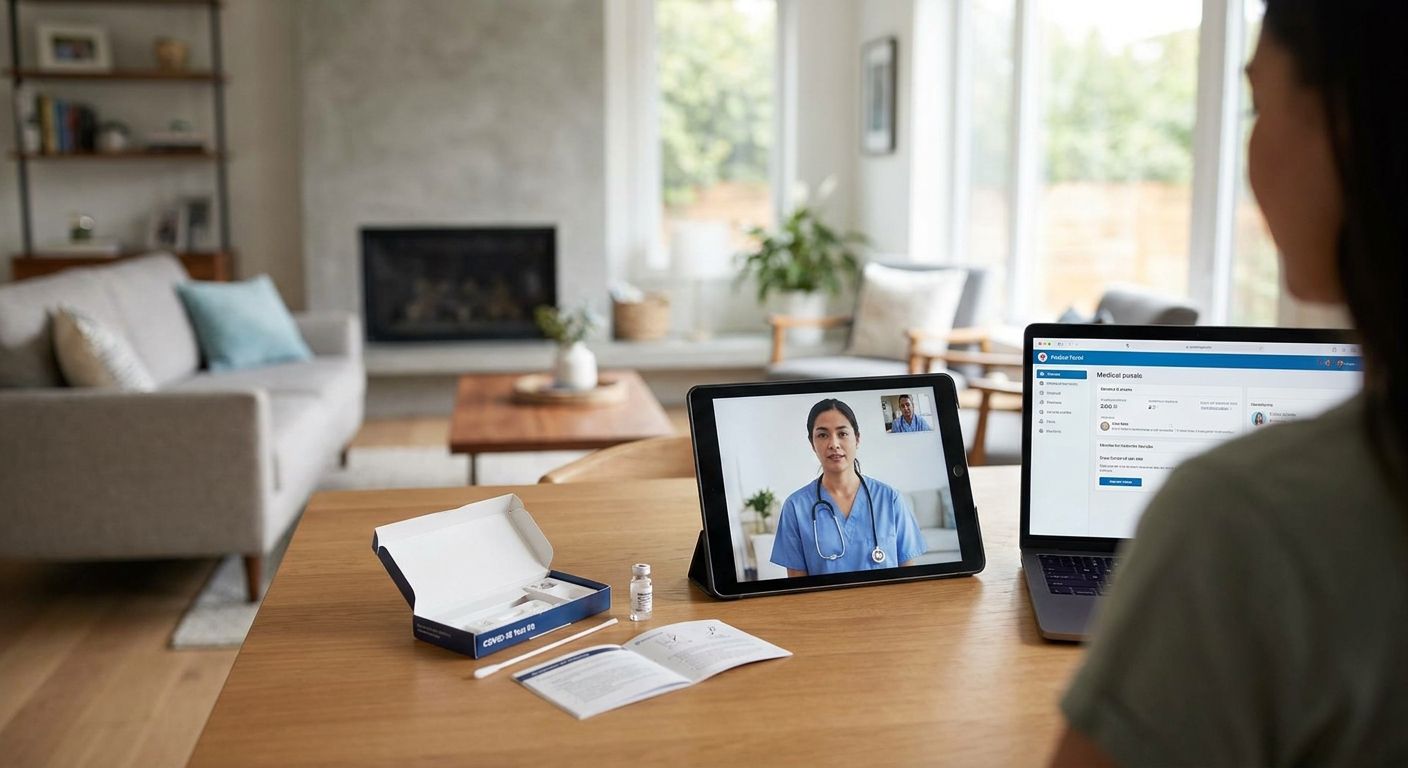
Telehealth covid testing and treatment in 2026 means fast symptom triage, a treatment plan when it fits your case, and a straight answer on whether you need a swab, an in-person visit, or the ER.
- Telehealth covid testing and treatment in 2026 covers symptom triage and care plans, not the physical swab.
- NowCare's virtual urgent care handles cold and flu-like symptoms same day: Buy for a fast first read.
- Home antigen tests still confirm a COVID diagnosis; no telehealth visit performs the swab remotely.
- A cough that lingers past two weeks needs a dedicated follow-up visit, not another urgent care call: Buy.
- Weekend and holiday coverage matters most for COVID-like symptoms, since they rarely wait for Monday: Consider.
Why this matters
Respiratory illness season doesn't check a calendar, and by 2026 most patients expect a same-day virtual option before they book an in-person slot. Telehealth can't replace the physical swab that confirms COVID-19 — no video call performs a nasal test — but it does two things well: it tells you whether your symptoms look like COVID, flu, or something else, and it gets you a treatment plan without a waiting room.
A typical visit runs the same way regardless of platform: intake questions about symptom onset and severity, a live or asynchronous review by a clinician, guidance on which test to take and when, and a plan for what happens next — rest and monitoring, a prescription if it's warranted, or a direct referral to in-person or emergency care.
NowCare runs its virtual urgent care as a flat-rate one-month plan built for everyday concerns like this, with a licensed clinician reviewing every visit instead of a chatbot flagging keywords. That distinction matters more than most patients realize: a real clinician catches red flags — chest pain, shortness of breath, confusion — that a symptom-checker app tends to miss entirely.
Who telehealth for COVID-19 testing and treatment is for
This fits anyone with cold, flu, or COVID-like symptoms who wants a same-day answer before deciding whether to test at home, see a doctor in person, or ride it out for a day. It's built for parents juggling a sick kid and a video call at 9 p.m., for remote workers who can't disappear to a clinic for three hours mid-shift, and for anyone managing a lingering cough weeks after the initial infection cleared.
It also works well for households trying to figure out who's actually sick with what — a clinician can help sort COVID-like symptoms from a garden-variety cold before everyone starts testing. It is not built for anyone with severe symptoms — trouble breathing, chest pressure, confusion, bluish lips — who needs emergency care in 2026, not a video visit.
What to look for in telehealth for COVID-19 testing and treatment
Same-day symptom assessment
COVID-like symptoms move fast — a scratchy throat on Monday can turn into a 102°F fever by Wednesday. A platform that books same-day, not next-week, keeps you from guessing at home for days before getting a clinician's read on what's actually going on.
Clear escalation guidance
A telehealth visit needs to tell you plainly when it's not enough. If the intake process doesn't ask about breathing difficulty, chest pain, or confusion, and doesn't route you to in-person or emergency care when those show up, that platform is skipping the one job that actually keeps patients safe.
Guidance on which test to use and when
Telehealth can't hand you a nasal swab through the screen, so the visit should tell you exactly which home antigen test to buy, when to take it relative to symptom onset, and when a lab-based PCR test makes more sense than a rapid kit. Rapid antigen tests typically deliver results in 15 to 30 minutes, which a clinician should factor into the timing advice.
Licensed clinician review, not just an algorithm
Every prescription and care plan should get reviewed by an actual licensed clinician. A chatbot that outputs "rest and fluids" for every symptom combination isn't triage — it's a form letter with a medical-sounding font.
Follow-up support for lingering symptoms
A subset of COVID cases leave a cough that hangs around for weeks after the fever breaks. The telehealth option worth paying for includes a follow-up path built for that stretch, not just a single one-and-done visit.
Transparent, insurance-free pricing
Respiratory visits shouldn't come with a surprise bill six weeks later. Flat-rate, no-insurance-required pricing means you know the cost before you click "start visit," which matters more in 2026 than it did when telehealth first went mainstream.
Top picks for telehealth COVID-19 care in 2026
1. NowCare's virtual urgent care for cold and flu symptoms — the front-door pick
This is where most COVID-like symptom visits should start. It's sold as a flat-rate one-month plan, a licensed clinician reviews every visit, and coverage extends beyond COVID-like symptoms into sinus infections, sore throats, and other everyday concerns that show up alongside them. Verdict: Buy for the first visit when you're not sure yet what you're actually dealing with. Book a cold and flu symptoms visit to get a same-day read on your symptoms before you spend money on the wrong test.
2. Persistent cough follow-up — the lingering-symptom pick
Some COVID cases leave a cough that outlasts the infection by two to three weeks, long after the fever and fatigue have cleared. A dedicated telehealth visit for bronchitis and persistent cough is built for exactly that window, when the initial illness is over but the cough keeps interrupting sleep and meetings. Verdict: Buy if your cough is still going two weeks past your last positive test — that timeline is the practical cutoff for "give it more time" versus "get it looked at."
3. Same-day telehealth platforms — the speed pick
When symptoms hit on a Tuesday morning and you need an answer by lunch, availability beats every other criterion on this list. Same-day telehealth platforms are compared specifically on how fast they can get a patient in front of a clinician, which is the number that matters most when symptoms are moving quickly. Verdict: Buy if same-day access is your top priority over price or provider continuity.
4. Weekend and holiday urgent care — the safety-net pick
COVID-like symptoms don't wait for a business day, and a lot of standard telehealth queues go quiet on Saturday and stay that way through Sunday night. Weekend and holiday urgent care exists for the Friday-night fever that can't wait until Monday morning. Verdict: Consider it as a backup option specifically for the hours your usual provider doesn't cover.
What to avoid
- Platforms that advertise a "video COVID test." No telehealth visit performs the swab. If a service implies otherwise, that's marketing language, not medicine — you still need a home antigen kit or an in-person lab draw to actually confirm a diagnosis.
- Intake forms with no escalation questions. If nobody asks about breathing trouble, chest pain, or confusion during triage, the platform isn't actually screening for the cases that need more than a video call — it's just collecting a co-pay.
- Per-symptom pricing that multiplies with every complaint. A single urgent care visit should cover assessment of any respiratory symptom set you bring to it, not charge a fresh fee every time you mention a new symptom in the same conversation.
Verdict comparison
Here's how the four picks stack up against the criteria that actually matter for COVID-like symptoms in 2026:
| Option | Same-day access | Escalation guidance | Best for | Verdict |
|---|---|---|---|---|
| Cold & flu symptoms visit | Yes | Yes | First-symptom triage | Buy |
| Persistent cough follow-up | Yes | Yes | Cough past 2 weeks | Buy |
| Same-day platforms | Yes | Varies by platform | Fastest access | Buy |
| Weekend & holiday care | Yes | Yes | Off-hours symptoms | Consider |
Feeling sick right now?
Book a same-day virtual visit for cold, flu, or COVID-like symptoms.
FAQ
Can telehealth test me for COVID-19?
No — a video visit can't perform the nasal swab that confirms COVID-19. A clinician can assess your symptoms and tell you exactly which home antigen test to use and when to use it.
Is telehealth good for COVID treatment in 2026?
Yes, for symptom management and deciding your next step. A licensed clinician can review your symptoms, rule out red flags, and build a treatment plan without an in-person visit.
How long should I isolate with COVID in 2026?
Current CDC guidance, updated in 2024, says you can resume normal activity once you're fever-free for 24 hours without medication and your symptoms are improving, rather than following a fixed day count.
When should I go to the ER instead of a video visit?
Go to the ER for trouble breathing, chest pain or pressure, confusion, or bluish lips or face. A telehealth visit isn't built for those symptoms and should route you to in-person care immediately.
Can a virtual doctor prescribe antiviral treatment like Paxlovid?
Many telehealth clinicians can prescribe antivirals when a patient qualifies based on risk factors and timing since symptom onset. Ask directly during your visit whether that applies to your case.
Do I need insurance for a telehealth COVID visit?
Not necessarily — flat-rate, no-insurance telehealth plans exist specifically so cost isn't a barrier to getting assessed quickly.
What's the difference between urgent care and primary care telehealth for COVID symptoms?
Urgent care telehealth is built for a single acute episode you need answered today, while primary care telehealth manages ongoing health over months. COVID-like symptoms usually call for the urgent care route first.
How much does an online doctor visit cost without insurance in 2026?
Costs vary by platform and visit type, but flat-rate urgent care telehealth plans are built to be paid upfront with no insurance required, so the price at booking is the price you pay.
One last thing
Most patients assume a video visit costs more than walking into urgent care. In 2026, flat-rate telehealth plans built for cold, flu, and COVID-like symptoms tend to run the opposite way — the price you see at booking is the price you pay, with no insurance required and no separate bill showing up six weeks later. That's worth checking before you default to the waiting room out of habit.


