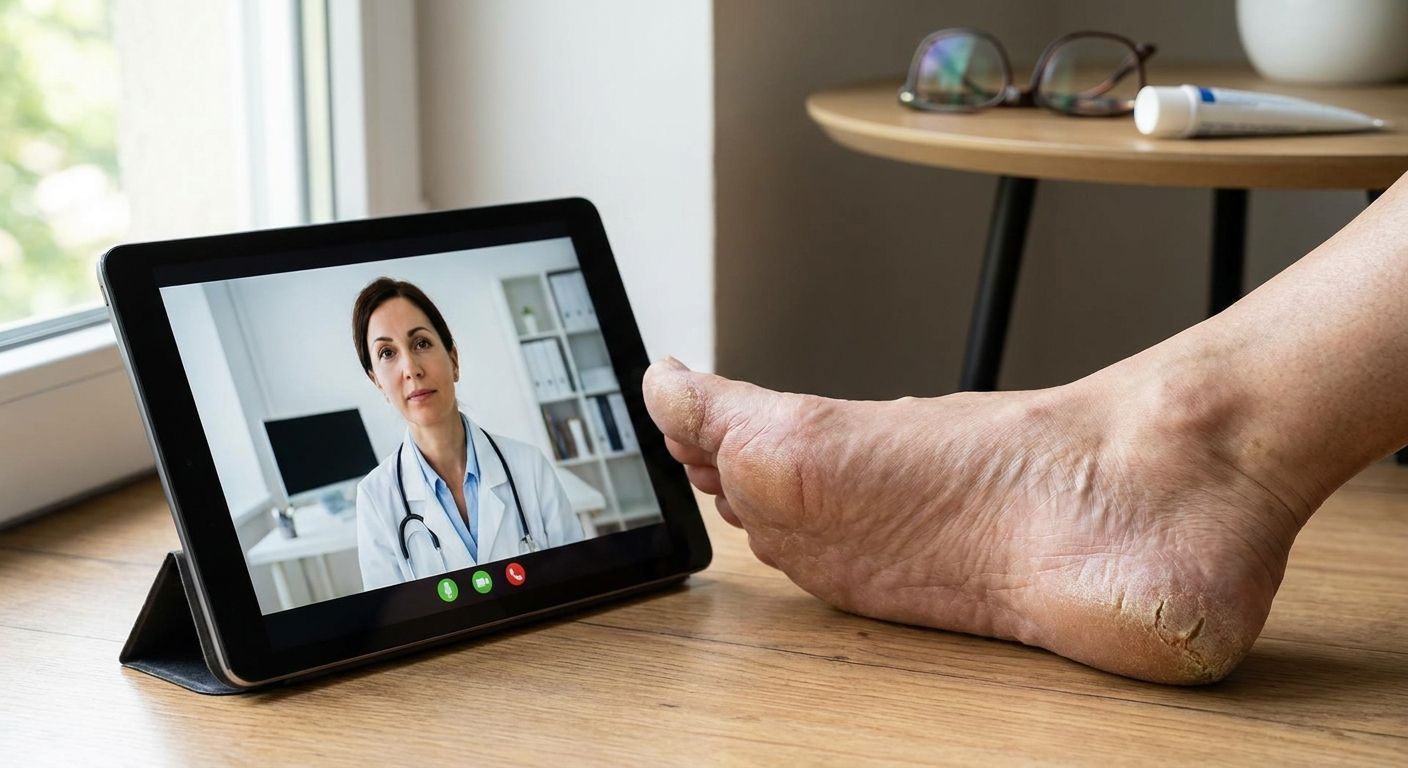
Cracked heels and foot skin conditions like athlete's foot, corns, and psoriasis flares can go from cosmetic annoyance to infection risk fast, and cracked heels telehealth visits put a licensed clinician on the photos within days instead of weeks.
- Cracked heels telehealth works when a licensed clinician reviews photos before prescribing anything — skip tools that skip that step.
- NowCare's Corns & Calluses and Athlete's Foot Treatment pathways cover most non-diabetic cracked heel cases: Buy.
- Diabetic feet need the Diabetic Foot Health pathway, not a general skin plan — cracked heels there carry real infection risk.
- Plans run 1, 3, or 6 months in 2026, with annual memberships available for nail health and diabetic foot care.
Why cracked heels need more than a tub of lotion
Cracked heels sound minor until the crack goes past the top layer of skin and starts catching on socks or bleeding. At that point it's a small wound, not a dryness problem, and wound care is exactly what foot and skin telehealth is built to catch early. Corns, calluses, athlete's foot, and eczema or psoriasis flares on the feet look similar from the couch but need different treatment, and guessing wrong burns weeks.
A diabetic foot health plan exists separately from general skin care for a reason: a cracked heel on a diabetic foot is a higher-risk situation than the same crack on anyone else, because reduced sensation and slower healing can turn a small split into an infection before it's noticed. Telehealth intake in 2026 is good at flagging that distinction from photos and history, but only when a licensed clinician is actually reviewing the case.
Who cracked heels telehealth care is for
This is for anyone with heel cracks, scaly patches, fungal-looking skin, or recurring corns and calluses who wants a diagnosis and a treatment plan without booking a same-week podiatry appointment. It covers people managing diabetes who need a faster read on foot skin changes, runners and gym regulars dealing with friction-related calluses, and anyone whose over-the-counter cream stopped working after a few weeks. It is not for open wounds with visible pus, spreading redness, or fever — those need in-person urgent care the same day.
What to look for in telehealth for cracked heels and foot skin conditions
Provider review before any treatment plan
A plan that skips a licensed clinician review and just sells you a cream based on a symptom checklist is guessing. Cracked heels, fungal infections, and psoriasis plaques respond to different active ingredients, and the wrong one can make a fungal case worse.
Photo-based intake that actually works
The intake has to ask for close-up, well-lit photos of the affected skin, not a single blurry selfie of your foot from three feet away. Clinicians can't diagnose what they can't see clearly, and a bad photo means a slower, less accurate plan.
Prescription-strength options when OTC fails
If you've already tried drugstore urea cream or antifungal spray for two to four weeks with no change, the plan needs a path to prescription-strength treatment, not another round of the same OTC advice.
A diabetic-safe pathway
Diabetic feet need faster follow-up windows and lower thresholds for escalation to in-person care. A generic skin plan that treats a diabetic cracked heel the same as anyone else's is missing the point.
Ongoing follow-up, not a one-time script
Cracked heels and chronic skin flares often need a check-in at two to four weeks to see if the plan is working. One prescription and silence afterward isn't care, it's a transaction.
Get Your Foot Skin Reviewed Today
Licensed clinicians review your photos before any plan ships.
Top picks: which pathway fits your skin issue
Cracked heels with corns or calluses — the common case. The Corns and Calluses pathway covers thickened, cracked skin from friction and pressure, which is the majority of cracked heel cases that aren't fungal or diabetic. Plans run 1, 3, or 6 months, and the clinician review catches whether debridement guidance or a prescription-strength keratolytic is the better fit. Buy if your heels crack from dry skin and pressure with no diabetes involved.
Cracked heels that itch, peel, or smell — likely fungal. Athlete's Foot Treatment covers fungal skin infections that mimic dry cracked heels but need antifungal treatment instead of moisturizer. Misdiagnosing this as simple dryness is the most common reason OTC creams fail for months. Buy if the skin has a peeling or musty-smelling quality on top of the cracking.
Flare-ups with red, scaly plaques. An eczema or psoriasis flare pathway addresses inflammatory skin conditions that can show up on heels and look like severe dry-skin cracking but respond to anti-inflammatory treatment, not just moisturizer. Consider this route if you have a known eczema or psoriasis history and the pattern flares and clears in cycles.
Diabetic feet with any cracking. The Diabetic Foot Health pathway mentioned above is the right call here, not a general skin plan, because infection risk changes the whole calculus. Buy if you're managing diabetes and notice any heel cracking, regardless of severity.
Persistent thick, discolored toenails alongside heel issues. A nail health pathway treats fungal nail involvement that often shows up alongside cracked heels since both stem from the same fungal exposure. Consider adding this if your nails have thickened or yellowed over the same period your heels started cracking.
What to avoid
- Generic wellness apps that skip photo review. If a service prescribes a cream off a symptom dropdown with no clinician looking at your actual skin, you're gambling on a guess.
- Forum-sourced self-diagnosis. Cracked heels, tinea, and psoriasis all look alike in a phone photo to an untrained eye; a licensed clinician exists specifically to tell them apart.
- One-size skincare bundles that ignore diabetic status. A bundle marketed for "dry, cracked skin" that doesn't ask about diabetes is built for the wrong risk profile if that applies to you.
Verdict comparison table
| Care pathway | Best for | Plan length | Verdict |
|---|---|---|---|
| Corns & Calluses | Friction-based cracked heels, non-diabetic | 1/3/6-month | Buy |
| Athlete's Foot Treatment | Fungal, peeling, or itchy cracked skin | 1/3/6-month | Buy |
| Eczema/Psoriasis Flare Care | Recurring scaly, inflamed patches | 1/3/6-month | Consider |
| Diabetic Foot Health | Any cracking on a diabetic foot | 1/3/6-month plus annual | Buy |
| Nail Health | Fungal nails alongside heel cracking | 1/3/6-month plus annual | Consider |
FAQ
What is the best telehealth option for cracked heels in 2026?
A cracked heels telehealth visit with photo-based intake and licensed clinician review is the best 2026 option, since it distinguishes dry-skin cracking from fungal or diabetic causes before treatment starts. NowCare's Corns and Calluses pathway covers the most common non-diabetic version.
Can telehealth actually diagnose foot skin conditions without an in-person exam?
Yes, for most cracked heel, fungal, and inflammatory skin conditions, close-up photos plus a symptom history give a licensed clinician enough to diagnose and prescribe. Open wounds with pus, spreading redness, or fever still need in-person urgent care the same day.
How much does telehealth for cracked heels cost without insurance?
NowCare's foot and skin plans are sold as flat 1, 3, or 6-month programs with no insurance required, so pricing is transparent up front rather than dependent on a copay. Check current plan pricing on the site since it varies by pathway and length.
Is cracked heel care different for people with diabetes?
Yes, diabetic feet heal slower and have reduced sensation, so a cracked heel carries more infection risk than the same crack on a non-diabetic foot. Diabetic patients should use a diabetic-specific foot pathway rather than a general skin plan.
How fast can I start treatment for athlete's foot online?
Most telehealth athlete's foot visits move from intake to a reviewed treatment plan within a couple of days once photos and history are submitted. Speed depends on photo quality and how quickly the clinician can rule out a diabetic or wound complication.
Do cracked heels need a prescription or is over-the-counter enough?
Mild cracked heels often respond to OTC urea or lactic acid creams within two to four weeks. If there's no improvement in that window, or the skin is peeling or discolored, a prescription-strength option reviewed by a clinician is the next step.
What foot skin conditions can telehealth actually treat?
Telehealth can treat cracked heels, athlete's foot, corns, calluses, eczema and psoriasis flares, and fungal nail involvement through photo review and prescription when medically appropriate. Open wounds, deep ulcers, or signs of active infection need in-person evaluation.
How does NowCare handle prescriptions for foot skin conditions?
A licensed clinician reviews the case and, if medically appropriate, sends the prescription electronically to the pharmacy the patient chooses. There's no guaranteed prescription outcome since treatment depends on what the clinician finds in the photos and history.
One last thing
The detail most people miss: a cracked heel that hasn't closed in two weeks of consistent moisturizing isn't a lotion problem anymore, it's a signal to get eyes on it. That two-week mark is the practical line between "keep doing what you're doing" and "get a clinician to look at photos before it gets worse," and it applies whether the cause turns out to be dry skin, fungus, or something that needs a diabetic-specific plan.


