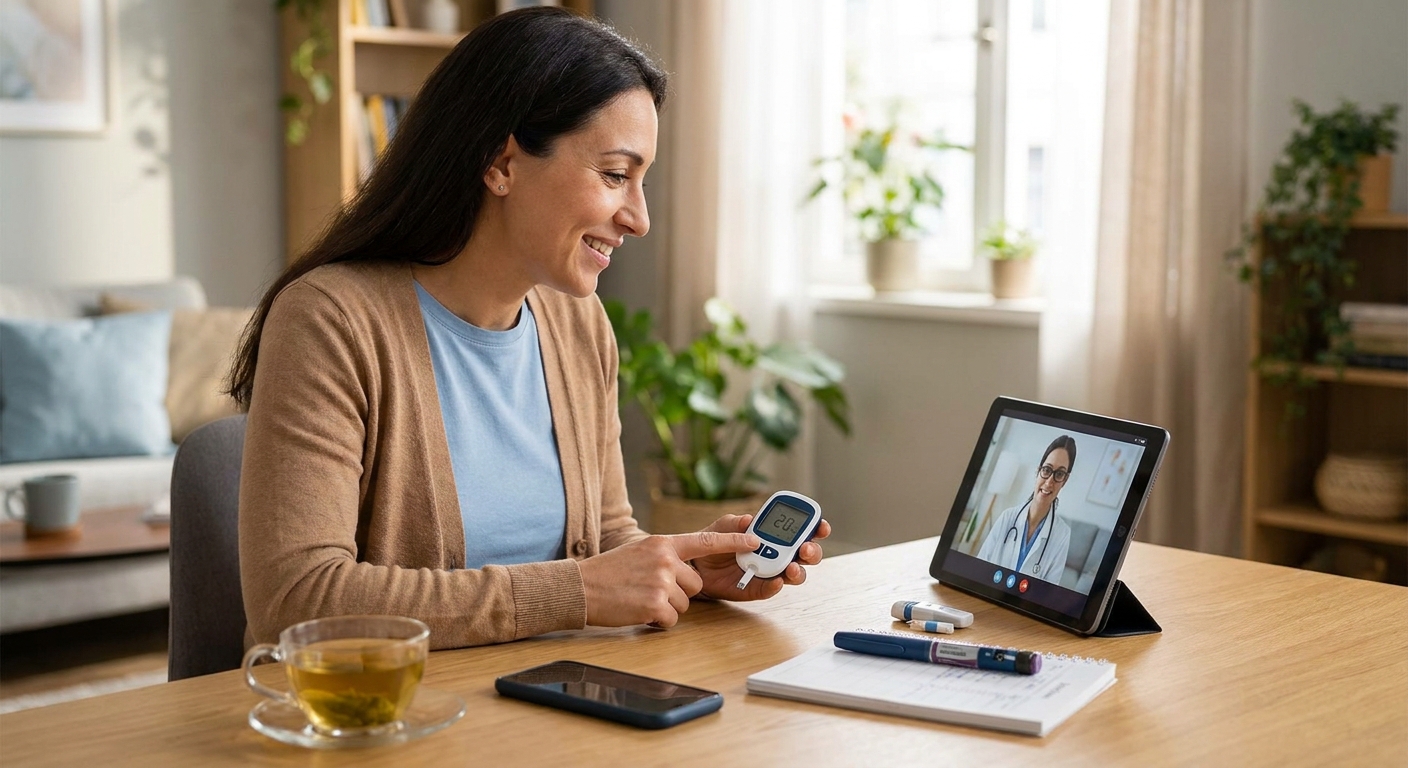
Telehealth diabetes management in 2026 isn't a single video call — it's an ongoing plan that covers medication refills, chronic condition check-ins, and the foot and nerve screening that diabetes quietly puts at risk. This guide breaks down what to look for, which care paths hold up, and which ones skip the parts that actually matter.
- NowCare's chronic condition management primary care is the strongest fit for telehealth diabetes management in 2026 — Buy.
- Maintenance medication refill telehealth keeps insulin and metformin on schedule between visits — Buy for stable patients.
- GLP-1 access through NowCare's qualification process supports weight-related type 2 diabetes management — Consider, not universal.
- Skip any platform that won't screen diabetic foot risk at least once a year.
- Seniors on Medicare need continuity, not one-off urgent care apps, for diabetes management in 2026.
Why this matters
Diabetes management fails most often between appointments, not during them. A1C gets checked every three to six months once a patient is stable, but blood sugar swings, medication gaps, and nerve damage happen every week in between. Telehealth diabetes management closes that gap only if the platform is built for continuity — the same clinician reviewing your chart, refills that don't require a new office visit, and screening for the complication most people forget: diabetic foot damage.
Peripheral neuropathy from diabetes blunts pain signals in the feet, which means small cuts, blisters, or pressure sores can go unnoticed until they're serious. That's the piece most general telehealth apps drop entirely, and it's why primary care built around chronic condition management needs to include foot health, not just medication refills.
Who this is for
This guide is for people managing type 2 diabetes — or prediabetes with weight as a driver — who want an online care plan that handles medication continuity, chronic condition check-ins, and diabetic foot screening without stacking three separate apps. It's also for caregivers of older adults on Medicare who need a telehealth setup that won't drop them after one urgent care visit.
What to look for in telehealth diabetes management
Continuity with one clinician, not a rotating cast
Diabetes care depends on a provider who knows your history, current dosages, and last A1C trend. A platform that assigns a new clinician every visit forces you to re-explain your case each time, which slows down dosage adjustments that should happen in days, not weeks.
Diabetic foot screening built into the plan
Nerve damage from diabetes doesn't announce itself — a foot exam should happen at least once a year, and more often if neuropathy is already diagnosed. This is the pillar most general telehealth platforms skip because it requires clinicians trained specifically in foot and ankle health, not just general medicine.
Medication refill logistics that skip the office visit
Insulin, metformin, and other maintenance medications shouldn't require a new office visit every 30 days. Look for refill cycles that stretch to 90 days for stable patients, with provider review built into the renewal instead of a rubber stamp.
Support for weight management alongside blood sugar
GLP-1 medications are increasingly part of type 2 diabetes management, not just weight loss. A platform that screens for medical appropriateness before prescribing — rather than treating it as an automatic add-on — is doing this correctly in 2026.
Built for seniors and Medicare coverage
Older adults managing diabetes need a platform that doesn't assume smartphone fluency or same-day insurance verification. Telehealth built for seniors on Medicare should make scheduling and refills simple, not an extra task layered on top of an already complicated care routine.
Top picks for telehealth diabetes management
Chronic Condition Management Primary Care — the steady hand. This is ongoing primary care built around one plan reviewed on a recurring basis rather than a single urgent care visit. The value here is continuity: one clinician tracking your diabetes plan over time instead of starting from zero each visit. Verdict: Buy — this is the base layer for anyone managing diabetes long-term in 2026.
Maintenance Medication Refill — the refill lifeline. Built around 90-day refill cycles for medications like metformin, this path removes the friction of a new office visit every month for a prescription that hasn't changed. The catch: it works best for patients whose dosage is already stable, not those mid-adjustment. Verdict: Buy for stable patients, Consider if your regimen is changing frequently.
GLP-1 Weight Loss Qualification — the metabolic lever. GLP-1 medications increasingly factor into type 2 diabetes management because weight and blood sugar control move together for many patients. This path requires provider review before any prescription, which is the correct order of operations. Verdict: Consider — it's not a universal fit, but worth the screening conversation if weight is part of your diabetes picture.
Diabetic Foot Health (Podiatric Care) — the pillar most platforms skip. This is one of NowCare's Seven Pillars of Foot & Ankle Health, covering neuropathy checks and foot ulcer screening that general telehealth platforms rarely offer. Diabetes patients need this at least once a year regardless of how well blood sugar is controlled elsewhere. Verdict: Buy — skipping this pillar is the single most common gap in telehealth diabetes management plans.
“Peripheral neuropathy means a foot problem can turn serious before it ever hurts.”
What to avoid
- One-off urgent care apps that don't retain your chart. If a platform treats every visit as a fresh start, your diabetes plan never accumulates the history it needs to adjust medication safely.
- Weight-loss-only telehealth that ignores foot and nerve screening. GLP-1 access without any pathway to diabetic foot care leaves half the condition unmanaged.
- Platforms promising same-day prescriptions with no provider review. Medication changes for diabetes should go through a clinician who's actually looked at your history, not an automated approval.
Verdict comparison
| Care option | Continuity | Foot Screening | Medication Refill | Verdict |
|---|---|---|---|---|
| Chronic Condition Management Primary Care | Yes | Yes | Yes | Buy |
| Maintenance Medication Refill | Partial | No | Yes | Buy |
| GLP-1 Qualification | Partial | No | N/A | Consider |
| Diabetic Foot Health (Podiatry) | Yes | Yes | No | Buy |
FAQ
What is telehealth diabetes management?
Telehealth diabetes management is ongoing diabetes care delivered through video and messaging with a licensed clinician, covering medication adjustments, chronic condition check-ins, and screening for complications like diabetic foot damage. In 2026 it typically includes recurring visits rather than a single one-off consult.
Is telehealth diabetes management as good as in-person visits in 2026?
For medication management, chronic condition check-ins, and foot screening triage, telehealth handles the majority of routine diabetes care effectively. Complications requiring hands-on procedures, like wound debridement, still need an in-person referral.
Can I get insulin or metformin refilled through telehealth?
Yes, maintenance medication refill telehealth typically covers metformin and other stable diabetes prescriptions with provider review built into the renewal. Insulin refills depend on dosage stability and clinician judgment.
Does telehealth cover diabetic foot exams?
Some telehealth platforms include diabetic foot screening as part of ongoing care, though it requires clinicians trained specifically in foot and ankle health. This is one of the most commonly skipped pieces of general telehealth diabetes management.
How often should a diabetic foot exam happen?
A comprehensive diabetic foot exam should happen at least once a year, and more frequently if neuropathy or prior ulcers are already diagnosed. Peripheral nerve damage can mask pain, so regular screening catches problems before they're felt.
Is GLP-1 medication used for diabetes or weight loss?
GLP-1 medications are used for both type 2 diabetes management and weight loss, and the two often overlap for the same patient. Prescribing should follow a provider review confirming medical appropriateness, not automatic approval.
Do Medicare patients qualify for telehealth diabetes management?
Many telehealth platforms built for seniors on Medicare cover diabetes management visits, though coverage details vary by plan. Confirm what's included before assuming full coverage in 2026.
How much does telehealth diabetes management cost in 2026?
Cost depends on the specific service — chronic condition management, medication refills, and foot screening may be priced or covered differently. Check current pricing directly on the platform you're considering rather than assuming a flat rate.
One last thing
The part of diabetes management that gets skipped most isn't medication — it's the feet. Neuropathy blunts pain signals, so a foot ulcer can develop and worsen without the patient noticing anything is wrong until it's already serious. If a telehealth diabetes management plan doesn't include a foot screening pathway, it's managing half the condition in 2026, not all of it.


