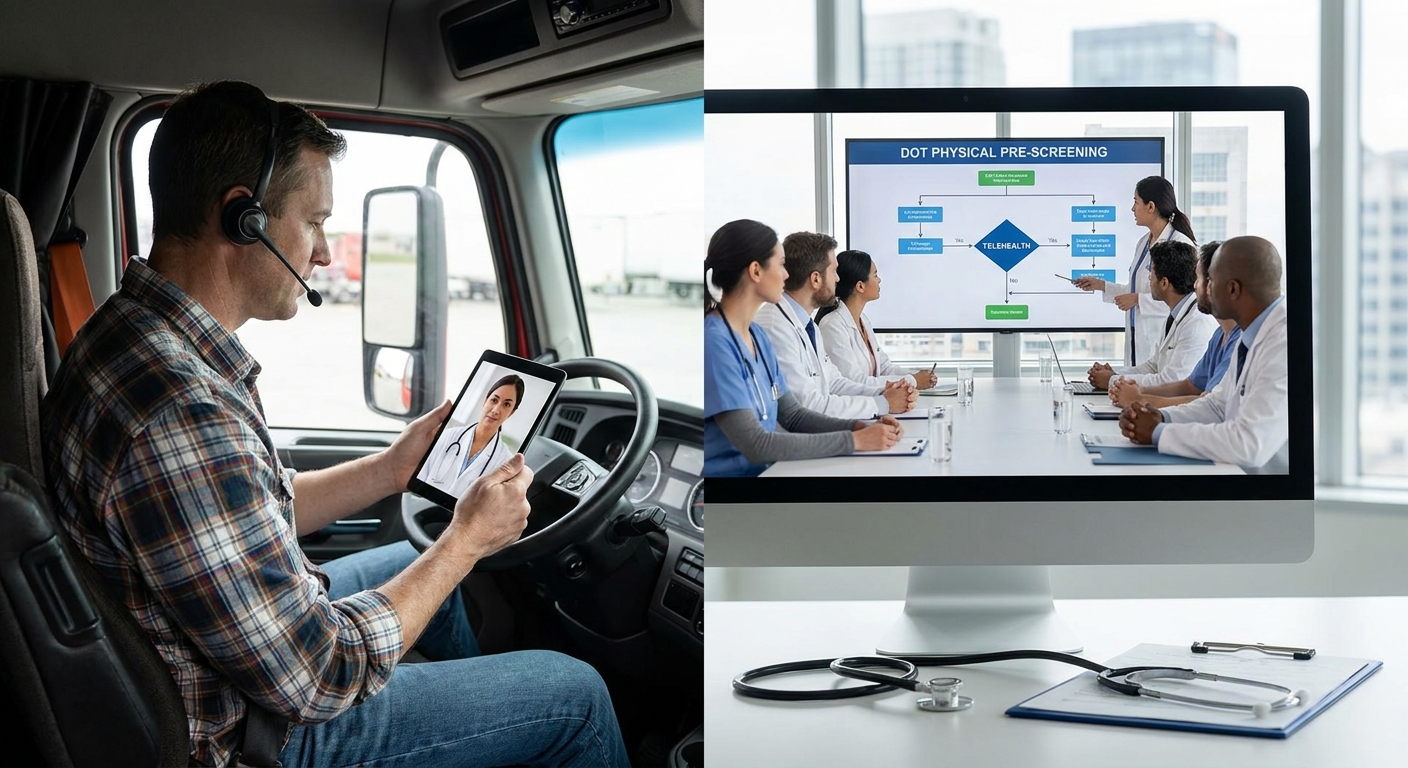
Telehealth dot physical pre-screening lets CDL drivers, bus operators, and other commercial license holders catch blood pressure, blood sugar, and sleep issues weeks before the in-person FMCSA exam that actually certifies them.
- Telehealth dot physical pre-screening catches blood pressure and A1C problems before your in-person exam — book it 3-4 weeks ahead, not the night before.
- Blood pressure medication management gets Stage 1 readings (140-159/90-99 mmHg) under control before exam day — Buy if you've never had it checked this year.
- Sleep apnea risk hides behind a BMI of 33+ and daytime fatigue; telehealth screening flags it before an examiner does — Consider it if you're borderline.
- Diabetes management telehealth visits build the A1C history FMCSA examiners ask for — Buy 4-6 weeks before your certification is due.
- Waiting until exam-day panic to fix blood pressure or blood sugar is how drivers lose a 24-month certification — Skip that gamble in 2026.
Why this matters
A DOT physical isn't a formality. It's a pass/fail gate that decides whether you keep driving for a living, and the FMCSA-certified medical examiner who signs your card has zero incentive to give you the benefit of the doubt.
Most disqualifications in 2026 don't come from a dramatic diagnosis. They come from blood pressure that's crept up over two years, an A1C nobody's tracked, or sleep apnea nobody's screened for. Telehealth pre-screening exists to find those problems while you still have time to fix them, not while you're sitting in the exam chair.
Who this is for
This is for CDL holders, delivery drivers, bus operators, and anyone facing a required medical certification who wants to walk into their pre-employment physical exam with known numbers instead of surprises. It's also for drivers renewing a certification that's about to expire and don't want a 3-month card instead of a 24-month one.
It is not a substitute for the in-person exam itself. No telehealth visit issues an actual DOT medical certificate — that requires a certified examiner who checks vision, hearing, and does the physical exam in person. What telehealth for DOT physical exam pre-screening does is fix the fixable stuff first.
What to look for in telehealth pre-screening for DOT physicals
Blood pressure control, checked more than once
FMCSA guidance splits certification length by blood pressure reading: under 140/90 mmHg gets you up to 24 months, 140-159/90-99 gets a 1-year card, and 160-179/100-109 gets you 90 days to bring it down. One clinic-day reading doesn't tell you which bucket you're in — you need a trend.
A telehealth visit that reviews your blood pressure history and adjusts medication weeks before your exam changes which bucket you land in. That's the difference between a 2-year certification and a 3-month one.
Diabetes and blood sugar history
Examiners want to see a stable A1C and a medication record, not a driver guessing at their last lab result. If you're on insulin or oral medication, a documented management history matters more than a single good reading on exam day.
A telehealth visit focused on diabetes management can pull together the medication log and recent trend an examiner will ask for, instead of you scrambling for old paperwork.
Sleep apnea risk factors
A BMI of 33 or higher, neck circumference, and reported daytime fatigue are the flags many examiners use to refer a driver for a sleep study — and an unresolved referral can delay certification indefinitely. Catching this risk early, through a telehealth review of sleep symptoms, gives you time to get ahead of a referral instead of being blindsided by one.
Medication list accuracy
Certain medications and dosages are disqualifying or require additional documentation. A telehealth review of your full medication list before the exam catches a conflict — an old prescription, an interaction, a dosage that needs adjusting — before an examiner flags it cold.
Weight and metabolic trend
BMI alone doesn't disqualify a driver, but it feeds into sleep apnea screening and cardiovascular risk assessment. A weight trend that's climbing without a plan is a red flag examiners note; a documented management plan is not.
Get your pre-screening booked
Review blood pressure, diabetes, and sleep risk before your DOT physical.
Top picks: what to book before your DOT physical
1. Blood pressure medication review — the most common disqualifier. Stage 1 hypertension (140-159/90-99 mmHg) drops your certification from 24 months to 12; Stage 2 drops it to 90 days. A telehealth blood pressure medication refill visit 3-4 weeks out gives adjusted medication time to work before exam day. Buy if you haven't had a reading checked in the last six months.
2. Diabetes management review — the paperwork problem. Examiners want A1C trend and medication documentation, not a driver's memory of their last lab. A diabetes management telehealth visit builds that record ahead of time. Buy if you're on insulin or oral diabetes medication and haven't had labs pulled together in one place.
3. Sleep and insomnia screening — the quiet disqualifier. Daytime fatigue and a BMI over 33 are the combination that triggers a sleep apnea referral, and an unresolved referral can stall certification for months. A telehealth visit for insomnia and sleep issues flags this risk before an examiner does. Consider it if you snore, wake tired, or carry extra weight around your neck and midsection.
4. Occupational health screening bundle — the one-stop option. Employers requiring recurring physicals for a fleet or crew benefit from a telehealth occupational health screening that covers blood pressure, weight trend, and medication review in one visit instead of three. Buy if you're screening multiple drivers on a schedule.
5. Medication and weight trend check-in. A general review of your current prescriptions and weight trajectory against what an examiner will ask about takes one visit through NowCare's telehealth intake. Consider it as a final pass 1-2 weeks before your scheduled exam.
What to avoid
- Waiting until exam week to check anything. Blood pressure medication takes weeks to show a stable trend — a same-day reading fixed the night before doesn't hold up under a repeat check.
- Treating a home blood pressure cuff reading as clinical proof. Examiners want a documented trend from a provider, not a screenshot from a wrist monitor.
- Assuming telehealth replaces the in-person exam. Vision, hearing, and the physical exam itself still require an FMCSA-certified examiner in person — pre-screening only handles what can be managed before that appointment.
“If your blood pressure reads 160/100 in the exam room, you get 90 days to fix it or you're off the road.”
Verdict comparison: pre-screening checklist by criteria
| Criteria | Why it matters | Verdict |
|---|---|---|
| Blood pressure trend | Determines 24-month vs. 90-day certification | Buy — check 3-4 weeks out |
| Diabetes/A1C history | Examiners ask for documented trend, not memory | Buy if on medication |
| Sleep apnea risk (BMI 33+) | Unresolved referral can stall certification | Consider if borderline |
| Medication list accuracy | Conflicts flagged cold cost time on exam day | Buy — review before booking |
| Weight/metabolic trend | Feeds cardiovascular and sleep risk scoring | Consider for a management plan |
FAQ
What is telehealth dot physical pre-screening?
It's a telehealth visit that reviews blood pressure, diabetes control, sleep apnea risk, and medication history before your in-person DOT physical, so known issues get addressed ahead of exam day rather than during it.
Can telehealth replace a DOT physical exam?
No. The actual DOT medical certificate requires vision, hearing, and a physical exam performed by an FMCSA-certified medical examiner in person. Telehealth handles the pre-screening and chronic condition management pieces beforehand.
What blood pressure disqualifies a CDL driver in 2026?
A reading of 180/110 mmHg or higher is disqualifying until controlled. Readings of 160-179/100-109 get a 90-day certification, and 140-159/90-99 gets a 1-year card instead of the full 24 months.
Does diabetes disqualify you from a DOT physical?
Insulin-treated diabetes doesn't automatically disqualify a driver, but it requires documented monitoring and a stable treatment history, which is exactly what a telehealth diabetes management visit builds ahead of the exam.
How often do CDL drivers need DOT physicals?
Certification runs up to 24 months for drivers with well-controlled blood pressure and no disqualifying conditions, and as short as 90 days for drivers with unmanaged Stage 2 hypertension or unresolved referrals.
Can telehealth screen for sleep apnea before a DOT physical?
A telehealth visit can flag sleep apnea risk factors like BMI over 33 and daytime fatigue, giving you time to address the risk before an in-person examiner triggers a formal sleep study referral.
How much does telehealth pre-screening cost?
Pricing varies by visit type and what's being reviewed — check current pricing directly on nowcare.health before booking.
What should I bring to my in-person DOT physical after pre-screening?
Bring your current medication list, recent blood pressure and A1C readings if you have them, and any documentation from your telehealth visits so the certified examiner has a full picture instead of starting from zero.
One last thing
The drivers who lose 24-month certifications for 90-day ones almost never lose them to something dramatic — it's usually a blood pressure reading nobody addressed for two years running. Booking a telehealth review a month out costs you one visit; getting a 90-day card instead of a 2-year one costs you three more trips to the examiner's office before 2027.


