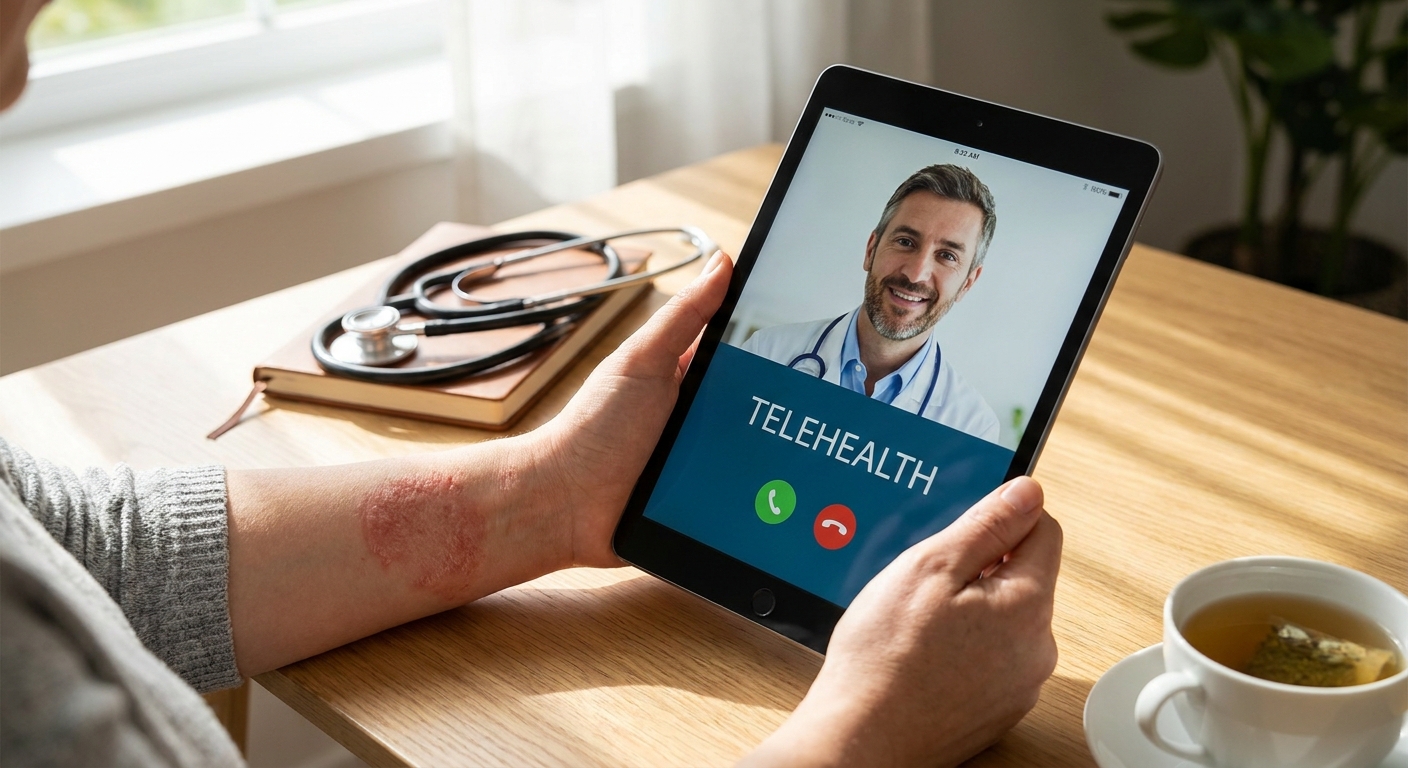
Eczema and psoriasis flares rarely wait for a dermatology slot three weeks out — telehealth eczema psoriasis care puts a licensed clinician on the problem the same day, often before the itching gets worse.
- Telehealth eczema psoriasis visits connect a flare to a licensed clinician same-day — Consider for stable rashes.
- Same-day video visits win for sudden, spreading flares; book within hours, not weeks — Buy.
- A chronic condition management path beats one-off urgent care for psoriasis with 3+ flares a year — Buy.
- Photo-only triage with no follow-up scheduling is a Skip for moderate-to-severe psoriasis needing biologics.
Why this matters
The National Eczema Association puts the number of Americans living with some form of eczema at roughly 31 million. The National Psoriasis Foundation estimates close to 7.5 million U.S. adults have psoriasis. Both conditions flare on their own schedule — stress, weather, a new detergent — and both respond best when treatment starts within days, not weeks.
A telehealth visit for skin conditions closes that gap. You send photos or get on video, a licensed clinician reviews the flare, and you leave with a treatment plan or a referral before the rash spreads. NowCare runs its telehealth skin-conditions consults this way: provider-guided, treatment only when it's medically appropriate, no waiting room involved.
In 2026, more insurers reimburse telehealth dermatology visits at the same copay as in-person care, which changes the math on whether to wait for a specialist slot or handle a flare online first.
Who telehealth eczema psoriasis care is for
This fits adults managing a flare that's uncomfortable but not an emergency — spreading redness, cracked skin, plaques that itch enough to disrupt sleep, or a psoriasis patch that's grown since last week. It's a poor fit for anyone with signs of skin infection (fever, spreading warmth, pus) or a first-time diagnosis of a widespread rash covering more than 10% of the body — those cases need in-person evaluation, and a telehealth clinician should say so.
What to look for in telehealth eczema psoriasis care
Photo quality and triage protocol
A clinician can't touch the skin over video, so the intake process has to force good photos — natural light, multiple angles, a size reference. Platforms that skip this step misdiagnose distribution and severity more often, which means the wrong-strength topical gets prescribed.
Prescription authority for topical treatment
Most eczema and psoriasis flares respond to a prescription-strength topical steroid, a non-steroidal cream, or an antihistamine for itch control. Confirm the clinician can actually prescribe these in your state before you book — some urgent-care-style telehealth lines only handle triage and referral, not treatment.
Follow-up cadence
Eczema and psoriasis are chronic. A visit that ends with a prescription and no plan to check back in two to four weeks leaves you guessing whether the treatment worked. Look for a platform that schedules the follow-up at booking, not one you have to chase down.
A path to specialist referral
If a flare doesn't clear with first-line topical treatment, or a patient needs phototherapy or a biologic, the telehealth clinician should refer out rather than keep prescribing stronger steroids indefinitely. Ask how referrals work before you need one.
Cost transparency without insurance
Flare-up visits should have a flat, quoted price before you commit. Hidden per-message fees or a jump in cost for a follow-up photo review are red flags for anyone paying cash.
Speed to appointment
A flare that's spreading daily doesn't wait well. Same-day booking matters more here than for routine chronic-disease check-ins.
“If a flare doesn't respond to an over-the-counter steroid within a week, it needs a clinician's eyes on it, not more patience.”
Top care paths for eczema and psoriasis flare-ups
The same-day fix. For a flare that showed up in the last 48 hours and is spreading, a same-day telehealth appointment gets a clinician's eyes on it before it gets worse over a weekend. One spec that matters: booking-to-visit time. If a platform can't confirm same-day scheduling at checkout, keep looking. Buy for sudden, spreading, or intensely itchy flares.
The maintenance path. Psoriasis that flares three or more times a year needs a standing plan, not a fresh urgent-care visit every time. An online primary care path built for chronic condition management sets a recurring check-in cadence and keeps one clinician tracking the pattern instead of starting over with someone new each flare. Buy for patients with a documented history of recurring flares.
The direct match. NowCare's telehealth skin-conditions consult is built for exactly this scenario — photo-based triage, a licensed clinician reviewing severity, and treatment only when it's medically appropriate. It's the right call for a first-time or occasional flare where you don't yet know if this needs a standing management plan. Consider it before defaulting to an in-person dermatology wait list.
What to avoid
- Phone-only triage lines with no photo upload. A clinician guessing at severity from a description alone under-treats or over-treats the flare roughly as often as they get it right.
- Platforms that prescribe a short steroid burst and nothing else. Chronic conditions need a follow-up scheduled at the same visit, not a one-time refill with no plan.
- General urgent care video visits marketed for "skin issues" but staffed mainly for cold and flu triage. They can spot an emergency but often can't assess plaque distribution or recommend a maintenance regimen.
Talk to a Clinician About a Flare
Provider-guided telehealth for skin conditions, no waiting room required.
Verdict comparison
| Care path | Speed | Prescription scope | Follow-up | Verdict |
|---|---|---|---|---|
| Same-day video visit | Hours | Topicals, antihistamines | Optional | Buy for sudden flares |
| Chronic condition management | 1-3 days | Ongoing prescribing | Scheduled at booking | Buy for recurring psoriasis |
| Skin-conditions telehealth consult | Same to next day | Topicals, referral out | Case by case | Consider for first-time flares |
| Phone-only triage line | Same day | Limited or none | Rare | Skip |
FAQ
Is telehealth eczema psoriasis care actually effective?
Telehealth works well for stable flares that need a photo-based assessment and a topical prescription, and less well for widespread rashes or suspected infection that need hands-on exams. In 2026 most insurers treat these visits the same as in-person dermatology for copay purposes.
Can a telehealth clinician prescribe steroid cream for eczema?
Yes, licensed clinicians can prescribe topical steroids and other flare treatments during a telehealth visit when it's medically appropriate. Scope varies by state, so confirm prescribing authority before booking.
How much does a telehealth visit for a skin flare cost?
Pricing varies by platform and insurance coverage; ask for a flat quoted price before booking if paying without insurance. Look for transparent per-visit pricing rather than per-message fees.
Is same-day telehealth better than urgent care for a psoriasis flare?
Same-day telehealth is usually faster and cheaper for a flare that isn't showing infection signs, since it skips the waiting room entirely. Urgent care in person still wins if there's fever, spreading warmth, or pus.
How often should psoriasis patients see a clinician?
Patients with three or more flares a year typically do better on a recurring chronic condition management plan than repeat one-off visits. A follow-up every two to four weeks after a new treatment starts is a reasonable default.
Can telehealth handle a first-time eczema diagnosis?
Telehealth can assess and treat a first-time flare covering a small area, but a rash covering more than 10% of the body usually needs an in-person exam. A telehealth clinician should say so and refer out rather than guess.
What photos does a telehealth dermatology visit need?
Clear photos in natural light from multiple angles, ideally with a size reference like a coin, give the clinician enough to assess severity. Poor lighting or a single blurry photo is the most common reason for a misjudged flare.
One last thing
Most flares tell you within a week whether the treatment is working. If an over-the-counter or prescribed topical hasn't calmed a patch within seven days, that's the signal to go back to a clinician rather than wait it out — in 2026, that follow-up can happen over video, without another trip to a waiting room.


