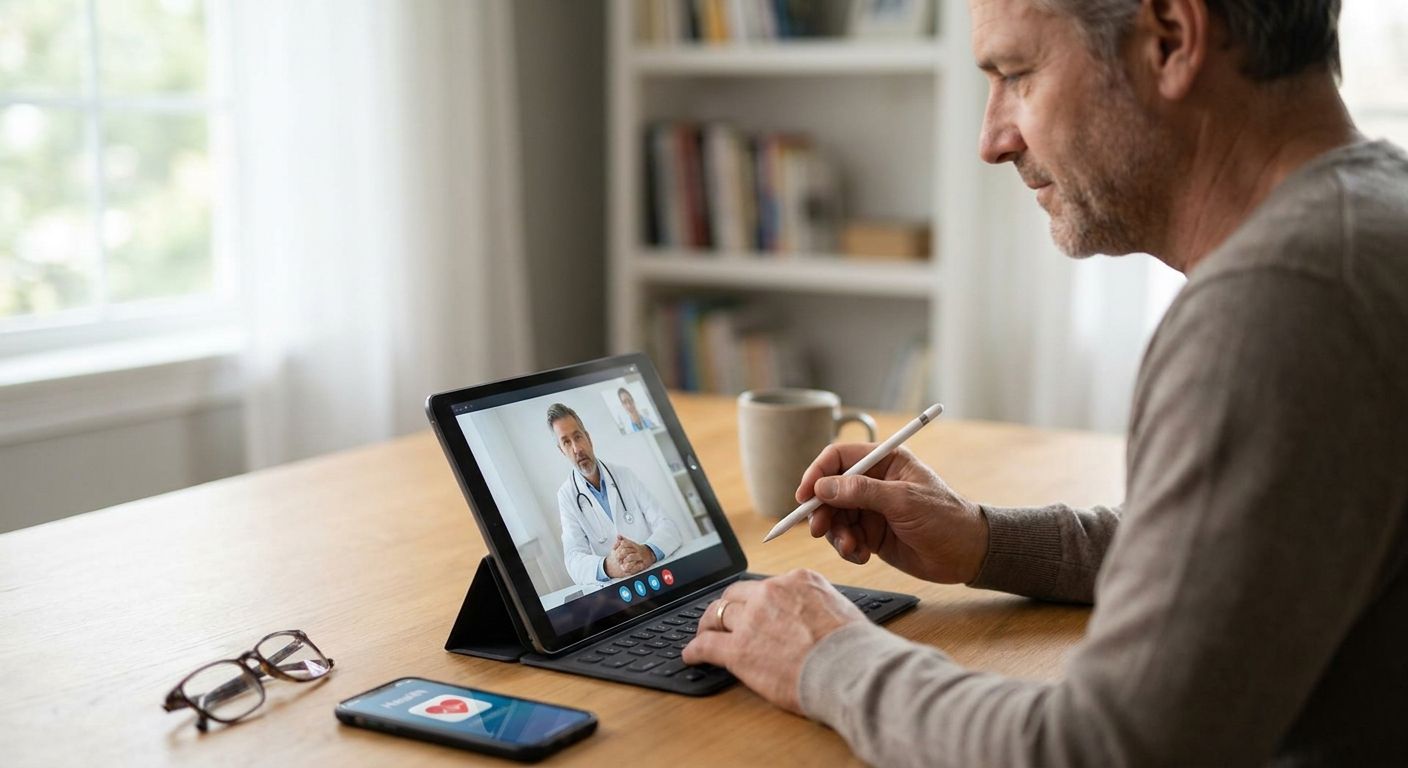
BPH telehealth for men with enlarged-prostate symptoms in 2026 is a virtual visit built to triage urinary changes, review medication options, and route men who need a physical exam or PSA test to an in-person urologist fast. Men in this segment differ from a typical telehealth caller: symptoms build for months before anyone books anything, and embarrassment keeps the visit off the calendar longer than the symptoms actually deserve.
- BPH telehealth triages urinary symptoms and reviews medication like alpha blockers, but can't run a PSA test or digital exam.
- Roughly half of men in their 50s-60s have BPH; that share climbs toward 90% by age 80.
- Elevated PSA, blood in urine, or sudden urinary retention always route to an in-person urologist, not a video call.
- NowCare's Virtual Urgent Care handles the men's health intake and medication review that starts the process.
Why BPH telehealth matters for men with urinary symptoms
Benign prostatic hyperplasia isn't rare and it isn't optional to manage. It affects roughly half of men in their 50s and 60s, and that share climbs to about 90% by age 80, according to data cited by the Urology Care Foundation. That prevalence means most men in this segment already know someone who's dealt with it — and most still wait months, not weeks, before asking a clinician about their own symptoms.
The friction here isn't medical, it's logistical and social. Nighttime bathroom trips and a slow stream are hard to bring up in a rushed in-person slot squeezed between other patients. A virtual visit through NowCare's Virtual Urgent Care removes the waiting-room factor and lets men describe symptoms from home, which is often the difference between addressing BPH in 2026 and letting it drag on unaddressed for another year.
Get symptom triage without the waiting room
Most men booking BPH telehealth in 2026 start with the same handful of moves, in roughly this order.
Track your urinary symptoms before you book a visit
- Log how many times you wake up at night to urinate over 3-5 nights
- Rate stream strength each time: strong, weak, or stop-and-start
- Note straining, dribbling, or a sense you never fully empty your bladder
- Track daytime frequency against how much fluid you're actually drinking
- Write down any blood in urine or pain immediately — that's an in-person flag, not a telehealth one
Rule out infection and other causes first
- Burning or urgency alongside frequency points toward infection more than prostate enlargement
- Fever or flank pain suggests a kidney issue, not BPH
- A recent new partner or unprotected sex changes what a clinician should test for
- Sudden onset (days, not months) usually means something other than BPH is driving symptoms
- Bring a clear timeline — "since when" matters more than "how bad"
Start with a virtual intake with a licensed clinician
- Complete a symptom questionnaire similar to the IPSS scale clinicians use in person
- List every medication you're already on — several common drugs worsen BPH symptoms
- Mention family history of prostate issues if you know it
- Describe stream strength and nighttime frequency in numbers, not "a lot"
- Ask directly whether your case needs an in-person PSA draw or physical exam
Ask about medication options before assuming surgery
- Alpha blockers, like tamsulosin, relax the muscle around the prostate and bladder neck and work within days
- 5-alpha reductase inhibitors shrink the prostate over months but take longer to show benefit
- Combination therapy is common when symptoms are moderate to severe
- Some BPH medications affect sexual function — men managing both conditions often ask about erectile dysfunction telehealth in the same visit
- Watchful waiting is a legitimate choice when symptoms are mild and not bothersome
Know when telehealth refers you to a urologist in person
- Elevated or rising PSA needs an in-person workup, not a video call
- Sudden inability to urinate (urinary retention) is an emergency, not a telehealth case
- Blood in urine always gets an in-person referral
- Symptoms that don't improve after a full medication trial warrant a specialist look
- A telehealth referral to a specialist keeps the paper trail moving instead of starting the workup over with a new provider
Set up ongoing monitoring and refills without extra office visits
- Renew maintenance medication online once dosing is stable
- Schedule symptom check-ins every few months instead of waiting for a crisis
- Track PSA on the schedule your clinician sets, not on your own timeline
- Flag new symptoms right away instead of waiting for the next scheduled check-in
- Keep pharmacy details current so refills don't stall between visits
Start a men's health telehealth visit
Get urinary symptoms reviewed by a licensed clinician online.
Comparing your options for managing BPH symptoms in 2026
| Option | Best for | How it works | Key limitation |
|---|---|---|---|
| Telehealth men's health visit | Men who want fast symptom triage and medication review from home | Video or async intake with a licensed clinician; prescription sent to your pharmacy if appropriate | Can't perform a digital rectal exam, PSA blood draw, or uroflow test remotely |
| In-person urologist visit | Men with elevated PSA, blood in urine, or symptoms not responding to medication | Physical exam, labs, and imaging handled in one visit | Longer wait times and harder to schedule on short notice |
| At-home symptom trackers | Men early in symptom onset who aren't sure a visit is worth it yet | Free apps or paper logs recording frequency, urgency, and stream strength | No diagnostic value alone; doesn't rule out infection or cancer |
| Over-the-counter saw palmetto and similar supplements | Men wanting a low-commitment first step | Taken daily, no prescription required | Evidence for symptom relief is mixed and doesn't reduce prostate size |
A telehealth visit is the fastest way to get BPH symptoms triaged and medication started in 2026, but it doesn't replace the in-person exam a urologist runs once PSA or imaging enters the picture.
Common mistakes men make with BPH symptoms
These are the patterns that show up over and over once men finally book a visit in 2026.
- Assuming every urinary symptom is prostate-related. Burning, urgency, and pelvic pain point toward infection more than enlargement, and ruling out a urinary infection with STI testing before starting a prostate medication saves a wasted month on the wrong treatment.
- Waiting for urinary retention before calling anyone. By the time urination stops completely, it's an emergency room visit, not a telehealth one.
- Stopping medication because of early dizziness. Alpha blockers cause lightheadedness for many men in the first week or two, and it usually fades — stopping without asking a clinician means restarting the trial from zero.
- Expecting supplements to shrink the prostate. Saw palmetto and similar products show mixed evidence for symptom relief and don't reverse gland size.
- Skipping the symptom log. A clinician managing BPH remotely needs the numbers — nightly trips, stream rating — to tell if a medication is working. "Somewhat better" isn't data.
FAQ
What is BPH telehealth and how does it work?
BPH telehealth is a video or async visit where a licensed clinician reviews urinary symptoms, medication history, and decides whether a prescription or an in-person referral is the right next step. It doesn't replace a physical exam.
Can a telehealth visit diagnose an enlarged prostate?
No. A telehealth visit can screen symptoms and start medication in appropriate cases, but a formal BPH diagnosis usually needs a digital rectal exam, PSA blood test, or uroflow study done in person.
What medications does a telehealth clinician prescribe for BPH symptoms?
Common options include alpha blockers like tamsulosin and 5-alpha reductase inhibitors, prescribed based on symptom severity and medical history. A clinician reviews interactions with other medications before prescribing.
When does BPH require an in-person urologist instead of telehealth?
Elevated PSA, blood in urine, sudden urinary retention, or symptoms that don't improve after a full medication trial all require an in-person urologist visit.
Does BPH telehealth include a PSA test?
Telehealth visits don't draw blood remotely, so a PSA test happens at a local lab or in-person visit. A telehealth clinician can order the test and review results afterward.
Can BPH symptoms be confused with a urinary tract infection?
Yes. Frequency and urgency overlap heavily between BPH and UTIs, which is why burning or fever should prompt infection testing before assuming it's the prostate.
Is BPH telehealth covered without insurance?
Coverage and out-of-pocket cost vary by provider and plan; check current pricing directly on the provider's site before booking.
Can BPH treatment affect erectile function?
Some BPH medications, particularly certain alpha blockers, can affect ejaculation or sexual function in a subset of men, which is worth raising directly during the intake visit.
One last thing
Nocturia — getting up multiple times a night to urinate — isn't just an annoyance. Men who wake three or more times a night to urinate carry measurably higher fall risk than men who don't, which is part of why clinicians treat nighttime frequency even when men shrug it off as normal aging. Heading further into 2026, that single symptom is worth flagging on its own, even without the rest of the BPH picture.


