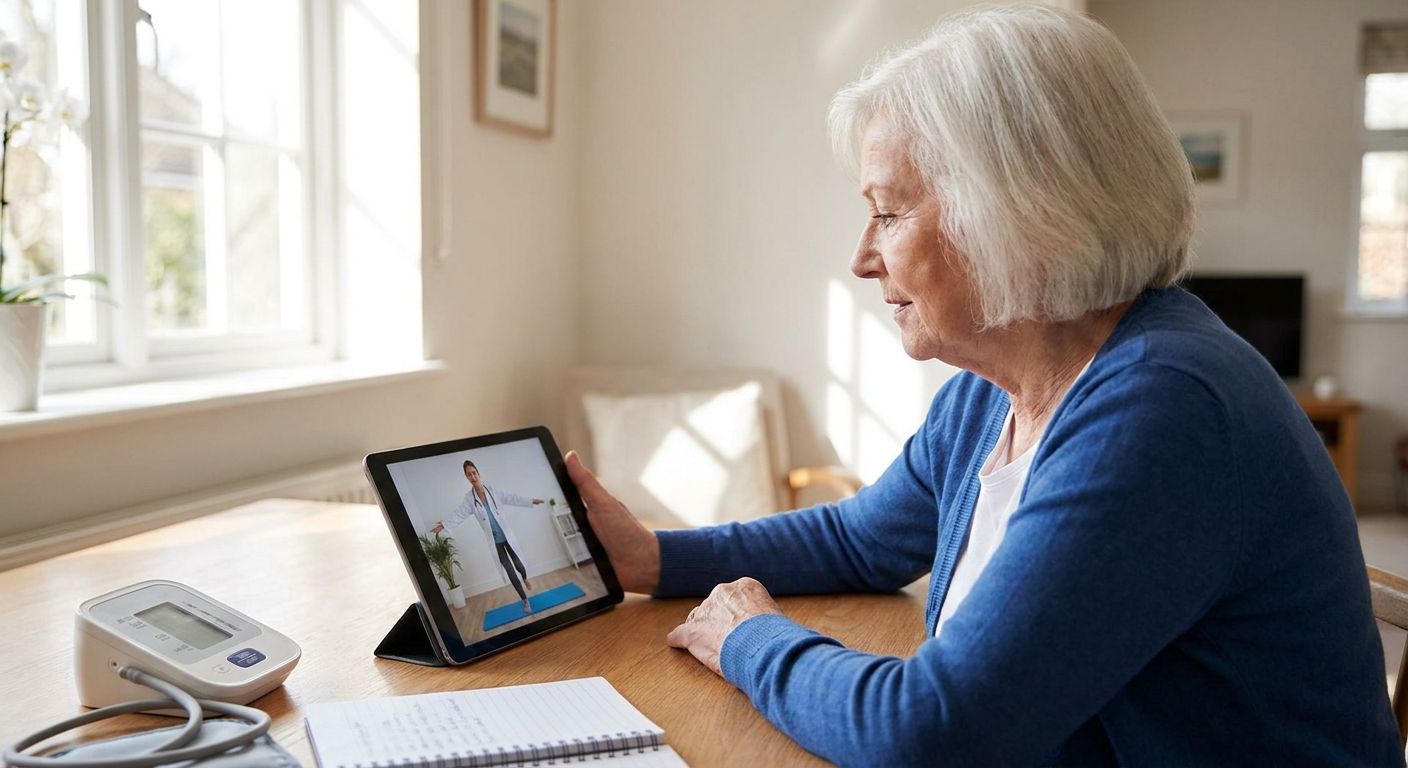
Fall risk assessment telehealth for older adults is a video visit with a licensed clinician who reviews balance, gait, medications, vision, and home hazards to flag fall risk before a hip fracture or ER visit happens. Older adults juggling mobility limits, no easy transportation, or a caregiver managing the calendar need a screening that doesn't require a drive across town to a geriatric specialist — a virtual visit removes that barrier directly.
- Fall risk assessment telehealth screens gait, medications, and home hazards in one video visit, no travel required.
- NowCare's Virtual Urgent Care connects older adults with a licensed clinician for symptom review and next-step guidance.
- In-person geriatric clinics still win for hands-on balance testing; telehealth wins for medication review and fast triage.
- Caregivers can join the call remotely, which removes a major reason fall risk screenings get skipped entirely.
Why fall risk assessment matters for older adults
Falls are the leading cause of injury-related death among adults 65 and older, according to the CDC. That single fact is why fall risk assessment shouldn't wait until after the first fall — it works better as a proactive check, the same way a dental cleaning beats waiting for a cavity.
For this segment specifically, the obstacle usually isn't awareness. It's logistics. Booking a specialist visit means arranging transportation, sometimes pulling a family member out of a workday, and sitting in a waiting room that carries its own trip-and-fall risk for someone using a cane or walker. NowCare built its Virtual Urgent Care pathway to remove that step: a licensed clinician reviews symptoms like dizziness, recent stumbles, or medication side effects over video, no waiting room required.
If recurring dizziness or vertigo is part of the picture, that's worth a dedicated conversation rather than a footnote at an annual physical — dizziness and balance loss are two of the most common precursors to a fall in adults over 65, and a dedicated vertigo and dizziness visit can separate an inner-ear issue from a blood pressure problem faster than waiting for the next in-person slot.
Build the fall risk assessment step by step
Screen for balance and gait problems at home
Start with tools that need no appointment and no equipment beyond a sturdy chair.
- Run the Timed Up and Go test: stand from a chair, walk 10 feet, turn around, sit back down. Over 12 seconds is the cutoff the CDC's STEADI screening tool flags as elevated risk.
- Try a 30-second chair stand — fewer repetitions than expected points to weak leg muscles, a common fall driver.
- Hold single-leg balance for at least 5 seconds on each side.
- Write down any recent near-falls or a new "fear of falling" that's changed how someone moves through the house.
Review medications for fall risk factors
Drug interactions and side effects are one of the most fixable fall risk factors in older adults.
- List every prescription, supplement, and over-the-counter drug currently in use, including sleep aids.
- Flag sedatives, benzodiazepines, and antihistamines — these classes carry the strongest documented links to falls in seniors.
- Check for orthostatic hypotension: a blood pressure drop on standing that triggers dizziness.
- Ask whether any drug combination is compounding sedation or lightheadedness.
Get a licensed clinician's review through telehealth
Once the home screening and medication list are ready, a clinician visit turns raw data into a plan.
- Book a video visit to walk through the Timed Up and Go result, the medication list, and any vision or footwear issues found so far.
- NowCare's telehealth option for seniors on Medicare routes this kind of review through a licensed clinician before any next step is recommended.
- Have a caregiver join the call — they often notice mobility changes the older adult doesn't report unprompted.
- Request a written summary to hand off to a primary care doctor or physical therapist for follow-up.
Check vision and footwear
Small, cheap fixes here often move the needle more than anything else on this list.
- Get an annual eye exam — cataracts and other vision changes are a major, underrated fall contributor.
- Replace shoes with worn-out soles and skip backless slippers entirely.
- Watch for bifocals worn while walking down stairs; they distort depth perception at the exact moment it matters most.
- Add non-slip tread to any smooth-soled house shoe still in rotation.
Assess the home environment for hazards
A 20-minute walkthrough catches most of what causes indoor falls.
- Remove loose throw rugs and tape down or reroute floor cords.
- Install grab bars near the toilet and inside the shower.
- Improve lighting in hallways and stairwells, with a night light on the bedroom-to-bathroom path.
- Move frequently used items to shoulder height to cut down on step-stool use.
Address foot and nerve issues that affect balance
Feet are the foundation of every gait pattern, and problems here get missed until they cause a fall.
- Get numbness or tingling in the feet evaluated — reduced sensation multiplies fall risk because the brain gets less feedback about ground contact.
- Treat bunions, hammertoes, or thickened toenails that are already changing how someone walks.
- For anyone managing diabetes, ongoing diabetic foot care matters here specifically, since diabetic nerve damage is one of the more common and preventable drivers of balance loss in older adults.
- Ask about custom orthotics if a structural foot problem is throwing off gait mechanics.
Build a follow-up and monitoring plan
A one-time assessment loses value fast without a recheck built in.
- Repeat the Timed Up and Go test in 4-6 weeks to track whether interventions are working.
- Ask the clinician whether a physical therapy referral for strength and balance training makes sense.
- Set a recheck date for any medication changes made after the fall risk review.
- Keep a simple log of near-falls or dizzy spells to bring to the next visit.
Comparing fall risk assessment options for older adults in 2026
| Option | Best for | Key limitation |
|---|---|---|
| In-person geriatric assessment | Seniors needing a full physical and cognitive workup | Travel required, often a multi-week wait for a geriatrician |
| Physical therapy-led balance clinic | Seniors with a diagnosed weakness or a prior fall | Frequently needs a referral before insurance covers it |
| NowCare Virtual Urgent Care | Seniors and caregivers wanting a fast clinician review of symptoms, medications, and next steps | Not a substitute for hands-on balance testing or imaging |
| Home health fall risk evaluation | Homebound seniors already receiving home health services | Usually requires a qualifying diagnosis to get ordered |
| Senior center balance screening | Free basic screening for otherwise healthy, mobile seniors | Not clinician-led; results don't enter a medical record |
Verdict: telehealth fall risk assessment is the right first move for a senior who hasn't fallen yet but has a near-miss, a new dizzy spell, or a medication change — in-person geriatric evaluation is the right move once gait or cognitive changes are already visible.
Book a fall risk review this week
Talk to a licensed clinician about balance, dizziness, or medication concerns.
Common mistakes older adults and caregivers make
- Treating a single stumble as a one-off instead of a pattern worth reporting to a clinician.
- Skipping the medication review after a new prescription is added, even when the drug is a known sedative.
- Assuming fall risk assessment only matters after an actual fall, instead of before one.
- Letting fear of falling shrink daily activity, which weakens legs further and raises risk — a cycle known as deconditioning.
- Booking the visit without letting the older adult describe their own near-misses, which often surfaces symptoms a caregiver never saw.
FAQ
What is fall risk assessment telehealth?
It's a video visit where a licensed clinician reviews balance test results, medications, vision, and home hazards to flag fall risk in older adults. It's not a replacement for hands-on physical therapy testing, but it catches most red flags without an office visit.
Can a telehealth clinician actually assess fall risk without hands-on tests?
Yes, for medication review, symptom history, and basic self-administered tests like the Timed Up and Go. Anything requiring hands-on balance testing or imaging still needs an in-person referral.
Is fall risk assessment telehealth covered by Medicare?
Coverage varies by provider and billing structure, so check the specific plan details before booking. NowCare's visits run on transparent one-time pricing rather than insurance billing, which some seniors prefer for speed.
How often should older adults get a fall risk screening?
Annually at minimum, and sooner after any near-fall, new dizziness, or a medication change. A repeat check every 4-6 weeks makes sense while adjustments are being tested.
Does dizziness always mean elevated fall risk?
Not always, but recurring dizziness or vertigo is one of the most common precursors to a fall in adults over 65 and deserves its own visit rather than a passing mention.
Can a caregiver join the telehealth fall risk visit?
Yes, and it often improves the visit — caregivers frequently notice mobility changes the older adult hasn't reported. Most telehealth platforms allow a second person on the video call.
What's the difference between fall risk assessment and a physical therapy referral?
Fall risk assessment is the screening step that identifies whether a problem exists; a physical therapy referral is the treatment step once weakness or gait issues are confirmed. Telehealth typically handles the first, then routes to the second.
What should I bring to a fall risk assessment telehealth visit?
A full medication list, notes on any recent near-falls or dizziness, and results from a self-administered Timed Up and Go test if you've already run one. That prep turns a 20-minute call into a usable plan.
One last thing
The Timed Up and Go test takes under two minutes, needs nothing but a chair with arms, and most older adults can run it themselves before ever booking a visit. Bring that number — under or over 12 seconds — into the telehealth call in 2026 and the clinician skips straight to the parts that actually need a professional: medications, vision, and the home walkthrough.


