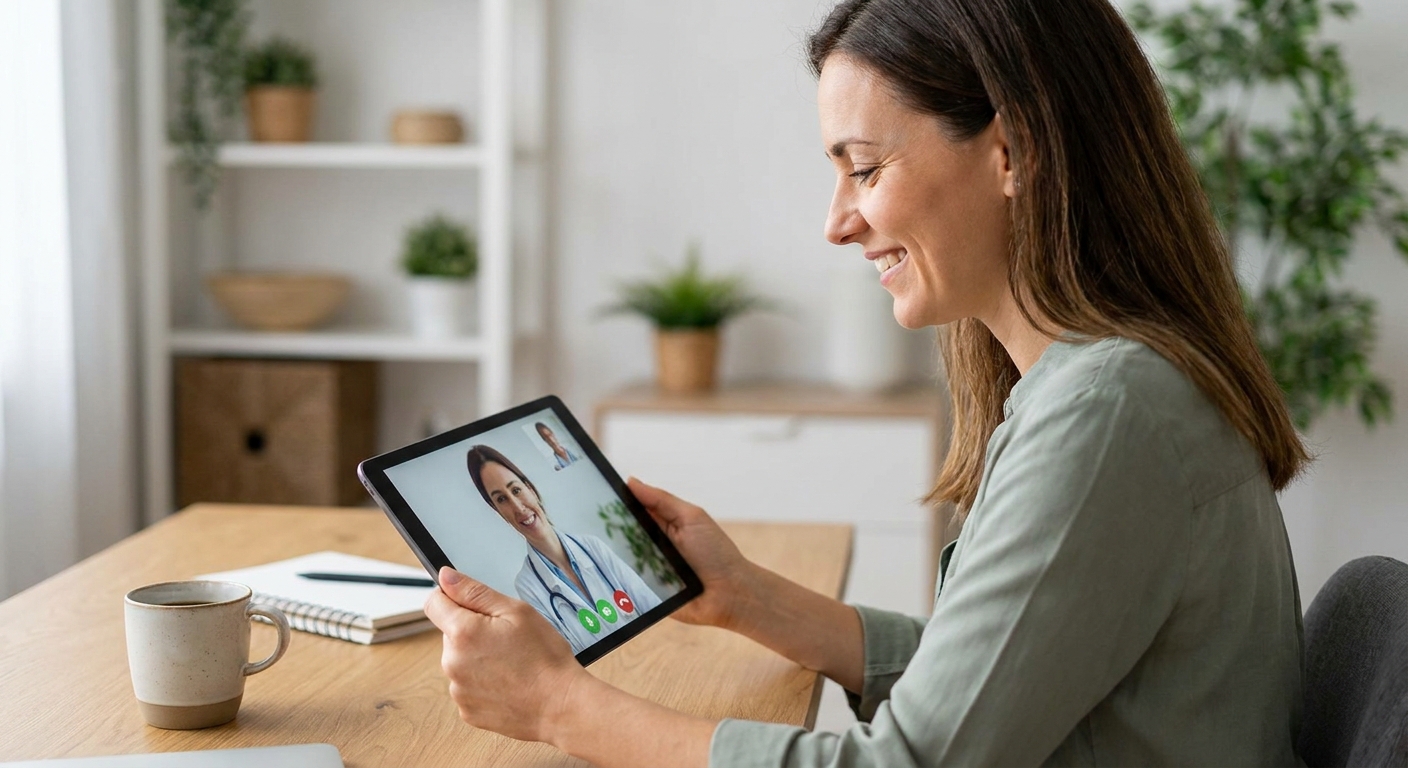
Fertility care used to mean weeks of waiting rooms before you got a straight answer. In 2026, a first fertility consultation can happen over video in under 30 minutes — the question is which type of telehealth visit actually gets you a diagnosis instead of a stall.
- Reproductive endocrinology telehealth programs are the right call once you've hit the 12-month (or 6-month, if 35+) trying window — Buy.
- OB/GYN video visits handle baseline hormone workups fast, often with cycle day 3 bloodwork ordered same-visit — Buy for a first opinion.
- At-home hormone test kits are a screening step, not a diagnosis — Consider, don't treat results as final.
- PCOS and thyroid issues drive a large share of fertility delays and are manageable through general telehealth platforms like NowCare while you wait on a specialist referral.
- Skip any telehealth fertility consultation that promises a diagnosis without ordering bloodwork or imaging.
Why this matters
Fertility workups get stuck at the referral stage more often than the diagnosis stage. A patient waits eight weeks for an OB/GYN appointment just to get a hormone panel ordered — bloodwork that a telehealth visit can order same-day.
Hormone conditions like PCOS and thyroid dysfunction are two of the most common, most treatable drivers of fertility delay, and both are things a telehealth platform for PCOS or general primary care telehealth visit can start managing before you ever see a reproductive endocrinologist. That's the gap a telehealth fertility consultation closes: speed on the workup, not a replacement for procedures that require a physical exam room.
Who this is for
This guide is for anyone who has been trying to conceive for 12 months (or 6 months, if you're 35 or older — the American Society for Reproductive Medicine's own threshold for a workup) and wants to know which telehealth option to book first. It's also for people managing a condition that touches fertility indirectly — PCOS, thyroid dysfunction, or perimenopause — who want a faster path than the standard referral queue. If you're in your late 30s or early 40s and wondering whether menopause-related hormone shifts are complicating your timeline, a telehealth visit is often the quickest way to get a hormone panel ordered.
What to look for in a telehealth fertility consultation
Board certification and reproductive endocrinology credentials
A telehealth visit is only as good as the clinician behind the screen. Look for board-certified reproductive endocrinologists (RE) or OB/GYNs, not a generalist wellness coach reading from a script — fertility hormone panels need a clinician who can interpret them correctly the first time.
Diagnostic testing that doesn't require a separate in-person trip for basics
The best platforms order cycle day 3 bloodwork, thyroid panels, and semen analysis referrals directly from the video visit, routing you to a local lab. If a platform can't order labs remotely, you're paying for a conversation, not a workup.
Turnaround time on bloodwork and imaging referrals
A fertility clock doesn't pause for administrative delays. Ask how fast results get reviewed — same-week turnaround on a hormone panel is standard for a legitimate telehealth fertility program in 2026; anything past two weeks is a red flag.
Coordination with a local clinic for procedures video can't do
Telehealth can order tests, review results, and adjust medication protocols. It cannot perform an ultrasound, an IUI, or an egg retrieval. A platform worth paying for has a clear handoff to a physical clinic when the plan moves past consultation.
Cost transparency and benefit coverage
Fertility benefits vary wildly by employer and by state mandate. Confirm what a visit costs before you book, and check whether your insurance or employer fertility benefit applies to the telehealth portion separately from the in-person portion.
Top picks: which telehealth fertility option to book
Reproductive endocrinology (RE) telehealth programs — the specialist pick. These connect you directly to a board-certified RE for consultation and protocol management. One concrete marker: they order a full hormone panel (FSH, LH, AMH, estradiol) on the first or second visit, not the fourth. Buy if you've already crossed the 12-month (or 6-month) threshold.
OB/GYN video visits — the fast pick. A 20 to 30-minute visit gets a baseline hormone panel ordered same-day, often with results back within a week. Buy for a first opinion before you commit to a specialist waitlist.
At-home hormone testing plus telehealth follow-up — the DIY pick. Finger-stick or saliva panels ship results in 5 to 7 business days, then a telehealth clinician reviews them with you. Consider it a screening layer — it's not a substitute for a clinician-ordered panel if results come back abnormal.
Employer or insurance fertility benefit platforms — the already-paid-for pick. If your employer offers a fertility benefit, the telehealth consultation is frequently bundled at no added cost. Buy if this applies to you — check your benefits portal before booking anywhere else.
General telehealth primary care for hormone-linked conditions — the supportive pick. PCOS and thyroid dysfunction are two of the most common, most treatable contributors to fertility delay, and both can be managed through a standard telehealth primary care visit while a specialist referral is pending. Buy alongside specialist care, not instead of it.
Manage the hormone conditions tied to fertility
Provider-guided telehealth for PCOS, thyroid, and related conditions.
What to avoid
- Platforms that promise a diagnosis over video with no bloodwork or imaging ordered. A real fertility workup requires labs; a clinician who skips that step is guessing.
- Subscription apps that sell hormone supplements off a quiz, with no clinician review of your actual results. A quiz is not a hormone panel.
- Any service that has no local clinic partnership for procedures. If a platform can't tell you where your IUI, ultrasound, or retrieval happens next, that's a workup with no finish line.
Verdict comparison
| Option | Best for | Typical visit length | Verdict |
|---|---|---|---|
| RE telehealth program | 12+ months trying, prior diagnosis | 30-45 min | Buy |
| OB/GYN video visit | First opinion, baseline labs | 20-30 min | Buy |
| At-home test + telehealth follow-up | Early screening | 15-20 min follow-up | Consider |
| Employer fertility benefit platform | Anyone with the benefit | Varies | Buy (if available) |
| General telehealth for PCOS/thyroid | Hormone conditions tied to fertility | 15-25 min | Buy (alongside RE care) |
FAQ
What's the best telehealth option for a first fertility consultation?
An OB/GYN video visit is the best first step for most people in 2026 because it orders baseline hormone bloodwork the same day. Reproductive endocrinology telehealth programs are better once you already have a diagnosis or have passed the 12-month trying threshold.
Is a telehealth fertility consultation as good as an in-person visit?
For consultation, bloodwork ordering, and results review, yes — telehealth performs the same function as an in-person visit. It cannot replace procedures like ultrasounds, IUI, or egg retrieval, which still require a physical clinic.
How much does a telehealth fertility consultation cost in 2026?
Cost depends heavily on your insurance plan and whether your employer offers a fertility benefit. Check your benefits portal before booking, since many employer fertility programs cover the telehealth consultation at little to no added cost.
Can a telehealth doctor order fertility bloodwork?
Yes, a licensed telehealth clinician can order a cycle day 3 hormone panel, thyroid panel, and other standard fertility labs, routing you to a local lab for the draw. Results typically come back within a week.
Do telehealth fertility platforms treat men too?
Many telehealth fertility programs include semen analysis referrals and hormone evaluation for the partner not carrying the pregnancy. Ask specifically whether a platform includes male fertility workup before booking.
How long should you try before seeing a fertility specialist?
The American Society for Reproductive Medicine defines the workup threshold as 12 months of trying under age 35, or 6 months at 35 and older. A telehealth OB/GYN visit before that threshold can still order baseline labs if you want an earlier read.
Can PCOS or thyroid issues affecting fertility be managed through telehealth?
Yes, PCOS and thyroid dysfunction are commonly managed through standard telehealth primary care visits, and both are frequent contributors to fertility delay. Managing these conditions while a specialist referral is pending is one of the more overlooked telehealth fertility strategies in 2026.
What happens after a telehealth fertility consultation?
You typically get bloodwork or imaging ordered, a follow-up visit scheduled to review results, and a referral to a local clinic if the next step requires an in-person procedure. The telehealth visit sets the plan; the clinic executes the parts that need a physical exam room.
One last thing
The fertility conversation usually starts in the wrong place. Most people book a specialist consult first when a hormone panel from a telehealth primary care visit — the kind that catches PCOS or thyroid dysfunction — would have answered half the question for a fraction of the wait. Start there, not at the end of a three-month waitlist.


