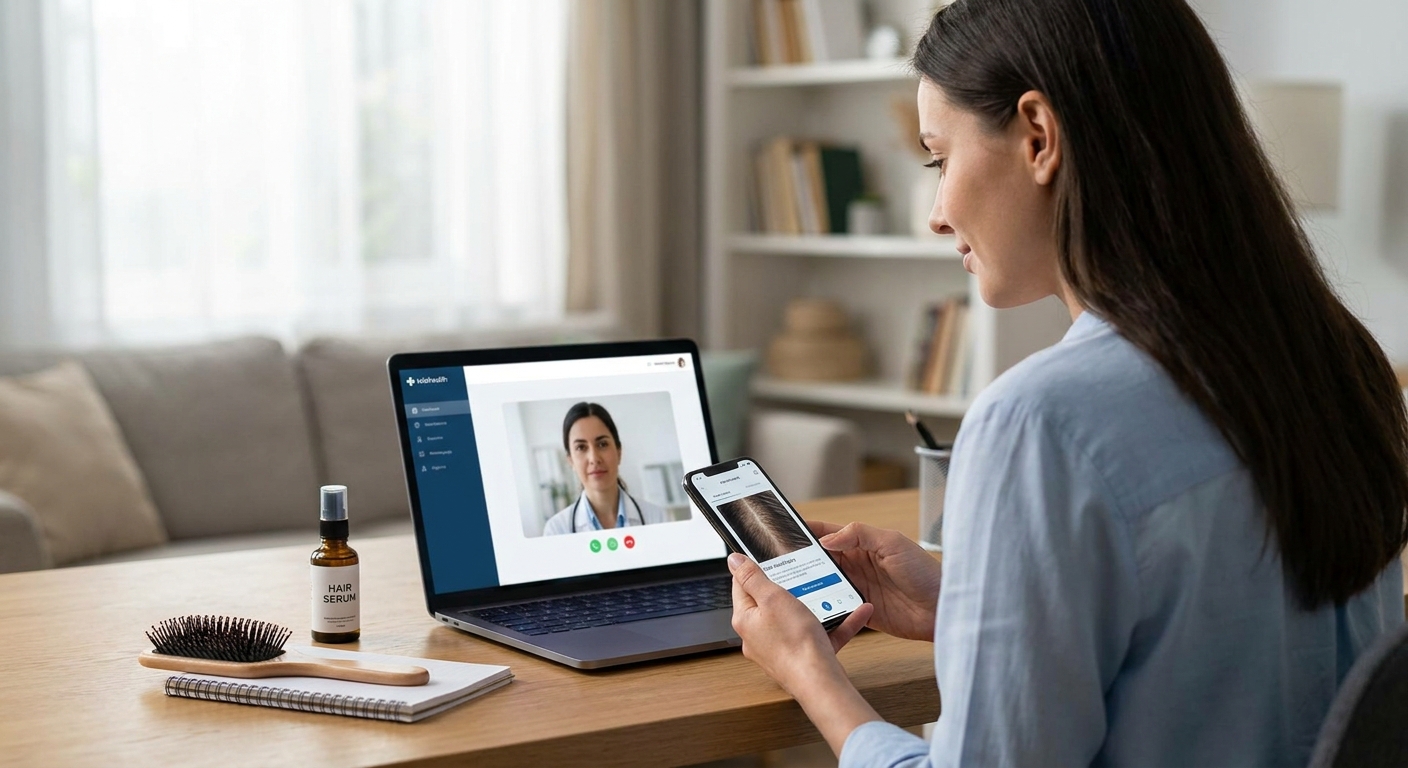
Telehealth hair loss treatment connects you with a licensed clinician who reviews your history and, when appropriate, prescribes FDA-approved medication — without a dermatology waiting room. This guide breaks down what separates a monitored protocol from a subscription gimmick in 2026.
- Telehealth hair loss treatment works best when a licensed clinician reviews photos and history, not just a quiz.
- FDA-approved options — finasteride and minoxidil — beat unproven supplement subscriptions. Buy the protocol, skip the gummy.
- Follow-up every 90 days catches side effects early; platforms without it are a Skip.
- Expect intake, prescription, and pharmacy fulfillment inside one visit, not three separate logins.
Why This Matters
Androgenetic alopecia affects up to 80 million people in the United States, according to the American Academy of Dermatology, and female pattern hair loss reaches up to 40% of women by age 70. That volume built an entire subscription industry around a few generic drugs.
The problem: most of that industry sells the medication, not the medicine. A photo upload and a questionnaire is not the same as a clinician tracking your response over time. NowCare covers telehealth logistics across dozens of conditions, and the same intake questions apply whether you're troubleshooting a UTI or a receding hairline — who's reviewing your case, what they're allowed to prescribe, and how follow-up works. Apply that same lens here.
Who Telehealth Hair Loss Treatment Is For
This is for anyone noticing thinning, a receding hairline, or diffuse shedding who wants a diagnosis and a prescription without booking a dermatologist three months out. It fits people comfortable managing a chronic, slow-moving condition through periodic virtual check-ins rather than in-person exams. It's a poor fit for sudden, patchy hair loss (alopecia areata) or scalp pain and scaling, which need a hands-on exam, not a photo upload.
If you've never done a virtual visit, prepare for your first telehealth appointment before you start comparing platforms — intake speed matters more than most people expect.
What to Look for in Telehealth Hair Loss Treatment
Licensed clinician review, not just an algorithm
Some platforms route your questionnaire through a nurse practitioner or physician; others rely on an automated approval engine with a clinician signing off in bulk. Ask directly who reviews your intake and whether that person can be reached again. A prescription without a reachable prescriber is a liability, not a convenience.
FDA-approved medication first
Finasteride and minoxidil are the two treatments with real trial data behind them. Interesting fact most subscription pages skip: finasteride's hair loss dose is 1mg, compared to 5mg for the same drug prescribed for enlarged prostate. Supplements, biotin gummies, and "proprietary blends" have none of that data — treat them as optional add-ons, never the core protocol.
Follow-up cadence
Side effects from finasteride are rare but real, and dose adjustments matter. A platform that checks in every 90 days with photos catches problems early. One that ships a refill automatically for a year without asking a single question isn't practicing medicine — it's running a subscription box.
Prescription and pharmacy fulfillment
Some platforms partner with a compounding pharmacy and ship directly; others hand you a prescription to fill wherever you want. Neither is wrong, but know which one you're signing up for before checkout, especially if you already manage refills through an online prescription refill service.
Cost transparency
Most subscription hair-loss telehealth plans run somewhere between $20 and $90 a month depending on whether the plan includes finasteride, minoxidil, or both, plus whether the medication is brand-name or generic. Read the fine print on whether that price includes the clinician visit or just the refill.
Privacy of intake
Hair loss intake often includes photos of your scalp and sometimes sensitive health history tied to hormones or medication interactions. Confirm the platform uses encrypted, HIPAA-compliant intake before you upload anything.
Learn what NowCare treats online
See the full range of conditions handled through licensed virtual visits.
Top Picks: Types of Telehealth Hair Loss Providers
1. Dermatology-led telehealth platforms — the specialist pick
These route your case to a board-certified dermatologist, not a general practitioner. The number that matters: photo-based follow-up every 90 days, which is the standard interval for judging whether minoxidil or finasteride is actually working. Verdict: Buy if you want a monitored protocol and are willing to pay a premium for dermatology-specific oversight.
2. Primary care telehealth with a refill focus — the practical pick
If you already use telehealth for maintenance medications, this is the lowest-friction option. Clinicians here can prescribe minoxidil and often finasteride, though follow-up tends to be annual rather than quarterly. It pairs well if you're already comparing online prescription refill services for other conditions. Verdict: Consider if convenience matters more than dermatology-specific tracking.
3. General urgent care telehealth — the wrong tool
Urgent care telehealth is built for acute issues resolved in a single visit — strep throat, pink eye, a sprained ankle. Hair loss is a chronic, months-long condition, and most urgent care clinicians won't prescribe finasteride outside a dedicated protocol. Verdict: Skip for hair loss specifically, even if it's your go-to for same-day sick visits.
4. DIY subscription hair-loss brands — the convenience pick
Async questionnaire, no video call, medication shipped monthly. Fast and cheap, but clinician oversight is thin, and follow-up is usually an automated check-in email rather than a real review. Verdict: Consider only if you've already had an in-person diagnosis and just need refills managed.
What to Avoid
- Platforms that skip a real intake history. If a form takes under two minutes and approves you instantly, no one meaningfully reviewed your case.
- Supplement-only "treatment." Biotin, saw palmetto, and multivitamin blends have no FDA approval for hair regrowth — fine as an add-on, never a substitute for finasteride or minoxidil.
- No path to a real clinician. If the only contact option is a chatbot after your first order, you have no recourse if side effects show up.
Verdict Comparison
| Provider Type | Clinician Review | Prescription Options | Follow-Up Cadence | Verdict |
|---|---|---|---|---|
| Dermatology-led telehealth | Board-certified dermatologist | Finasteride, minoxidil, combo topicals | Every 90 days with photos | Buy |
| Primary care telehealth (refill-focused) | Licensed physician or NP | Minoxidil, sometimes finasteride | Annual or on-request | Consider |
| General urgent care telehealth | Rotating on-call clinician | Rarely prescribes hair-loss meds | None specific to hair loss | Skip |
| DIY subscription brand | Async questionnaire review | Finasteride, minoxidil, supplements | Automated check-in | Consider |
FAQ
What's the best telehealth hair loss treatment for men?
Dermatology-led telehealth platforms are the best option for men in 2026 because they prescribe finasteride and minoxidil with quarterly photo follow-up. Primary care telehealth with a refill focus is a solid second choice if you already use it for other prescriptions.
Is telehealth hair loss treatment as effective as an in-person dermatologist visit?
For diagnosed androgenetic alopecia, telehealth treatment is comparably effective because the medications prescribed - finasteride and minoxidil - are the same regardless of visit format. An in-person exam still matters for sudden, patchy, or painful hair loss that needs a hands-on scalp exam.
How much does telehealth hair loss treatment cost in 2026?
Most subscription-based telehealth hair loss plans cost between $20 and $90 a month in 2026, depending on whether the plan includes finasteride, minoxidil, or a combination. Confirm whether that price covers the clinician visit or only the medication refill.
Is finasteride available through telehealth?
Yes, licensed telehealth clinicians can prescribe finasteride for androgenetic alopecia after reviewing your medical history. The hair-loss dose is 1mg, far lower than the 5mg dose used for enlarged prostate treatment.
How fast do telehealth hair loss treatments show results?
Most people see reduced shedding within 3 to 6 months of consistent use and visible regrowth closer to 12 months. That timeline is why a follow-up cadence around every 90 days matters for judging progress.
Do I need a video visit or is a questionnaire enough?
A detailed written questionnaire reviewed by a licensed clinician is sufficient for most straightforward hair loss cases in 2026. A video visit is worth requesting if you have other medications, hormone concerns, or a family history that complicates the picture.
Can women get telehealth hair loss treatment?
Yes, female pattern hair loss affects up to 40% of women by age 70, and telehealth platforms prescribe minoxidil and, less commonly, spironolactone or finasteride for women after a hormone-aware intake.
Does insurance cover telehealth hair loss treatment?
Insurance coverage for hair loss treatment is inconsistent in 2026 because most plans classify it as cosmetic. Most telehealth hair loss programs bill cash-pay, so confirm pricing before you complete intake.
One Last Thing
Finasteride's hair-loss dose (1mg) is one-fifth of the dose used for prostate treatment (5mg) — the same drug, wildly different indication. Most landing pages never mention it, but it's the reason side-effect profiles at the hair-loss dose are lower than people assume from Googling the drug name alone.


