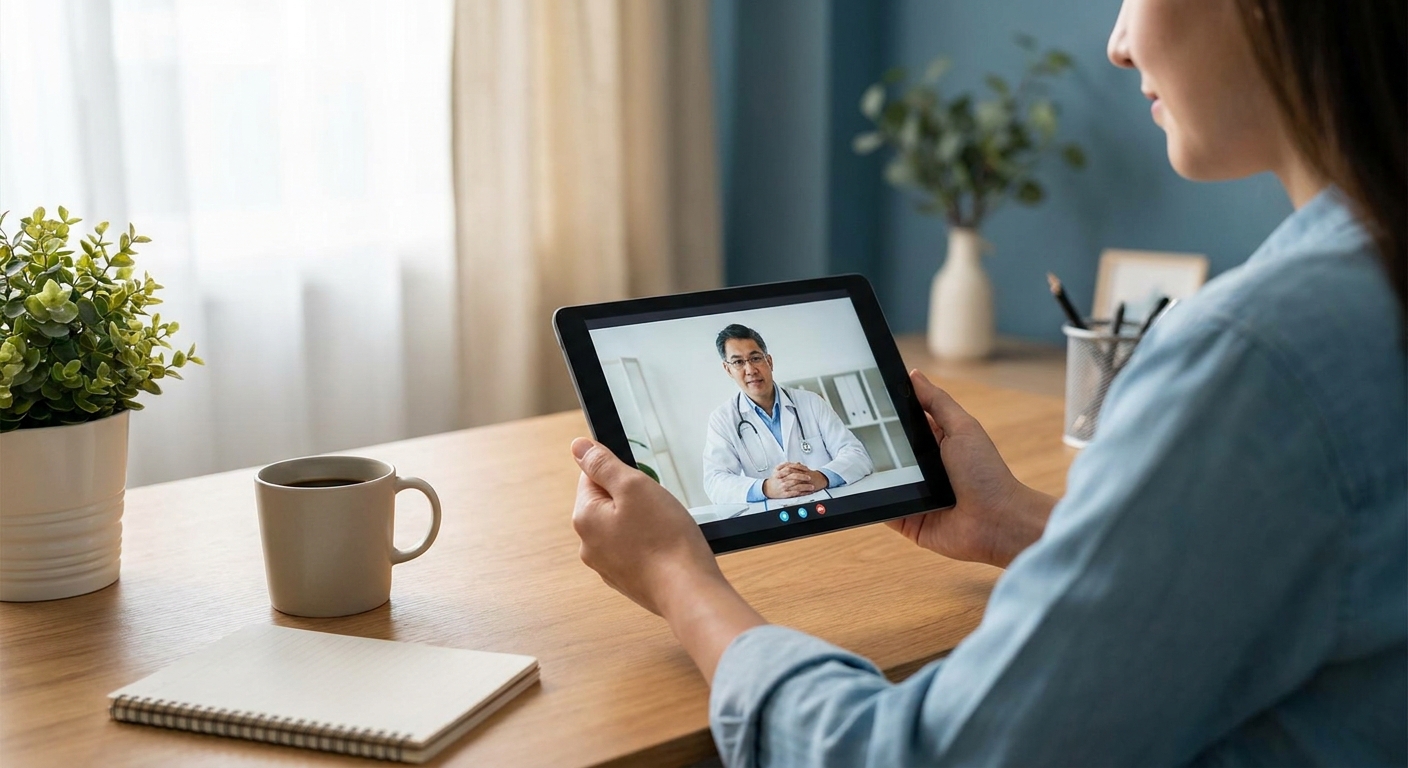
Hemorrhoid symptoms rarely need an emergency room, but they do need a plan — and telehealth for hemorrhoid treatment covers the assessment, prescription, and follow-up steps that get most flare-ups under control without an in-person exam.
- Telehealth hemorrhoid treatment works for mild to moderate flare-ups in 2026 — book a same-day virtual visit first.
- Rectal bleeding lasting more than 10 minutes or a hard, painful lump needs in-person care, not a video visit.
- Provider-guided platforms that screen for red flags before prescribing beat apps that skip the photo review.
- Maintenance therapy — fiber, stool softeners — refills online without a repeat office visit in most cases.
Why this matters
Hemorrhoids are common and embarrassing enough that people delay care for weeks, which is exactly when a mild flare-up turns into a painful one. The National Institute of Diabetes and Digestive and Kidney Diseases estimates roughly 50% of adults deal with symptomatic hemorrhoids by age 50.
Telehealth removes the friction: no waiting room, no undressing for a stranger, no half-day off work. A licensed clinician can review a photo, ask the right screening questions, and prescribe a topical treatment or refer out in under 20 minutes. The catch is that a camera can't feel for a mass or confirm internal bleeding the way an exam does, so knowing where the line sits in 2026 matters as much as knowing the treatment options.
Who telehealth for hemorrhoid treatment is actually for
This is built for adults with recurring mild-to-moderate symptoms — itching, mild bleeding after a bowel movement, a soft external lump, or discomfort sitting for long periods. If you've had one or two episodes before and know roughly what's going on, a video visit gets you a diagnosis and a prescription fast. If you're not sure how to prepare for your first telehealth appointment, the intake process matters more than people expect — clear photos and a symptom timeline speed up the visit and the prescription.
What to look for in telehealth for hemorrhoid treatment
Photo or video triage, not a text form
A platform that lets you upload a photo or hop on video gets a real look at the swelling and location, which changes the treatment recommendation. Text-only intake forms that skip visual review are guessing, and hemorrhoids look different from anal fissures, skin tags, and prolapse — three conditions that need three different plans.
Licensed clinicians with prescribing authority
Over-the-counter creams handle mild itching, but persistent inflammation often needs a prescription-strength topical steroid or a stronger anti-inflammatory. This is the same provider-guided model NowCare uses across its podiatry and weight loss programs — a real clinician reviewing your case before anything gets prescribed, not an algorithm.
A red-flag screening protocol
Good telehealth intake asks specific questions before treatment: how much bleeding, how long it lasts, whether there's a hard painful lump, whether you're over 45 with new symptoms. Those answers determine whether you get a prescription today or a same-day referral instead.
A clear path to in-person care
Thrombosed external hemorrhoids need in-office treatment within about 72 hours of onset for pain relief to be effective — telehealth should catch this fast and route you out, not stall you with another virtual follow-up.
Prescription refill logistics that don't require a repeat visit
Maintenance therapy — fiber supplements, stool softeners, occasional topical refills — shouldn't require booking a fresh appointment every time. Platforms with straightforward refill workflows save you the wait when symptoms are already managed.
The telehealth visit types that actually help
Same-day virtual primary care visit — the fast track for an active flare-up. Most video visits for hemorrhoid symptoms run 15 to 20 minutes, and same-day slots are the whole point when you're uncomfortable now. Options like same-day telehealth appointment platforms exist specifically for this. Book.
Follow-up visit after in-office treatment — the recovery check after banding, excision, or another procedure. A short virtual check-in around day 7 to 10 confirms healing is on track without another trip to the office. Consider if your specialist offers it.
Maintenance refill visit — the low-friction pick for people managing recurring symptoms with fiber and stool softeners. A refill visit takes minutes and skips the exam when nothing has changed clinically. Consider.
Ongoing management check-in — for anyone with chronic constipation, IBS, or another condition that keeps triggering flare-ups, a recurring telehealth relationship catches patterns a one-off visit misses. Consider if flare-ups happen more than twice a year.
Asynchronous message-only triage — the shortcut that backfires. Answering a form and getting a prescription with zero photo review or clinician conversation skips the exact step that separates hemorrhoids from something that needs a colonoscopy referral. Skip.
What to avoid
- Text-only symptom checkers with no photo upload — they can't tell a hemorrhoid from a fissure or a prolapse, and the wrong treatment wastes a week.
- "Miracle cream" upsells bundled into the visit — a legitimate clinician prescribes based on your symptoms, not a subscription box.
- Any platform that treats bleeding lasting over 10 minutes as routine — that's a same-day-in-person flag, not a wait-and-see prescription.
“If the bleeding doesn't stop within 10 minutes of a bowel movement, that's not a telehealth visit — that's an in-person one.”
Verdict comparison across the criteria
| Visit type | Photo/video triage | Red-flag screening | Refill logistics | Verdict |
|---|---|---|---|---|
| Same-day primary care visit | Yes | Yes | Moderate | Book |
| Post-procedure follow-up | Yes | Yes | N/A | Consider |
| Maintenance refill visit | Limited | Limited | Fast | Consider |
| Ongoing management check-in | Yes | Yes | Fast | Consider |
| Message-only triage | No | Weak | Fast | Skip |
Talk to a licensed clinician today
Provider-guided visits, only when treatment is medically appropriate.
FAQ
Does telehealth hemorrhoid treatment actually work?
Yes, for mild to moderate symptoms — a clinician can diagnose from photos and prescribe topical treatment in one visit. Severe cases with heavy bleeding or a thrombosed lump still need in-person care.
Can a telehealth doctor prescribe medication for hemorrhoids?
Licensed clinicians can prescribe topical steroids and other prescription-strength treatments through a video visit. What they prescribe depends on your symptoms and screening answers, not a fixed script.
When should I skip telehealth and see someone in person?
See someone in person if bleeding lasts more than 10 minutes, you have a hard painful lump, or symptoms are new after age 45. A thrombosed external hemorrhoid needs in-office treatment within about 72 hours to relieve pain effectively.
How much does a telehealth visit for hemorrhoids cost in 2026?
Costs vary by platform and insurance coverage in 2026, so check current pricing directly with the provider before booking. Many platforms list visit fees upfront during intake.
How long does it take for hemorrhoids to heal with home care?
Most mild cases resolve in 7 to 10 days with fiber, hydration, and sitz baths. Symptoms lasting longer than that warrant a follow-up visit rather than continued self-treatment.
Is telehealth private enough for an embarrassing condition like this?
Provider-guided telehealth visits happen over secure video or photo upload with a licensed clinician, without a waiting room. That privacy is a major reason people use telehealth for hemorrhoid symptoms in the first place.
Can I get a prescription refill for hemorrhoid treatment without a new visit?
Many platforms handle maintenance refills — fiber supplements, stool softeners — without a full repeat exam when nothing has changed clinically. Ask about refill policy before your first visit.
One last thing
Most recurring hemorrhoid cases trace back to chronic straining and low fiber intake, not a one-time injury — which means the cheapest fix in 2026 is still a $10 fiber supplement and more water, not a repeat prescription. Telehealth is fastest at catching that pattern early, before a mild flare-up becomes a 72-hour emergency.


