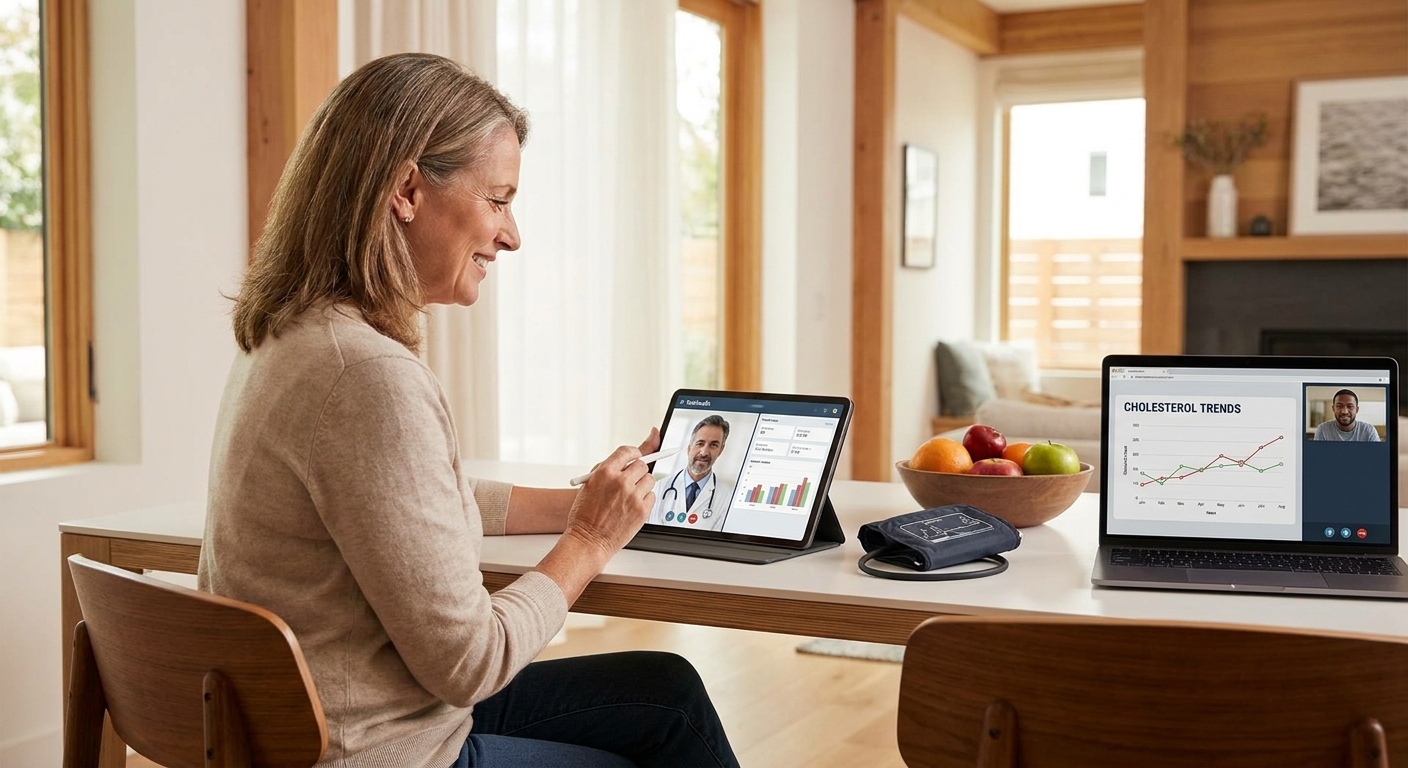
Telehealth high cholesterol management now covers everything from statin refills to lipid panel follow-up, but not every platform is built to track a chronic number over years, not weeks.
- Telehealth high cholesterol management works best as ongoing chronic care, not a one-time lab-and-refill transaction — Buy the ongoing model.
- NowCare's maintenance medication refill service renews statins without an office visit for stable, previously diagnosed patients — Consider.
- GLP-1 weight-loss telehealth through NowCare supports weight-linked lipid improvement but isn't a cholesterol treatment on its own — Consider as an adjunct.
- Diabetes management and cholesterol tracking often share the same visit cadence, so pairing them cuts down on redundant appointments in 2026.
Why this matters
High cholesterol doesn't announce itself with symptoms. It shows up on a lipid panel, and the only way to know whether a statin or a lifestyle change is working is another lipid panel three to six months later. That cadence is exactly what telehealth is built for: refills, check-ins, dose adjustments, no waiting room.
The catch is that a lot of "telehealth cholesterol" search results point to mail-order lab kits with no ongoing clinician relationship attached. That's a one-time snapshot, not management. Online primary care for chronic condition management is built around the repeat-visit model cholesterol actually needs: track a number across 2026 and beyond, not just once.
Who this is for
This guide is for adults already diagnosed with high cholesterol, or sitting at a borderline LDL number, who want ongoing telehealth management: statin refills, periodic lipid panels, and provider-guided lifestyle adjustments without a quarterly trip to a primary care office. It's not for anyone with chest pain, shortness of breath, or new cardiac symptoms — that's an emergency room visit, not a video call.
What to look for in telehealth for high cholesterol management
A licensed prescriber, not just a lab report
A lab-kit subscription tells you your LDL number. It doesn't tell you what to do about it. Any service worth paying for in 2026 puts a licensed clinician between the lab result and the next step — statin dose, lifestyle counseling, or a referral.
A refill workflow that matches your dosing schedule
Statins are a maintenance medication, which means the whole point is not re-explaining your history every 30 days. Look for a refill process built around 90-day or annual renewal windows, not a fresh intake form every time.
A follow-up cadence built around lipid panels
Guideline-based lipid monitoring runs roughly every three to six months once a statin dose is stable. A platform that doesn't prompt you toward that cadence is optimizing for visit volume, not your cholesterol number.
Integration with weight and metabolic care
Weight loss is one of the few interventions that moves LDL and triglycerides without a new prescription. A telehealth service that connects cholesterol management to weight-loss support — rather than treating them as unrelated visits — saves you appointments and gets you a coordinated plan.
Access to records a future doctor can use
Cholesterol management is a multi-year relationship, even if you switch providers along the way. Confirm the platform sends visit summaries and lab values somewhere you can actually retrieve them, not just a portal that disappears if you cancel.
Top picks
The chronic-care generalist. Online primary care for chronic condition management (linked above) is the pick for anyone who wants cholesterol folded into a broader visit plan alongside blood pressure or thyroid tracking, with check-ins spaced roughly every 3 to 6 months instead of a single annual physical. Verdict: Buy if you want one relationship handling multiple numbers.
The refill specialist. Online prescription refill for maintenance medications exists for the patient who already has a diagnosis and a stable statin dose and just needs the prescription renewed without re-litigating the whole history — turnaround typically runs inside 24 to 48 hours once the intake is complete. Verdict: Buy for stable, previously diagnosed patients; Skip if you've never had a baseline lipid panel with a provider.
The weight-loss adjunct. GLP-1 weight-loss medication qualification is the pick for patients whose cholesterol is tied to excess weight rather than genetics — GLP-1 medications aren't cholesterol drugs, but weight loss of even 5 to 10% of body weight moves lipid numbers in most patients. Verdict: Consider as an add-on to a cholesterol plan, never as a replacement for a statin your provider has already prescribed.
The comorbid-condition track. Telehealth for diabetes management matters here because elevated cholesterol and blood sugar issues frequently travel together, and both get monitored on similar three-to-six-month panels. Verdict: Consider if you're managing both; running them on separate platforms means duplicate intake forms and duplicate visit fees.
What to avoid
- Mail-order lab kits with no physician attached. You get a number in the mail and no plan for what to do with it — that's data, not management.
- Subscription "cholesterol support" supplement services marketed as treatment. Fish oil and plant sterol blends aren't a substitute for a statin when LDL is elevated enough to need one; a licensed clinician makes that call, not a subscription box.
- Platforms that won't forward records to your regular doctor. If your lipid panel history lives only inside one app with no export option, you've built a dead end for the next provider you see.
Verdict comparison table
| Pick | Best for | Follow-up cadence | Verdict |
|---|---|---|---|
| Chronic condition management | Multi-condition tracking | Every 3-6 months | Buy |
| Maintenance medication refill | Stable, diagnosed patients | 90-day to annual | Buy |
| GLP-1 weight-loss qualification | Weight-linked LDL | Program-based | Consider (adjunct) |
| Diabetes management overlap | Comorbid cholesterol + glucose | Every 3-6 months | Consider |
FAQ
Can telehealth actually manage high cholesterol, or just refill medication?
Telehealth can manage high cholesterol when the platform includes a licensed clinician reviewing lipid panels and adjusting treatment, not just a refill form. A pure refill-only service works for stable patients but won't catch a number that's trending the wrong way.
How often do I need a lipid panel while on telehealth cholesterol management?
Most guideline-based cadences call for a lipid panel every 3 to 6 months once a statin dose is stable in 2026. Annual checks are common once a patient has been on the same dose for a year or more with a controlled number.
Is telehealth high cholesterol management as good as an in-person visit?
For refills, dose adjustments, and reviewing lab results, telehealth covers the same ground as an office visit. It's not a substitute for the blood draw itself, which still requires a lab or an at-home kit shipped to a certified lab.
Will GLP-1 medication lower my cholesterol?
GLP-1 medications aren't prescribed as cholesterol treatments, but the weight loss they produce often improves LDL and triglyceride numbers as a side effect. They work best paired with, not instead of, a cholesterol-specific treatment plan.
Can I get a statin prescription refilled online without an office visit?
Yes, for patients with an existing diagnosis and a stable dose, online maintenance medication refill services can renew a statin prescription without a new office visit. A new diagnosis or a dose change typically still needs a fuller clinical review first.
Does telehealth work for cholesterol if I also have diabetes?
Telehealth works well for overlapping conditions like cholesterol and diabetes because both track on similar 3-to-6-month lab cadences. Choosing one platform that covers both cuts down on duplicate intake forms and separate appointment fees.
What's the biggest mistake people make with telehealth cholesterol management?
The most common mistake is treating a mail-order lab kit as a treatment plan. A number without a licensed clinician attached to interpret it and adjust medication isn't management, it's just data.
One last thing
The patients who get the most out of telehealth high cholesterol management aren't the ones chasing the fastest lab result — they're the ones who lock in a repeat visit cadence and stick to it through 2026, because a single good number six months ago says nothing about where the trend is headed now.


