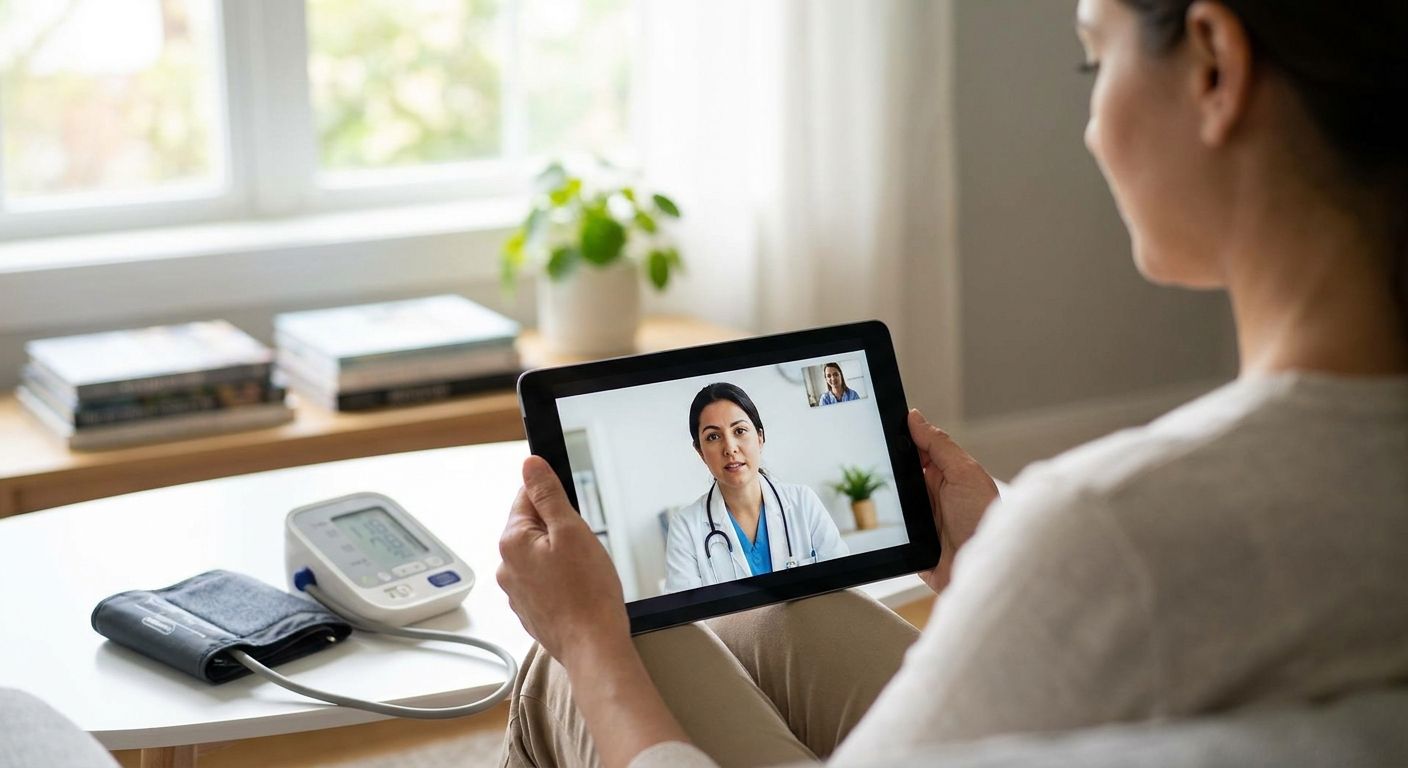
Hypertension patients using telehealth management get regular blood pressure monitoring, medication adjustments, and physician follow-up without a waiting-room visit every time their numbers drift. In 2026, most people with a confirmed high blood pressure diagnosis can handle monitoring and medication refills virtually — the two exceptions are the initial diagnosis and any reading that signals a hypertensive crisis.
- Hypertension management telehealth works well for medication refills and follow-up, not for a first diagnosis.
- A reading of 180/120 mm Hg or higher with symptoms needs an ER visit, not a video call.
- Home cuffs validated against a clinic reading are the single biggest accuracy factor in a virtual hypertension visit.
- NowCare's online refill for blood pressure medication covers maintenance dosing once a diagnosis already exists.
Why hypertension management works well over telehealth
Hypertension is a monitoring disease, not a one-visit disease. Treatment success depends on repeated readings and small dose adjustments over months, not a single office exam — that pattern fits a video visit better than a rushed 15-minute primary care slot booked six weeks out.
Once a diagnosis exists, a licensed clinician can review your blood pressure log, adjust a dose, and route a prescription to your pharmacy in the same session. Virtual primary care for chronic condition management is built for exactly this pattern — ongoing review of a condition that's already documented, not a first-time workup.
What still doesn't work over video in 2026: the initial diagnosis. Standard diagnostic thresholds (130/80 mm Hg or higher, confirmed on two or more separate readings) require a validated cuff reading, and a webcam doesn't replace a calibrated device on your arm during an exam.
How to manage hypertension with telehealth in 2026
Get a validated baseline reading before your first visit
A telehealth clinician can only act on numbers you bring — get accurate ones first.
- Use a clinic or pharmacy BP kiosk validated within the last 12 months
- Ask your regular doctor's office for a nurse-only BP check if one is available
- Buy a validated upper-arm cuff — look for AAMI, ESH, or ISO validation, not a wrist cuff
- Take three readings one minute apart, seated with feet flat, and average them
- Skip caffeine and exercise for 30 minutes before measuring
Log two weeks of readings, morning and evening
One reading tells a clinician almost nothing. A two-week pattern tells them everything.
- Write down systolic, diastolic, and pulse for every reading
- Note the time of day and whether you'd just eaten, exercised, or felt stressed
- Use a free tracking app or a paper log — either works for a telehealth visit
- Flag any single reading above 160/100 so your clinician sees it first
- Bring or upload the full two-week log, not just the high numbers
Book a virtual visit to review your numbers and medication
A visit that just asks "still taking your pills?" isn't a real review — it needs your log, your full medication list, and a few minutes on side effects.
- Confirm the visit includes a licensed clinician, not just an intake form
- Send your BP log ahead of time if the platform allows attachments
- List every medication and supplement, including OTC NSAIDs and decongestants — both raise blood pressure
- Ask directly whether your dose needs adjusting based on the log, not just whether to keep taking it
Refill your blood pressure medication online
Once a clinician has reviewed your recent log, a refill doesn't need another office visit.
- Have your current pharmacy name and address ready
- List your exact dose and last fill date so the clinician can match refill quantity
- Mention any side effects — dizziness, swelling, persistent cough — before requesting a refill
- Use refill blood pressure medication online once your recent numbers are on file
- Ask whether a longer supply is available to reduce how often you need a refill visit
Set a home monitoring routine between visits
Monitoring doesn't stop once a dose looks right — it's how you catch a dose that stops working.
- Check blood pressure at the same time each day, seated, arm at heart level
- Replace or recalibrate a home cuff every 1-2 years
- Re-share your log with your care team every 4-6 weeks, not just at an annual visit
- Track weight and sodium intake alongside BP if you're adjusting diet
- Set a recurring phone reminder so monitoring doesn't lapse once numbers look normal
Watch for conditions that complicate hypertension
High blood pressure rarely travels alone, and the same virtual visit can usually cover the overlap.
- Ask your clinician about a lipid panel — high cholesterol management and hypertension share the same risk factors
- Watch for signs of insulin resistance if you're overweight
- Mention any joint or nerve symptoms tied to metabolic changes
- Review whether your diuretic or beta-blocker is affecting blood sugar or cholesterol
- Bring up snoring or daytime fatigue — untreated sleep apnea drives resistant hypertension
Know when to skip telehealth entirely
Telehealth handles monitoring and maintenance. It does not handle an emergency.
- Call 911 or go to an ER for a reading of 180/120 mm Hg or higher with chest pain, vision changes, or a severe headache
- Seek in-person care for a first-time reading above 180/120, even without symptoms
- Get in-office bloodwork or an EKG if a clinician orders one — telehealth can order the test, not run it
- Escalate to in-person care if new swelling or shortness of breath appears between visits
“A reading of 180/120 with chest pain or vision changes is a hypertensive crisis — call 911, not a video visit.”
Comparing your options for hypertension telehealth
| Option | Best for | Key limitation |
|---|---|---|
| Home BP monitor + log | Newly diagnosed patients establishing a baseline | No clinician interpretation or dose changes |
| Virtual primary care for chronic condition management | Diagnosed patients needing ongoing dose review | Still needs an accurate home cuff reading before each visit |
| In-person primary care | First diagnosis or when labs/EKG are required | Scheduling can take weeks for a new-patient slot |
| Retail pharmacy BP kiosk | Quick spot-checks between visits | Kiosks aren't consistently calibrated; one reading isn't diagnostic |
| Online prescription refill for maintenance dosing | Stable patients who just need a refill, no dose change | Not a substitute for periodic review of your BP trend |
Verdict: hypertension management telehealth is the right call for anyone already diagnosed who needs monitoring and refills — it's the wrong call for a first diagnosis or a crisis-level reading.
Refill your blood pressure prescription online
A licensed clinician reviews your BP log before adjusting or renewing a prescription.
Common mistakes hypertension patients make with telehealth
- Treating one high reading as diagnostic and requesting a dose change immediately — a single spike isn't a diagnosis
- Skipping the cholesterol conversation even though the same virtual visit can cover both conditions
- Letting a prescription lapse and rationing pills instead of requesting a refill early
- Measuring blood pressure right after coffee, a walk, or an argument, then reporting that as the baseline
- Assuming one normal clinic reading means home monitoring can stop — white-coat effects run both directions
FAQ
Can telehealth diagnose high blood pressure?
Telehealth alone can't formally diagnose hypertension because standard thresholds (130/80 mm Hg or higher, confirmed on two or more readings) require a validated in-person or home-cuff reading first. Once you have documented readings, a virtual visit can confirm the diagnosis and start treatment.
Can a doctor prescribe blood pressure medication online?
Yes, once a clinician has reviewed your diagnosis and BP log, they can prescribe or adjust medication and send it to your pharmacy without an office visit. Dose changes typically still require a recent reading on file.
How accurate do home blood pressure monitors need to be for telehealth visits?
Use an upper-arm cuff with AAMI, ESH, or ISO validation — wrist and finger monitors run less accurate and most clinicians won't use them for dose decisions. Recalibrate or replace the cuff every 1-2 years.
How often should I check blood pressure during telehealth follow-up?
Twice daily, morning and evening, for the two weeks before a visit gives a clinician enough data to adjust medication. Once your numbers are stable, weekly checks are usually enough between visits.
Is telehealth good for hypertension follow-up visits?
Yes — follow-up and medication management are exactly what telehealth handles well, since the visit is a data review plus a prescription decision rather than a hands-on exam.
What blood pressure reading needs an ER visit instead of telehealth?
A reading of 180/120 mm Hg or higher, especially with chest pain, vision changes, or a severe headache, is a hypertensive crisis. Call 911 or go to an ER — don't wait for a video visit.
Does telehealth work for hypertension alongside diabetes or high cholesterol?
Yes, the same virtual visit can usually cover overlapping chronic conditions since they share risk factors and sometimes the same medications, though each condition still needs its own diagnostic workup first.
One last thing
Masked hypertension — normal-looking readings in the clinic, elevated readings at home — is real and easy to miss with a once-a-year physical. A two-week home log, the kind a 2026 telehealth visit is built around, catches the pattern that a single annual checkup never will. If your clinic numbers look fine but you feel off, start logging at home before you assume you're in the clear.


