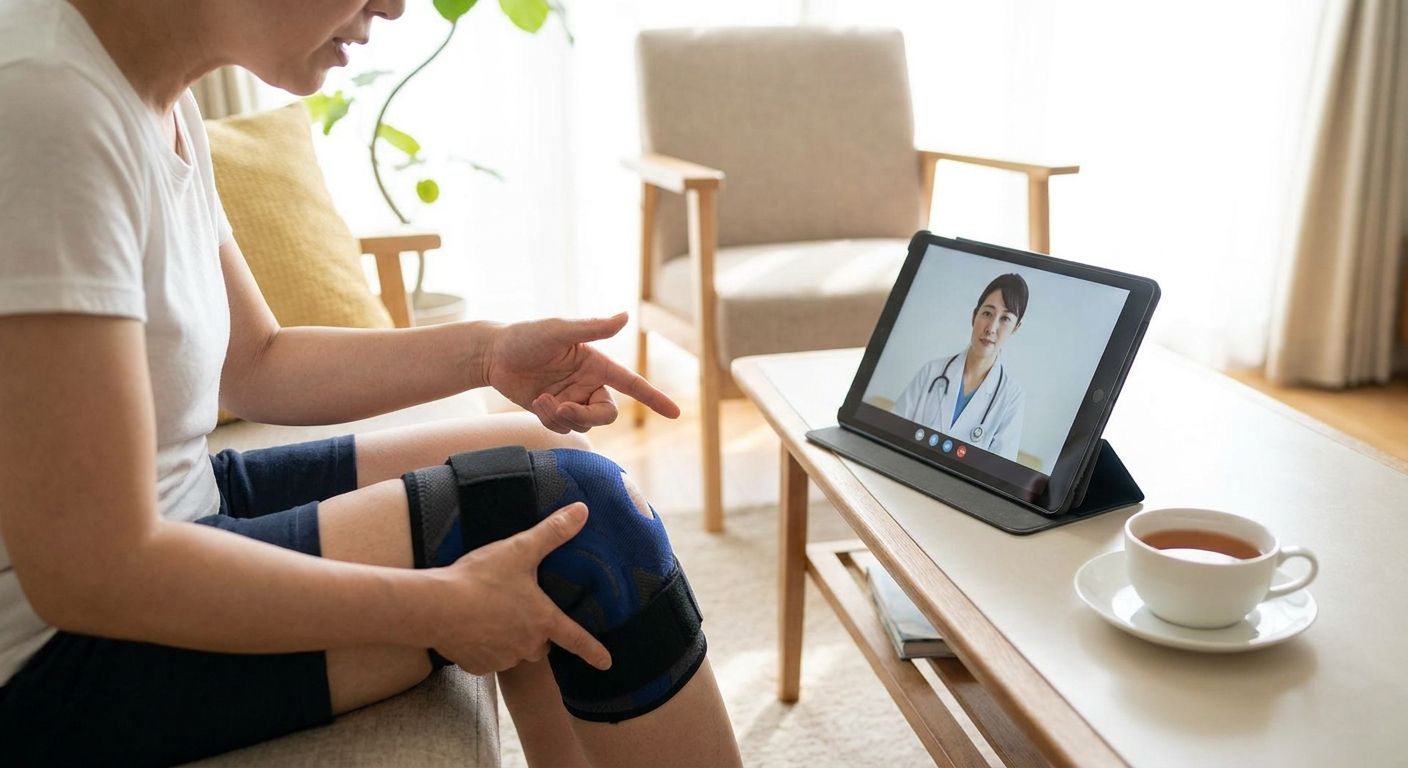
Knee pain rarely needs an ER trip, but it does need the right first move — and telehealth for knee pain is built to make that call fast, before you waste a week guessing.
- Telehealth for knee pain starts with a licensed-clinician review, not a symptom-checker quiz — Virtual Urgent Care handles new or sudden pain. Buy.
- Pain past two to three weeks usually needs a physical therapy referral, not another virtual visit alone. Buy.
- Sports injury assessment pathways fit athletes with a clear mechanism of injury. Consider.
- Skip telehealth if the knee is visibly deformed, locked, or you can't bear weight — that's an in-person or ER call. Skip.
Why this matters
Knee pain is one of the most common reasons people search for care online in 2026, and most cases don't need an ER slot or even a same-day orthopedic booking. What they need is a clinician who can tell the difference between a strain that responds to rest and a joint problem that needs a real workup. NowCare's Virtual Urgent Care pillar handles that first call for everyday concerns, and its physical therapy referrals pathway routes you toward hands-on rehab when a video visit alone won't fix it. Getting that triage right means fewer wasted co-pays and fewer weeks limping through the wrong plan.
Who this is for
Telehealth for knee pain fits people who want a fast read on a new ache, a referral pathway for pain that's stuck around, or a second opinion before booking an in-person orthopedic visit. It's the right call for a runner with post-workout swelling, a desk worker whose knee locks up after a long flight, or a parent managing a teenager's post-practice soreness. It's not the right call for anyone with a knee that's visibly deformed, can't bear any weight, or ballooned in size within an hour of an injury — that's an in-person urgent care or ER situation, full stop.
What to look for in telehealth for knee pain
Provider-guided evaluation, not a symptom checker
A licensed clinician needs to review your history before any plan gets built — a scripted questionnaire can't tell a meniscus strain from a bursitis flare. Treatment only happens when it's medically appropriate for what a virtual visit can actually assess.
A real referral path, not a dead end
Most knee pain that lasts more than two to three weeks responds better to guided rehab than to more rest alone. A visit only helps if it ends in a next step — a home plan, or a referral into physical therapy — instead of a shrug and a generic handout.
No unnecessary in-person requirement
If your knee pain doesn't involve deformity, instability, or an inability to bear weight, there's no medical reason to force an office visit just to hear "try ice and ibuprofen." A clinician should be able to say that over video in 2026 without wasting your afternoon.
Transparent, flat-rate pricing
Surprise billing kills trust fast. A flat-rate structure with no insurance requirement means you know the cost before you book, not after a claim comes back denied.
Same-day or next-day access
Knee pain that's actively getting worse doesn't wait for a three-week specialist queue. Same-day virtual booking matters more for joint pain than for a routine annual check-in.
Secure, HIPAA-compliant intake
Your history, imaging notes, and any prior injury details need to move through a secure system, not a form that emails itself to a shared inbox.
Top picks for telehealth for knee pain
Virtual Urgent Care visit — the fast first step. One flat-rate one-month plan covers everyday concerns, including new joint pain, and a licensed clinician reviews your case before any plan is built. It's the pick for pain that started this week and hasn't been looked at by anyone yet. Verdict: Buy — it's the fastest, lowest-friction way to find out if you need more than rest and ice.
Sports injury assessment — the pick for athletes and weekend warriors. If the pain traces back to a specific play, a missed step, or a hard landing, sports injury assessment visits ask mechanism-of-injury questions a general urgent care visit skips. The assessment flags whether you need imaging or a referral before you re-aggravate it on next weekend's run. Verdict: Consider — strong fit if you can name the moment it started hurting, weaker fit for pain with no clear trigger.
Chronic pain management — the pick for pain that won't quit. Knee pain stuck past the three-month mark behaves differently than an acute sprain, and chronic pain management programs build an ongoing plan instead of a one-off visit. Expect regular check-ins rather than a single prescription and done. Verdict: Consider — right for pain with no acute injury behind it, wrong if you haven't ruled out a structural issue first.
Referral pathway for hip- or spine-linked knee pain — the wildcard pick. Knee pain sometimes starts higher up — a hip that's compensating, or a lower back issue changing your gait. That workup looks more like a back pain and physical therapy referral visit than a straight knee complaint. Verdict: Consider — worth ruling out if the pain doesn't match a typical knee-injury pattern.
Get your knee pain triaged today
Start with a provider-guided visit and get routed to the right next step.
What to avoid
Skip apps that skip the clinician. A quiz that spits out a diagnosis without a licensed clinician reviewing your case isn't provider-guided care — it's guesswork with a nicer interface.
Don't let logistics kill the referral. A referral for physical therapy is only useful if you actually get to the sessions; arranging transport to physical therapy ahead of time keeps a rehab plan on schedule instead of stalling after the second missed appointment, especially for patients with limited mobility after a knee injury.
Don't treat a locked, deformed, or rapidly swelling knee as a virtual case. That combination needs a hands-on exam and possibly same-day imaging, not a video call.
Verdict comparison table
| Care Pathway | Best For | Turnaround | Verdict |
|---|---|---|---|
| Virtual Urgent Care visit | New or sudden knee pain | Same-day booking | Buy |
| Sports injury assessment | Athletes, weekend warriors, clear injury moment | Same-day booking | Consider |
| Chronic pain management | Pain lasting 3+ months, no acute injury | Ongoing program | Consider |
| Hip/spine-linked referral pathway | Pain that doesn't match a typical knee pattern | Same-day booking | Consider |
FAQ
What's the best telehealth option for knee pain?
A Virtual Urgent Care visit is the best starting point for new or sudden knee pain in 2026, since a licensed clinician can decide whether you need home care, a physical therapy referral, or in-person imaging. It's the fastest way to avoid guessing.
Can a telehealth visit diagnose a torn meniscus?
No — a video visit can flag symptoms that suggest a meniscus tear, but confirming it requires an in-person exam and often an MRI. Telehealth's role is triage: deciding fast whether you need that next step.
Is telehealth for knee pain covered without insurance?
Flat-rate telehealth plans don't require insurance and post a transparent price before you book, which is different from a traditional office visit billed after the fact. Check current plan pricing directly on the site.
How do I get a telehealth referral for physical therapy?
A clinician reviews your knee pain during a virtual visit and issues a referral if hands-on rehab is the right next step, rather than another round of rest and ice. The referral comes after an evaluation, not before one.
Can virtual urgent care treat a swollen knee?
Virtual urgent care can evaluate mild to moderate swelling and recommend a plan, but a knee that's rapidly swelling within an hour of an injury needs an in-person exam the same day. Sudden, severe swelling is not a telehealth case.
Is telehealth good for sports injuries?
Yes, for injuries with a clear mechanism — a bad landing, a twist, a missed step — a sports injury assessment asks the right questions to flag whether you need imaging or rehab. It's less useful for pain with no clear trigger.
What happens if my knee pain needs an X-ray?
A telehealth clinician who suspects a fracture or structural issue will direct you to in-person imaging rather than guess from a video call. The virtual visit's job is to catch that early, not replace the X-ray.
One last thing
Most knee pain evaluated within the first week resolves with rest, ice, and a home exercise plan — no in-person visit required at all. The cases that actually need a physical therapy referral are usually the ones where the pain changes how you walk, not just how much it hurts, so pay attention to your gait before you decide the pain is "nothing."


