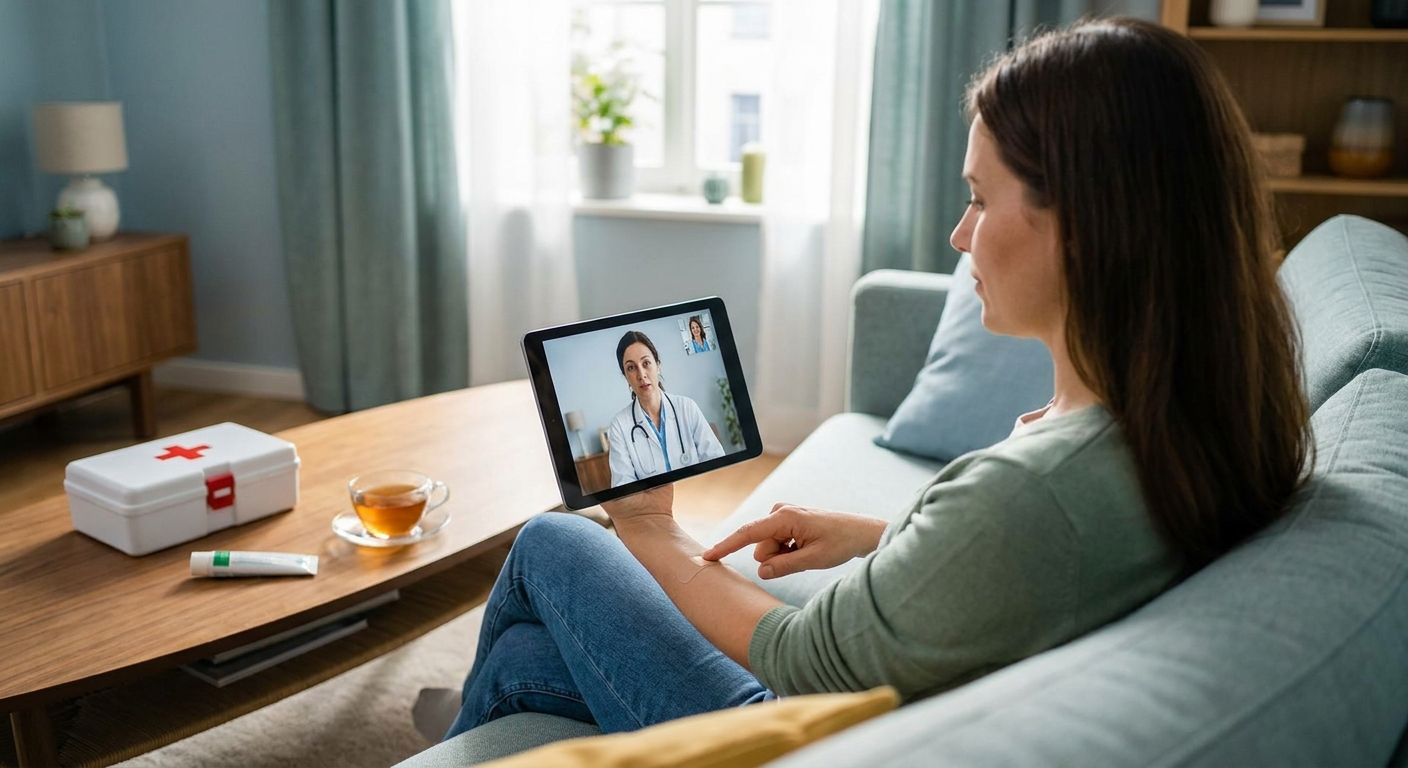
Minor burns and cuts happen fast — a splash of hot oil, a step on broken glass, a kitchen knife slip — and the real question is never "does this hurt," it's "does this need a clinician right now." Telehealth minor burns and cuts triage answers that in minutes, without a waiting room.
- First-degree burns and shallow cuts under an inch qualify for telehealth minor burns and cuts triage in 2026 — Buy.
- Diabetic patients with any foot cut should book same-day, not wait-and-see — NowCare routes these faster.
- Cuts that are gaping, still bleeding after 10 minutes of pressure, or show exposed fat need in-person suturing — Skip telehealth for these.
- A clear, well-lit photo of the wound is the single biggest factor in whether a clinician can triage it accurately over video.
Why this matters
Most people either ignore a small wound until it's infected or drive to urgent care for something a five-minute video visit could handle. Neither is efficient, and for feet specifically, the stakes are higher than they look — blood flow below the knee is comparatively poor, so a foot cut or burn heals slower than the same wound on your arm.
NowCare built its telehealth model around exactly this gap: licensed clinicians assess the wound, tell you within the visit whether it's manageable at home, and escalate you to in-person care when it isn't. That's provider-guided triage, not a chatbot guessing from a photo.
Diabetics and anyone with neuropathy carry extra risk here. A cut you can't feel is a cut you don't treat, and by the time it's visibly infected in 2026 it's often already deep. That's the population telehealth minor burns and cuts screening protects best, because it catches wounds early instead of waiting for pain that may never come.
Who this is for
This guide is for anyone with a superficial burn or cut who wants a fast, credible answer on whether it needs professional attention — especially people managing diabetes, neuropathy, or an active lifestyle where foot and ankle injuries are common. If you're bleeding heavily, seeing bone, or running a fever, this isn't your guide — go to urgent care or the ER now.
What to look for in telehealth for minor burns and cuts
Photo and video quality standards
A clinician can't assess what they can't see clearly. Look for a platform that gives explicit photo guidance — natural light, in-focus, wound centered — because blurry submissions are the number one reason virtual triage gets it wrong.
Wound depth and size thresholds
Good telehealth intake asks for measurements, not just "small" or "big." A cut under half an inch with clean edges is a different conversation than a two-inch gash, and the platform should draw that line for you, not leave it to guesswork.
Diabetic and neuropathy screening
If the intake form doesn't ask about diabetes, circulation problems, or numbness before it asks about the wound itself, that's a red flag. Foot wounds in diabetic patients get triaged faster and followed up more closely because the complication risk is real.
Same-day scheduling
Burns and cuts don't wait for a Tuesday slot next week. A platform worth using offers same-day virtual visits for acute wound concerns, not a multi-day queue.
Follow-up and dressing instructions
A one-time visit that hands you a diagnosis and disappears isn't wound care. Look for explicit follow-up — a 48-hour check-in photo request for foot wounds specifically, since they're slower to heal and faster to hide a problem.
Tetanus and infection-sign guidance
Any reputable telehealth wound visit should ask about your last tetanus shot and give you concrete infection warning signs — spreading redness, increasing pain, fever — not vague "watch it and see."
Top picks by scenario
Kitchen or grill burns, first-degree — redness, no blisters, smaller than your palm. Buy telehealth for this every time; a clinician can confirm degree and give dressing instructions in one visit.
Shallow cuts and abrasions from yard work or sports — clean edges, minimal bleeding, no numbness around the site. If the injury happened during activity and you're unsure whether it's soft-tissue or something deeper, NowCare's sports injury assessment covers this exact overlap. Consider.
Diabetic foot cuts or blisters, any size — this is the scenario where speed matters most. Route through NowCare's diabetes management program so the visit includes circulation and neuropathy context, not just the wound. Consider — but book same-day, don't wait.
Cuts from broken glass or metal with visible fat, muscle, or a wound that won't stop bleeding after direct pressure — telehealth can't close this. Use how to book an urgent care video visit to get triaged into the right in-person setting fast, rather than guessing which ER or clinic to drive to. Skip telehealth as the endpoint — use it to route you.
Sunburn or a minor scald needing dressing guidance only — no blistering beyond pinhead size, no signs of infection. Buy telehealth here; this is the lowest-risk, highest-fit case for a virtual visit.
What to avoid
- Photo-only chat apps with no licensed clinician on the other end. If there's no named provider reviewing your case, you're getting a guess, not a diagnosis.
- Skipping the tetanus question. A platform that doesn't ask isn't doing wound care correctly, and you should ask yourself if it wasn't asked.
- Using a virtual visit to talk yourself out of care for a wound that's spreading, hot, or increasingly painful. That pattern reads as early sepsis risk, and no video call should end with "just keep watching it" once redness is expanding.
“If a cut needs stitches, a phone screen can't close it — it can only tell you that.”
Verdict comparison table
| Wound type | Telehealth suitable? | 2026 verdict |
|---|---|---|
| First-degree burn, palm-sized or smaller | Yes | Buy |
| Shallow cut, under half an inch, clean edges | Yes | Buy |
| Diabetic foot cut or blister, any size | Yes, same-day | Consider — urgent |
| Sports abrasion with uncertain depth | Yes, for triage | Consider |
| Gaping cut or exposed fat/muscle | No | Skip — go in person |
| Wound with spreading redness or fever | No | Skip — seek care now |
Get a wound triaged today
Licensed clinicians assess burns and cuts virtually, same day.
FAQ
Can telehealth actually treat a burn or cut?
Telehealth can assess and manage first-degree burns and shallow cuts in 2026, giving you a diagnosis and dressing instructions in one visit. It cannot suture a wound, debride deep tissue, or treat anything requiring hands-on procedure.
What's the best option for a minor burn treated online?
A telehealth visit with a licensed clinician who reviews photos and asks about size, blistering, and pain level is the best fit for first-degree and small second-degree burns. Anything with blistering larger than a quarter or covering a large area needs in-person care.
Is telehealth better than urgent care for a small cut?
For a shallow, clean cut with no active bleeding, telehealth is faster and avoids an unnecessary copay-heavy visit. For anything gaping, deep, or still bleeding after 10 minutes of pressure, urgent care wins because it can suture on the spot.
How much does a telehealth visit for a minor wound cost?
Costs vary by platform and insurance coverage, so check current pricing directly with your provider before booking. Compare that against a typical urgent care copay when deciding which route makes sense for a minor wound.
Do diabetic patients need special care for foot cuts?
Yes — diabetic patients should treat any foot cut as urgent because reduced circulation and neuropathy slow healing and mask pain signals. A same-day telehealth visit that includes diabetes context catches problems earlier than a generic wound check.
How do I know if a burn is bad enough to skip telehealth?
Skip telehealth if the burn covers more than the size of your palm, shows deep blistering, or looks white or charred rather than red. Those signs point to a second- or third-degree burn that needs in-person evaluation immediately.
What photo details does a clinician need for wound triage?
A clinician needs a well-lit, in-focus photo taken close enough to see the wound edges clearly, plus a size reference like a coin or ruler. Blurry or distant photos are the top reason virtual wound assessments get delayed or escalated.
Can telehealth tell me if I need a tetanus shot?
A telehealth clinician will ask about your last tetanus shot date and can tell you whether your wound and vaccination history call for a booster. They can't administer the shot itself, so you'd need an in-person follow-up for that part.
One last thing
Foot and ankle wounds get a shorter follow-up window than wounds anywhere else on the body for a reason: circulation below the knee is weaker, so trouble shows up later and moves faster once it does. That's why a 48-hour follow-up photo matters more for a foot cut than a seven-day check-in would for the same wound on your arm — don't skip that step just because the first visit felt like enough.


